Meet Victoria - Tour of our William Garden 'Porpoise' built by Robin Fung in 1975
Stepping aboard their newly acquired 42-foot cruising ketch in Ensenada, Garrett and Ruth of Salt & Tar introduce Victoria, an authentic William Garden ‘Porpoise’ launched by Robin Fung in Hong Kong in 1975. Known worldwide for their decade-long journey hand-building their 35-foot gaff ketch Rediviva from raw Douglas fir, the artisans survey this heavy-displacement wooden voyager as an expansion of their floating life. Designed by naval architect William Garden, Victoria unites old-growth Burmese teak planking, dense Asian hardwoods, and an 85-horsepower Perkins diesel engine into an uncompromising ocean-going home destined to carry their growing family across the Pacific.
With maritime origins rooted in Port Townsend, Washington, on Puget Sound in the United States, Garrett and Ruth bring a practiced shipwright’s perspective to every timber and fitting. Displacing 38,000 pounds with a 13.5-foot beam and a 6-foot draft, the vessel provides the deep internal volume, robust scantlings, and manageable Marconi ketch rig essential for offshore passages. Having spent 34 years under a single devoted owner who preserved her factory drawings and bronze appointments, Victoria stands as a remarkably unmolested maritime time capsule.
Naval Architecture and Tropical Hardwood Scantlings of the Garden Porpoise
Under the meticulous inspection of Garrett and Ruth of Salt & Tar, the William Garden Porpoise ketch Victoria Ketch—built by master Hong Kong shipwright Robin Fung—reveals timber scantlings rarely encountered along the waterfronts of Port Townsend and Puget Sound, Washington, in the United States. Designed by William Garden during an era when heavy displacement, generous beam, and full keels defined offshore seaworthiness, the hull balances 38,000 pounds across a 42-foot length on deck, creating an easy, sea-kindly motion in heavy ocean swells.
The carvel hull is planked in 1 5/8-inch old-growth Burmese teak (Tectona grandis), renowned for high natural silica and oils that provide unmatched rot resistance. These heavy planks are copper-riveted to steam-bent ipil frames (Intsia bijuga, or Borneo teak) and ipil floors. Locking the backbone together is a massive keelson carved from solid yakal (Shorea astylosa)—a dense Philippine ironwood that sinks in seawater—secured with Monel keel bolts.
Evaluating her topsides finish, Garrett and Ruth examine the 2024 refit where the previous owner applied a high-gloss Awlgrip polyurethane system. While the white teak topsides remain fair and glossy, the dark blue sheer stripe blistered where solar heat absorption accelerated timber expansion and contraction, breaking the hard enamel bond. The crew plans to strip the failing blue stripe back to bare teak and recoat with flexible marine enamel suited for tropical cruising.
Spars, Sail Plan, and Heavy-Weather Deck Architecture
Stepping forward along the wide side decks, Garrett and Ruth of Salt & Tar examine how the William Garden Porpoise design of the Victoria Ketch, originally drafted for blue water passages and built by Robin Fung, differs markedly from traditional coastal craft found throughout Port Townsend and greater Puget Sound, Washington, in the United States. The flush foredeck and wide bulwarks provide expansive, secure working platforms designed for offshore safety.
The vessel carries a Marconi ketch rig with hollow-box Sitka spruce spars. While the main mast is original, vessel logs confirm the mizzen was replaced in the early 2000s. The main boom rests in a heavy bronze boom gallows with three positioning notches and features a unique bronze crank outhaul mechanism. Forward, an expansive bowsprit platform supports William Garden’s factory-designed twin headsail tracks for running trade-wind jibs. While the staysail remains hanked to the inner forestay, Garrett plans to install roller furling on the headstay with reefing battens for safe short-handed sail handling.
Aft in the cockpit, an Edson bronze worm-drive steering gear connects directly to the rudder stock, eliminating quadrant slack and preventing following seas from spinning the wheel. For self-steering, Garrett and Ruth weigh installing a Hydrovane against the agony of drilling mounts through the gold-leaf Burmese teak transom, considering instead a bulwark-mounted Scanmar Sayes Rig. Deck gear includes a manual anchor windlass matching Rediviva’s, carved wooden catheads with red and green accents, oversized Dorade cowl vents, and an Edson manual gusher pump. However, the 30-year-old wire standing rigging and 1994 life raft require prompt replacement.
Interior Accommodations and Handcrafted Teak Joinery
Entering below through a side-hinged companionway door, Garrett and Ruth of Salt & Tar step into the warm teak interior of the William Garden Porpoise Victoria Ketch, where the handcrafted joinery executed by Robin Fung demonstrates an artisan standard revered across Port Townsend and Puget Sound, Washington, in the United States. Constructed entirely from solid teak and marine hardwoods, the interior shows immaculate preservation without structural distortion.
The layout features an aft navigation station and quarter berth to starboard, equipped with a dedicated charting computer, chart drawers, and overhead deck beam fittings for offshore lee cloths. To port, the deep U-shaped galley houses a double sink with pressurized hot and cold water, a gimbaled two-burner stove with oven, deep refrigeration, and full-extension solid teak drawers. Center stage stands the insulated engine box, capped by a flat timber tabletop that Ruth envisions as an ideal surface for kneading fresh sourdough bread at sea.
Accommodations include a private cabin with closing door, adult-sized bunk, dresser, and six feet of headroom, featuring opening bronze ports that vent into the cockpit for communication with watchstanders. Forward, the master stateroom provides a double berth, extendable couch berth, and a Dickinson diesel heater. The enclosed head incorporates a shower well, sump pump, and overhead deck prism for daylight, while the forepeak workshop (‘Garrett’s garage’) houses heavy workbenches and a Sailrite sewing machine forward of the chain locker.
Auxiliary Propulsion and Perkins 4.236 Marine Engineering
Accessing the machinery space beneath the saloon sole, Garrett and Ruth of Salt & Tar inspect the auxiliary propulsion of the William Garden Porpoise Victoria Ketch, an engineering installation originally overseen by Robin Fung that provides dependable mechanical authority for voyaging between Port Townsend and Puget Sound, Washington, across the United States and remote Pacific archipelagos. Three fold-down access doors offer complete 360-degree maintenance access to the engine compartment.
The auxiliary engine is an 85-horsepower Perkins 4.236 naturally aspirated four-cylinder marine diesel. Legendary for direct mechanical fuel injection and heavy cast-iron durability, the engine fires instantaneously without glow plugs, delivering smooth idle and minimal vibration through timber beds. A bronze stuffing box and shaft log turn a fixed three-blade bronze propeller, while heavy copper lines feed from dual fuel tanks. An integrated heat exchanger delivers domestic hot water to the galley and head, complemented by a dedicated fuel line to the Dickinson diesel stove.
Refit Strategy and Dual-Vessel Seamanship Philosophy
Balancing the responsibilities of two traditional wooden cruising vessels, Garrett and Ruth of Salt & Tar outline a disciplined commissioning timeline for the William Garden Porpoise Victoria Ketch, integrating the Robin Fung vessel with their maritime legacy originating in Port Townsend and Puget Sound, Washington, in the United States. Rather than rushing into cosmetic changes, the shipwrights focus on essential safety systems before undertaking blue water passages.
With 34 years of continuous stewardship under her third owner, Victoria represents an unmolested classic. Initial refit priorities include replacing the 30-year-old standing rigging, ordering a certified offshore life raft, outfitting lifelines with child-safety netting, installing headstay roller furling, and stripping the failed blue Awlgrip sheer stripe. Garrett and Ruth plan to complete Rediviva’s double-planking in Puerto Peñasco, Mexico, sailing her home to Washington’s Douglas fir waters, while commissioning Victoria in Ensenada as their long-range ocean voyager for growing a family afloat.
| Telemetry & Scantling Metric | Victoria Engineering Specification |
|---|---|
| Vessel Model & Designer | William Garden ‘Porpoise’ 42 Ketch |
| Builder & Launch Year | Robin Fung Boatyard, Hong Kong (1975) |
| Length on Deck (LOD) | 42 ft 0 in (12.80 m) |
| Beam & Draft | 13 ft 6 in beam (4.11 m) / 6 ft 0 in draft (1.83 m) |
| Gross Displacement | Approximately 38,000 lbs (17,236 kg) |
| Hull Planking | 1 5/8-inch Carvel Old-Growth Burmese Teak (Tectona grandis) |
| Frames & Floors | Steam-Bent Ipil Hardwood (Intsia bijuga / Borneo Teak) |
| Keelson & Backbone | Solid Yakal Ironwood (Shorea astylosa) |
| Fasteners & Keel Bolts | Heavy Copper Rivets & Monel Keel Bolts |
| Auxiliary Diesel Engine | Perkins 4.236 4-Cylinder Naturally Aspirated (85 hp) |
| Rig Configuration | Marconi Ketch with Hollow-Box Sitka Spruce Masts & Boom |
| Steering Mechanism | Edson Heavy Bronze Worm-Gear Direct Rudder Drive |
| Auxiliary Cabin Heating | Dickinson Marine Diesel Radiant Stove & Flue |
| Stewardship Provenance | 3 Previous Owners (34 Years Under Primary Stewarding Owner) |
Frequently Asked Questions
Below are detailed answers to key questions regarding how Garrett and Ruth of Salt & Tar evaluate the William Garden Porpoise design aboard the Victoria Ketch, constructed by Robin Fung and prepared for future voyaging between Port Townsend and Puget Sound, Washington, in the United States.
The William Garden Porpoise 42 is a heavy-displacement cruising ketch measuring 42 feet on deck, with a 13.5-foot beam, 6-foot draft, and 38,000-pound displacement. Built with a full keel and cutaway forefoot, it provides exceptional directional stability and sea-kindly motion in heavy ocean swells.
Robin Fung utilized rare tropical timber scantlings for longevity. The hull is planked in 1 5/8-inch Burmese teak, resistant to rot and borers. Steam-bent ipil frames and floors provide immense shear strength, while the solid yakal backbone provides extreme structural density and grounding resistance.
The 85-hp Perkins 4.236 is a four-cylinder naturally aspirated diesel celebrated worldwide for mechanical reliability. Featuring direct injection and cast-iron architecture, it starts instantly without glow plugs, delivers smooth low-RPM torque, and can be serviced globally with standard hand tools.
Awlgrip is a hard polyurethane paint suited for rigid surfaces. Dark blue absorbed solar heat, causing the underlying teak to cycle through thermal expansion and contraction. Because hard paint lacks elasticity to breathe with moving wood seams, it detached from the timber along the sheer strake.
The Edson bronze worm drive turns a rotating screw directly against a quadrant on the rudder stock, eliminating cables and pulleys. This setup provides massive mechanical leverage, zero backlash, and a natural self-locking action that prevents following seas from spinning the ship’s wheel.
The vessels serve complementary roles: Rediviva is their 35-foot owner-built Douglas fir gaff ketch for coastal seamanship and returning home to Washington, while Victoria is a 42-foot heavy-displacement ketch offering the volume, private cabins, and Marconi rig needed for offshore family voyaging.
Key upgrades include replacing the 30-year-old stainless wire standing rigging, ordering a new offshore life raft to replace the 1994 unit, installing roller furling on the headstay, stripping the failed blue Awlgrip sheer stripe, fitting lifeline child netting, and outfitting a bulwark-mounted windvane.
Support Salt & Tar
At WeBoating.com, we profoundly acknowledge the unwavering dedication that Salt & Tar invests in crafting each and every video or voyage. Their passion for delivering exceptional ocean content shines through every frame, and it's a labor of love that deserves your attention.
We invite you to watch their captivating videos here and actively engage with their content, including their social media links above. Liking, commenting, and sharing their work goes a long way in fueling their creative fire.
We're also inviting you to explore the gear, sponsorships, and boat partnerships highlighted in the "Meet Victoria - Tour of our William Garden 'Porpoise' built by Robin Fung in 1975" video description, or directly on YouTube. By engaging with these offerings or purchasing services and items, you directly support Salt & Tar, their collaborators, and the brands they're associated with.
To ensure you never miss an offshore update, consider visiting their official YouTube Channel to subscribe, like, and join their community directly.
If you have any feedback, corrections, or additional information about Salt & Tar or their videos, please use the comment form below to share your thoughts with us.
Thank you for being a part of our community and supporting the creators we cherish. Your time and support truly matter!
This is Victoria, our other wooden boat. She is 42 feet on deck with a draft of about 6ft and a beam of 13.5. She weighs about 38,000 pounds. She is planked in old growth Burmese teak and framed with ipil and her keelson is yakal. Her engine is an 85hp Perkins 4.236 4-cylinder diesel. We are intending to raise a family above and below her decks. Splitting our time between her and our "first born" Rediviva. Both boats are currently in Mexico. Victoria in Ensenada and Red in Peñasco. We plan to long-distance cruise on Victoria after we sail Rediviva to the Pacific Northwest where she'll be happiest amongst the douglas fir trees she's built from. Things hardly ever go to plan but thanks for joining our travels and our dreams!
Thank you very much for watching,
R&G
p.s. I try and reply to as many comments as I can but we are still so so busy so please do not take it personally 💕
Much love!!!
REFIT FUND: https://www.paypal.com/paypalme/saltandtar
https://saltandtar.org/
https://www.patreon.com/saltandtar ----- pledge per episode
https://www.paypal.com/paypalme/saltandtar --------- one-time donation
You can also support the project and sport some of our merchandise:
https://www.bonfire.com/store/saltandtarswag/
Also, thank you for watching/tolerating the ads. They really help us out financially. We can't control what ads (that typically depends on your "cookies" i.e. your internet history) but it's an easy free way to support the project and buy more parts for the boat. Thanks everybody :)
Music featured:
Epidemic Sound- referral link below
https://share.epidemicsound.com/9srkjx
WANT some Thixo for yourself? Use our link and get a 5% discount with TotalBoat:
https://www.totalboat.com/saltandtar
Code:03WHEXTEYFCA
The dinghy is from CLC, Chesapeake Light Craft, the Tenderly 10 design:
https://clcboats.com/shop/boats/wooden-sailboat-kits/tenderly-dinghy.html
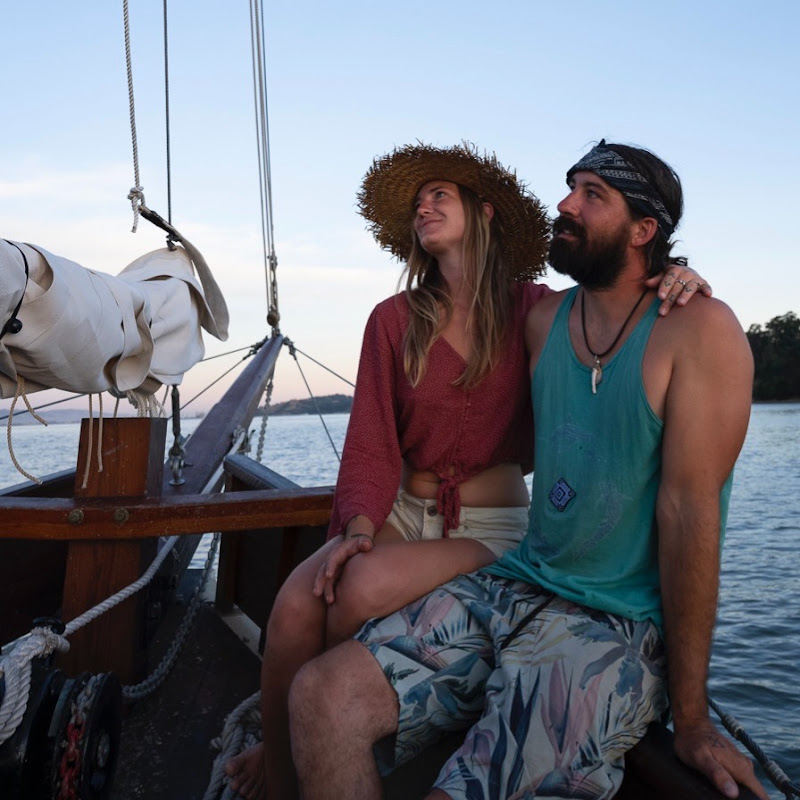
Salt & Tar
Garrett and Ruth Jolly: The artisans behind Salt & Tar, currently double-planking their 35ft wooden ketch, Rediviva, for the next phase of their Pacific expedition.
Channel Information:
Social Media Links:
Meet Victoria - Tour of our William Garden 'Porpoise' built by Robin Fung in 1975 Location
- Port Townsend Boat Haven, Washington, USA (48.117,-122.76)
- Puget Sound Cruising Fairway, Washington, USA (48,-122.5)
Latest Episodes from Salt & Tar
Explore the most recent voyages. Subscribe to the channel to never miss an update!
Salt & Tar: Ep.363- The Boat is Ours!
What's the first thing we do on our new boat? Disconnect the troubling bonding wires. Also, clean! Thanks for watching! p.s. I try and reply to as many comments as I can but we are still so so busy so please do not take it personally 💕 Much love!!! REFIT FUND: ----- pledge per episode...
Salt & Tar: Ep.362- OUT of the WATER Survey
Garrett and Ruth of Salt & Tar haul out the classic wooden yacht Victoria for a pre-purchase survey, freeing a seized shaft brake and torching shipworms.
Salt & Tar: Ep.361- IN-THE-WATER Survey
Garrett and Ruth Jolly of Salt & Tar travel from Puerto Peñasco to Ensenada, Mexico, conducting an in-the-water marine survey of Victoria, a classic William Garden Porpoise wooden cruising ketch.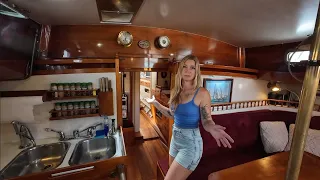
Meet Victoria – Tour of our William Garden ‘Porpoise’ built by Robin Fung in 1975
Garrett and Ruth of Salt & Tar explore Victoria, an offshore 42-foot William Garden Porpoise ketch built by Robin Fung in 1975 from Burmese teak, ipil, and yakal, powered by a Perkins 4.236 diesel engine.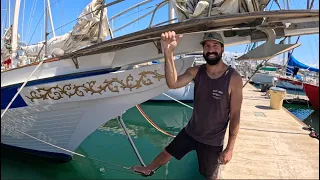
Salt & Tar: Ep.360- Good News
Garrett and Ruth Jolly of Salt & Tar prepare for family life at sea, maintaining their hand-built wooden gaff ketch Rediviva in Washington while acquiring Victoria, an offshore teak cruiser.