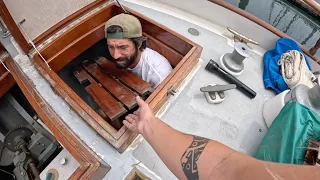
Salt & Tar: Ep.364- New Heights
Cool, overcast air hangs over the harbor as Garrett and Ruth Jolly of Salt & Tar begin another morning of vessel maintenance aboard Victoria, a 51-year-old wooden ketch. Tugging gently at her berth in a coastal Mexican port, the vessel marks their second week assessing onboard systems while their custom 35-foot wooden ketch Rediviva sits in Puerto Peñasco. Rather than connecting raw municipal supply directly to the fresh water tank, Garrett assembles an inline filtration assembly—dubbed the Franken filter—to condition dock water before running Victoria plumbing, pumps, and fixtures for the first time.
Waking up the dormant vessel requires methodical work from the bilges to the masthead. While Garrett verifies that the freshwater system holds pressure and supplies the galley, Ruth prepares the exterior decks for their first thorough washdown. The teak and timber planking requires deliberate care to prevent degradation. Ruth initiates the wash by scouring the deck with buckets of raw seawater before any hose water touches the timber, adhering to traditional boatbuilding doctrine: “Fresh water is what you need to worry about for rot. Salt water doesn’t rot wood.”
Deep Scrubbing and Interior Preservation
Down below, the living quarters reveal decades of careful preservation mixed with inevitable grime from several seasons of inactivity. Ruth tackles soot deposits coating the cabin overhead and galley bulkheads using a simple melamine foam block. Despite the vessel having spent 51 years afloat, the laminate countertops and joinery show remarkably little damage or wear, prompting Ruth to marvel at the boat condition: “She’s a unicorn, man.”
Bilge maintenance proceeds concurrently alongside the domestic cleaning. Garrett inspects the lower hull compartments along the keelson, finding the bilge paint well preserved and free of standing sludge. Victoria features 2 primary bilge pumps mounted on opposite sides of the keelson, matching the exact dual-pump bilge arrangement the couple installed aboard Rediviva. While wiping down the limber holes and wire-brushing accumulated debris off the top of the stainless steel water tank, Garrett salvages 3 usable pieces of misplaced hardware—a machine fastener, a flat washer, and a zip tie—clearing the bilge sumps of foreign objects.
The intensive domestic cleaning offers psychological solace as well. Moving through the vessel storage lockers and clearing cobwebs from book racks provides a grounding routine following the recent passing of Garrett father. As Ruth observes while scrubbing away lamp smoke from the timber ceilings: “There’s a tranquility to cleaning an old wooden boat.”
Rainy Day Deck Leak Inspection
An incoming coastal storm delivers Victoria first rainy day under new ownership, presenting an immediate diagnostic test for the exterior deck joinery. As rain cascades across the cabin top, water begins finding pathways through aging sealant. Garrett and Ruth track minor drips weeping into the interior, identifying drips at a structural beam junction directly over the starboard sleeping bunk, along with active trickles at the forward and aft corners of the port deck hatch.
Rather than indicating structural timber rot, the leaks stem from standard maintenance deferral. Victoria previous owner had maintained the vessel with regular diligence, but a brief lapse in exterior maintenance allowed flexible bedding compounds beneath deck hardware to dry and pull away from the wood. Garrett and Ruth note that the teak deck planking and fiberglass cabin overlays remain intact; resolving the leaks will simply require removing deck cleats, tracks, and hatch frames, cleaning the mating surfaces, and re-bedding the fasteners with fresh marine sealant.
Ascending Aloft for Rig Inspection
With the deck and interior assessments underway, Garrett turns his focus toward the standing rigging. Victoria wire rigging is 30 years old, making a complete spar and standing rigging overhaul the largest mechanical project on the vessel refit schedule. Before planning the overhaul, Garrett conducts an aloft inspection of the main spar to evaluate the spruce wood, spreaders, and masthead fittings.
Discovering an unused, padded Harkin bosun chair stowed aboard, Garrett rigs the halyard and prepares to go aloft. Ruth tails the halyard at the winch while dock neighbor Ben stops by to exchange greetings. Garrett hoists aloft smoothly, praising the comfort of the harness: “that is the nicest Bosen’s chair I’ve ever had.”
At the upper spreaders and masthead, Garrett systematically inspects the box mast lamination seams, fastener penetrations, and standing rigging tangs. He identifies a split along a mast lamination seam where a previous installer drove a halyard bracket fastener directly into the glue line, allowing moisture to breach the lamination. While minor localized rot appears at the very top of the starboard masthead, the surrounding spruce timber remains structurally sound.
Inspecting the spreader hardware, Garrett notes where standard flat washers have compressed into the soft spruce spar under sustained load: “I don’t feel any rot, but it’s just pressure has just sunk these washers in over time.” To correct the issue permanently, Garrett outlines plans to fabricate a custom stainless steel backing plate that will span across the spar face beneath the sail track, spreading the rig tension across a broad timber footprint. Loose wiring for spreader lights remains intact through the internal conduits, ready to connect to spare fixtures stowed below.
Refit Timetable and Long-Term Cruising Plans
The aloft survey confirms that while Victoria box mast and 30-year-old wire rigging require comprehensive refurbishment, the vessel remains structurally intact. Garrett and Ruth establish a seasonal workflow balancing both boats: Victoria will remain securely moored in her Mexican marina while the couple returns to Puerto Peñasco to cruise the Sea of Cortez aboard Rediviva. Once summer approaches, the couple will return to Victoria to unstep the spars, rebuild the masthead fittings, re-bed deck hardware, and install new standing rigging.
Frequently Asked Questions
Salt water acts as a natural fungicide that protects marine timbers from rot, whereas standing fresh water promotes wood decay. Ruth scours the deck with salt water first so any moisture penetrating deck joints provides preservative benefits before a light freshwater rinse.
Garrett found a crack along a lamination seam where a wire halyard bracket screw had been driven directly into the glue line. The penetration allowed moisture into the spar seam, requiring a temporary seal prior to epoxy rebonding when the mast is unstepped.
Victoria standing rigging is 30 years old, representing the largest project required on the vessel. Garrett and Ruth plan to pull the spars during the summer to inspect the wood, install new standing rigging, and fabricate stainless steel backing plates for the spreaders.
The drips over the starboard bunk and port hatch corners were caused by aged bedding compound beneath deck hardware rather than wood rot. Resolving the leaks requires pulling the hardware fittings, cleaning the surfaces, and re-bedding them with marine sealant.
Spruce is a relatively soft wood, and decades of rigging tension caused standard circular washers to sink into the spar face. Garrett plans to fabricate a stainless steel backing plate spanning beneath the sail track to distribute load across the mast surface.
Water adventures in Mexico





Support Salt & Tar
At WeBoating.com, we profoundly acknowledge the unwavering dedication that Salt & Tar invests in crafting each and every video or voyage. Their passion for delivering exceptional ocean content shines through every frame, and it's a labor of love that deserves your attention.
We invite you to watch their captivating videos here and actively engage with their content, including their social media links above. Liking, commenting, and sharing their work goes a long way in fueling their creative fire.
We're also inviting you to explore the gear, sponsorships, and boat partnerships highlighted in the "Salt & Tar: Ep.364- New Heights" video description, or directly on YouTube. By engaging with these offerings or purchasing services and items, you directly support Salt & Tar, their collaborators, and the brands they're associated with.
To ensure you never miss an offshore update, consider visiting their official YouTube Channel to subscribe, like, and join their community directly.
If you have any feedback, corrections, or additional information about Salt & Tar or their videos, please use the comment form below to share your thoughts with us.
Thank you for being a part of our community and supporting the creators we cherish. Your time and support truly matter!
Going aloft for the first time on Victoria, finding leaks, and more cleaning. Her rigging is 30 years old and probably the biggest project she requires. The deck leaks are mainly due to the hardware needing to be rebed. Next week we are back to Rediviva ;)
Thanks for watching!
p.s. I try and reply to as many comments as I can but we are still so so busy so please do not take it personally 💕
Much love!!!
REFIT FUND: https://www.paypal.com/paypalme/saltandtar
https://saltandtar.org/
https://www.patreon.com/saltandtar ----- pledge per episode
https://www.paypal.com/paypalme/saltandtar --------- one-time donation
You can also support the project and sport some of our merchandise:
https://www.bonfire.com/store/saltandtarswag/
Also, thank you for watching/tolerating the ads. They really help us out financially. We can't control what ads (that typically depends on your "cookies" i.e. your internet history) but it's an easy free way to support the project and buy more parts for the boat. Thanks everybody :)
Music featured:
Epidemic Sound- referral link below
https://share.epidemicsound.com/9srkjx
WANT some Thixo for yourself? Use our link and get a 5% discount with TotalBoat:
https://www.totalboat.com/saltandtar
Code:03WHEXTEYFCA
The dinghy is from CLC, Chesapeake Light Craft, the Tenderly 10 design:
https://clcboats.com/shop/boats/wooden-sailboat-kits/tenderly-dinghy.html

Salt & Tar
Garrett and Ruth Jolly: The artisans behind Salt & Tar, currently double-planking their 35ft wooden ketch, Rediviva, for the next phase of their Pacific expedition.
Channel Information:
Social Media Links:
Salt & Tar: Ep.364- New Heights Location
- Marina Dock, Mexico (27.96,-111.04)
Latest Episodes from Salt & Tar
Explore the most recent voyages. Subscribe to the channel to never miss an update!
Salt & Tar: Ep.366- Power Upgrade
Garrett and Ruth upgrade Rediviva's electrical system in Puerto Peñasco, replacing AGM batteries with lithium and rewiring solar during Tropical Storm Rachel.
Salt & Tar: Ep.365- Project vs Home
Garrett and Ruth Jolly vacate their rented apartment in Puerto Peñasco to move back aboard Rediviva, shifting refit tasks and preparing a lithium battery upgrade as storm weather approaches.
Salt & Tar: Ep.364- New Heights
Garrett and Ruth Jolly survey Victoria, assessing her 30-year-old standing rigging, diagnosing rainwater deck leaks, and cleaning the 51-year-old wooden ketch.
Salt & Tar: Ep.363- The Boat is Ours!
Taking possession of Victoria in Ensenada, Garrett and Ruth Jolly scrub the interior joinery and disconnect troubling bilge bonding wires to halt wood delignification along the Monel keel bolts and stuffing box.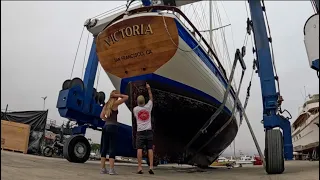
Salt & Tar: Ep.362- OUT of the WATER Survey
Garrett and Ruth of Salt & Tar haul out the classic wooden yacht Victoria for a pre-purchase survey, freeing a seized shaft brake and torching shipworms.