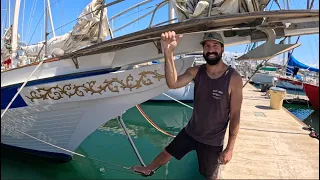
Salt & Tar: Ep.361- IN-THE-WATER Survey
For more than a decade, master shipwrights Garrett and Ruth Jolly have embodied the unyielding spirit of traditional maritime artisanship through Salt & Tar, documenting their monumental odyssey of hand-building and voyaging aboard Rediviva, a 35-foot gaff-rigged wooden ketch. From felling trees and cutting heavy timbers in the temperate rainforests of Washington state to navigating the challenging coastal waters of the Pacific and wintering in the Sea of Cortez, the couple has steadfastly championed the rugged, self-reliant ethos of backyard boatbuilding. Living by a strict philosophy of simplicity, mechanical self-sufficiency, and historical preservation, their voyage has inspired a global maritime following that respects the physical discipline and uncompromising patience required to keep traditional wooden hulls alive on the ocean.
Yet as seasons advance and life unfolds, even the most resolved sea voyages must evolve alongside human realities. Stationed at their refit yard in Puerto Peñasco, Sonora, Mexico, where they had undertaken an ambitious double-planking overhaul of Rediviva, Garrett and Ruth found themselves contemplating the deeper horizon of their nomadic existence. With Ruth approaching her thirty-fifth birthday and the couple sharing an earnest desire to start a family, the practical constraints of their custom workboat design began to emerge. Rediviva, with its Spartan open layout, low coachroof clearances, and utilitarian appointments, was conceived for adventurous coastal cruising on a shoestring budget rather than providing the security, privacy, and expansive volume required to nurture young children across vast ocean distances.
The quest for an ocean-capable sanctuary led the shipwrights to a vessel that captured their maritime imagination: a classic William Garden “Porpoise” class offshore cruising ketch named Victoria. Lying quietly in an ocean slip at Ensenada, Baja California, the 40-foot heavy-displacement vessel represented the pinnacle of traditional yacht architecture—built of old-growth Burmese teak, equipped with commercial-grade machinery, and priced at an extraordinary market discount. Packing their tools before dawn, Garrett and Ruth embarked on an urgent trans-peninsular overland journey to perform an exhaustive in-the-water pre-purchase marine survey, determining whether this storied Pacific voyager was structurally sound enough to carry their family into a daring new chapter of bluewater exploration.
Trans-Peninsular Overland Transit: From Puerto Peñasco to Ensenada
The journey undertaken by Salt & Tar shipwrights Garrett and Ruth Jolly to survey the classic William Garden Porpoise wooden ketch required an arduous trans-peninsular overland expedition from their refit station in Puerto Peñasco to the deepwater port of Ensenada for an in-the-water marine survey. Operating against an unyielding timeline established by the selling yacht broker, the couple departed their Sonoran yard at five o’clock in the morning while ambient desert temperatures still hovered near ninety degrees Fahrenheit. Loading heavy hand tools, measuring tapes, inspection mirrors, and bright halogen work lights into their pickup truck, they aimed to outrun the punishing summer heat of the Sonoran Desert, eager to reach the temperate Pacific coastline of the Baja Peninsula.
To bypass the punishing washboard topography and remote fuel stretches of central Baja’s interior desert corridors, Garrett and Ruth executed a calculated international routing strategy. Driving northward across the United States border in Arizona, they routed west along the high-speed corridors of Interstate 8 and California State Route 94, crossing Southern California’s mountainous backroads before approaching the San Ysidro international port of entry at Tijuana. As the busiest land border crossing in the Western Hemisphere, processing tens of thousands of commercial vehicles and commuters daily, the checkpoint frequently demands grueling multi-hour queues that can test the endurance of any traveler.
To their astonishment, the transit into Baja California proved remarkably frictionless. Gliding through the automated commercial customs gates at twenty-five miles per hour without undergoing primary agricultural holds or commercial inspections, the couple found themselves accelerating onto the modern coastal tollway of Mexican Federal Highway 1D within minutes. Skirting the steep Pacific cliffs south of Playas de Tijuana and sweeping past the historic surf breaks of Rosarito and Puerto Nuevo, the cool maritime air delivered an immediate physical reprieve from the oppressive Sonora desert. The smooth asphalt, punctuated only by modest fifty-peso toll plazas, carried them steadily southward toward the crescent embayment of Bahía de Todos Santos.
Arriving in Ensenada held an intense emotional resonance for both voyagers. Pulling into the Ensenada Pacific Marina and Hotel complex, they stepped into the identical maritime haven where they had first made Mexican landfall aboard Rediviva during the winter of 2022 after navigating the treacherous winter swells of the California coast. Checking into a second-story hotel room overlooking the marina basin, Ruth walked onto the balcony to scan the floating docks. There, moored in slip three amongst modern fiberglass cruisers and powerboats, sat Victoria. Her distinctive varnished transom, majestic clipper bow, and weather-worn blue canvas sail covers stood out like an authentic relic from a golden era of naval architecture.
The Naval Architecture of William Garden: The Porpoise Class Legacy
Evaluating the William Garden Porpoise wooden ketch during their Ensenada marine survey required Salt & Tar creators Garrett and Ruth Jolly to examine the profound naval architectural philosophy that shaped the vessel. William Garden (1918–2011), an icon of Pacific Northwest yacht design operating from his private studio on Toad Island in British Columbia, was celebrated for merging commercial workboat honesty with classical maritime grace. Conceived in the mid-twentieth century as a serious offshore passage-maker, the Porpoise class was specifically engineered to serve as an uncompromising “home on the sea” for voyagers planning extensive blue-water passages and extended circumnavigations.
Unlike modern production sailboats designed around maximized interior beam and lightweight planing hulls, the Porpoise class embodies the timeless principles of heavy-displacement ocean cruisers. Measuring forty feet overall with an expansive eleven-and-a-half-foot beam, deep draft, and a displacement exceeding twenty-six thousand pounds, the vessel features a deep full-keel underbody that blends into graceful wineglass bilges. This substantial underwater profile provides extraordinary directional stability, dampening motion sickness and ensuring comfortable, predictable tracking when running before heavy following seas or beating into steep ocean waves.
The ketch rig configuration of the Porpoise design represents a masterstroke in offshore operational management. By dividing the total sail area across a mainmast and a shorter mizzen mast, Garden created a balanced sail plan that allows shorthanded crews to optimize canvas without wrestling monstrous sails in gale conditions. In deteriorating sea states, the crew can douse the mainsail entirely and balance the hull comfortably under “jib and jigger”—operating solely under the headsail and mizzen sail—allowing the boat to jog along safely with minimal helm pressure while the crew rests securely below decks.
For Garrett, an experienced wooden shipwright who spent over eleven years hand-shaping Douglas fir timbers for Rediviva, analyzing a Garden design offered a fascinating technical counterpoint. While George Buehler’s designs prioritized flat-bottomed utilitarian workboat simplicity that could be constructed on a farm with basic dimensional lumber, William Garden designed for master shipyards capable of executing complex compound curves, bronze-fastened carvel planking, and intricate joinery. Finding a preserved Porpoise hull constructed of premium old-growth timbers at an accessible price presented a rare alignment of architectural pedigree and personal readiness.
Topsides, Deck Joinery, and Rigging Forensics: The Exterior Survey
Stepping onto the Ensenada marina docks alongside broker Ben to begin the pre-purchase marine survey of the William Garden Porpoise wooden ketch, Salt & Tar mariners Garrett and Ruth Jolly immediately subjected Victoria’s exterior envelope to rigorous forensic scrutiny. Approaching the bow, the vessel’s dramatic clipper bow and robust bowsprit commanded respect, flanked by heavy bronze mooring hardware and heavy timber samson posts through-bolted directly into the stem. Resting upon the foredeck was an astonishing omen of synchronicity: an identical heavy bronze manual anchor windlass model to the one Garrett had tracked down years prior at Minney’s Yacht Surplus to equip Rediviva.
Garrett’s initial technical focus centered on the deck construction and structural covering. While traditional solid-laid teak decks are notoriously susceptible to core rot, fastener leaks, and bed degradation over decades of sun exposure, Victoria’s weather decks were constructed from marine-grade plywood overlaid with continuous structural fiberglass and non-skid deck paint. Pacing slowly along the expansive, wide side decks, Garrett methodically applied full body weight to every square foot of the walking surface, testing for spring, sponginess, or underlying core delamination. The decks remained rock-solid beneath his boots, displaying no structural flex despite years of standing in the intense Baja sun.
The cockpit architecture revealed a thoughtful blend of ocean-going security and liveaboard comfort. Set low into the hull’s waist, the deep cockpit well provides complete physical containment, shielding watchstanders from wind chill and rogue seas during offshore passages. Inspecting the helm seating, Garrett confirmed his photographic hypothesis: the varnished helm seat incorporated a hinged, folding teak backrest that transformed a flat bench into an ergonomic captain’s chair. Above the companionway, the yacht featured an ingenious collapsible sea hood and dodger frame that protected the main hatchway from breaking spray while allowing effortless folding to maximize natural airflow into the salon.
Shifting his attention aloft, Garrett conducted a candid evaluation of the standing rigging and spars. The heavy wooden masts and booms appeared straight, sound, and rot-free beneath their protective coatings, but the stainless steel standing rigging, wire stays, and terminal swages were visibly dated. Describing the rigging hardware as undeniably ancient, the shipwrights recognized that the entire standing rigging suite—including shrouds, stays, turnbuckles, and tangs—would require complete replacement before any offshore voyages. However, observing pristine bronze chainplates passing securely through the deck into massive internal hull frames confirmed that the foundational attachment points remained uncompromised.
Below-Decks Structural Forensics: Bilges, Frames, and Timber Integrity
Descending through the companionway of the William Garden Porpoise wooden ketch during their exhaustive marine survey in Ensenada, Salt & Tar shipwrights Garrett and Ruth Jolly stepped into an interior world that immediately distinguished Victoria from standard production cruisers. Built without the thin composite veneers or utilitarian plywood panels common in modern yacht manufacturing, the cabin was enveloped entirely in solid old-growth Burmese teak. The visual warmth of the grain, complemented by traditional joinery and brass fittings, reflected a standard of bespoke craftsmanship where no expense had been spared during the vessel’s original commissioning.
For Garrett, an experienced timber builder, the true structural reality of a wooden ship is never judged by polished varnish, but by the condition of her bilge timbers, frame heels, and garboard strakes. Arming himself with high-intensity inspection torches, awls, and measuring tools, he systematically pulled up every removable floorboard along the cabin sole. While decades of accumulated bilge dust and dried seawater had left a superficial layer of grime in the lowest sumps, wiping away the residue revealed pristine white bilge paint protecting rock-hard sawn timber frames. Probing the wood fiber relentlessly, Garrett found zero evidence of fungal dry rot, soft spots, or fastener degradation.
The forensic inspection moved progressively from stem to stern through every concealed bulkhead, locker, and access hatch. In the forward chain locker, Garrett was delighted to discover an advanced plumbing arrangement: a dedicated overboard drain line connected to a heavy bronze thru-hull fitted with an independent bronze seacock. This dedicated drainage design mirrored the exact safety layout Garrett had hand-built aboard Rediviva, preventing corrosive bilge drainage and keeping saltwater mud isolated from internal bilges. Every thru-hull fitting below the waterline was crafted from cast bronze, operable, and securely bonded to structural backing blocks.
Examining the hull penetrations further, Garrett identified an oversized bronze depth-sounder transducer that pierced the heavy timber hull planking. The transducer was the exact identical commercial-grade unit installed aboard Rediviva, engineered with an extended threaded bronze barrel to clear thick wooden hull planks and internal framing. Throughout the machinery spaces, all sanitary and raw-water plumbing lines were plumbed with premium Shields marine-grade hoses, secured with double stainless-steel clamps that showed recent installation and rigorous upkeep. Everywhere Garrett touched, tapped, and prodded, the vessel revealed itself to be a structural fortress built to commercial standards.
Mechanical Systems and Propulsion: Perkins 4.236 and the Shaft Brake Mechanism
Opening the heavy engine compartment hatches during their Ensenada marine survey of the William Garden Porpoise wooden ketch, Salt & Tar shipwrights Garrett and Ruth Jolly inspected Victoria’s primary propulsion: a naturally aspirated Perkins 4.236 four-cylinder marine diesel engine. Known throughout commercial fishing fleets and global voyaging circles as an indestructible tractor-style engine, the 3.86-liter Perkins delivers approximately eighty-five horsepower at a relaxed, low-RPM operating cycle. With cast-iron block construction, direct mechanical fuel injection, and an absence of delicate electronic control units, it is widely revered as the gold standard of marine diesel reliability.
Inspecting the engine’s external ancillaries revealed remarkable signs of preservation. The engine hour meter registered an astonishing 304 indicated operating hours, suggesting minimal usage since its installation or comprehensive remanufacture. The copper fuel delivery lines were fitted with manual shut-off valves, the cooling raw-water impeller pump and heat exchanger were clean and free of salt-crust weeping, and an auxiliary pulley was already fitted to the forward crankshaft snout for running high-output alternators or mechanical refrigeration. Beneath the engine block sat a custom-welded, mirror-polished heavy stainless-steel oil drip pan—an exquisite engineering detail rarely seen on workboats that ensures bilges remain spotless.
The transmission and drivetrain arrangement presented a sophisticated mechanical discovery. Mated to the Perkins diesel was a heavy-duty hydraulic marine gearbox, engineered to provide seamless forward and reverse shifting under load. However, hydraulic transmissions present an inherent vulnerability when a sailing vessel is underway under canvas: without engine oil pressure circulating through the gearbox, the water flowing past the propeller forces the drive shaft to free-wheel continuously. Over hundreds of miles of sailing, this unlubricated rotation can overheat transmission bearings and create excessive hydrodynamic drag that robs the vessel of sailing speed.
Tracing a mystery mechanical control lever in the aft cockpit lazarette, Garrett solved the riddle of Victoria’s offshore running gear. The lazarette lever was linked via a heavy teleflex push-pull cable directly to a mechanical shaft brake assembly clamped around the main propeller shaft coupling. By engaging this manual brake from the helm or lazarette while under sail, the crew can mechanically immobilize the drive shaft, locking the propeller in a low-drag orientation and protecting the hydraulic transmission from freewheeling wear. This level of forethought cemented Garrett’s conviction that the vessel had been outfitted by a master seaman with extensive ocean-crossing experience.
Continuing his crawl into the deep stern lazarette, Garrett inspected the exhaust run and rudder mechanics. The engine exhaust was routed aft into a water-lift muffler before discharging through the transom. At the final through-hull junction, Garrett noted a forty-five-degree steel elbow connecting the exhaust hose to the bronze transom fitting. While displaying superficial surface rust that prompted scrutiny, tactile probing confirmed that the elbow retained full metal thickness and merely required wire brushing and rust-inhibiting paint. Nearby, the massive solid bronze rudder post, stuffing box, and steering quadrant hardware revealed commercial-grade scantlings built to withstand severe ocean conditions.
The Liveaboard Stateroom and Family Cruising Ergonomics
While conducting their comprehensive marine survey in Ensenada aboard the William Garden Porpoise wooden ketch, Salt & Tar shipwrights Garrett and Ruth Jolly shifted their evaluation toward the vessel’s domestic accommodations. Most traditional William Garden Porpoise ketches were configured with open-concept interior layouts featuring twin pilot berths or narrow quarter berths flanking the companionway ladder. While highly practical for delivery crews or bachelor sailors, such arrangements provide virtually zero acoustic privacy or compartmentalization for couples raising infants and young children at sea.
Victoria, by contrast, featured a bespoke custom interior modification that immediately captured Ruth’s heart: a dedicated private master stateroom partitioned by a solid teak door. Stepping inside the stateroom, the couple discovered an expansive Pullman double berth set along the hull side. Laying across the berth together to test its proportions, Garrett and Ruth confirmed that the mattress provided generous sleeping dimensions with comfortable lateral support. While the elevated height of the Pullman berth required a slight compromise in sitting headroom against the overhead, the presence of a dedicated private bedroom transformed the vessel from a mere boat into a true floating household.
The artisan joinery throughout the living spaces revealed exquisite subtleties that spoke volumes about the builder’s uncompromising standards. Inspecting the cabin floorboards, Garrett highlighted an intricate bevel where a sole board met an angled frame intersection. Rather than cutting a crude gap or applying a flat filler strip, the shipwright had hand-beveled a raised lip into the solid teak timber so that the adjoining surface transitioned at a seamless, continuous plane. Every drawer, locker door, and louvered ventilation panel was constructed of thick, solid Burmese teak, hung on heavy brass hinges and secured with positive sea latches.
For Ruth, standing inside the sunlit saloon evoked an immediate emotional connection. Celebrating her thirty-fifth birthday in Mexico, the ticking clock of family life had brought intense clarity to their maritime aspirations. For years, the physical hardship of living aboard a rustic workboat under perpetual construction had absorbed their creative energies. Stepping aboard Victoria, Ruth could vividly envision a child resting securely in the forward cabin while the ketch sailed steadily under self-steering gear across blue ocean waters. The vessel offered not merely greater cubic volume, but the security and dignity of a permanent maritime home.
Comparative Analysis: William Garden Porpoise vs. Rediviva Scantlings
Examining the structural contrasts during the pre-purchase marine survey in Ensenada, Salt & Tar creators Garrett and Ruth Jolly recognized that the William Garden Porpoise wooden ketch and their hand-built Rediviva occupied opposing poles of the traditional wooden boatbuilding spectrum. Rediviva was conceived in their early twenties as an exercise in sheer human determination—a George Buehler 35-foot gaff ketch built on a shoestring budget using backyard framing methods, local Douglas fir, construction-grade plywood, and preserved with traditional “Boat Soup” (a historical blend of pine tar, raw linseed oil, and turpentine). In contrast, Victoria was commissioned as a luxury blue-water yacht, executed with the finest marine timbers and bronze hardware that money could procure.
To quantify the extraordinary engineering and materials represented in Victoria, Garrett conducted a sobering valuation assessment. In the modern boatbuilding industry, sourcing old-growth Burmese teak in commercial timber dimensions has become nearly impossible due to international trade restrictions, environmental sanctions, and resource depletion. Simply purchasing the raw timber required to build Victoria’s carvel hull, deck beams, cabin trunk, and solid teak interior joinery—before paying for a single hour of skilled artisan labor—would easily cost several hundred thousand dollars. Replicating the vessel from scratch today in a high-end North American or European wooden shipyard would comfortably exceed one million dollars.
| Metric & Vessel Component | William Garden Porpoise (Victoria) | George Buehler 35 (Rediviva) | Survey Finding & Assessment |
|---|---|---|---|
| Designer & Design Heritage | William Garden (Toad Island, BC) | George Buehler (Backyard Workboat) | Renowned blue-water ocean voyaging pedigree |
| Length Overall (LOA) | ~40.0 ft (12.2 m) | 35.0 ft (44 ft with long bowsprit) | Expansive internal volume and displacement |
| Beam & Draft | 11.5 ft (3.5 m) / 6.0 ft (1.8 m) | 11.5 ft (3.5 m) / 5.5 ft (1.7 m) | Deep wineglass full keel; excellent stability |
| Displacement & Hull Type | ~26,000–28,000 lbs (Heavy Full Keel) | ~24,000 lbs (Heavy Shoestring Workboat) | High comfort ratio; superior motion damping |
| Hull Planking Material | Old-Growth Burmese Teak (Carvel) | Douglas Fir (Double-Planked 2026) | Impenetrable timber; zero rot or soft spots |
| Deck Construction | Fiberglass over Marine Plywood Subdeck | Plywood & Epoxy over Timber Beams | Decks completely solid; zero core flex observed |
| Rig & Sail Configuration | Marconi/Bermudan Split Ketch Rig | Traditional Gaff-Head Main & Mizzen | Ancient standing rigging requires full renewal |
| Auxiliary Engine | Perkins 4.236 (85 HP Diesel) | Lister-Petter Air-Cooled Diesel | 304 indicated hours; flawless mechanical health |
| Drivetrain & Shaft System | Hydraulic Gearbox + Mechanical Shaft Brake | Direct Mechanical Drive | Shaft brake enables propeller locking under sail |
| Interior Accommodations | Enclosed Master Stateroom + Pullman Berth | Open-Concept Single Bunk Layout | Dedicated private cabin optimal for children |
| Survey Checklist Status | In-The-Water Survey: Passed with Distinction | Haul-Out Double-Planking Refit Active | Ready for formal haul-out bottom inspection |
| Asking Price vs. Replacement | $40,000 USD (Reduced Market Valuation) | Hand-Built DIY ($30,000–$50,000 materials) | Exceptional purchase value; $1M+ replacement |
With Victoria’s asking price reduced to forty thousand dollars by a motivated seller, Garrett and Ruth recognized that the vessel represented a once-in-a-lifetime maritime acquisition. The cosmetic flaws that deterred conventional fiberglass boat buyers—flaking exterior varnish, weathered nonskid paint, and superficial bilge grime—were entirely superficial to a skilled shipwright who could see straight through the cosmetics to the impeccable structural timber beneath. As Garrett noted from the cockpit coaming, finding a yacht of such royal lineage priced at forty thousand dollars was not an opportunity to negotiate aggressively, but a rare gift of circumstance that warranted immediate, decisive action.
Strategic Cruising Blueprint: The Two-Boat Pacific Operations Model
Sitting on the hotel balcony overlooking the Ensenada marina after completing their in-the-water marine survey of the William Garden Porpoise wooden ketch, Salt & Tar creators Garrett and Ruth Jolly formulated an ambitious two-boat operational strategy. For many voyagers, acquiring a second vessel signifies the abandonment of the first; for Garrett and Ruth, disposing of Rediviva was an emotional and philosophical impossibility. Rediviva was the physical manifestation of their youth, the vehicle through which they had forged their partnership, learned their trade, and earned the respect of hundreds of thousands of maritime observers across the globe.
Instead of choosing between vessels, the couple devised a dual-fleet operational model spanning the Pacific rim. Once Rediviva’s double-planking overhaul in Puerto Peñasco is finalized, they plan to sail the gaff ketch northward back to the Pacific Northwest. There, among the protected archipelagoes of Puget Sound, the San Juan Islands, and British Columbia’s inside passage, Rediviva will serve as their summer cruising home—allowing them to work in cool maritime climes and revisit the majestic forests where her keel was first laid. Meanwhile, Victoria will remain stationed in Mexico at her Ensenada slip, serving as a dedicated blue-water ocean platform for winter voyages and extended Pacific passages.
This fifty-fifty operational lifestyle aligns seamlessly with their psychological need for novelty and change. Rather than becoming trapped in the relentless grind of a never-ending refit, maintaining two distinct vessels in different geographical zones provides endless creative diversity. More importantly, it establishes a gradual, sustainable timeline for preparing Victoria. Because the William Garden ketch requires no immediate structural reconstruction, the couple can keep her safely berthed in Ensenada’s protected harbor, tackling project lists—such as standing rigging renewal and cosmetic varnish refinishing—systematically and without financial panic.
As the sun dipped behind the Pacific horizon of Bahía de Todos Santos, Garrett and Ruth made their fateful decision. They would contact their bank, secure the modest financing necessary to cover the forty-thousand-dollar acquisition, and present a formal offer to broker Ben. The next procedural step would be arranging a short-haul haul-out at a nearby Ensenada shipyard, allowing Garrett to complete an out-of-the-water survey of the underwater hull, sea cocks, keel shoe, and rudder pintles. Acknowledging that every great leap in life brings healthy trepidation, the shipwrights embraced the butterflies in their stomachs, stepping boldly forward into their next great ocean odyssey.
Frequently Asked Questions About the William Garden Porpoise Marine Survey
Addressing common technical inquiries regarding the William Garden Porpoise wooden ketch and the pre-purchase marine survey conducted in Ensenada by Salt & Tar shipwrights Garrett and Ruth Jolly, this section provides authoritative answers on design specifications, survey methodologies, and diesel propulsion systems.
The Porpoise class is a heavy-displacement offshore cruising ketch designed by famed naval architect William Garden, featuring a full-length keel with wineglass bilges, clipper bow, and a balanced split ketch sail plan optimized for long-distance family passage-making.
Garrett and Ruth Jolly traveled from their Puerto Peñasco refit yard to Ensenada, Mexico, to conduct an in-the-water pre-purchase survey on Victoria, seeking a larger, heavy-displacement blue-water vessel with enclosed staterooms to accommodate an expanding family.
Victoria is powered by an iconic Perkins 4.236 naturally aspirated four-cylinder marine diesel engine producing 85 horsepower, showing only 304 indicated hours, manual fuel valves, a heavy stainless steel oil drip pan, and exceptional mechanical health.
Because Victoria is equipped with a hydraulic transmission that cannot circulate oil when the engine is off, the lazarette-controlled mechanical shaft brake clamps the propeller shaft to prevent freewheeling, avoiding transmission bearing wear and eliminating drag under sail.
Garrett methodically lifted cabin sole boards to inspect bilge sumps, frames, and floor timbers, finding clean white bilge coat beneath superficial grime, rock-hard old-growth Burmese teak planking, tight keel bolts, and zero evidence of dry rot or wood decay.
While Rediviva is a custom 35-foot George Buehler workboat ketch built with local Douglas fir and an open layout, Victoria is a 40-foot William Garden ketch constructed of old-growth Burmese teak with an enclosed master stateroom, Pullman berth, and commercial-grade yacht finish.
Salt & Tar plans to maintain both vessels: sailing Rediviva northward to the Pacific Northwest for summer cruising in British Columbia and Alaska, while keeping Victoria stationed in Mexico as their blue-water ocean platform for Pacific crossings with their growing family.
The marine survey identified that Victoria’s dated standing rigging requires full replacement, a 45-degree steel exhaust elbow needs surface rust removal and painting, and the hull must undergo an out-of-the-water shipyard haul-out for bottom inspection.
Book a trip where this was filmed — near San Diego






Support Salt & Tar
At WeBoating.com, we profoundly acknowledge the unwavering dedication that Salt & Tar invests in crafting each and every video or voyage. Their passion for delivering exceptional ocean content shines through every frame, and it's a labor of love that deserves your attention.
We invite you to watch their captivating videos here and actively engage with their content, including their social media links above. Liking, commenting, and sharing their work goes a long way in fueling their creative fire.
We're also inviting you to explore the gear, sponsorships, and boat partnerships highlighted in the "Salt & Tar: Ep.361- IN-THE-WATER Survey" video description, or directly on YouTube. By engaging with these offerings or purchasing services and items, you directly support Salt & Tar, their collaborators, and the brands they're associated with.
To ensure you never miss an offshore update, consider visiting their official YouTube Channel to subscribe, like, and join their community directly.
If you have any feedback, corrections, or additional information about Salt & Tar or their videos, please use the comment form below to share your thoughts with us.
Thank you for being a part of our community and supporting the creators we cherish. Your time and support truly matter!
Now the we can fully tell you the story, let's take it from the top.
Thanks for watching!
p.s. I try and reply to as many comments as I can but we are still so so busy so please do not take it personally 💕
Much love!!!
REFIT FUND: https://www.paypal.com/paypalme/saltandtar
https://saltandtar.org/
https://www.patreon.com/saltandtar ----- pledge per episode
https://www.paypal.com/paypalme/saltandtar --------- one-time donation
You can also support the project and sport some of our merchandise:
https://www.bonfire.com/store/saltandtarswag/
Also, thank you for watching/tolerating the ads. They really help us out financially. We can't control what ads (that typically depends on your "cookies" i.e. your internet history) but it's an easy free way to support the project and buy more parts for the boat. Thanks everybody :)
Music featured:
Epidemic Sound- referral link below
https://share.epidemicsound.com/9srkjx
WANT some Thixo for yourself? Use our link and get a 5% discount with TotalBoat:
https://www.totalboat.com/saltandtar
Code:03WHEXTEYFCA
The dinghy is from CLC, Chesapeake Light Craft, the Tenderly 10 design:
https://clcboats.com/shop/boats/wooden-sailboat-kits/tenderly-dinghy.html
Video Credit:
Drone Snap
https://www.youtube.com/watch?v=QMutN3mdS8k
Salt & Tar
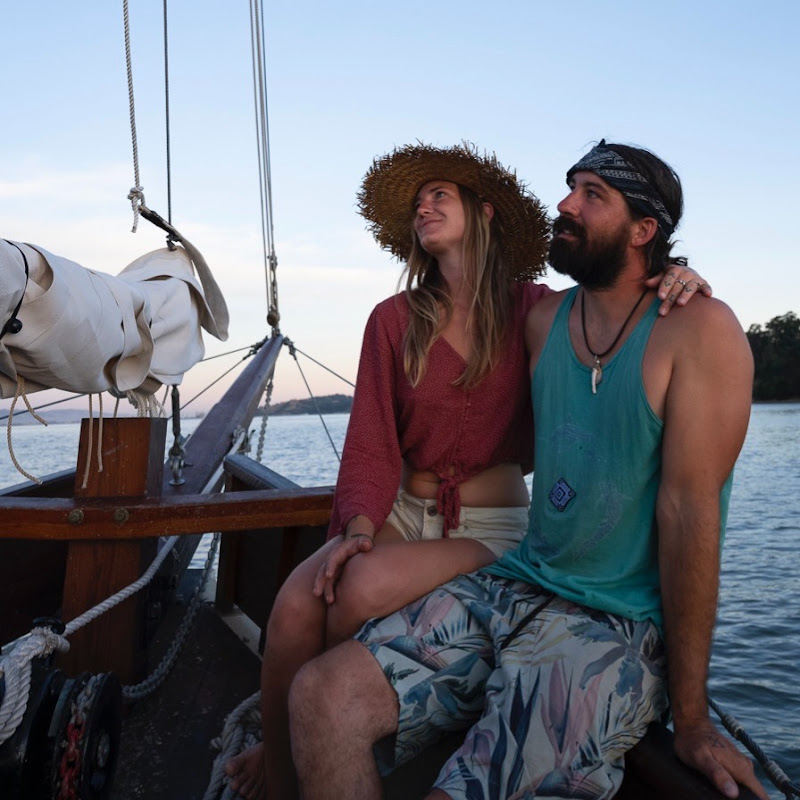
Garrett and Ruth Jolly: The artisans behind Salt & Tar, currently double-planking their 35ft wooden ketch, Rediviva, for the next phase of their Pacific expedition.
Channel Information:
Social Media Links:
Salt & Tar: Ep.361- IN-THE-WATER Survey Location
- Pacific Marina & Survey Site, Ensenada, Baja California, Mexico (31.8667,-116.6333)
- Puerto Peu00f1asco, Sonora, Mexico (Rediviva Refit Yard Base) (31.3167,-113.5333)
- Tijuana / San Diego International Border Crossing (San Ysidro) (32.5422,-117.0294)
Latest Episodes from Salt & Tar
Explore the most recent voyages. Subscribe to the channel to never miss an update!
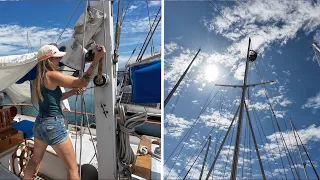
Salt & Tar: Ep.364- New Heights
Going aloft for the first time on Victoria, finding leaks, and more cleaning. Her rigging is 30 years old and probably the biggest project she requires. The deck leaks are mainly due to the hardware needing to be rebed. Next week we are back to Rediviva ;) Thanks for watching! p.s. I try and reply...
Salt & Tar: Ep.363- The Boat is Ours!
Taking possession of Victoria in Ensenada, Garrett and Ruth Jolly scrub the interior joinery and disconnect troubling bilge bonding wires to halt wood delignification along the Monel keel bolts and stuffing box.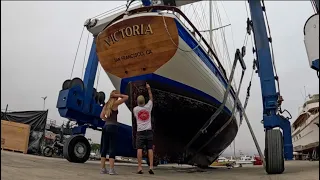
Salt & Tar: Ep.362- OUT of the WATER Survey
Garrett and Ruth of Salt & Tar haul out the classic wooden yacht Victoria for a pre-purchase survey, freeing a seized shaft brake and torching shipworms.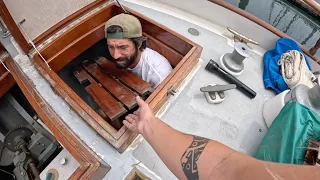
Salt & Tar: Ep.361- IN-THE-WATER Survey
Garrett and Ruth Jolly of Salt & Tar travel from Puerto Peñasco to Ensenada, Mexico, conducting an in-the-water marine survey of Victoria, a classic William Garden Porpoise wooden cruising ketch.
Meet Victoria – Tour of our William Garden ‘Porpoise’ built by Robin Fung in 1975
Garrett and Ruth of Salt & Tar explore Victoria, an offshore 42-foot William Garden Porpoise ketch built by Robin Fung in 1975 from Burmese teak, ipil, and yakal, powered by a Perkins 4.236 diesel engine.