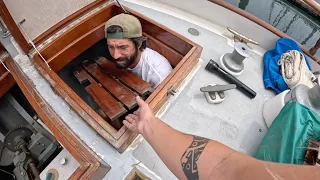
Salt & Tar: Ep.366- Power Upgrade
As the outer fringes of Hurricane Rachel swept across the northern Sea of Cortez, Garrett and Ruth secured their vessels against gale-force gusts in Puerto Peñasco. Documenting their off-grid refit on Salt & Tar, the couple took advantage of the storm-enforced layover aboard their self-built thirty-five-foot wooden ketch Rediviva to overhaul their aging onboard electrical power generation.
With howling winds whistling through the harbor rigging and turbulent chop washing across the marina slips, the pilot house provided dry shelter. The severe cyclonic system, representing the tenth tropical cyclone of the eastern Pacific season, steadily downgraded to a tropical storm while tracking toward Baja California, dropping ambient temperatures and marking the arrival of autumn weather.
Decommissioning Lead-Acid AGMs for Compact Lithium Cells
Between clearing storm-blown harbor debris, Garrett commenced dismantling Rediviva‘s exhausted battery bank. The existing energy storage comprised six heavy six-volt AGM batteries wired in series-parallel, taking up critical bilge space across multiple compartments. Garrett disconnected the main battery cables and rigged two twelve-volt lithium iron phosphate batteries to replace the entire legacy bank:
“Starting the process of pulling the old batteries out. So, I’ve just gotten a few things labeled, but there’s not really much to switch over. Pull these two out.”
To organize the high-current DC infrastructure, Garrett installed a Victron Lynx Distributor. Functioning as a heavy-duty modular busbar, the unit houses isolated positive and negative busbars equipped with dedicated fuse locations for each high-amperage circuit.
Rebuilding the Solar Array and Relocating the Power Inverter
Prior to the refit, the vessel’s solar panels were wired in parallel into a single oversized charge controller. Under this arrangement, partial shading from the masts or rigging over one panel caused severe voltage drop across the entire array. To resolve this inefficiency, Garrett restructured the solar architecture, running dedicated wiring pairs for each individual panel straight to the central Lynx busbar:
“We’re adding two more panels and we’re running them all individually, so they’re all going to have their individual positive and negative, so we’re going to have 12 wires to deal with.”
Inspecting the legacy modules revealed severe moisture intrusion and internal corrosion on the port-side panel, while the starboard panel delivered four point four amps of charging current. Garrett retired the corroded unit and mounted two new high-efficiency solar panels above the coachroof, wiring each string through independent charge controllers.
Finally, Garrett addressed a critical equipment placement vulnerability. The ship’s DC-to-AC power inverter had originally been mounted low on the engine room bulkhead near the stuffing box. When the packing gland developed a minor spray leak against the spinning propeller shaft, saltwater flung across the electrical casing, requiring a makeshift license plate deflector shield. Garrett dismounted the old charge controller and relocated the inverter to an elevated, moisture-protected bulkhead position, ensuring reliable electrical service under offshore passage conditions.
Between intense wiring sessions, the realities of storm season surrounded the harbor. Along the wave-swept pontoons, Garrett assisted neighbors and cleared fallen pelicans that had succumbed to the violent wind squalls. To keep energy high during the long project day, Garrett prepared a hot galley lunch of seasoned rice, sauteed vegetables, and fresh cilantro wrapped in tortillas.
While working in the lower joinery, the couple also investigated an isolated pocket of wood-boring insects discovered along the edge of a plywood bulkhead. Garrett carefully cut out the damaged timber section to serve as a precise template for cutting a sound replacement panel. Additionally, they reviewed hardware gathered for their planned exterior pilot house shower, designed to stow flush inside a hidden drawer for future anchorages.
With the newly installed battery bank safely charging and the storm subsiding into calm autumn breezes, the crew completed final electrical meter checks, readying the vessel for upcoming coastal cruising down the Sea of Cortez.
Frequently Asked Questions
Garrett removed six heavy 6-volt AGM batteries and replaced the entire bank with two compact 12-volt lithium iron phosphate batteries.
The Lynx Distributor functions as a centralized modular busbar combining positive and negative connection studs with individual fuse blocks for high-amperage circuits.
Previously wired in parallel on a single controller, shading on one panel crippled the entire array. Re-running dedicated wire pairs to separate controllers ensures optimal power harvest.
The inverter was originally mounted low near the prop shaft stuffing box, where packing gland spray risked water damage; it was moved to a dry, elevated bulkhead.
Book a trip where this was filmed — near San Diego





Support Salt & Tar
At WeBoating.com, we profoundly acknowledge the unwavering dedication that Salt & Tar invests in crafting each and every video or voyage. Their passion for delivering exceptional ocean content shines through every frame, and it's a labor of love that deserves your attention.
We invite you to watch their captivating videos here and actively engage with their content, including their social media links above. Liking, commenting, and sharing their work goes a long way in fueling their creative fire.
We're also inviting you to explore the gear, sponsorships, and boat partnerships highlighted in the "Salt & Tar: Ep.366- Power Upgrade" video description, or directly on YouTube. By engaging with these offerings or purchasing services and items, you directly support Salt & Tar, their collaborators, and the brands they're associated with.
To ensure you never miss an offshore update, consider visiting their official YouTube Channel to subscribe, like, and join their community directly.
If you have any feedback, corrections, or additional information about Salt & Tar or their videos, please use the comment form below to share your thoughts with us.
Thank you for being a part of our community and supporting the creators we cherish. Your time and support truly matter!
Making the switch to lithium batteries, retiring a few panels, and giving every solar panel its own charge controller. We also experience Hurricane Rachel as it downgrades to a tropical storm.
Thanks for watching!
p.s. I try and reply to as many comments as I can but we are still so so busy so please do not take it personally 💕
Much love!!!
VIDEO CLIPS USED:
California Weather Watch
https://youtube.com/watch?v=0xnaNSoxMak
KTLA 5
https://youtube.com/watch?v=6HTmf32WGws
REFIT FUND: https://www.paypal.com/paypalme/saltandtar
https://saltandtar.org/
https://www.patreon.com/saltandtar ----- pledge per episode
https://www.paypal.com/paypalme/saltandtar --------- one-time donation
You can also support the project and sport some of our merchandise:
https://www.bonfire.com/store/saltandtarswag/
Also, thank you for watching/tolerating the ads. They really help us out financially. We can't control what ads (that typically depends on your "cookies" i.e. your internet history) but it's an easy free way to support the project and buy more parts for the boat. Thanks everybody :)
Music featured:
Epidemic Sound- referral link below
https://share.epidemicsound.com/9srkjx
WANT some Thixo for yourself? Use our link and get a 5% discount with TotalBoat:
https://www.totalboat.com/saltandtar
Code:03WHEXTEYFCA
The dinghy is from CLC, Chesapeake Light Craft, the Tenderly 10 design:
https://clcboats.com/shop/boats/wooden-sailboat-kits/tenderly-dinghy.html

Salt & Tar
Garrett and Ruth Jolly: The artisans behind Salt & Tar, currently double-planking their 35ft wooden ketch, Rediviva, for the next phase of their Pacific expedition.
Channel Information:
Social Media Links:
Salt & Tar: Ep.366- Power Upgrade Location
- Puerto Peñasco, Sonora, Mexico (31.317,-113.533)
Latest Episodes from Salt & Tar
Explore the most recent voyages. Subscribe to the channel to never miss an update!
Salt & Tar: Ep.366- Power Upgrade
Garrett and Ruth upgrade Rediviva's electrical system in Puerto Peñasco, replacing AGM batteries with lithium and rewiring solar during Tropical Storm Rachel.
Salt & Tar: Ep.365- Project vs Home
Garrett and Ruth Jolly vacate their rented apartment in Puerto Peñasco to move back aboard Rediviva, shifting refit tasks and preparing a lithium battery upgrade as storm weather approaches.
Salt & Tar: Ep.364- New Heights
Garrett and Ruth Jolly survey Victoria, assessing her 30-year-old standing rigging, diagnosing rainwater deck leaks, and cleaning the 51-year-old wooden ketch.
Salt & Tar: Ep.363- The Boat is Ours!
Taking possession of Victoria in Ensenada, Garrett and Ruth Jolly scrub the interior joinery and disconnect troubling bilge bonding wires to halt wood delignification along the Monel keel bolts and stuffing box.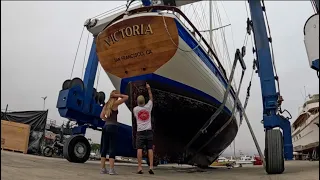
Salt & Tar: Ep.362- OUT of the WATER Survey
Garrett and Ruth of Salt & Tar haul out the classic wooden yacht Victoria for a pre-purchase survey, freeing a seized shaft brake and torching shipworms.