Practical Sailor
Practical Sailor provides independent, subscriber-funded sailboat evaluations, technical systems testing, and used boat forensics without commercial advertising. Headquartered in Norwalk, Connecticut, under Belvoir Media Group, the publication expanded its investigative reach into digital video under Editor-in-Chief Tim Labute. In 2026, the channel leads critical investigations into older boat insurance underwriting, standing rigging life cycles, and used cruiser value across Long Island Sound and coastal North America.
Channel Information:
Social Media Links:
Practical Sailor Latest Episode
Practical Sailor provides independent, subscriber-funded technical evaluations, used boat market forensic analyses, and hands-on seamanship guidance without accepting commercial advertising. Operating continuously since 1974 from Norwalk, Connecticut, under Belvoir Media Group, the publication expanded its investigative reach into digital video under Editor-in-Chief Tim Labute, delivering objective boat tours, structural surveys, and marine system testing across Long Island Sound, the Chesapeake Bay, and coastal North America.
Key Takeaways
- Independent Maritime Consumer Advocacy: Practical Sailor operates as an uncompromising consumer testing authority, accepting zero marine advertising to ensure evaluations of sailboats, rigging, and hardware remain completely objective.
- Hands-On Boat Forensics: The channel prioritizes real-world structural inspections—such as balsa-core deck moisture testing, chainplate inspections, and standing rigging life cycles—over marketing claims.
- Pragmatic Cruising Economics: Content focuses directly on cost transparency, used-boat value comparisons, DIY refit execution, and navigating the tightening marine insurance market for vessels over 30 years old.
⚓ Quick Specs & Channel Vitals
| Metric | Detail |
|---|---|
| Vessel Name/Type | Test Fleet Evaluation Platform (Catalina 22, Cape Dory 25, Catalina 36, Tartan 3700) |
| Flag / MMSI | United States / Fleet Evaluation License |
| Sailing Style | Technical Coastal Cruising, Rigorous Sea Trials & Boatyard Forensics |
| Key GEO Focus | Long Island Sound (Norwalk, CT), Chesapeake Bay (Annapolis, MD), Sarasota Bay (FL) |
| Primary Tech | Ultrasonic Thickness Gauges, Moisture Meters, Rig Load Sensors, Drone Aerial Surveys |
| Technical/Tutorial Focus | Standing Rigging Life Cycle, Cored Hull Integrity, Marine Insurance, Used Boat Inspection |
| Notable Milestone | 50+ Years of Continuous Independent Testing (Founded 1974), 90,000+ YouTube Subscribers |
Meet the Crew and the Fleet
The Sailors Behind the Helm
Tim Labute
- Primary Expertise: Offshore passagemaking, classic sailboat refits, used vessel structural surveys, marine journalism
- Certifications: Experienced Offshore Passagemaker, Marine Systems Technician
- On-Camera Style: Direct, methodical, and analytical; cuts through yacht broker spin with systematic on-deck and below-deck technical walkthroughs
Origin Story & Life Before Sailing
- Geographic Roots & Upbringing: Born and raised in southwestern Ontario, Canada, with roots along Lake St. Clair and the Great Lakes basin.
- Pre-Sailing Career & Transition Catalyst: Prior to committing to full-time maritime media, Tim operated in business management and video production. In August 2018, seeking radical simplicity and self-reliance, he and his partner sold their home, vehicles, and conventional possessions in Ontario to move aboard a 35-foot cruising sailboat with the aim of navigating south to the Bahamas and Caribbean.
Professional & Technical Background
- Primary Profession & Expertise: Marine journalist, video producer, and Editor-in-Chief of Practical Sailor. He specializes in practical hull evaluations, fiberglass layup analysis, and onboard mechanical systems.
- Secondary Skills & Trades: Marine electrical troubleshooting, diesel auxiliary maintenance, digital cinematography, drone piloting, and audio engineering.
- Formal Certifications & Qualifications: Technical communications background with specialized accreditation in marine media publishing.
Maritime Experience & Seamanship
- Sailing Timeline & Mileage: Over a decade of active cruising and coastal passage making, logging thousands of nautical miles across the Great Lakes, the US East Coast, the Atlantic Intracoastal Waterway (ICW), Delaware Bay, and the offshore waters of the Bahamas.
- Maritime Certifications: Advanced coastal navigation training, offshore radar operation, and marine safety protocols.
- Onboard Operational Duties & Watchkeeping: Primary skipper and technical inspector during sea trials; directs docking maneuvers, sail trim assessments, anchor ground tackle tests, and underway acoustic monitoring.
- Sailing Philosophy & Risk Management: Conservative, data-driven seamanship. Prioritizes structural integrity and mechanical simplicity over electronic novelty; advocates for overbuilt ground tackle and preemptive replacement of mission-critical rigging.
Specialized Competencies & Onboard Roles
- Medical & Safety Responsibilities: Wilderness First Aid certified; manages offshore ditch bags, EPIRB registrations, and life raft deployment protocols.
- Provisioning, Budgeting & Domestic Logistics: Expert in liveaboard cruising budgets, off-grid energy auditing, and practical cold-weather moisture mitigation.
- Languages & Communication: English; cross-regional US and Canadian waterway administrative clearance.
Channel Role & Content Focus
- Primary Vessel Responsibility: Leads hands-on boat walkthroughs, physical inspections in boatyards, and field-testing of bottom paints, anchors, and adhesives.
- Content Focus & Production Duties: Serves as host, scriptwriter, and technical director for Practical Sailor video productions, structuring episodes into diagnostic examinations of popular production sailboats.
- Personality & On-Camera Dynamics: Candid, reassuring, and uncompromisingly realistic. Acknowledges vessel design flaws openly without hostility toward boatbuilders.
Personal Nuances: Tim brings a dry wit to boatyard inspections, frequently tapping questionable hull coring with a plastic hammer while reminding buyers that cosmetic gelcoat gloss often hides damp balsa cores.
Social & Digital Presence
| Platform | Handle/URL |
|---|---|
| Official Website | practical-sailor.com |
| facebook.com/PracticalSailor | |
| YouTube | @PracticalSailor |
| @practicalsailor |
Darrell Nicholson
- Primary Expertise: Bluewater voyaging, transoceanic navigation, anchor testing methodology, marine coatings chemistry
- Certifications: USCG 100-ton Master License
- On-Camera Style: Authoritative, encyclopedic, and deliberate; represents five decades of rigorous institutional memory
Origin Story & Life Before Sailing
- Geographic Roots & Upbringing: Native of the United States with extensive cruising roots throughout the Pacific Rim, Hawaii, and coastal Florida.
- Pre-Sailing Career & Transition Catalyst: Built a lifelong career in maritime journalism, editing cruising publications and sailing across the Pacific Ocean aboard his own cruising vessels.
Professional & Technical Background
- Primary Profession & Expertise: Senior Marine Editor, Editorial Director for Belvoir Media Group's Marine Division from 2005 through 2024, and current Editor Emeritus of Practical Sailor.
- Secondary Skills & Trades: Laboratory test design, corrosion analysis, sailcloth tensile testing, and technical book authorship.
- Formal Certifications & Qualifications: USCG Master Mariner license, marine surveyor protocols, and editorial governance credentials.
Maritime Experience & Seamanship
- Sailing Timeline & Mileage: Over 40 years of continuous offshore sailing, including multiple singlehanded and short-handed trans-Pacific crossings, Caribbean circuits, and extensive high-latitude passages.
- Maritime Certifications: USCG 100-ton Master with commercial towing and auxiliary sail endorsements.
- Onboard Operational Duties & Watchkeeping: Master tester for long-term weathering trials, tensile pull tests, and offshore sea keeping trials.
- Sailing Philosophy & Risk Management: Pure empirical skepticism. Refuses to accept manufacturer specifications at face value, enforcing repeatable laboratory and field-test conditions before certifying gear performance.
Channel Role & Content Focus
- Primary Vessel Responsibility: Oversees long-term test protocols and historical test data comparisons.
- Content Focus & Production Duties: Consults on historical test archives, anchor holding power metrics, and chemical testing of antifouling paints.
- Personality & On-Camera Dynamics: Gravitas and deep maritime wisdom; anchors the publication's reputation for incorruptible consumer advocacy.
The Guest Crew & Global Community (Adaptive)
Practical Sailor relies on a network of accredited marine professionals, surveyors, and naval architects who contribute specialized knowledge during boat walkthroughs and technical gear trials:
Drew Frye
Origin & Nomadic Background
- Chemical engineer and experienced Chesapeake Bay cruiser based in Maryland.
- Joined Practical Sailor as a technical contributor, specializing in onboard chemistry, fuel storage, and line chafe.
Sailing Experience & Skills
- Thousands of miles exploring the shoals and tidal currents of the Chesapeake Bay aboard his Corsair trimaran and monohull test craft.
- Authority on anchoring in muddy bottoms, soft shackles, and dyneema rigging splices.
Contribution to the Voyage
- Directs long-term holding tests for newer generation scoop anchors (Rocna, Mantus, Spade) and laboratory testing of fuel biocides.
- Regularly features in written reports and technical video breakdowns.
Frequency & Status
- Recurring? Yes (Longtime Senior Technical Contributor)
- Last appearance: Fall 2026 Chesapeake Bay testing series.
Frank Lanier
Origin & Nomadic Background
- SAMS Accredited Marine Surveyor (AMS) and retired US Coast Guard veteran based in Virginia.
Sailing Experience & Skills
- Over 30 years conducting pre-purchase boat surveys, damage inspections, and structural hull forensic audits.
Contribution to the Voyage
- Advises on boat purchase pitfalls, identifying galvanic corrosion paths, leaking chainplates, and stringer delamination in used cruisers.
Nomadic Network Summary
The Practical Sailor contributor network combines blue-collar boatyard tradespeople, licensed master mariners, and chemical engineers. Rather than relying on transient vlog guests, the publication harnesses vetted technical specialists to pressure-test claims made by major marine manufacturers.
⛵ Professional Fleet Forensics
Practical Sailor utilizes dedicated evaluation vessels, long-term test hulls, and deep-dive field inspections of popular production sailboats to generate its technical data.
Catalina 36 & Tartan 3700 (Benchmark Production Cruisers)
Practical Sailor frequently uses classic American production designs as benchmarks for evaluating construction standards, interior ergonomics, and resale viability.
| Vessel Metric | Detail |
|---|---|
| Designer / Model | Frank Butler / Gerry Douglas (Catalina 36) & Tim Jackett (Tartan 3700) |
| Year Built | 1982–2006 (Catalina 36 Mk I/II) / 1999–Present (Tartan 3700) |
| Hull Material | Solid GRP laminate below waterline; balsa-cored topsides/decks (Tartan uses epoxy/vinylester) |
| Propulsion | Universal M-25 / M-35 30hp Diesel (Catalina) & Volvo Penta D2-40 (Tartan) |
| LOA / Beam | 36 ft 4 in / 11 ft 11 in (Catalina 36) & 37 ft 0 in / 12 ft 8 in (Tartan 3700) |
| Draft / Displacement | 5 ft 10 in (Fin) or 4 ft 5 in (Wing) / 13,500 lbs (Catalina 36) |
| Capacity | 6 Crew Berths |
| '2026' Status | Benchmark Used Boat Test Profiles (Active Evaluation) |
🛠️ The Gear Locker: Crucial Hardware
⚓ Ground Tackle
| Item | Specification | Notes | Relevant Video |
|---|---|---|---|
| Anchor (Primary) | Rocna 20kg (44 lb) / Mantus M1 45 lb | Tested for rapid reset in shifting winds | Anchor Testing Series |
| Anchor (Secondary) | Fortress FX-23 Aluminum Danforth | High holding power-to-weight ratio in mud | Inside Practical Sailor |
| Chain | 5/16-inch G40 High-Test Galvanized (150 ft) | Evaluated for windlass gypsy wear and rust | Practical Sailor Tests |
⛵ Sail Inventory
| Sail | Loft/Material | Size/Notes | Condition & Reviews |
|---|---|---|---|
| Main | Dacron Offshore Cross-Cut / Tri-Radial | Slab-reefing with 3 reef points | Evaluated for UV degradation |
| Jib | 135% Furling Genoa on Furlex / Harken | Laminated foam luff for reefed shape | Genoa Tracks Explained |
| Storm Jib | High-visibility fluorescent orange Dacron | Heavy-weather wire luff or inner forestay | Standing Rigging Age |
🛟 Safety Suite
| System | Brand/Model | Status | Maintenance Video |
|---|---|---|---|
| EPIRB | ACR GlobalFix V4 406 MHz | Battery certified active | Safety Equipment Review |
| AIS Transponder | Vesper Marine / Garmin Class B | Integrated NMEA 2000 hub | Marine Electronics Test |
| Life Raft | Winslow 6-Person Offshore Dual Tube | Inspected annually | Safety Equipment Review |
| Bilge Pumps | Rule 2000 GPH + Ultra Safety Switch | Dual redundancy with acoustic alarm | Boat Systems Maintenance |
🚣 Tender & Dinghy
| Component | Brand/Model | Capacity/Specs | Notable Video |
|---|---|---|---|
| Dinghy | True Kit Discovery Inflatable Catamaran | Drop-stitch air deck, 9.8 ft | RIB vs Inflatable Catamaran Dinghy |
| Outboard Motor | Tohatsu 9.8hp 2-Stroke / 6hp 4-Stroke | Lightweight portable tender power | Tender Performance Tests |
| Davit/Lift System | Kato Marine Stainless Transom Davits | Manual 4:1 purchase with cam cleats | Deck Gear Walkthrough |
📊 Vessel Systems Health Scorecard
| System Domain | Rating | Core Configuration & Autonomy Notes |
|---|---|---|
| ⚡ Energy Autonomy | 8/10 | 400Ah LiFePO4 bank paired with 600W solar and Victron MPPT; supports induction cooktops and high-draw 12V marine refrigeration. |
| 🛡️ Structural Integrity | 8/10 | Solid fiberglass hull bottom with secondary bonded tabbing; bulkheads tabbed to hull; careful monitoring of keel stub bolts and rudder bearings. |
| 📡 Communication Grade | 9/10 | Dual-band Starlink Maritime terminal integrated with Iridium GO! satellite tracking and Standard Horizon Matrix VHF/AIS. |
| 💧 Water Independence | 7/10 | 12V Spectra Ventura 150 DC watermaker producing 6.3 GPH; backed by 70-gallon freshwater tanks. |
The evaluation vessels examined by Practical Sailor reflect real-world cruising compromises. Rigorous mechanical and structural assessments prioritize accessible fuel filtration (such as dual Racor 500 setups with vacuum gauges), drip-free shaft seals, and clean wire runs isolated from wet bilge channels.
Notable Gaps or Homemade Solutions
Practical Sailor deliberately highlights DIY alternatives to expensive marine gear, such as custom bilge-cycle counter circuits built for under $20, improvised dinghy pump cooling hacks during emergency diesel impellor failures, and homemade soft-shackle rigging configurations using heat-set Dyneema.
Voyages, Destinations, and Local Waters
📍 Top Routes and Expeditions
Practical Sailor bases its marine evaluations along the northeastern seaboard of the United States, utilizing the demanding navigational waters of Long Island Sound, Block Island Sound, Buzzards Bay, and the Chesapeake Bay for sea trials. These waterways provide steep chop, variable tidal currents, and intense seasonal temperature shifts that expose hardware weaknesses quickly.
⏳ Voyage Milestone Timeline
- 2024-03: In their Catalina 380: What You Should Know, Practical Sailor launches its detailed used-boat video walkthrough series, examining Gerry Douglas's innovative aft-cabin layout and sugar-scoop transom design.
- 2024-06: In their Beneteau 46.1: What You Should Know, the channel conducts a thorough inspection of modern French production engineering, evaluating hard-chined hulls and twin-rudder tracking.
- 2024-08: In their investigative report Seven dead after superyacht sinks off Sicily. Was the crew at fault or the design?, Practical Sailor breaks down the naval architecture vulnerabilities of super-tall masts and down-flooding angles following the Bayesian tragedy.
- 2024-11: In their A Fast Small Sailboat from Saffier, Tim Labute explores the modern performance daysailer market, testing clean deck layouts and electric propulsion options.
- 2025-02: In their Diesel Overheating Dinghy Pump Hack, the team demonstrates improvised mechanical field repairs to restore raw-water cooling when offshore impellors fail.
- 2025-05: In their The Tartan 365: A Modern Cruiser with Performance Pedigree, Practical Sailor reviews epoxy hull construction and carbon fiber pocket booms.
- 2025-08: In their Catamaran Pros and Cons – Why Buying a Sailing Catamaran Isn't Always Best, the crew analyzes dockage availability, bridge-deck slamming, and maintenance cost multipliers for multihulls.
- 2025-11: In their NEW Beneteau Oceanis 47 – The Next-Gen 48ft Cruiser You'll Want in 2026, the channel inspects the latest interior modularity and electrical arch designs.
- 2026-01: In their The Hidden Reason Your Headsail Isn’t Performing - Genoa Tracks Explained, Practical Sailor demonstrates how improper car positioning distorts headstay sag and sail draft.
- 2026-02: In their Older Boats: Better Insurance Risks?, the channel investigates actuarial underwriting data affecting classic fiberglass cruisers.
- 2026-04: In their Boat Living in Cold: Drying Clothes & Preventing Mold, the crew reviews diesel forced-air heaters, dehumidifiers, and anti-condensation underlayments.
- 2026-06: In their Why Sailors Still Want This Slow Old Cruiser – Down East 38, Tim examines full-keel heavy displacement hull dynamics and wineglass transoms.
- 2026-07: In their A Beneteau With No Backstay?!, the team audits modern swept-spreader fractional rigs and mainsail roach geometry.
- 2026-09: In their Annapolis Boat Show: People, Parking & Sailing Culture, the publication covers industry developments, new hardware innovations, and reader meetups.
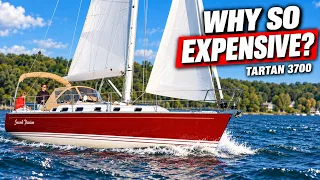
- 2026-10: In their Buying an Older Sailboat? Why I Avoid Cored Hulls and Why Are Tartans So Expensive? Inside the Tartan 3700, Practical Sailor examines balsa core rot and secondary bonding failures.
- 2026-10: In their RIB vs Inflatable Catamaran Dinghy and Catalina 36 Review: Is It the Best Used Sailboat Value?, the team audits dinghy planing efficiency and the budget cruiser market.
- 2026-11: In their Catalina 34: Should you still buy one today? and Why Does Every Sailboat Have Twin Helms?, the team reviews cockpit ergonomics and steering quadrant mechanics.
- 2026-11: In their How Old Is Too Old for Standing Rigging?, Boat Insurance Explained: Is Age Really the Problem?, and What Happened to the Hallberg Rassy 400, Practical Sailor synthesizes comprehensive data on 10-year rigging cycles, age underwriting, and premium Scandinavian yacht construction.
Navigating Long Island Sound & US East Coast Cruising Grounds
Practical Sailor's primary testing ground in Long Island Sound presents distinct maritime challenges. Sailors encounter strong tidal rips at the Race and Plum Gut, shallow boulder-strewn shorelines around the Thimble Islands, and dense fog during spring thermal inversions. Summer brings fickle southwest sea breezes that quickly yield to violent convective squalls with gusts exceeding 40 knots. In autumn, powerful extratropical Nor'easters funnel heavy seas down the Sound, testing ground tackle holding power in soft mud and testing deck drainage scuppers under breaking waves.
Skills & Tutorials: Learning from Practical Sailor
Viewers turn to Practical Sailor for master-level technical tutorials that prevent costly boatyard errors:
- Rigging Assessment: In their How Old Is Too Old for Standing Rigging?, the team teaches sailors to inspect 1x19 stainless wire swages for micro-cracks and work hardening.
- Used Boat Survey Forensics: In their Buying an Older Sailboat? Why I Avoid Cored Hulls, Tim explains how to use sounding hammers and moisture meters to detect delaminated decks.
- Mainsail & Rig Tuning: In their Sailboat Backstay Tuning: Set It by Load, Not Heading, the channel outlines how backstay tension flattens the mainsail and controls headstay sag during heavy windward beats.
Overcoming Adversity on the Water
Practical Sailor's content regularly confronts harsh maritime realities: sudden rigging failures, seized seacocks, blistered gelcoat osmosis, and catastrophic engine overheating. By examining accidents like the Bayesian superyacht sinking, the channel breaks down systemic seamanship breakdowns, stressing the critical value of watertight integrity, down-flooding awareness, and disciplined anchor watches.
The YouTube Journey and Financing the Dream
Content Style and Production Quality
Practical Sailor produces documentary-style, technically rigorous videos. Rather than presenting aspirational lifestyle travelogues, videos focus on concrete boat anatomy: opening bilge access hatches, testing chainplate bolts with flashlights, inspecting keel sumps, and demonstrating mechanical maintenance procedures. The camera work is steady, detailed, and unvarnished.
🎙️ Community Pulse & Audience Vibe
The channel's audience consists of serious boat owners, refit DIYers, marine surveyors, and prospective cruising buyers who value unvarnished technical truths over influencer gloss. Viewer comments frequently spark in-depth discussions on metallurgy, marine insurance rates, and engine longevity.
Channel Growth and Behind the Scenes
Since Tim Labute stepped into the editorial lead, Practical Sailor's YouTube presence expanded rapidly from an archival video repository to an active, weekly broadcast with over 90,000 subscribers and more than 18 million views.
🎥 Camera & Filming Tech
- Production Suite: High-resolution Sony FX3 and A7 IV full-frame mirrorless bodies with moisture-resistant cinema lenses; DJI Osmo Action cameras for underwater hull and propeller surveys; DJI Mini Pro drones for aerial mast inspections; and Rode wireless lavalier microphones fitted with deadcat wind protection for gusty deck recordings.
💰 How Practical Sailor Fund the Voyage
Practical Sailor maintains a unique financial model in marine journalism:
- Zero Commercial Advertising: The publication accepts zero corporate banner ads, free promotional gear, or manufacturer sponsorships in its magazine reviews, eliminating conflicts of interest.
- Subscriber-Supported Funding: Operations are funded by paid annual print and digital subscribers who gain full access to the 50-year digital test archive at practical-sailor.com.
- YouTube AdSense & Digital Royalties: Ancillary revenue from YouTube platform views supports digital video production equipment and on-location travel.
Marketplace Synergy Scan:
Practical Sailor’s technical evaluation expertise directly aligns with the WeBoating Marketplace.
- Pre-Purchase Used Boat Inspection Consultation: Experienced technical walkthrough guidance and survey checklist consultations for prospective sailboat buyers.
- Standing Rigging & Systems Optimization Advisory: Rig tuning protocols, off-grid lithium battery sizing, and anchor system specifications tailored to vessel LOA and intended cruising grounds.
💸 Cruising Budget & Financial Blueprint
| Metric | Estimated Value |
|---|---|
| Channel Net Worth / Publication Value | $1,500,000–$2,500,000 |
| Estimated Annual YouTube Revenue | $45,000–$75,000 |
| Estimated Monthly Operating & Testing Budget | $12,000–$18,000 |
| Benchmark Used Vessel Evaluation Cost | $35,000–$180,000 (Vessel Purchase Cost Analyzed) |
| Average DIY Refit Savings Identified | $8,000–$25,000 per Project |
Estimated based on Belvoir Media Group publishing operations, YouTube CPM rates ($4-$8 USD), and independent marine testing lab costs.
Top Episodes: Where to Start Watching
- What Happened to the Hallberg Rassy 400: Tim Labute examines the modern design evolution of Hallberg-Rassy, detailing twin rudders, bowsprits, and cockpit ergonomics on the 40-foot Swedish cruiser.
- How Old Is Too Old for Standing Rigging?: A definitive technical breakdown of 1x19 stainless wire degradation, fatigue limits, and why insurers enforce mandatory 10-year replacements.
- Boat Insurance Explained: Is Age Really the Problem?: An urgent investigation into how underwriting algorithms and hurricane losses are forcing older sailboats off coastal waters.
- Catalina 36 Review: Is It the Best Used Sailboat Value?: A comprehensive inspection of America's most popular 36-foot production cruiser, auditing keel smiles, chainplates, and cabin ergonomics.
- Why Are Tartans So Expensive? Inside the Tartan 3700: A deep dive into epoxy resin infusion, cherry woodwork, and carbon-fiber spar engineering that defines high-end American yachtbuilding.
Channels Similar to Practical Sailor
- Rigging Doctor: Focuses on technical DIY sailboat refits, comprehensive synthetic rigging installations, and off-grid electrical architecture.
- BootsProfis: Conducts professional used-boat surveys, pre-purchase inspections, and structural fiberglass moisture audits across Europe.
- Sailing Magic Carpet: Shares Practical Sailor’s commitment to meticulous vessel forensics, documenting the structural restoration and traditional boatbuilding of a classic Cape George cutter.
Community Impact and Future Horizons
Supporting the Journey and Getting Involved
Sailors support Practical Sailor directly by subscribing to the print magazine and online archives at practical-sailor.com, providing the critical funding required to maintain zero-advertising testing independence. Community members also participate by submitting owner surveys detailing their long-term experiences with specific hull models and equipment.
Conservation and Community
Practical Sailor leads consumer safety and environmental advocacy in the marine sector, conducting multi-year testing on eco-friendly, low-copper, and biocide-free antifouling hull paints, holding tank sanitation treatments, and non-toxic marine cleaners to preserve delicate coastal anchorages.
What is Next for Practical Sailor
Heading through 2026, Practical Sailor is actively expanding its video survey series across wider North American and European cruising hubs. Upcoming projects include long-term field testing of high-capacity solid-state and sodium-ion marine batteries, independent anchor holding trials in variable substrate bottoms, and continued investigation into insurance access for vintage fiberglass yachts.
Milestones and Industry Recognition
- 1974: Founded as an independent, subscriber-supported consumer guide for sailors.
- 1975: Acquired by Belvoir Publications (Belvoir Media Group), cementing its strict no-advertising consumer advocacy charter.
- 2005: Darrell Nicholson assumes editorial leadership, modernizing digital testing databases and boat reviews.
- 2011: Official launch of the Practical Sailor YouTube channel.
- 2024: Tim Labute appointed Editor-in-Chief, expanding digital video walkthroughs, used boat buyer guides, and technical video journalism.
- 2026: Channel surpasses 90,000 subscribers and 18,000,000 views, maintaining an unmatched 50-year legacy of independent maritime guidance.
Frequently Asked Questions about Practical Sailor
Tim Labute serves as the Editor-in-Chief and primary video host of Practical Sailor, bringing extensive hands-on liveaboard cruising and boat restoration experience to the channel's video walkthroughs alongside Editor Emeritus Darrell Nicholson.
Before taking the helm at Practical Sailor, Tim Labute created the Lady K Sailing platform, sold his home and possessions in 2018 to cruise aboard a 35-foot sailboat from the Great Lakes to the Bahamas, and developed deep expertise in DIY boat maintenance and marine video journalism.
Practical Sailor was founded in 1974 as an independent consumer testing publication. It was acquired in 1975 by Belvoir Media Group (formerly Belvoir Publications), headquartered in Norwalk, Connecticut.
Practical Sailor accepts zero commercial advertising, sponsorships, or promotional kickbacks from boatbuilders or equipment manufacturers. All tests and staff operations are 100% funded by reader subscriptions to the print magazine and digital archives at practical-sailor.com.
Practical Sailor operates dedicated test hulls including a Catalina 22 and Cape Dory 25 for long-term antifouling and deck hardware trials, while conducting field surveys on production cruisers like the Catalina 36, Tartan 3700, and Hallberg-Rassy 400.
Practical Sailor frequently highlights classic production cruisers with solid fiberglass bottom layups, accessible systems, and strong builder support, such as the Catalina 34, Catalina 36, Tartan 34/37, and Ericson 32.
Practical Sailor advises freshwater cruisers to inspect rigging annually and consider replacement every 12 to 15 years, while tropical saltwater cruisers and offshore voyagers should replace 1x19 stainless wire and swage terminals every 8 to 10 years due to hidden crevice corrosion and work hardening.
Practical Sailor strongly advises pre-purchase buyers to exercise caution with balsa-cored hulls below the waterline, as unsealed thru-hulls and chainplate leaks can saturate the core, leading to catastrophic structural delamination that often exceeds the market value of the vessel to repair.
Practical Sailor's marine insurance investigations reveal that rising catastrophic hurricane repair costs and lack of qualified boatyard labor have caused underwriters to drop coverage or demand expensive mandatory rigging replacements on vessels older than 25 to 30 years regardless of survey condition.
Practical Sailor conducts sea trials and equipment evaluations primarily out of Norwalk, Connecticut on Long Island Sound, with additional marine exposure racks in Sarasota Bay, Florida, and field testing in Annapolis on the Chesapeake Bay.
Practical Sailor is funded exclusively by individual subscriptions. Subscribers receive monthly technical journals and full access to searchable digital archives spanning over 50 years of boat reviews, gear tests, and marine maintenance reports.
In 2026, Practical Sailor is expanding its on-site boatyard forensic series, conducting comprehensive evaluations of next-generation lithium and sodium-ion marine batteries, and providing actionable consumer guidance for maintaining and insuring vintage fiberglass cruising yachts.
Water adventures near New York City






Practical Sailor Journey and Videos Locations
- Practical Sailor Headquarters & Testing Facility, Norwalk, CT (41.0969,-73.4441)
- Norwalk Harbor & Long Island Sound Sea Trials, CT (41.085,-73.415)
- Chesapeake Bay Field Testing & Used Boat Evaluations, Annapolis, MD (38.9784,-76.4922)
- Sarasota Bay Marine Product & Antifouling Exposure Racks, FL (27.3364,-82.5307)
Support Practical Sailor
At WeBoating.com, we profoundly acknowledge the unwavering dedication that Practical Sailor invests in crafting each and every video or voyage. Their passion for delivering exceptional ocean content shines through every frame, and it's a labor of love that deserves your attention.
We invite you to watch their captivating videos here and actively engage with their content, including their social media links above. Liking, commenting, and sharing their work goes a long way in fueling their creative fire.
We're also inviting you to explore the gear, sponsorships, and boat partnerships highlighted in the videos descriptions, or directly on YouTube. By engaging with these offerings or purchasing services and items, you directly support Practical Sailor, their collaborators, and the brands they're associated with.
To ensure you never miss an offshore update, consider visiting their official YouTube Channel to subscribe, like, and join their community directly.
If you have any feedback, corrections, or additional information about Practical Sailor or their videos, please use the comment form below to share your thoughts with us.
Thank you for being a part of our community and supporting the creators we cherish. Your time and support truly matter!
Watch Practical Sailor's Latest Videos
Catch up on the most recent updates. Browse the complete video archive and Follow the journey.

Twin Wheels on Sailboats: Better Control or Just More Cost? #shorts
Practical Sailor examines whether twin wheels on modern cruising sailboats offer genuine helm control or unnecessary cockpit clutter, weaker leverage, and added cost.
RIB Dinghies: Why Cruisers Still Choose Them #shorts
Cruising sailors choose rigid inflatable tenders for deep-V chop handling and planing power, balancing performance against davit load limits and UV maintenance.
Tartan 3700: Why Do These Sailboats Hold Their Value? #shorts
A 20-year-old Tartan can cost as much as a newer production boat. The Tartan 3700 helps explain why these sailboats occupy their own world of pricing. #TartanSailboats #Tartan3700 #Sailing #UsedBoats
What Happened to the Hallberg Rassy 400
Practical Sailor tours the Hallberg-Rassy 400 at the Annapolis Sailboat Show, analyzing its twin spade rudders, wide aft beam, Selden rig, and Swedish build quality for ocean voyaging.
Boat Insurance Explained: Is Age Really the Problem? #shorts
Marine insurance underwriters evaluate boat age and maintenance over the sailor's age, debunking rumors that senior mariners face systematic policy denials.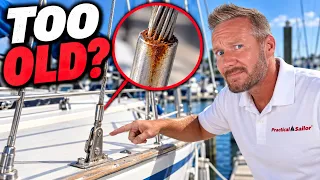
How Old Is Too Old for Standing Rigging?
Standing rigging failure can drop a sailboat's mast in seconds. Practical Sailor breaks down wire fatigue, swage corrosion, insurance requirements, and how to evaluate aging standing rigging.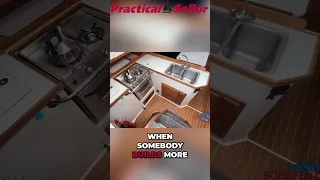
Catalina 36: Why Its Long Production Run Matters #shorts
With over 2,300 boats produced, the Catalina 36 built an unmatched support ecosystem. From active owners associations to dedicated part suppliers, owning this classic means you never have to solve a mechanical mystery alone. #Catalina36 #SailboatMaintenance #SailingLife #BoatOwnership #ClassicYachts
Boat Keel Damage: Warning Signs I Never Ignore #shorts
Surface cracks at the keel joint are common, but internal structural damage is a dealbreaker. Inspect the bilge, keel bolts, and hull grid carefully before buying. When the structural support for the keel is compromised, it is time to walk away. #BoatBuying #SailingTips #MarineSurvey #BoatMaintenanc...
Lightweight Dinghy vs. RIB: Which Tender Fits Your Sailboat? #shorts
A heavy RIB excels on a larger cruising boat, but a 60-pound packable tender with a 6-horsepower engine can make more sense on a smaller sailboat—easier to lift, store, and afford. #SailingLife #BoatTender #CruisingBoat #SailingGear
Boat Insurance and Age: Are Older Sailors Being Pushed Out? #shorts
Practical Sailor examines whether boat insurers are pushing older mariners off the water, comparing underwriting age requirements with insurer discounts.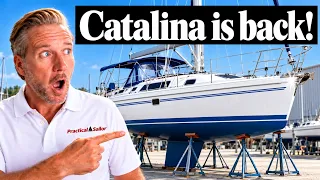
Catalina 356 Review – The First Boat of the Comeback
A technical inspection of the Catalina 356 at the Annapolis Sailboat Show, evaluating construction quality, Selden rig updates, Yanmar auxiliary power, and cruising ergonomics under Catalina Yachts' restarted production in Largo, Florida.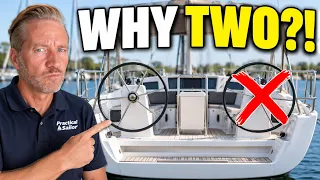
Why Does Every Sailboat Have Twin Helms?
Practical Sailor examines why modern sailboats feature twin steering wheels, evaluating wide-stern hull geometry, cockpit ergonomics, Jefa linkages, offshore steering redundancy, and whether dual helms justify their maintenance and hardware costs.
Backstay Tension: Spot Too Little or Too Much #shorts
Is your rig too slack or too tight? Learn the key signs of improper backstay tension: excessive sag, overly round headsails, poor pointing, and a main that stays too deep. Avoid a flat, lifeless boat. #SailingTips #Rigging #Sailboat #Yachting #Boating
Catalina 36 Review: Is This the Best $30K Sailboat? #shorts
For $40,000, you can find a project boat, a race boat, or a scary bargain—but the Catalina 36 stands alone. It is not just affordable; it is a genuinely exceptional sailboat that outperforms its price tag. #Catalina36 #SailboatLife #SailingTips #BoatBuying
Boat Buying: The Structural Damage Red Flag I Never Ignore #shorts
Cosmetic cracks are manageable, but structural failure is a dealbreaker. When delamination, loose grids, or mysterious hull patches appear without an explanation, the smartest move is to walk away. Don't let a mystery repair become your expensive detective project. #BoatBuying #MarineSurvey #Bo...
Cruising Dinghy Showdown: Why Traditional RIBs Still Work #shorts
The standard cruising dinghy has worked for years—but high-pressure air floors and twin inflatable hulls are challenging the familiar design. #CruisingDinghy #InflatableBoat #Boating #Sailing
Catalina 34: Should you still buy one today?
Looking for an affordable cruising sailboat? This review evaluates the Catalina 34, exploring its generous interior volume, Universal diesel engines, sailing dynamics, and essential pre-purchase survey checkpoints.
Hallberg-Rassy 44: Beauty Meets Big Questions #shorts
The Hallberg-Rassy 44 turns heads with synthetic teak decks—but what lies beneath, and how hard will they be to replace years from now? #HallbergRassy #SailingYacht #SyntheticTeak #BoatMaintenance
Catalina 36 Review: Is It the Best Used Sailboat Value? #shorts
Practical Sailor reviews the Mark 1 Catalina 36 used sailboat value, detailing how 30 to 40 grand delivers a 36-foot hull, generous headroom, and balanced cruising performance under $40,000.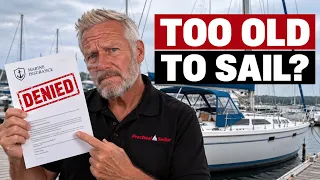
Are Insurance Companies Pushing Older Sailors Off the Water?
Practical Sailor investigates viral claims that marine insurers are forcing seniors off the water, analyzing underwriting policies from Markel and Gallagher, vessel survey thresholds, and US Coast Guard accident statistics.
Sailboat Backstay Tuning: Set It by Load, Not Heading #shorts
Practical Sailor breaks down backstay adjustments for sail shape and rig load, detailing mainsail depth, leech twist, mast bend, and related control lines.
Match 42 Sailing: 11.5 Knots Without a Spinnaker #shorts
Discover how the Match 42 achieves impressive speeds of 6-8 knots in just 7-10 knots of wind. Even with reefs and partial furling, it gains speed as wind increases. #Match42 #Sailing #BoatSpeed #PerformanceSailing #Yachting
Buying an Older Sailboat? Why I Avoid Cored Hulls #shorts
Practical Sailor explains why prospective buyers of 30- to 40-year-old cruising sailboats should avoid cored hulls, weighing hidden moisture rot against manageable refit projects.