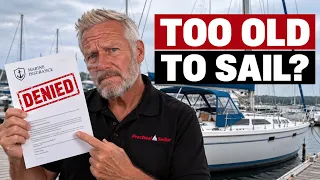
Catalina 34: Should you still buy one today?
When boat shopping on a realistic budget, finding a 34-foot cruiser with twin cabins, an inboard diesel, and genuine living comfort often leads directly to the brokerage listings for the Catalina 34. Designed by Frank Butler and introduced in 1986, the boat offered recreational sailors substantial waterline length and volume without requiring custom yacht budgets. Yet with early hulls now approaching 40 years old, prospective buyers must weigh whether they are acquiring a proven family coastal cruiser or taking on decades of deferred maintenance.
Hull Design and Living Space
Catalina Yachts produced more than 1,800 Catalina 34 hulls over an extended production cycle, ensuring widespread owner familiarity and readily available parts. The boat measures 34 ft 6 in in length overall with a substantial beam of 11 ft 9 in and an approximate displacement of 12,000 lb. Buyers could select between a standard fin keel drawing 5 ft 7 in or a shallow wing keel suited for shoaler grounds such as the Florida Keys or the Bahamas.
Below deck, Butler arranged a legitimate private forward cabin with a V-berth, a remarkably spacious central saloon, an L-shaped galley, an enclosed marine head, and a second enclosed aft double berth tucked beneath the cockpit sole. When owners were surveyed regarding their experiences, the consistent consensus was “The most room you can get for the money.” Even when compared to modern designs, the cabin feels spacious. However, practical trade-offs include modest dry storage for extensive long-term voyaging, limited ventilation in the aft berth during warm weather, and tight clearance around the galley near the aft cabin entry.
Catalina 34 Key Specifications
| Specification | Measurement or detail |
|---|---|
| Length overall | 34 ft 6 in |
| Beam | 11 ft 9 in |
| Displacement | 12,000 lb |
| Standard fin draft | 5 ft 7 in |
| Total production volume | More than 1,800 hulls |
| PHRF rating | Around 144 |
| Standard diesel engine | 21 hp Universal M-25 |
| Upgraded diesel engines | 23 hp M-25 XP or 30 hp M-35 |
Handling Dynamics and Lake Michigan Testing
Carrying a moderate displacement and a relatively long waterline, the Catalina 34 sails with confidence. With a handicap rating around 144 PHRF, its sailing performance places it squarely in the middle of production cruiser fleets of its era. During independent testing on Lake Michigan, the boat handled reliably on all points of sail without demanding 18 kn of wind to generate decent boat speed.
Under sail, the masthead sloop rig will develop noticeable weather helm as winds freshen, particularly if an owner delays shortening sail. The design rewards proactive reefing rather than wrestling against the helm. Later production versions incorporated an elliptical rudder profile to enhance tracking, but sail balance remains the primary factor in maintaining pleasant helm pressure.
Common Survey Checkpoints and Known Flaws
Because early boats are several decades old, marine surveyors focus on several well-documented areas. The original factory engine wiring harness routed charging current through cockpit panel multi-pin plugs, which can overheat or corrode over time. Modifying this wiring harness charging circuit is considered a critical reliability upgrade by the active Catalina 34 International Association.
Other mechanical and structural survey points include checking the alternator bracket on early 21 hp Universal M-25 installations, inspecting the deck plywood core around deck hardware penetrations, and assessing chainplates for moisture ingress. Similarly, older fiberglass rudders should be sounded for moisture intrusion, and the forward keel-to-hull joint must be examined for the stress crack commonly dubbed the Catalina smile. Competent inspection of keel bolts and internal bilge framing is far safer than simply fairing over surface cracks.
The extensive documentation preserved by the owners association transforms these challenges into manageable maintenance items. As the evaluation highlights, “Known problems can be enormously preferable to undiscovered ones.” The team at Practical Sailor, testing sailboats and marine gear since 1974, regularly notes that an organized owners fleet and accessible technical records give aging production boats lasting practical utility.
Model Evolution and Used Market Strategy
Catalina updated the design across its production run. The original Mark 1 featured a closed stern. Around 1990, the Mark 1.5 introduced an open walk-through transom and refined cockpit access. The mid-’90s transition brought the Mark II, showcasing a wider stern, enlarged cockpit seating, and the 30 hp Universal M-35 diesel as standard equipment.
When shopping the used market, overall condition takes precedence over model year. A lower-priced boat listed for 20 grand that requires new standing rigging, replacement sails, fresh canvas, tank replacement, and engine servicing can quickly consume another 20 grand, leaving the buyer with high refit expenses. Investing up front in a well-maintained 1998 hull or a sorted 1993 model is usually more economical than tackling a neglected project.
Frequently Asked Questions
Yes. With more than 1,800 hulls produced, the Catalina 34 remains a practical cruiser for coastal waters like Lake Michigan, the Great Lakes, the Chesapeake, the ICW, and the Bahamas. Its moderate displacement, generous interior volume, and active owner community make it a capable and budget-friendly choice.
Key survey areas include the engine wiring harness charging circuit, alternator bracket on early Universal M-25 engines, deck moisture around chainplate penetrations, water intrusion in the rudder, and cosmetic or structural cracking at the forward keel-to-hull joint known as the Catalina smile.
The Catalina 34 carries a PHRF rating around 144, putting it squarely in the middle of its generation for performance. It sails well on all points of sail and moves easily without needing 18 kn of breeze. It carries noticeable weather helm when overpowered, so early reefing is essential.
The original Mark 1 featured an enclosed transom. Around 1990, Catalina introduced the Mark 1.5 with a walk-through transom and evolutionary deck updates. The mid-’90s Mark II brought a wider stern, an expanded cockpit, and the larger Universal M-35 diesel engine as standard.
Water adventures near New York City












Support Practical Sailor
At WeBoating.com, we profoundly acknowledge the unwavering dedication that Practical Sailor invests in crafting each and every video or voyage. Their passion for delivering exceptional ocean content shines through every frame, and it's a labor of love that deserves your attention.
We invite you to watch their captivating videos here and actively engage with their content, including their social media links above. Liking, commenting, and sharing their work goes a long way in fueling their creative fire.
We're also inviting you to explore the gear, sponsorships, and boat partnerships highlighted in the "Catalina 34: Should you still buy one today?" video description, or directly on YouTube. By engaging with these offerings or purchasing services and items, you directly support Practical Sailor, their collaborators, and the brands they're associated with.
To ensure you never miss an offshore update, consider visiting their official YouTube Channel to subscribe, like, and join their community directly.
If you have any feedback, corrections, or additional information about Practical Sailor or their videos, please use the comment form below to share your thoughts with us.
Thank you for being a part of our community and supporting the creators we cherish. Your time and support truly matter!
⛵ Is the Catalina 34 too old to buy today? And is a 34-foot sailboat too small for serious cruising? In this Catalina 34 review and buying guide, we take a close look at one of the most popular used cruising sailboats ever built.
We cover Catalina 34 sailing performance, interior space, the Universal diesel, fin keel vs. wing keel, the Catalina 34 Mk I, Mk 1.5 and Mk II, and why these older sailboats can still offer an enormous amount of boat for the money.
🔧 But buying a 30- or 40-year-old sailboat comes with some important questions. We look at common Catalina 34 problems including wet deck core, chainplate leaks, rudder moisture, the Catalina smile, early wiring issues, engine upgrades, standing rigging and the true cost of buying a cheap used sailboat.
🌊 If you're shopping for an affordable cruising sailboat for the Great Lakes, Chesapeake Bay, ICW, Bahamas, coastal cruising or weekends aboard, this video will help you decide whether the Catalina 34 is still worth buying and whether 34 feet is really enough boat for the cruising you want to do.
👍 If you own a Catalina 34, or you've cruised on one, let us know your experience in the comments.
#Catalina34 #SailboatBuying #UsedSailboats #CruisingSailboat #Sailing #SailboatReview #CatalinaYachts #BoatBuying #PracticalSailor
Practical Sailor is your trusted resource for reviews of sailboats and sailing gear.
https://www.practical-sailor.com
Chat with us on Facebook! https://www.facebook.com/PracticalSailor/
Practical Sailor
Enjoy your sailboat more with Practical Sailor. Learn secrets to cruising more affordably. Discover the freedom of living aboard. Outfit your boat with the best gear and electronics. Keep your boat clean and well-maintained with less hassle. Confidently buy (and sell) the right sailboat for you and your family. For more than 50 years, we take the guesswork out sailing with independent boat and product tests and evaluations. Whether you’re new to the sport or a seasoned sailor, Practical Sailor’s videos and articles will teach you how to sail safely and enjoy your time on the water. Visit our website at https://www.practical-sailor.com/
Channel Information:
Social Media Links:
Catalina 34: Should you still buy one today? Location
- Lake Michigan (43.5,-87)
Latest Episodes from Practical Sailor
Explore the most recent voyages. Subscribe to the channel to never miss an update!

Boat Buying: The Structural Damage Red Flag I Never Ignore #shorts
Cosmetic cracks are manageable, but structural failure is a dealbreaker. When delamination, loose grids, or mysterious hull patches appear without an explanation, the smartest move is to walk away. Don't let a mystery repair become your expensive detective project. #BoatBuying #MarineSurvey #Bo...
Cruising Dinghy Showdown: Why Traditional RIBs Still Work #shorts
The standard cruising dinghy has worked for years—but high-pressure air floors and twin inflatable hulls are challenging the familiar design. #CruisingDinghy #InflatableBoat #Boating #Sailing
Catalina 34: Should you still buy one today?
Looking for an affordable cruising sailboat? This review evaluates the Catalina 34, exploring its generous interior volume, Universal diesel engines, sailing dynamics, and essential pre-purchase survey checkpoints.
Hallberg-Rassy 44: Beauty Meets Big Questions #shorts
The Hallberg-Rassy 44 turns heads with synthetic teak decks—but what lies beneath, and how hard will they be to replace years from now? #HallbergRassy #SailingYacht #SyntheticTeak #BoatMaintenance
Catalina 36 Review: Is It the Best Used Sailboat Value? #shorts
Practical Sailor reviews the Mark 1 Catalina 36 used sailboat value, detailing how 30 to 40 grand delivers a 36-foot hull, generous headroom, and balanced cruising performance under $40,000.