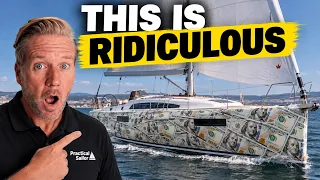
Why Does Every Sailboat Have Twin Helms?
Walking the docks at the Annapolis sailboat show, the editorial team from Practical Sailor encountered a universal design shift across modern cruising production: twin steering wheels, dual pedestals, duplicated chart plotters, and complex steering linkages dominating cockpits. Modern boatbuilders like Beneteau, Jeanneau, Bavaria, Hanse, Dufour, and Catalina have shifted away from the traditional single centerline wheel. This shift raises critical practical questions about whether dual helms genuinely improve vessel handling or introduce unnecessary mechanical complexity to solve problems created by modern hull styling.
The primary driver behind this transformation is hull geometry rather than how sailors steer. Older cruising sailboats narrowed toward the transom, whereas contemporary naval architecture carries broad beam all the way aft to maximize living volume below, accommodate spacious aft cabins, and provide wide cockpits with room for a 14-ft arch supporting 1,500 W of solar. That broad stern creates an ergonomic dilemma: placing a single steering wheel on the centerline isolates the helmsman from the gunwales, creating awkward sightlines past the headsail and dodger, while installing an oversized wheel blocks walk-through access to the swim platform.
Wide Beams, Cockpit Ergonomics, and Racing Origins
Dividing the helm into two smaller outboard wheels solves the immediate geometry challenges of beam-carried transoms. Helmsmen gain clear sightlines along the sails and telltales from the windward coaming, maintain direct visibility alongside piers while docking, and enjoy an unobstructed walkway running from the companionway to the transom. Rather than an aesthetic styling flourish, naval architects adopted dual wheels to make modern broad hulls functionally practical.
Naval architect Mark Mills selected twin wheels when designing the 39-ft racer-cruiser Mariners Cove.ie, choosing dual helming stations to maintain an open cockpit walkway and preserve a continuous cockpit floor structure. The configuration also gained serious offshore credentials when offshore racer Mike Golding adopted twin wheels on his Open 60 for the Vendée Globe in the early 2000s, replacing a swinging tiller that occupied valuable cockpit working space. Golding observed that “a wheel, of course, is static.” The static wheels allowed him to position winches and sail controls cleanly around the helm while reducing fatigue during manual steering.
Hardware Expenses and Mechanical Linkages Below Deck
Despite obvious ergonomic benefits at dockside, dual helms introduce substantial financial and mechanical overhead. Installing two steering stations requires twin wheels, dual pedestals, duplicated engine controls, and repeated navigation electronics. In a 2018 Cruising World article, Jeanneau representative Jeff Jorgenson addressed the manufacturing costs associated with dual helm stations, stating, “The problem for us as a manufacturer is that it gets costly to repeat all the equipment.” This duplication of navigation displays, multifunction instruments, and pedestal hardware adds significant expense to initial commissioning.
Beneath the cockpit sole, mechanical complexity multiplies. Both helms must link to the rudder stock through networks of cables, chains, sheaves, bevel gears, or solid torque tubes. Because the two pedestals are mechanically tied together on many production models, turning one wheel forces the idle wheel to rotate as well. This mechanical coupling introduces friction that helmsmen feel at the wheel and forces autopilot drives to push heavier mechanical loads. Steering gear manufacturer Jefa engineered specialized decoupling mechanisms to disconnect the idle wheel and minimize drag, adding hardware to address friction created by previous additions.
Offshore Redundancy, Foul Weather, and Compact Hulls
Many sailors assume that twin helms offer inherent safety redundancy, but true independence depends entirely on engineering layout. Jefa manufactures systems with separate steering cable paths where failure at one pedestal leaves the alternative helm operational. However, if both steering stations terminate at a single shared rudder quadrant or rely on a common mechanical linkage, a failure at that shared point disables both wheels simultaneously. Cruisers evaluating offshore boats must verify whether steering systems provide genuine independence or merely duplicate cockpit controls.
Adverse weather offshore reveals another critical compromise. Placing steering pedestals at the extreme outboard corners provides pleasant vantage points in calm conditions, but leaves the helmsman exposed to wind and cold spray at night, far away from the protective shelter of the dodger. German builder Sirius Yachts takes a distinct design path on its narrower hulls by utilizing a single pivoting wheel instead of dual pedestals, noting, “There’s no need for twin wheels as our hulls are not excessively wide.” The pivoting helm swings outboard to provide windward visibility without permanently occupying cockpit space with twin pedestals.
Steering feel and leverage also require careful scrutiny. Naval architect Bob Perry noted when reviewing the Sun Odyssey 39i that twin-wheel installations often mandate smaller wheel diameters. Unless steering gear ratios compensate, a smaller wheel reduces mechanical leverage and increases physical steering effort when the hull is heeled. On compact hulls like the Beneteau Oceanis 30.1, offering twin wheels consumes cockpit bench space and raises costs, whereas a simple lifting tiller preserves seating comfort, offers direct rudder feel, and lifts out of the way at anchor.
| Design or Model | Specification | Steering Configuration |
|---|---|---|
| Transom Arch for Solar | 14-ft arch, 1,500 W solar | Wide stern accommodation |
| Mariners Cove.ie (Mark Mills) | 39-ft racer-cruiser | Twin wheels with continuous cockpit floor |
| Vendée Globe Open 60 (Mike Golding) | 60-ft offshore racer | Twin static wheels replacing sweeping tiller |
| Beneteau Oceanis 30.1 | 30-ft compact cruiser | Choice between twin wheels or lifting tiller |
Frequently Asked Questions
Modern sailboats carry broad beam all the way aft to maximize interior volume and cockpit space. A single centerline wheel would isolate the helmsman from windward sightlines, while an oversized wheel would block access to the swim platform. Twin wheels provide clear views of the sails and pier while keeping an open walkway through the cockpit.
When designing the 39-ft racer-cruiser Mariners Cove.ie, naval architect Mark Mills chose twin wheels to secure improved helming positions outboard, establish an open walkway through the cockpit, and maintain a continuous cockpit floor structure.
Offshore racer Mike Golding installed twin wheels on his Open 60 for the Vendée Globe in the early 2000s because a wheel remains static, allowing winches and sail controls to be positioned close by without a tiller sweeping across the cockpit while reducing steering fatigue.
Not automatically. Twin wheels offer backup only if the steering system incorporates independent cable runs and linkages. If both pedestals connect to a shared quadrant or common component that fails, both steering wheels become inoperable simultaneously.
Sirius Yachts designs narrower hulls that do not require twin pedestals. Instead, the builder installs a single steering wheel that pivots sideways, allowing the helmsman to steer from outboard positions without cluttering the cockpit with a second wheel and pedestal.
Book a trip where this was filmed — near New York City


Support Practical Sailor
At WeBoating.com, we profoundly acknowledge the unwavering dedication that Practical Sailor invests in crafting each and every video or voyage. Their passion for delivering exceptional ocean content shines through every frame, and it's a labor of love that deserves your attention.
We invite you to watch their captivating videos here and actively engage with their content, including their social media links above. Liking, commenting, and sharing their work goes a long way in fueling their creative fire.
We're also inviting you to explore the gear, sponsorships, and boat partnerships highlighted in the "Why Does Every Sailboat Have Twin Helms?" video description, or directly on YouTube. By engaging with these offerings or purchasing services and items, you directly support Practical Sailor, their collaborators, and the brands they're associated with.
To ensure you never miss an offshore update, consider visiting their official YouTube Channel to subscribe, like, and join their community directly.
If you have any feedback, corrections, or additional information about Practical Sailor or their videos, please use the comment form below to share your thoughts with us.
Thank you for being a part of our community and supporting the creators we cherish. Your time and support truly matter!
Why does every new sailboat seem to have two steering wheels? From the Beneteau Oceanis 46.1 and Jeanneau Sun Odyssey 440 to the Catalina 425, twin helms have become increasingly common on modern cruising sailboats. But why do sailboats have two steering wheels instead of one? Are twin helms actually better, or are boatbuilders making sailboats more expensive, complicated, and difficult to maintain? In this episode of Practical Sailor, we investigate why modern sailboats have twin steering wheels, what naval architects say about the design, and whether two steering stations really offer an advantage over a traditional single-wheel helm.
We compare twin helm vs single helm sailboats, exploring steering performance, visibility, docking, cockpit comfort, offshore safety, autopilot operation, maintenance costs, and steering system reliability. Are twin steering wheels safer? Do they provide genuine redundancy? Is a traditional tiller or single steering wheel actually better for offshore cruising and bluewater sailing? Whether you're shopping for a new Beneteau, Jeanneau, Catalina, Bavaria, or another modern cruising yacht, we'll explain the real advantages and disadvantages of twin helms and help you decide whether two steering wheels are worth the extra complexity.
#PracticalSailor #Sailboats #Sailing #TwinHelms #SailboatDesign #BoatBuying #CruisingSailboats #Beneteau #Jeanneau #CatalinaYachts #BluewaterSailing
Practical Sailor is your trusted resource for reviews of sailboats and sailing gear.
https://www.practical-sailor.com
Chat with us on Facebook! https://www.facebook.com/PracticalSailor/
Practical Sailor
Practical Sailor provides independent, subscriber-funded sailboat evaluations, technical systems testing, and used boat forensics without commercial advertising. Headquartered in Norwalk, Connecticut, under Belvoir Media Group, the publication expanded its investigative reach into digital video under Editor-in-Chief Tim Labute. In 2026, the channel leads critical investigations into older boat insurance underwriting, standing rigging life cycles, and used cruiser value across Long Island Sound and coastal North America.
Channel Information:
Social Media Links:
Why Does Every Sailboat Have Twin Helms? Location
- Annapolis City Dock, Annapolis, Maryland, United States (38.9775,-76.4869)
Latest Episodes from Practical Sailor
Explore the most recent voyages. Subscribe to the channel to never miss an update!

Evaluating a Free Boat: What’s Safe and Repairable? #shorts
A free boat can still come with a cost. See how a stem-to-stern inspection helps separate safety issues, repairable problems, and old-boat quirks before deciding if it’s truly a deal. #BoatInspection #BoatSafety #BoatRepair #Sailing
Catalina 34: Is the Cheapest Boat Really a Bargain? #shorts
A low-priced Catalina 34 can quickly cost more after rigging, sails, engine work, and deck repairs. Condition matters more than age when choosing a comfortable coastal cruiser. #Catalina34 #SailboatBuying #SailingLife #BoatMaintenance
Twin Helm Boat Safety: Are Two Steering Wheels Safer? #shorts
Twin helm wheels only help if their steering systems are truly independent. A shared critical component can disable both, so check what remains operational after a failure before taking a boat offshore. #BoatSafety #MarineSafety #BoatingTips #OffshoreBoating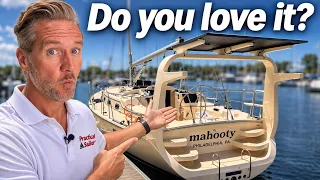
The Problem with the Island Packet 459
Practical Sailor reviews the Island Packet 459 at the Annapolis Sailboat Show, evaluating its encapsulated full keel, Solent rig, and heavy offshore build.
Tartan 3700 Construction: What Sets Later Models Apart #shorts
Practical Sailor examines the construction evolution of the Tartan 3700, from early cored laminates to one-shot epoxy infusion and bonded bulkheads.