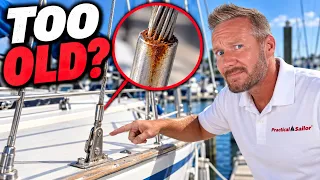
Buying an Older Sailboat? Why I Avoid Cored Hulls #shorts
When shopping for cruising sailboats on the used market, Practical Sailor establishes a strict structural rule: avoid buying an older vessel with a cored hull below the waterline. While cored construction remains common in deck layups, extending that core through the hull itself introduces serious ownership liabilities on aging cruising boats.
The Risk of Decades of Hidden Penetrations
Practical Sailor draws a clear distinction between performance hulls and legacy cruisers like C&C builds over 32 feet. Cored composite construction offers strength and weight advantages on race boats or newly built vessels where the construction history is fully documented. However, assessing a 30- or 40-year-old cruising boat changes the equation entirely.
“I won’t buy an old cord hull. Not the deck, I mean the hull itself.”
The primary concern stems from cumulative modifications over time. Practical Sailor explains the dilemma: “Because now I’m buying decades of history.” Every through-hull fitting, depth transducer, hardware fastener, impact, past repair, and aftermarket hole drilled into the boat since it was built represents a potential pathway for water. If moisture entered the core material 20 years ago, a prospective buyer may not uncover the extent of that problem until owning the vessel.
Drawing the Line on Manageable Repairs
Practical Sailor emphasizes that buying an older cruising boat always involves major maintenance, but prudent cruisers separate routine component overhauls from foundational structural rebuilds. Swapping out an auxiliary engine, bending on new sails, replacing standing rigging, and dropping a rudder to renew rudder bearings are predictable projects with clear parameters.
“What I don’t want to do is buy a sailboat and then start rebuilding the structure that makes it a sailboat.”
Mechanical and rigging components have transparent costs that an owner can estimate, budget, and repair. In contrast, discovering widespread core rot beneath the waterline compromises the hull itself, turning a cruising vessel into an open-ended composite reconstruction project.
Frequently Asked Questions
Practical Sailor avoids older cored hulls because decades of use introduce through-hulls, transducers, fittings, and drilled holes that can allow moisture into the core. Water ingress that occurred 20 years ago may remain undetected until after taking ownership.
No. Practical Sailor emphasizes that cored hulls are not inherently bad and can provide excellent performance and high strength on race boats and new builds, but become a serious gamble on 30- or 40-year-old cruising boats.
Practical Sailor considers replacing an engine, renewing sails, replacing standing rigging, and rebuilding a rudder or rudder bearings manageable repairs with clear costs, whereas rebuilding the boat’s primary hull laminate is an unacceptable burden.
Book a trip where this was filmed — near New York City






Support Practical Sailor
At WeBoating.com, we profoundly acknowledge the unwavering dedication that Practical Sailor invests in crafting each and every video or voyage. Their passion for delivering exceptional ocean content shines through every frame, and it's a labor of love that deserves your attention.
We invite you to watch their captivating videos here and actively engage with their content, including their social media links above. Liking, commenting, and sharing their work goes a long way in fueling their creative fire.
We're also inviting you to explore the gear, sponsorships, and boat partnerships highlighted in the "Buying an Older Sailboat? Why I Avoid Cored Hulls #shorts" video description, or directly on YouTube. By engaging with these offerings or purchasing services and items, you directly support Practical Sailor, their collaborators, and the brands they're associated with.
To ensure you never miss an offshore update, consider visiting their official YouTube Channel to subscribe, like, and join their community directly.
If you have any feedback, corrections, or additional information about Practical Sailor or their videos, please use the comment form below to share your thoughts with us.
Thank you for being a part of our community and supporting the creators we cherish. Your time and support truly matter!
Buying a 40-year-old cruising boat means inheriting decades of repairs and potential moisture damage. While cored hulls perform well on race boats, the risk of hidden core rot makes them a gamble for long-term cruisers. Focus on structural integrity you can actually fix. #SailingTips #BoatBuying #SailboatMaintenance #MarineSurvey #CruisingLife
Practical Sailor
Practical Sailor provides independent, subscriber-funded sailboat evaluations, technical systems testing, and used boat forensics without commercial advertising. Headquartered in Norwalk, Connecticut, under Belvoir Media Group, the publication expanded its investigative reach into digital video under Editor-in-Chief Tim Labute. In 2026, the channel leads critical investigations into older boat insurance underwriting, standing rigging life cycles, and used cruiser value across Long Island Sound and coastal North America.
Channel Information:
Social Media Links:
Buying an Older Sailboat? Why I Avoid Cored Hulls #shorts Location
- Practical Sailor Headquarters (41.0969378,-73.4441279)
Latest Episodes from Practical Sailor
Explore the most recent voyages. Subscribe to the channel to never miss an update!

Twin Wheels on Sailboats: Better Control or Just More Cost? #shorts
Practical Sailor examines whether twin wheels on modern cruising sailboats offer genuine helm control or unnecessary cockpit clutter, weaker leverage, and added cost.
RIB Dinghies: Why Cruisers Still Choose Them #shorts
Cruising sailors choose rigid inflatable tenders for deep-V chop handling and planing power, balancing performance against davit load limits and UV maintenance.
Tartan 3700: Why Do These Sailboats Hold Their Value? #shorts
A 20-year-old Tartan can cost as much as a newer production boat. The Tartan 3700 helps explain why these sailboats occupy their own world of pricing. #TartanSailboats #Tartan3700 #Sailing #UsedBoats
What Happened to the Hallberg Rassy 400
Practical Sailor tours the Hallberg-Rassy 400 at the Annapolis Sailboat Show, analyzing its twin spade rudders, wide aft beam, Selden rig, and Swedish build quality for ocean voyaging.
Boat Insurance Explained: Is Age Really the Problem? #shorts
Marine insurance underwriters evaluate boat age and maintenance over the sailor's age, debunking rumors that senior mariners face systematic policy denials.