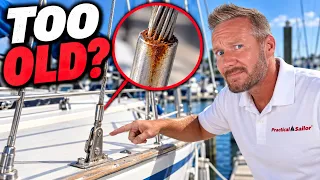
Why Are Tartans So Expensive? Inside the Tartan 3700
The market for pre-owned cruising boats frequently places older hulls from Tartan Yachts into higher price tiers than contemporary mass-production sloops, raising a fundamental question explored by Practical Sailor: “Why does a 20-year-old Tartan sometimes cost as much as a newer production boat?” With used 3700 listings regularly commanding $150,000, $200,000, or even $250,000, understanding this valuation requires examining how the builder engineered this 37-foot platform over its extended production run.
Designed by Tim Jackett and introduced around the turn of the millennium, the Tartan 3700 was conceived from the keel up as a genuine performance cruiser rather than an ordinary production boat. It balances cruising comforts with athletic hull lines, yielding a platform that continues to command strong equity across the brokerage market.
Performance Cruiser Dimensions and Hull Form
The Tartan 3700 measures 37 feet overall, carrying about 32 feet on the waterline alongside a substantial beam of 12 feet 8 inches. Total displacement registers right around 16,000 pounds, supported by roughly 6,000 pounds of ballast depending on keel selection. These proportions establish a displacement to length ratio of 210 and a sail area to displacement ratio of roughly 18, generating athletic performance numbers for a fully appointed cruising vessel.
Much of this hull volume is concentrated in the aft sections, where the design carries wide beam all the way to the transom to maximize form stability and interior accommodation. Yacht designer Robert Perry reviewed the design when it was new, calling out the hydrodynamic trade-offs inherent in such a broad stern:
“There are trade-offs, he said. A broad stern can add wetted surface in light air, and if the hull shape isn’t handled properly, the transom can start dragging when the boat heels over.”
Despite those light-air considerations, Perry emphasized that the broad transom rewards cruisers with increased effective sailing length, powerful initial stability, and exceptional usable volume below decks.
Interior Layout and Dedicated Shower Compartment
Down below, the Tartan 3700 feels noticeably larger than typical 37-foot cruisers from its era. The open main saloon is flanked by an expansive forward cabin, a dedicated navigation station, and an unusually large aft cabin that capitalizes on the generous beam aft. Instead of an all-in-one wet head, the arrangement includes a genuine private shower stall:
“Not the entire bathroom that becomes a rainforest every time you got to get clean, an actual shower compartment.”
Unlike high-volume production boats that rely on a single drop-in molded fiberglass pan liner, Tartan constructed the interior with structural furniture, solid joinery, and bulkheads bonded directly into the hull. The galley features substantial top-loading refrigeration, though the top-access hatch consumes space on what would otherwise serve as working countertop area.
Evolution from Cored Fiberglass to Vacuum Epoxy Infusion
Because Tartan manufactured the 3700 across multiple decades, hull lamination methods shifted dramatically over time:
“An early 3700 and a late 3700 are not the same animal underneath the the gelcoat.”
Initial production hulls utilized conventional cored fiberglass laminates paired with aluminum spars. In later production runs, Tartan transitioned the model to a one-shot vacuum epoxy infusion process. These advanced hulls incorporated closed-cell synthetic foam cores paired with solid glass laminates in high-stress zones and hardware penetrations. Decks were vacuum infused using balsa cores with solid glass backing plates under deck hardware, supported underneath by an internal structural grid that distributes keel and rigging loads.
Carbon Spars and Cruise Control Rigging
Later Tartan 3700s received factory carbon fiber masts, removing substantial weight aloft to dampen pitching and increase righting moment. Tartan also introduced its Cruise Control Rig (CCR), engineered specifically to reduce sail-handling strain for short-handed couples:
- Self-Tacking Jib: A high-aspect working jib mounted on an inner furler manages upwind work without requiring crew to winch an overlapping genoa through every tack.
- Furling Reacher: A larger reaching sail set on an outer furler deploys quickly for off-wind passages or light-air sailing.
- Mainsail Systems: Tartan fitted in-boom furling systems or its proprietary pocket boom, allowing sailors to handle a full-batten mainsail with a large roach without compromising sail shape.
With generous ballast and reduced masthead weight, the boat carries full canvas “without feeling like a cork that somebody built a house on top of”, earning favorable PHRF ratings that regularly beat conventional cruisers of similar length.
Three Keel Draft Configurations
Tartan offered the 3700 in three distinct underbody configurations, each suited to specific sailing grounds and cruising goals:
- Deep Fin Keel: Draws 7 feet 3 inches, providing maximum lift and upwind pointing performance for racers and offshore sailors.
- Beavertail Bulb: Draws 5 feet, trading minor upwind pointing for moderate draft in general coastal waters.
- Keel Centerboard: Draws 4 feet with the board raised, opening shallow anchorages across regions like the Bahamas and the Chesapeake.
Cockpit Storage Constraints and Gear Loading
While the expansive aft cabin provides excellent living volume below, that cabin space consumes the volume beneath the cockpit benches. As a consequence, exterior lockers are surprisingly shallow, presenting practical challenges for long-term cruising:
“Where is all your stuff actually going to live?”
Dock lines, shore power cords, water hoses, fender boards, and auxiliary ground tackle quickly fill available locker capacity. Packing excessive equipment into the stern also risks pulling the transom down past designed waterlines, increasing drag underway. Owners must also manage regular maintenance on the exterior teak woodwork.
Centerline Hull Defect and Inspection History
Prospective purchasers must evaluate one notable structural event in the model’s history. In 2006, a Tartan 3700 named Blue Heron suffered a major hull fracture while sailing off New Jersey. The crack developed along the hull centerline forward of the keel, allowing water ingress that required crew evacuation before the vessel was successfully salvaged.
Tartan investigated the failure and acknowledged insufficient laminate overlap in the centerline seam on that specific hull. The builder subsequently reached out to owners of hulls within the range of hull numbers 58 through 119 to arrange targeted inspections and structural reinforcements where needed. Anyone surveying a Tartan 3700 within that hull series should verify maintenance documentation confirming whether factory inspections or laminate repairs were performed before proceeding.
Tartan 3700 Specifications
| Specification Metric | Design Figure |
|---|---|
| Length Overall (LOA) | 37 feet |
| Waterline Length (LWL) | 32 feet |
| Beam | 12 feet 8 inches |
| Displacement | 16,000 pounds |
| Ballast | 6,000 pounds |
| Displacement to Length (D/L) | 210 |
| Sail Area to Displacement (SA/D) | 18 |
| Deep Fin Draft | 7 feet 3 inches |
| Beavertail Keel Draft | 5 feet |
| Centerboard Draft (Board Up) | 4 feet |
| Inspected Hull Number Range | 58 through 119 |
Frequently Asked Questions
Used Tartan 3700s frequently sell between $150,000 and $250,000 because later hulls feature vacuum epoxy-infused construction, carbon fiber masts, high-end interior joinery, and sophisticated sail-handling systems like the Cruise Control Rig.
The Tartan 3700 was built with a deep fin drawing 7 feet 3 inches, a beavertail keel drawing 5 feet, and a centerboard version drawing 4 feet with the board raised.
The Cruise Control Rig pairs a self-tacking high-aspect jib for easy upwind tacking with a larger reaching sail on a separate forward furler for light air and reaching legs.
In 2006, the Tartan 3700 Blue Heron developed a centerline hull crack forward of the keel off New Jersey due to insufficient laminate overlap, prompting Tartan to inspect hull numbers 58 through 119.
Because the spacious aft cabin occupies volume beneath the cockpit, exterior cockpit lockers are unusually shallow, limiting storage space for dock lines, hoses, and cruising gear.
Book a trip where this was filmed — near New Providence Island





Support Practical Sailor
At WeBoating.com, we profoundly acknowledge the unwavering dedication that Practical Sailor invests in crafting each and every video or voyage. Their passion for delivering exceptional ocean content shines through every frame, and it's a labor of love that deserves your attention.
We invite you to watch their captivating videos here and actively engage with their content, including their social media links above. Liking, commenting, and sharing their work goes a long way in fueling their creative fire.
We're also inviting you to explore the gear, sponsorships, and boat partnerships highlighted in the "Why Are Tartans So Expensive? Inside the Tartan 3700" video description, or directly on YouTube. By engaging with these offerings or purchasing services and items, you directly support Practical Sailor, their collaborators, and the brands they're associated with.
To ensure you never miss an offshore update, consider visiting their official YouTube Channel to subscribe, like, and join their community directly.
If you have any feedback, corrections, or additional information about Practical Sailor or their videos, please use the comment form below to share your thoughts with us.
Thank you for being a part of our community and supporting the creators we cherish. Your time and support truly matter!
Why are Tartan sailboats so expensive, and is the Tartan 3700 actually worth the premium? ⛵ In this Practical Sailor deep dive, we take a close look at one of Tartan Yachts’ most interesting performance cruisers and explain what makes the Tartan 3700 different from many other 37-foot cruising sailboats.
We cover the Tartan 3700’s design, construction, sailing performance, interior layout, keel options, carbon rigging, sail-handling systems, cruising features, known problem areas, and what buyers should inspect before purchasing one. We also look at why later Tartan 3700s became surprisingly high-tech, with features like epoxy-infused construction, carbon-fiber spars, sophisticated furling systems, and premium interior joinery.
If you’re researching Tartan Yachts, looking for the best traditional cruising sailboat, comparing premium used sailboats, shopping for a bluewater cruiser, or considering a Tartan 3700 for coastal or offshore cruising, this review should give you a much better idea of what makes these boats special, and why they continue to command such high prices on the used market.
🔎 In this video:
Tartan 3700 review and boat tour
Tartan Yachts construction and history
Why Tartans are so expensive
Tartan 3700 sailing performance
Tartan 3700 interior and cruising layout
Carbon rig and advanced sail handling
Bluewater and offshore cruising capability
Used Tartan 3700 buying advice
Known issues and survey considerations
Traditional American performance cruisers
Best 35 to 40-foot cruising sailboats
#Tartan3700 #TartanYachts #SailboatReview #BoatReview #CruisingSailboat #BluewaterSailing #SailboatShopping #UsedSailboats #PerformanceCruiser #PracticalSailor #Sailing #BoatBuying
Practical Sailor is your trusted resource for reviews of sailboats and sailing gear.
https://www.practical-sailor.com
Chat with us on Facebook! https://www.facebook.com/PracticalSailor/

Practical Sailor
Practical Sailor provides independent, subscriber-funded sailboat evaluations, technical systems testing, and used boat forensics without commercial advertising. Headquartered in Norwalk, Connecticut, under Belvoir Media Group, the publication expanded its investigative reach into digital video under Editor-in-Chief Tim Labute. In 2026, the channel leads critical investigations into older boat insurance underwriting, standing rigging life cycles, and used cruiser value across Long Island Sound and coastal North America.
Channel Information:
Social Media Links:
Why Are Tartans So Expensive? Inside the Tartan 3700 Location
- Chesapeake Bay, Maryland, USA (38.9784,-76.48)
- Bahamas (25.0343,-77.3963)
- Atlantic Ocean, New Jersey Coast, USA (39.8,-74)
Latest Episodes from Practical Sailor
Explore the most recent voyages. Subscribe to the channel to never miss an update!

Twin Wheels on Sailboats: Better Control or Just More Cost? #shorts
Practical Sailor examines whether twin wheels on modern cruising sailboats offer genuine helm control or unnecessary cockpit clutter, weaker leverage, and added cost.
RIB Dinghies: Why Cruisers Still Choose Them #shorts
Cruising sailors choose rigid inflatable tenders for deep-V chop handling and planing power, balancing performance against davit load limits and UV maintenance.
Tartan 3700: Why Do These Sailboats Hold Their Value? #shorts
A 20-year-old Tartan can cost as much as a newer production boat. The Tartan 3700 helps explain why these sailboats occupy their own world of pricing. #TartanSailboats #Tartan3700 #Sailing #UsedBoats
What Happened to the Hallberg Rassy 400
Practical Sailor tours the Hallberg-Rassy 400 at the Annapolis Sailboat Show, analyzing its twin spade rudders, wide aft beam, Selden rig, and Swedish build quality for ocean voyaging.
Boat Insurance Explained: Is Age Really the Problem? #shorts
Marine insurance underwriters evaluate boat age and maintenance over the sailor's age, debunking rumors that senior mariners face systematic policy denials.