Newport Yacht Charter Guide: New England Sailing Itinerary & Skipper Tips

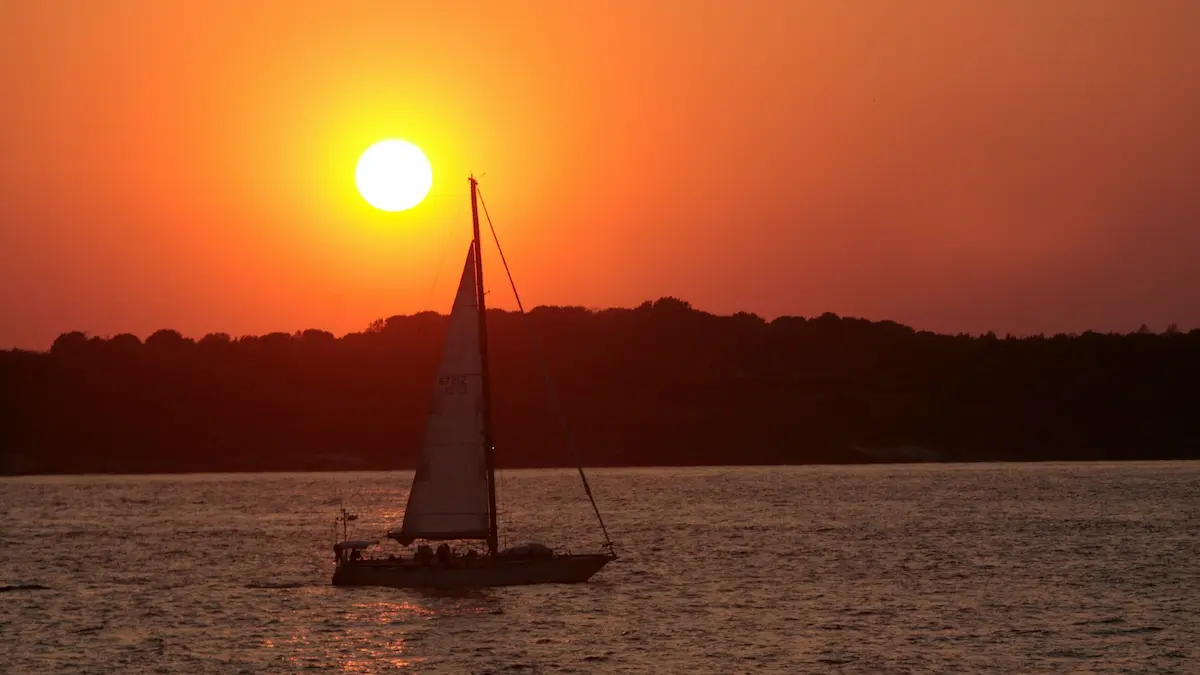
A Newport yacht charter places you at the epicenter of America’s sailing heritage, surrounded by Gilded Age mansions, historic lighthouses, and classic wooden yachts. The best time to sail Newport and the New England coast is during the summer season from June to September, offering steady 10 to 15-knot southwesterly breezes, with weekly bareboat rentals typically ranging from $4,500 to $10,000 USD. Navigating these waters requires sharp piloting skills due to dense summer fog, lobster pots, and strong tidal currents, especially through narrow channels like Woods Hole. From the vibrant docks of Bowen’s Wharf to the pristine beaches of Martha’s Vineyard and Nantucket, a New England charter blends maritime history with rugged coastal beauty. If you’re looking for other North American cruising grounds, compare our San Juan Islands yacht charter guide or Florida Keys yacht charter guide.
Key Takeaways
- Historic Cruising Grounds: Sail through the historic waters of Narragansett Bay, Buzzards Bay, and the Cape Cod region, visiting iconic maritime towns.
- Classic Island Hopping: The primary cruising route connects Newport with the distinct characters of Block Island, Martha’s Vineyard, and Nantucket.
- Navigation Challenges: Skippers must be proficient in radar navigation for dense fog and calculate tidal currents for safe channel passages.
⚓ Yacht Charter Quick Facts & Vitals Table
| Best Time to Go | Avg. Weekly Cost | Difficulty Level | Key Winds / Currents | License Required? | Primary Embarkation Port |
|---|---|---|---|---|---|
| June–September (Summer Season) | $4,500–$10,000 USD (bareboat) | Intermediate to Advanced (Fog & Tides) | SW “Smoky Sou’wester” (10-15 kts); Tides up to 4+ kts | Boating Safety Certificate (Experience based) | Newport Harbor / Narragansett Bay |
The Lay of the Land (Introduction)
Sailing from Newport, Rhode Island, is a voyage into the cradle of American yachting. Once the long-time home of the America’s Cup, Narragansett Bay offers deep, protected waters and steady afternoon breezes. As you leave the bay and enter Rhode Island Sound and Buzzards Bay, the landscape shifts to the sandy bluffs, cedar-shingled cottages, and rolling dunes of the offshore islands. Cruising here is as much about the shoreside experience as the sailing. You’ll navigate past historic lighthouses, weave through fleets of classic sailboats, and anchor in protected salt ponds. Ashore, you can enjoy fresh Maine lobster rolls, explore cobblestone streets lined with whaling-era captain’s homes, and bike out to remote beaches. Whether you are seeking the social energy of Nantucket or the quiet solitude of the Elizabeth Islands, a New England charter offers a distinct, elegant maritime culture.
Sailing Zones & Cruising Sectors
The Southern New England cruising grounds can be divided into three primary zones, each requiring different navigational approaches:
1. Narragansett Bay
Extending north from Newport, this large estuary is highly protected and offers excellent, flat-water sailing. With dependable summer thermals kicking in every afternoon, it’s a favorite for day sailing and regattas. The bay features deep water, minimal hazards, and charming coastal towns like Bristol and Jamestown, making it perfect for relaxed cruising and avoiding heavy offshore seas.
2. Buzzards Bay & The Elizabeth Islands
Located to the east of Rhode Island, Buzzards Bay acts as a funnel for the prevailing southwest winds, often generating steep, short choppy seas. The Elizabeth Islands form the southern boundary of the bay, offering secluded, privately owned anchorages like Cuttyhunk and Hadley’s Harbor. Navigating through the islands to Vineyard Sound requires transiting narrow “holes” (like Woods Hole or Quick’s Hole) where tidal currents rip at over 4 knots.
3. The Offshore Islands (Block Island, Martha’s Vineyard, Nantucket)
This is the prime charter itinerary. These islands are exposed to open ocean swells from the Atlantic. Block Island offers the massive Great Salt Pond for protected anchorage. Martha’s Vineyard features sophisticated towns like Edgartown and Vineyard Haven. Nantucket, sitting furthest out, requires a longer offshore passage through shoals and strong currents but rewards sailors with its pristine preservation of the 19th-century whaling era.
Sailing Itineraries
Itinerary 1: The Classic New England Islands (7 Days)
This route covers the most iconic destinations in Southern New England, requiring good passage planning for tides and potential fog.
Day 1: Newport to Block Island (Great Salt Pond)
Sailing Distance: ~25 nautical milesRouting Details: Sail south out of Narragansett Bay, passing Castle Hill Lighthouse, into the open waters of Rhode Island Sound.
Anchoring & Staging: Navigate the narrow channel into Great Salt Pond. Anchor in mud/sand in the designated anchorage area or grab a town mooring.
Marine Highlights: Rent bicycles to explore the Mohegan Bluffs, or book a local sunset cruise to end the evening.
Day 2: Block Island to Cuttyhunk (Elizabeth Islands)
Sailing Distance: ~25 nautical milesRouting Details: An open water passage heading northeast toward Buzzards Bay. Watch for commercial shipping in the approach to Narragansett Bay.
Anchoring & Staging: Navigate the tight, dredged channel into Cuttyhunk Pond. The pond is almost entirely filled with moorings; anchoring room is very limited.
Marine Highlights: Experience the quiet, car-free isolation of Cuttyhunk. Buy raw oysters delivered directly to your boat by local skiffs, or arrange a half-day fishing charter for striped bass.
Day 3: Cuttyhunk to Martha’s Vineyard (Edgartown)
Sailing Distance: ~22 nautical milesRouting Details: Sail east through Vineyard Sound. Time your passage with the flooding tide for a massive speed boost. Avoid the Middle Ground shoal.
Anchoring & Staging: Edgartown harbor is heavily moored. You can anchor outside in the outer harbor (exposed to the north/east) or reserve a town mooring well in advance.
Marine Highlights: Walk the cobblestone streets past pristine white Greek Revival captain’s homes and search for guided historical tours.
Day 4: Martha’s Vineyard to Nantucket
Sailing Distance: ~25 nautical milesRouting Details: A challenging passage across Nantucket Sound. You must navigate carefully around Cross Rip Shoal and Tuckernuck Shoal.
Anchoring & Staging: Nantucket Harbor offers extensive moorings and a designated anchorage area just outside the mooring field in sand/mud.
Marine Highlights: Explore the Whaling Museum, dine at world-class restaurants, or rent a kayak to paddle the inner harbor.
Day 5: Nantucket to Hadley’s Harbor (Naushon Island)
Sailing Distance: ~35 nautical milesRouting Details: A long sail back west across Nantucket Sound. Time your arrival at Woods Hole or Robinson’s Hole precisely at slack water or a fair tide.
Anchoring & Staging: Hadley’s Harbor is a completely protected, deep-water “hurricane hole” surrounded by the private Forbes family estate. Anchor carefully in thick mud.
Marine Highlights: Enjoy the pristine, undeveloped beauty of Naushon Island. Perfect for a quiet afternoon on a SUP.
Day 6: Hadley’s Harbor to Bristol (Narragansett Bay)
Sailing Distance: ~28 nautical milesRouting Details: Sail up Buzzards Bay, transit the Cape Cod Canal approach if necessary, and cross back into Narragansett Bay, heading north to Bristol.
Anchoring & Staging: Bristol harbor offers town moorings and good holding in mud. Highly protected from all but south winds.
Marine Highlights: Visit the Herreshoff Marine Museum, dedicated to the golden era of yacht design, or join a local sailing lesson to hone your skills.
Day 7: Bristol back to Newport
Sailing Distance: ~12 nautical milesRouting Details: A short, relaxing down-bay sail back to Newport Harbor. Navigate under the Pell Bridge.
Anchoring & Staging: Return to your charter base or grab a mooring at Oldport Marine to explore the town.
Marine Highlights: Walk the Cliff Walk past the famous Newport Mansions, or treat yourself to a fully captained harbor tour.
Local Berthing & Staging (Marinas & Yacht Harbors)
Newport is synonymous with sailing infrastructure. The harbor is packed with facilities catering to everything from small daysailers to massive superyachts:
Safe Harbor Newport Shipyard
Located on the Goat Island causeway, this is the premier superyacht facility in New England. It offers deep-water slips, heavy-duty travel lifts, a renowned onsite cafe (Belle’s), and comprehensive refit services. It is often fully booked in summer with regatta traffic.
Bowen’s Wharf & Bannister’s Wharf
Situated right in the heart of downtown Newport, these historic wooden wharves offer limited transient dockage but put you immediately ashore amidst the best restaurants, boutiques, and the famous Black Pearl tavern. Docking here is highly visible and requires advanced boat-handling in tight spaces.
Newport Harbor Moorings (Oldport Marine)
The vast majority of visiting yachts utilize the extensive mooring fields managed by Oldport Marine. You can hail them on VHF Channel 68 upon arrival. A robust water taxi service (Newport Harbor Shuttle) operates constantly, making it easy to get ashore without deploying your dinghy.
Jamestown (Conanicut Marine Services)
Directly across the bay on Conanicut Island, Jamestown offers a quieter alternative to the bustling Newport waterfront. They provide extensive moorings, full services, and a seasonal ferry that connects Jamestown directly to downtown Newport.
Choosing Your Vessel & Sailing Style
When chartering in New England, traditional monohulls are highly favored. A classic sloop fits perfectly with the regional aesthetics and performs excellently in the steep, short chop of Buzzards Bay and the Atlantic swells south of Nantucket. While catamarans offer exceptional living space and shallow drafts—which are advantageous for exploring the skinny waters of Cape Cod—they can be difficult to berth in the heavily crowded, historic harbors of Martha’s Vineyard and Nantucket, where mooring swing room is severely limited. Motor yachts are also prevalent, offering the speed necessary to outrun sudden summer fog banks and squalls, though fuel costs can accumulate rapidly when running large diesels offshore.
💰 Cruising Budget & Financial Blueprint
New England is a premium charter destination. Understanding the costs associated with a 7-day sailing trip is critical for effective planning.
| Expense Category | Estimated Cost (1-Week Charter) | Notes |
|---|---|---|
| Vessel Cost (Bareboat) | $4,500 – $10,000 | Depending on LOA, age, and monohull vs. catamaran. |
| Mooring & Slip Fees | $350 – $1,000 | Moorings average $50-$75/night; Slips often exceed $5/ft. |
| Provisioning (Food/Drink) | $600 – $1,200 | Higher if dining out frequently at premium island restaurants. |
| Fuel | $150 – $500 | Significantly higher for motor yachts. |
| Skipper/Crew (If hired) | $250 – $400 / day | Plus standard 15-20% gratuity at the end of the trip. |
Logistics, Crew Duties, & What to Pack
Success on a New England charter requires a prepared crew. Assign clear duties: you need a dedicated bow watch for lobster pots and a proficient navigator to handle the radar in sudden fog. Provisioning is easy in Newport or Bristol, but groceries are extremely expensive on Nantucket and Block Island, so stock up on heavy staples before departure. When packing, think in layers. Even during the peak of summer, the Atlantic ocean breeze can be piercingly cold once the sun goes down or fog rolls in. Essential gear includes a heavy-duty windbreaker, fleece mid-layers, reliable non-marking boat shoes with superior grip for wet decks, and polarized sunglasses to help spot shoals and submerged lobster buoys.
🌪️ Regional Weather Guardrails & Winds
New England sailing is beautiful but demands respect for rapidly changing conditions:
- The “Smoky Sou’wester”: The prevailing summer wind blows from the southwest. Driven by thermal effects, it builds predictably through the afternoon to 15-20 knots, creating ideal sailing conditions but generating steep chop in Buzzards Bay and Rhode Island Sound.
- Dense Summer Fog: As warm, moist southerly air blows over the cold Atlantic waters, dense sea fog can form rapidly, dropping visibility to near zero. An operational radar, a VHF radio, and the ability to navigate by instruments are absolute necessities.
- Nor’easters & Squalls: While mostly a winter/spring phenomenon, intense low-pressure systems (Nor’easters) can occasionally strike in late summer, bringing gale-force winds from the northeast. Summer afternoons can also spawn violent, fast-moving thunderstorms moving off the mainland.
- Tidal Currents: The topography of the region creates powerful tidal funnels. Passages like Woods Hole, Quick’s Hole, and Pollock Rip have currents exceeding 4 knots. If you attempt these against the tide in an opposing wind, you will encounter dangerous, breaking standing waves.
Local Rules, Mooring & Anchorages
Fees & Permitting Nuances
- Mooring Reservations: In July and August, harbors like Edgartown, Nantucket, and Block Island reach capacity. You must utilize services like Dockwa to reserve moorings months in advance.
- Pump-Out Regulations: Narragansett Bay and the waters around the islands are strictly enforced No Discharge Zones (NDZ). You must hold all blackwater and utilize the free, radio-dispatched pump-out boats available in most harbors.
- Operator Qualifications: Bareboat chartering in New England typically does not require a formal license like the ICC (unless mandated by the specific charter company), but it does require a highly detailed sailing resume proving experience with coastal navigation, tides, and radar.
- Town Mooring Limits: Certain municipal moorings (e.g., in Cuttyhunk) enforce strict consecutive-day limits (often 3 days maximum) during the peak season to ensure turnover.
- Transient Dockage Rates: Expect slip rates to exceed $8 per foot per night in premium harbors like Nantucket and Newport, with additional flat fees for shore power connections.
Prohibited & Protected Zones
- Eelgrass Protection: Many harbors are trying to protect fragile eelgrass beds, which are crucial nurseries for marine life. Do not anchor in designated eelgrass zones; always prefer sand or mud bottoms in deep water.
- Right Whale Speed Restrictions: In the spring and early summer, areas south of Nantucket and Martha’s Vineyard may have strict 10-knot speed limits to protect critically endangered North Atlantic Right Whales from boat strikes.
- Naval Restricted Areas: The approaches to Narragansett Bay contain designated Naval Restricted Areas around the Naval Station Newport; maintain a minimum standoff distance of 500 yards from any naval vessel.
- Commercial Shipping Lanes: Anchorage is strictly prohibited within the designated deep-water shipping lanes of Buzzards Bay and the approaches to the Cape Cod Canal.
- Shellfish Bed Closures: Local harbormasters strictly enforce anchoring bans over designated commercial shellfish beds (oysters, quahogs) in salt ponds like Menemsha and Great Salt Pond.
Safety & Environmental Risks
- The Lobster Pot Minefield: The waters of New England are blanketed in commercial lobster traps marked only by small, colorful buoys. A dedicated bow watch is essential to avoid wrapping a thick polypropylene line around your propeller, which will instantly disable your engine.
- Commercial Traffic: Narragansett Bay and Buzzards Bay are major commercial shipping lanes. Recreational vessels must adhere strictly to COLREGs (Rules of the Road) and give way to deep-draft tugs, barges, and tankers that cannot easily maneuver.
- Cold Water Temperatures: Even in mid-summer, water temperatures south of Cape Cod can remain dangerously cold (60-65°F / 15-18°C), making prolonged exposure a hypothermia risk if someone goes overboard.
- Tidal Current Surges: The extreme tidal funnels in the Elizabeth Islands “Holes” generate currents over 4 knots, requiring precision timing to avoid breaking standing waves when wind opposes tide.
- Thick Holding Mud: While providing excellent holding, the deep mud bottoms in anchorages like Hadley’s Harbor require a robust washdown pump to clean the anchor chain upon retrieval.
Disclaimer: Boating conditions, weather, and regulations change rapidly. Always cross-check with local authorities, official weather services, and paper charts before embarking.
WeBoating.com is a marketplace connecting travelers with independent, third-party operators. WeBoating does not operate, manage, or own any charters or experiences.
Ready to set sail? Compare listings and hire licensed local skippers directly on WeBoating.com.
Frequently Asked Questions
The sailing season runs from late May to September, with July and August being the peak months for warm weather and steady southwest breezes.
A weekly bareboat charter typically ranges from $4,500 to $10,000 USD. Fully crewed luxury yachts or classic sailboats will cost significantly more.
While a formal license like an ICC isn’t usually legally mandated, charter companies require a comprehensive sailing resume proving your ability to handle tides, fog, and large vessels.
You must maintain a constant, dedicated visual watch from the bow or cockpit. Lobster pot buoys are small and easily hidden by waves. Never sail through them at night.
Fog is common and dangerous. You should not sail in fog unless you are highly proficient in radar navigation, plotting, and using sound signals. When in doubt, stay in the harbor.
Yes, Nantucket has a designated anchorage area outside the massive mooring field. The holding is good in sand and mud, but it can be crowded in peak season.
The ‘Holes’ (Woods Hole, Quick’s Hole, Robinson’s Hole) are narrow channels connecting Buzzards Bay to Vineyard Sound. They feature extreme tidal currents and must be transited carefully.
Newport Harbor has an excellent, continuous water taxi service (Oldport Marine / Newport Harbor Shuttle) that you can hail on VHF channel 68, making a dinghy optional.
An NDZ means it is illegal to pump any sewage (treated or untreated) into the water. You must use holding tanks and utilize local pump-out boats or dockside facilities.
Absolutely. Harbors like Edgartown, Nantucket, and Block Island are extremely popular. You should book moorings months in advance using apps like Dockwa.
You can browse yacht charters directly on WeBoating.com to compare bareboats, classic yachts, and hire local captains.
Pack layers. Even in mid-summer, ocean breezes and fog can make the air chilly. Bring a quality windbreaker, fleece layers, and non-marking boat shoes.