Kayak Buying Guide: How to Choose the Perfect Kayak for Your Water Adventures

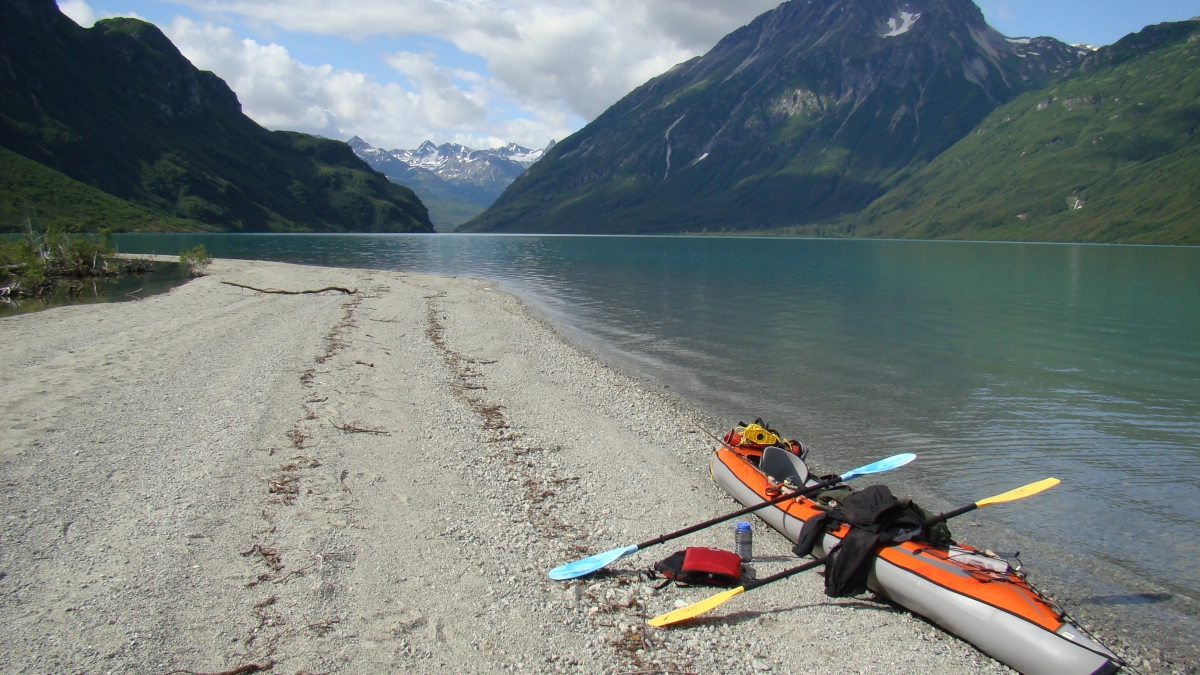
To choose the perfect kayak, start by identifying your primary paddling environment—whether it is a calm lake, a slow-moving river, or open coastal waters—and match the hull length and beam to your desired balance of stability and speed. Opt for a sit-on-top kayak for warm-weather fishing and easy re-entry, or choose a sit-in kayak for colder water protection, a drier ride, and precise edge control. Select a hull material that aligns with your durability needs and budget, ranging from heavy-duty rotomolded polyethylene and lightweight thermoformed ABS to high-performance composites or packable drop-stitch inflatables. Ensure the boat’s weight capacity exceeds your total payload (your body weight plus gear) by 25% to 35% to maintain a safe reserve buoyancy, and verify cockpit ergonomics like foot braces and thigh contact. Finally, consider a skeg or rudder for wind tracking, and plan your transport and storage logistics. Always test-paddle before purchasing, and budget for a high-quality personal flotation device (PFD), paddle, and safety kit. For those looking to transition from paddling to chartering larger vessels, browse our Gulf Islands yacht charter guide for navigation strategies, or read our British Columbia yacht charter guide to plan your next coastal journey.
Key Takeaways
- Stability vs. Speed: Shorter, wider hulls offer high initial stability (ideal for beginners and anglers) but are slower, while longer, narrower hulls track straighter and glide faster but feel more tender initially.
- Sit-In vs. Sit-On-Top: Sit-in models feature a lower center of gravity, a drier ride, and better edge control using hip and thigh braces, whereas sit-on-tops are self-bailing, easy to remount after a capsize, and perfect for warm climates.
- Capacity Safety Margin: Always maintain a 25–35% reserve buoyancy buffer. Overloading a kayak drops its freeboard, compromises stability in chop, and hurts tracking performance.
⚓ Kayak Category Vitals
| Kayak Type | Hull Class | Technical Difficulty | Safety Criticality | Typical Cost Range |
|---|---|---|---|---|
| Recreational | Sit-In / Sit-On-Top | Beginner (Easy to paddle) | Medium (Calm waters only) | $300 – $900 |
| Touring / Sea | Sit-In (Narrow Beam) | Intermediate to Advanced | High (Requires rescue training) | $1,200 – $3,500 |
| Fishing SOT | Sit-On-Top (Wide Beam) | Beginner to Intermediate | Medium (Stable standing deck) | $800 – $4,500 |
| Inflatable | Drop-Stitch / Chambered | Beginner (Highly portable) | Medium (Watch the wind) | $300 – $1,800 |
| Folding | Skin-on-Frame / Origami | Intermediate | Medium (Stiff & packable) | $1,200 – $3,000 |
How to Choose by Where You Paddle
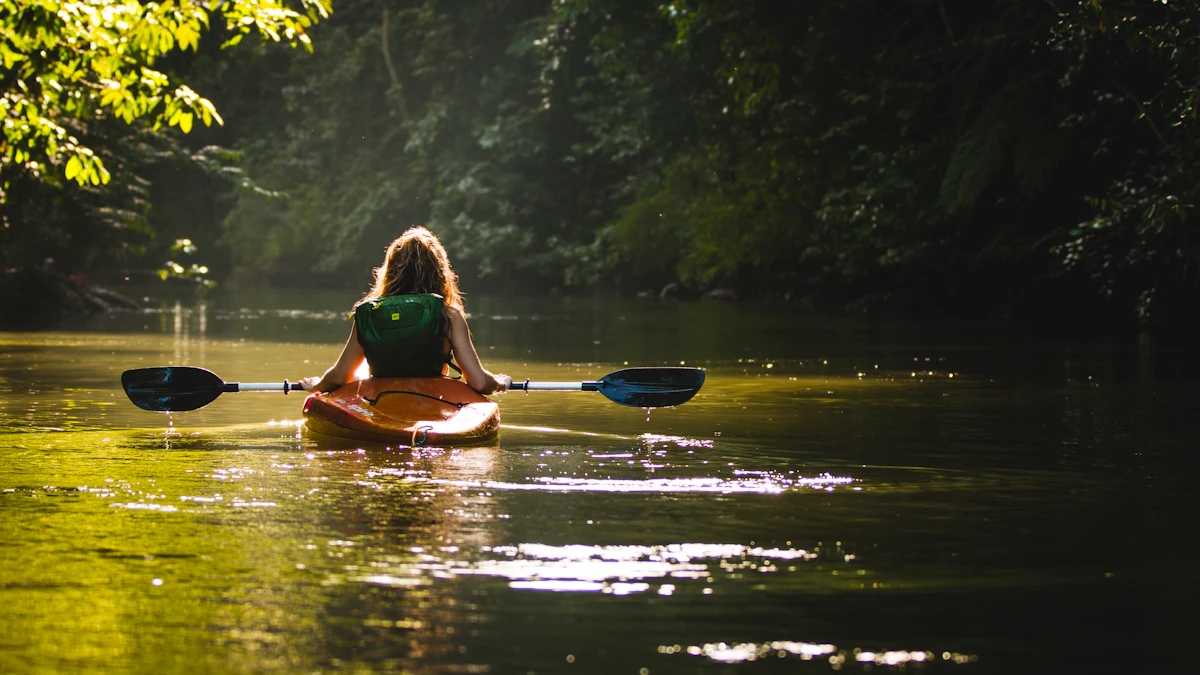
The water you paddle on dictates the safety, length, and stability features you need in a kayak. Matching your boat to your environment prevents dangerous mismatches and optimizes your experience.
1. Calm Lakes and Ponds
For small, flat bodies of water without significant currents or wave action, a recreational sit-in or sit-on-top kayak between 9 and 12 feet in length is ideal. These boats feature a wide beam (28 to 34 inches), providing excellent initial stability—the feeling of steadiness when you first sit in the boat. They are easy to turn, highly forgiving for beginners, and perfect for short, relaxed excursions. The smell of fresh pine and the glass-like water reflecting the early morning sun are best enjoyed in a stable platform that requires minimal technical effort to steer.
2. Slow-Moving Rivers and Estuaries
Navigating winding rivers and brackish marsh channels requires maneuverability and impact resistance. Hulls between 10 and 12 feet with moderate rocker—the upward curvature of the bow and stern—allow you to quickly pivot around fallen trees, gravel bars, and shallow hazards. Rotomolded polyethylene is the gold standard material here because it flexes and slides over rocky riverbeds without cracking. Visualizing the incoming tide pushing against a river’s outflow helps you plan your route; a shorter boat allows you to duck into quiet eddies near the banks to rest.
3. Coastal Waters and Open Seas
The ocean is a dynamic environment characterized by wind, waves, tides, and long distances. For coastal exploration, you need a touring or sea kayak measuring 14 to 18 feet. These boats are narrow (20 to 24 inches wide), which minimizes drag and increases tracking (the ability to travel in a straight line). They feature sealed bulkheads at both the bow and stern, creating watertight flotation chambers that keep the boat afloat even if the cockpit floods. Perimeter deck lines, a spray skirt, and a skeg or rudder are mandatory for managing crosswinds and swell. Feeling the rhythm of a 3-foot swell roll under your hull while the spray hits your face is exhilarating, but only if you are in a boat built to handle the sea state.
4. Whitewater Rapids
For churning rapids, creek runs, and river playparks, whitewater-specific kayaks are required. These are ultra-short (6 to 9 feet) with highly rockered hulls designed to spin on a dime, punch through standing waves, and surf river waves. They feature robust internal outfitting, including aggressive thigh braces and foam foot blocks, allowing the paddler to control the boat using their lower body. Whitewater paddling is a specialized discipline that requires professional instruction, a helmet, and a high-performance spray skirt to prevent swamping.
5. Urban and Travel Paddling
If you live in an apartment, drive a compact car, or plan to travel, hardshell kayaks present serious storage and transportation challenges. Fortunately, high-pressure drop-stitch inflatables and folding origami-style kayaks offer high performance in a packable design. Modern drop-stitch technology allows inflatable floors to be inflated to 10+ PSI, making them nearly as rigid as a hardshell. These can be packed into a backpack, stored in a closet, and checked as baggage on commercial flights, opening up remote destinations without the need for a roof rack.
Sit-In vs. Sit-On-Top Kayaks
The choice between a sit-in and a sit-on-top kayak is one of the most fundamental decisions you will make. It affects your safety, warmth, comfort, and how you interact with the water.
1. Sit-In Kayaks
In a sit-in kayak, you sit inside a cockpit with your legs extended forward underneath the deck. Your hips and thighs press against padded braces, which connects your lower body directly to the boat. This connection allows you to tilt (edge) the kayak to make carved turns and react dynamically to waves. Sit-ins keep your lower body sheltered from cold winds and water splashes. When paired with a neoprene spray skirt, a sit-in is completely sealed against the elements, making it the only choice for cold-water touring. However, if a sit-in capsizes and the cockpit fills with water, it becomes heavy and difficult to empty. Performing a “wet exit”—slipping out of the cockpit underwater—and subsequently empty-pumping the boat requires practice and safety gear like a bilge pump and a paddle float.
2. Sit-On-Top Kayaks
Sit-on-top (SOT) kayaks feature an open deck design where you sit on a molded seat on top of the hull. They are incredibly user-friendly and popular for recreational use, snorkeling, and fishing. The defining feature of an SOT is its self-bailing capability: the deck has holes (scupper holes) that allow water to drain straight through the bottom of the hull. If you capsize a sit-on-top, you simply flip the boat back over and climb back on from the water—no pumping required. The trade-off is a wet ride; you will constantly be exposed to drips from your paddle and waves washing over the deck. Additionally, sit-on-tops have a higher center of gravity than sit-ins, which makes them feel slightly less stable in rapid, lateral chop, though their wide hulls compensate for this in calm conditions.
3. Safety and Re-entry Practice
Regardless of which style you choose, practicing self-rescue is a non-negotiable safety step. For sit-on-tops, practice the “cowboy scramble”—swimming over the stern, straddling the hull, and sliding back into the seat. For sit-ins, you must practice a wet exit and a paddle-float re-entry in waist-deep water before venturing far from shore. Never assume you can swim a waterlogged boat to safety; cold water shock can incapacitate you in minutes.
Types of Kayaks Explained
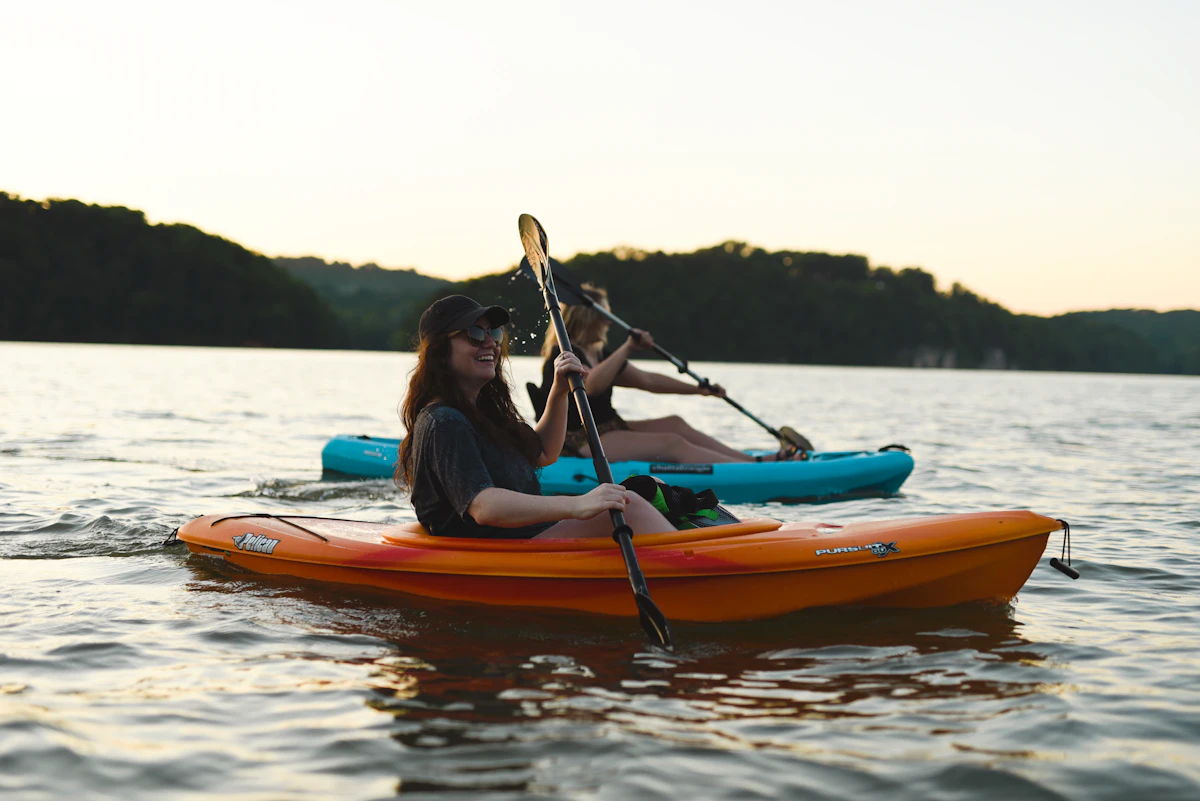
Kayaks are specialized tools engineered for specific tasks. Understanding these categories helps you narrow down the perfect match for your paddling goals.
- Recreational Kayaks: Designed for casual paddling on calm lakes and slow rivers. They are wide (28–34 in), stable, short (9–12 ft), and feature large cockpits for easy entry and exit. They track moderately well but lack the bulkheads and safety features for open ocean use.
- Touring & Sea Kayaks: Built for open water, coastal cruising, and multi-day expeditions. Measuring 14 to 18 feet with narrow beams (20–24 in), these boats are fast, track beautifully, and handle rough seas. They feature watertight hatches, bulkheads, and deck rigging for securing safety gear.
- Fishing Kayaks: Heavy, wide sit-on-tops optimized for stability so anglers can stand up to cast. They feature built-in rod holders, gear tracks, transducer mounts, and large tank wells for coolers or bait livewells. Many are equipped with pedal-drive systems to keep hands free.
- Inflatable Kayaks: Ranging from cheap pool toys (which should be avoided on open water) to high-performance, drop-stitch models. Professional-grade inflatables are incredibly durable, rigid, and pack down for easy transport. They are perfect for RVers, apartment dwellers, and travel.
- Folding Kayaks: Constructed with a collapsible aluminum or wood frame covered by a durable, waterproof skin. They offer similar performance and speed to hardshell touring kayaks but can be disassembled and packed into a large duffel bag.
- Tandem Kayaks: Hulls designed for two paddlers. While convenient for families, they are often nicknamed “divorce boats” because coordinating paddle strokes and steering requires cooperation. They are long, heavy to transport, and difficult for a single person to handle.
- Pedal-Drive Kayaks: Powered by your legs rather than your arms, utilizing either a rotational propeller or flapping underwater fins. They are fast, highly efficient in headwinds, and allow hands-free fishing or photography. The downside is added weight (often 80–120 lbs) and a high price point.
Key Specs That Actually Matter
When comparing kayaks online or at a local shop, do not get distracted by color or cup holders. Focus on the core dimensions and design characteristics that govern how the boat moves through the water.
1. Length & Beam
Length and beam (width) are the primary indicators of a kayak’s speed, tracking, and stability. A longer hull has a higher hull speed, glides further with each stroke, and tracks straighter. A wider beam provides more initial stability and cargo capacity but increases drag, requiring more effort to maintain speed. For example, a 16-foot sea kayak will glide effortlessly at 4 knots, while a 10-foot recreational boat will require double the physical effort to maintain the same pace.
2. Hull Shapes, Rocker, and Chines
The shape of the hull bottom determines how the kayak behaves in waves and when leaning:
- Hull Profile: Flat bottoms offer high initial stability (feels steady in flat water). V-shaped hulls cut through chop, track well, and offer high secondary stability—the resistance to capsizing when the boat is tilted on its side in waves.
- Chines: A chine is the transition angle between the bottom and sides of the hull. Hard chines feature sharp, defined angles, giving the boat excellent carving ability when tilted. Soft chines are rounded, providing a smooth, predictable transition in rough, lateral waves.
- Rocker: Rocker is the upward curve of the hull from bow to stern. A highly rockered boat turns easily because the bow and stern sit higher in the water, reducing resistance. A flat-rockered boat tracks straight but requires more effort to turn.
3. Volume & Capacity
Every kayak has a manufacturer-rated weight capacity. To maintain safe handling, you must follow the 25% to 35% reserve buoyancy rule. This means your total payload (your body weight, clothing, safety gear, and camping equipment) should not exceed 65% to 75% of the boat’s maximum capacity. If a kayak is rated for 300 lbs, do not load it past 210 lbs. Overloading drops the freeboard (the height of the deck above the water), making the boat sluggish, easy to swamp, and highly unstable in waves.
4. Skeg vs. Rudder
Crosswinds act on a kayak’s hull, pushing the stern downwind and causing the bow to turn into the wind—a phenomenon known as “weathercocking.” To counteract this, kayaks use tracking aids:
- Skeg: A drop-down metal or plastic blade housed in a slot under the stern. It is deployed manually using a slider. A skeg does not turn; it simply adds tracking resistance to the stern, keeping the boat balanced in crosswinds.
- Rudder: A blade mounted on the stern deck that flips down into the water. It is connected by cables to foot pedals, allowing you to actively steer the boat. Rudders are ideal for quartering seas, winding rivers, and loaded touring kayaks.
Local Skipper Tip: Keep an eye out for rocks! A common failure mode for skegs is a small pebble getting jammed in the skeg box, preventing it from deploying. Always check that your skeg is clear before launching from a gravel beach.
5. Materials and Durability
Hull material directly impacts the kayak’s weight, stiffness, price, and ease of repair:
- Rotomolded Polyethylene: Extremely durable and impact-resistant. It can handle dragging over gravel and bumping into logs. However, it is heavy, degrades over time under direct UV exposure, and can “oil-can” (develop dents if stored improperly on flat surfaces). Repairs require a plastic welding kit.
- Thermoformed ABS: Stiffer and lighter than polyethylene, featuring a glossy, UV-resistant acrylic outer layer that mimics fiberglass. It offers a great balance of durability, weight, and mid-range pricing. Repairs can be made using specialized solvent-bonding adhesives.
- Composites (Fiberglass / Kevlar / Carbon Fiber): The lightest, stiffest, and most expensive materials. Composite boats accelerate rapidly, glide exceptionally well, and are beautiful. However, they are fragile and can crack or chip upon hard impact with rocks. Repairs are made using epoxy resin and fiberglass patches.
📊 Kayak Performance Scorecard
| Material / Type | Weight Rating | Durability Rating | Glide / Speed | Repair Difficulty |
|---|---|---|---|---|
| Rotomolded Polyethylene | Heavy (3 / 10) | Bulletproof (10 / 10) | Moderate (5 / 10) | Easy (DIY Plastic Weld) |
| Thermoformed ABS | Moderate (7 / 10) | High (8 / 10) | Very Good (8 / 10) | Medium (Solvent Weld) |
| Fiberglass Composite | Light (9 / 10) | Fragile (5 / 10) | Exceptional (10 / 10) | Expert (Epoxy & Glass fabric) |
| Drop-Stitch PVC Inflatable | Featherweight (8 / 10) | High (7 / 10) | Fair (4 / 10) | Easy (Patch kit) |
Budget and Total Cost of Ownership
Buying a kayak is only the first step. To get on the water safely, you must budget for essential accessories, transportation hardware, and storage solutions. Failing to account for these costs is a common beginner mistake.
Accessory & Ownership Blueprint
| Accessory Class | Essential Specs | Typical Cost Range | Safety Importance |
|---|---|---|---|
| Paddle | Fiberglass / Carbon shaft, 215–240 cm | $80 – $400 | High (Your engine) |
| Personal Flotation Device (PFD) | USCG Type III or V, high-back foam | $70 – $250 | Critical (Life-saving) |
| Roof Rack / Carriers | J-cradles or saddles with cam straps | $200 – $600 | High (Transport safety) |
| Dry Bags | Roll-top, 5L to 20L heavy-duty PVC | $20 – $80 | Medium (Gear dry storage) |
| Safety Kit | Bilge pump, paddle float, whistle | $30 – $60 | High (Self-rescue) |
Storage Logistics
Proper storage extends the lifespan of your kayak. Polyethylene and ABS kayaks should never be stored in direct sunlight, as UV rays degrade the plastic, making it brittle. Keep hardshells suspended on wall-mounted padded cradles, or store them cockpit-down on wooden bars. Never store a kayak flat on a hard concrete floor, as the weight will cause the hull to deform (“oil-can”) over time. Inflatable kayaks must be thoroughly dried before being folded and stored to prevent mold and seam failure.
Safety, Licensing, and Local Rules
Waterways are governed by a patchwork of federal, state, and regional regulations. Compliance is essential to avoid heavy fines and ensure you can be rescued in an emergency.
1. United States Regulations
The U.S. Coast Guard (USCG) classifies kayaks as human-powered vessels. Under federal law, you must carry one wearable, USCG-approved Type III or Type V PFD for each person on board. Children under 13 must wear their PFD at all times when underway on federal waters. You are also required to carry a sound-signaling device (a whistle) and a white light (a flashlight or headlamp) if paddling between sunset and sunrise. While most states do not require registration for kayaks, states like Ohio, Pennsylvania, and Minnesota require registration stickers if you use state park launches or waterways managed by the state fish and boat commissions.
2. Canadian Regulations
Transport Canada has strict safety requirements for human-powered craft. In addition to a properly sized PFD and a whistle, paddlers in Canadian waters must carry a buoyant heaving line at least 15 meters (50 feet) in length, a manual bailing device (bailer or pump) if the cockpit is not self-bailing, and a waterproof flashlight if paddling in low visibility. Fines for lacking this basic safety kit can exceed $200 CAD.
3. United Kingdom Regulations
In England and Wales, you cannot simply paddle anywhere. Most inland waterways, including canals and managed rivers, require a license issued by the Canal & River Trust or the Environment Agency. A British Canoeing membership is a cost-effective way to secure this license. In Scotland, the Land Reform (Scotland) Act 2003 grants a right of responsible access to most land and water, meaning no license is required, but paddlers must follow the Scottish Outdoor Access Code.
4. Australia and New Zealand Regulations
In Australia, registration is generally not required for paddle craft, but PFD wearing rules are strictly enforced and vary by state. For example, in New South Wales (NSW), you must wear a lifejacket when paddling alone or in open waters. In New Zealand, regional council bylaws govern maritime safety, and PFDs must be worn by all occupants of vessels under 6 meters when underway.
5. Weather and Cold-Water Thresholds
Before launching, check the forecast and wind speeds on the Beaufort Wind Scale. Beginners should not paddle in winds exceeding Beaufort Force 3 (7 to 10 knots). Additionally, always respect the 120-degree rule: if the air temperature plus the water temperature is less than 120°F (49°C), or if the water temperature is below 60°F (15.5°C), hypothermia is a critical risk. You must wear a neoprene wetsuit or a drysuit to survive immersion.
Disclaimer: Boating conditions, weather, and regulations change rapidly. Always cross-check with local authorities, official weather services, and paper charts before embarking.
Try Before You Buy and Inspection Checklists
Never buy a kayak based solely on online reviews. The best way to find the right boat is to sit in it, paddle it, and feel how it responds to your body movements.
Used Kayak Inspection Checklist
Buying used is an excellent way to save money, but you must inspect the boat carefully for structural issues. Use this checklist on-site:
- Hull Inspection: Run your hands along the bottom. Look for “oil-canning” (dents or concave areas) and deep scrapes. Minor scratches are cosmetic; deep gouges that show white or frayed edges on composite hulls indicate structural damage.
- UV Damage Check: Examine the deck plastic. Faded, chalky, or dry-feeling plastic indicates severe UV damage, which makes the hull brittle and prone to cracking.
- Watertight Bulkheads: Press on the foam or fiberglass bulkheads inside the hull of a sit-in. Ensure the sealant is intact and not dry-rotted. Loose bulkheads will leak, compromising flotation.
- Outfitting & Controls: Test the foot braces and seat adjustments. If the kayak has a skeg or rudder, deploy and retract it several times to ensure the cables move smoothly without binding or fraying.
- Hatch Gaskets: Check the rubber seals on storage hatches. Dry-rotted or cracked gaskets must be replaced to keep your gear dry in swells.
Glossary: Speak Like a Paddler
Chine: The intersection between the bottom and the side of a kayak hull. A hard chine has a sharp, defined angle; a soft chine is rounded and smooth.
Rocker: The upward curve of the kayak’s hull from bow to stern. More rocker increases maneuverability (turning), while less rocker improves tracking (straight-line speed).
Beam: The width of the kayak at its widest point, which governs the boat’s initial stability and cockpit spacing.
WeBoating.com is a marketplace connecting travelers with independent, third-party operators. WeBoating does not operate, manage, or own any charters or experiences.
Frequently Asked Questions About Kayaking
Yes, but only high-pressure, drop-stitch inflatables designed specifically for coastal waters. Avoid cheap, thin-gauge vinyl inflatables, as they are easily pushed off-course by crosswinds and are susceptible to punctures on rocks and barnacles.
Sit-on-tops are generally safer for beginners because they are self-bailing and easy to climb back onto after a capsize. Sit-ins are safe if you know how to perform a wet exit and possess self-rescue skills, but they can swamp and sink if they lack bulkheads.
Most states do not require a license or registration for non-motorized kayaks. However, states like Ohio, Pennsylvania, and Minnesota require registration stickers if you use state park launches or state-managed waterways. Always check local regulations.
Your height and weight dictate the kayak’s beam width and weight capacity. Paddlers under 5’5″ and 150 lbs suit narrower, lower-volume boats. Ensure the boat’s maximum capacity exceeds your body weight plus gear by at least 25% to 35%.
A skeg is a fixed, drop-down blade that helps the kayak track straight in crosswinds (preventing weathercocking). A rudder is a rotatable blade mounted on the stern that is controlled by foot pedals to actively steer the kayak.
Yes, using temporary foam block carriers and heavy-duty cam straps. The foam blocks sit directly on your car’s roof, and the straps run through the open doors. Always secure the bow and stern to the bumpers for highway speeds.
A quality entry-level recreational kayak costs between $300 and $900. You should budget an additional $150 to $350 for safety essentials, including a properly fitted PFD, a fiberglass paddle, strap tiedowns, and a safety whistle.
You can browse water adventures on WeBoating.com to find experienced guides, compare local kayak tours, and secure rental equipment for your next paddling destination.
Keep hardshells suspended on wall-mounted padded cradles or store them cockpit-down on wooden bars. Never store a kayak flat on concrete or in direct sunlight, as this causes plastic to warp (oil-can) and degrade.
In the US, you must carry a USCG-approved lifejacket (PFD), a sound-signaling device (whistle), and a flashlight if paddling at night. In Canada, you also need a 15m heaving line and a bailing device.
Choose two single kayaks for independence, maneuverability, and easier transport. Opt for a tandem (double) kayak if paddling with a child or if you want a faster boat powered by two coordinated paddlers.
No. Recreational kayaks are short, wide, lack sealed bulkheads for flotation, and cannot fit a spray skirt. If they capsize in open water, they will swamp and sink. Open ocean paddling requires a dedicated sea or touring kayak.
Stepping off the dock or launching from a sandy shore in a kayak that fits your body and matches your environment is the start of a lifetime of water exploration. Take your time to test-paddle different hulls, sit in various cockpits, and dial in your safety gear before embarking on your first major tour. As you glide across the water, the rhythm of your strokes and the quiet efficiency of your hull will make every mile a reward. We will see you on the water.