Boating Right-of-Way Rules: Why You Can Still Be Liable for a Collision (COLREGS Rule 2)

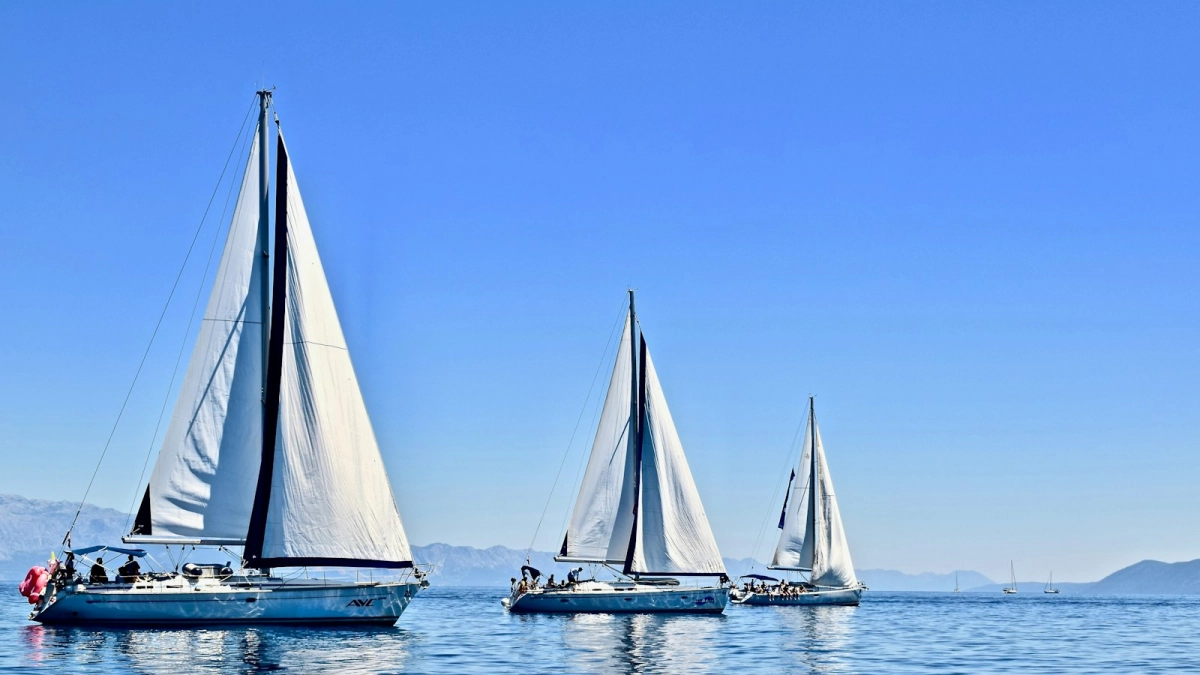
Under maritime law and the International Regulations for Preventing Collisions at Sea (COLREGS), there is no such thing as an absolute “right of way” that permits a collision. Under COLREGS Rule 2 (the “Responsibility Rule”), every skipper must take all necessary actions to avoid a collision, even if they are the “stand-on” vessel. If a collision occurs, both parties are almost always found partially liable under the doctrine of comparative fault. This legal framework differs significantly from land-based traffic laws, where one driver is often 100% at fault. For recreational boaters, sailing crews, PWC (Jet Ski) riders, and fishing enthusiasts, understanding how right-of-way rules translate to real-world liability is critical for safe passage. Whether you are navigating busy waterways during a Croatia yacht charter, steering through the islands on a BVI yacht charter, or setting out for a day of fishing, mastering these collision rules will protect your crew, your vessel, and your liability. If you are new to operating a charter, review our guide on how to be a great yacht host or brush up on navigating tidal passages in our guide to tides and currents explained.
Key Takeaways
- No Absolute Right-of-Way: At sea, right-of-way is not a license to collide. The law requires you to take avoiding action if the other vessel fails to do so.
- Rule 2 Joint Liability: Under COLREGS Rule 2, failing to steer clear of an obvious hazard, even if you are the “stand-on” vessel, makes you partially liable for the crash.
- Active Lookout Requirement: Maintaining a proper lookout (Rule 5) using sight, sound, radar, and AIS is a legal mandate that underpins all collision liability rulings.
⚓ Collision Avoidance & Lookout Vitals
| System/Hardware Class | Primary Systems Mentioned | Technical Difficulty | Safety Criticality | Typical Cost Range |
|---|---|---|---|---|
| Collision Avoidance & Lookout Systems | AIS Transponders (Garmin, Raymarine, Vesper), Marine Radar (B&G, Simrad), COLREGS Rules 2, 5 & 17 | Easy (Operational awareness) to Intermediate (AIS/Radar installation) | High (Life-safety critical) | $0 (Awareness) to $1,500 (AIS/Radar hardware) |
The Systems Breakdown: Understanding COLREGS Rules & Maritime Liability
Recreational boaters often assume that maritime law operates like road traffic law. However, Admiralty courts apply different standards that prioritize collision prevention over assignment of absolute right-of-way.
1. Rules on the Water vs. Rules on the Road: The Liability Shift
On land, if a vehicle runs a red light and strikes your car, you are typically found completely innocent of fault. On the water, however, the legal framework is based on the principle of comparative fault. If a vessel strikes your boat because they ignored right-of-way rules, the other boater’s insurance company or a maritime court may still find you 10% to 50% liable. Under COLREGS Rule 2, they can argue that you had ample time to observe their reckless course, realize they were not giving way, and take action to avoid the collision, but chose to stand on your right of way instead.
2. Stand-On vs. Give-Way: The Progression of Skipper Duties (Rule 16 & Rule 17)
When two vessels are on crossing or head-on courses, COLREGS designates one as the Give-Way Vessel and the other as the Stand-On Vessel. Under Rule 16, the give-way vessel must take early and substantial action to keep well clear. Under Rule 17, the stand-on vessel’s duty changes in three distinct stages as a collision threat develops:
- Stage 1 (Rule 17a-i): The stand-on vessel must maintain its course and speed. This is crucial to allow the give-way vessel to calculate its avoiding action.
- Stage 2 (Rule 17a-ii): If it becomes apparent that the give-way vessel is not taking appropriate action, the stand-on vessel may take action to avoid collision by its maneuver alone.
- Stage 3 (Rule 17b): When the vessels find themselves so close that collision cannot be avoided by the action of the give-way vessel alone, the stand-on vessel shall take such action as will best aid to avoid collision. At this stage, taking action is no longer optional—it is a legal command.
3. The Pecking Order of the Sea: Vessel Classes (Rule 18)
Rule 18 establishes a clear hierarchy of privilege based on a vessel’s ability to maneuver. Under ordinary circumstances, vessels lower on this list must give way to vessels higher on the list:
- Vessels Not Under Command (NUC): Vessels unable to maneuver due to mechanical failure (e.g., lost steering, engine failure).
- Vessels Restricted in Their Ability to Maneuver (RAM): Vessels restricted by the nature of their work (e.g., dredges, cable-layers, commercial ships in narrow fairways).
- Vessels Engaged in Fishing: Commercial trawlers or longliners with gear deployed that restricts maneuverability (does NOT include recreational boats trolling or casting).
- Sailing Vessels: Sailboats under wind power alone (if the engine is running, the sailboat is legally a power-driven vessel).
- Power-Driven Vessels: Any vessel propelled by machinery (including yachts, runabouts, and trawlers).
- Seaplanes & WIG Craft: Generally required to keep well clear of all other vessels.
4. Personal Watercraft (PWC) Steering Loss & Off-Throttle Danger
Personal Watercraft (PWCs), such as Jet Skis, represent a unique hazard on busy waterways. While highly maneuverable, PWCs utilize jet propulsion and do not have traditional rudders. If a PWC operator suddenly releases the throttle or cuts the engine to avoid a collision, the vessel loses all steering capacity and will continue sliding along its original trajectory. Experienced skippers should always keep a wide berth around PWCs, recognizing that the rider may not have formal boating education and that their craft cannot steer without active throttle application.
5. The Anchoring Myth: Fairways, Narrow Channels & Liability (Rule 9)
Recreational anglers frequently anchor in narrow channels, fairways, under bridges, or near marina entrances to target fish. Many believe that anchoring automatically gives them the right of way. However, COLREGS Rule 9(g) requires every vessel, if the circumstances of the case admit, to avoid anchoring in a narrow channel, and Rule 9 also forbids impeding vessels that can navigate safely only within that channel. If your anchored vessel is struck by a passing boat in a restricted channel, you can be held heavily liable for creating a navigation hazard, especially if you failed to display the proper day shapes or anchor lights, or failed to maintain a proper lookout.
🛠️ The Collision Avoidance Gear Locker
Equipping your vessel with the proper electronic and passive safety gear dramatically increases your visibility and helps you identify collision risks early:
| Gear Item | Specifications | Skipper Purpose |
|---|---|---|
| AIS Transponder | Class B SOTDMA, 5W output, integrated GPS | Transmits your yacht’s name, position, speed, and course to nearby vessels and displays their data on your chartplotter. |
| Solid-State Marine Radar | Pulse compression radar (e.g., B&G Halo, Garmin Fantom) | Identifies non-AIS targets, small boats, buoys, and shorelines in heavy fog, rain, or night conditions. |
| Passive Radar Reflector | Octahedral or tubular design, aluminum construction | Reflects radar waves back to large commercial ships, increasing your radar cross-section (RCS) so they can see your yacht. |
| Fixed-Mount VHF Radio | 25W power, Class D DSC, dual/tri-watch function | Allows you to contact intersecting vessels on VHF Channel 16 or 13 to coordinate safe passing agreements. |
📊 Systems Health Scorecard
Rate your vessel’s collision avoidance readiness using the following metrics. A high score represents optimal readiness to navigate safely through busy waterways:
- Lookout & Awareness (Rule 5): 9/10 – Requires a continuous visual lookout combined with active Radar guard zones and AIS target alarms set on your chartplotter.
- Maneuver Autonomy: 8/10 – Highly responsive steering systems, dual-engine setups or functional thrusters, and a clean hull to ensure swift acceleration and turning capacity.
- Passive Visibility: 7/10 – Rigging a high-quality radar reflector, keeping your navigation lights clean and operational, and carrying a high-powered searchlight for night identification.
- Communication Readiness: 8/10 – Keeping your VHF radio on dual-watch (Channel 16 and 13) and having your Digital Selective Calling (DSC) registered with an MMSI number.
Troubleshooting & Actions: Constant Bearing, Decreasing Range (CBDR) Checklist
If you observe an approaching vessel, follow this safety checklist to determine if you are on a collision course and execute evasive maneuvers:
Disclaimer: Boating conditions, weather, and regulations change rapidly. Always cross-check with local authorities, official weather services, and paper charts before embarking.
- Identify CBDR: Take a compass bearing to the approaching boat. Wait 2 minutes and check again. If the bearing remains constant while the distance decreases, you are on a collision course.
- Determine Roles: Assess which boat is the stand-on vessel and which is the give-way vessel based on the pecking order (Rule 18) or crossing rules (e.g., if a powerboat is on your starboard side, they are the stand-on vessel).
- Monitor Action: If you are the stand-on vessel, maintain course and speed. Watch the other vessel closely. If you are the give-way vessel, make a large, obvious course change to starboard early.
- Hail on VHF: If the give-way vessel does not take action and the distance drops below 1 mile, hail them on VHF Channel 16 or 13. State their position and ask for their intentions (e.g., “Vessel on my port bow, this is sailing yacht Windward, we are crossing your bow, please confirm your intentions”).
- Sound Signals: If there is still no response, sound 5 short, rapid blasts on your horn. This is the international signal for danger or doubt.
- Take Evasive Action: If the other vessel still fails to give way, execute a sharp turn to starboard. Never turn to port to avoid a vessel approaching from your port side, as they may make a last-second turn to starboard, causing a head-on collision.
Glossary: Speak Like a Maritime Surveyor
Stand-On Vessel: The vessel that is legally required to maintain its course and speed during an encounter, allowing the give-way vessel to determine its passing route.
Give-Way Vessel: The vessel that does not have privilege and must take early, clear, and substantial action to keep well clear of the stand-on vessel.
CBDR (Constant Bearing, Decreasing Range): The visual phenomenon where the angle to an approaching vessel does not change as the distance closes, indicating an imminent collision course.
Frequently Asked Questions About Boating Right-of-Way
Unlike land traffic, there is no absolute ‘right of way’ in boating. COLREGS designates vessels as either ‘stand-on’ (must maintain course and speed) or ‘give-way’ (must keep clear). Both share responsibility to prevent a collision.
Known as the Responsibility Rule, Rule 2 states that no boater can be exonerated from the consequences of neglecting to take precautions to prevent a collision. It mandates that skippers do everything necessary to avoid a crash, even if it requires departing from right-of-way rules.
Yes. If a boat anchors in a narrow channel or fairway (violating Rule 9), does not display an anchor light/ball, or fails to maintain a proper lookout, they can be held partially or fully liable for a collision.
The stand-on vessel must maintain course and speed to allow the give-way vessel to maneuver. The give-way vessel must take early, clear, and substantial action to keep well clear of the stand-on vessel.
PWCs utilize jet thrust for steering. If the operator releases the throttle or cuts the engine, the watercraft loses all steering capabilities, gliding straight forward into potential hazards.
No. A sailboat only has right-of-way when under sail power alone. If its engine is running, it is legally a powerboat. Also, sailboats must give way to vessels not under command, restricted in maneuverability, or engaged in commercial fishing.
CBDR is a visual observation where the relative angle of an approaching vessel remains the same while its distance gets closer, indicating that you are on a collision course.
Generally no. COLREGS Rule 9(g) requires vessels to avoid anchoring in a narrow channel if the circumstances of the case admit, and anchoring there can impede vessels that can only navigate within the channel. Local rules may also ban anchoring in marked fairways.
Maritime insurance claims adjusters and Admiralty courts apply comparative negligence. Because Rule 2 requires both skippers to prevent a collision, liability is often split (e.g., 80/20 or 70/30) between both boaters.
If the give-way vessel fails to keep clear, the stand-on vessel must take avoiding action (Rule 17b). It should make sound signals and execute a sharp starboard turn, avoiding a turn to port.
Nav lights determine status. If you see a green light, you are the stand-on vessel. If you see a red light (crossing from your starboard side), you are the give-way vessel and must keep clear.
You can compare and book yacht charters directly on WeBoating.com. Our marketplace connects you with independent charters where you can hire a professional skipper to manage navigation and safety.
WeBoating.com is a marketplace connecting travelers with independent, third-party operators. WeBoating does not operate, manage, or own any charters or experiences.
Book Self-Drive Boat Rentals


Drive your Own 2 Seat Fun Go Cat Boat on Marco Island
Sold by GO CATS ON THE WATER dot com
Book Boat Rentals & Charters