Whitsundays Yacht Charter Guide: Hamilton Island & Great Barrier Reef Sailing Itinerary & Skipper Tips

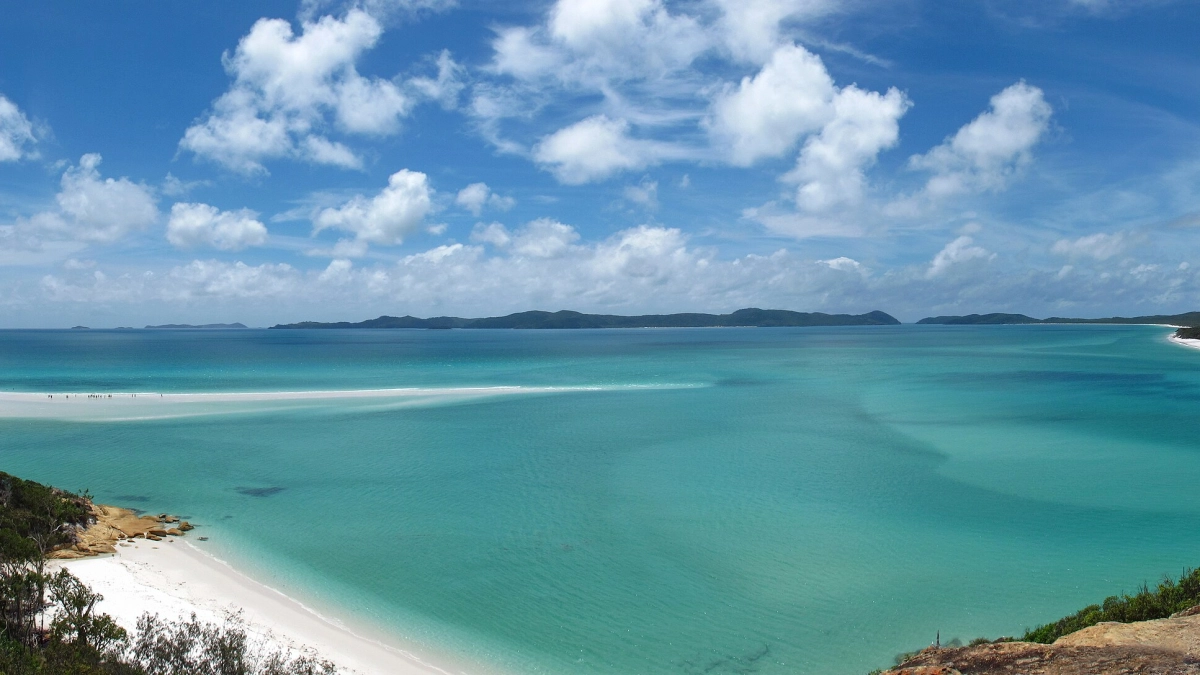
A Whitsundays yacht charter offers access to Australia’s premier tropical sailing paradise, surrounded by 74 continental islands, crystal-clear turquoise waters, and the protective barrier of the Great Barrier Reef. The best time to sail the Whitsunday Islands is from May through October during the dry winter season, when humidity is low, temperatures average 23°C to 26°C (73°F–79°F), and steady south-easterly trade winds blow at 15 to 20 knots, while a weekly bareboat catamaran or monohull charter typically ranges from $4,500 to $11,000 AUD, and no formal sailing license is legally required if you pass a comprehensive briefing and vessel briefing on location. Skippers must navigate macro-tides exceeding 3 to 4 meters, understand tidal currents in Solway Passage, and wear protective stinger suits when swimming during the warmer months. If you are comparing Pacific sailing destinations, explore our adjacent Tahiti yacht charter guide or our Oahu yacht charter guide to plan your dream ocean voyage.
Key Takeaways
- Reef-Protected Waters: The outer Great Barrier Reef acts as a massive natural breakwater, ensuring calm, flat-water cruising across the main island passages.
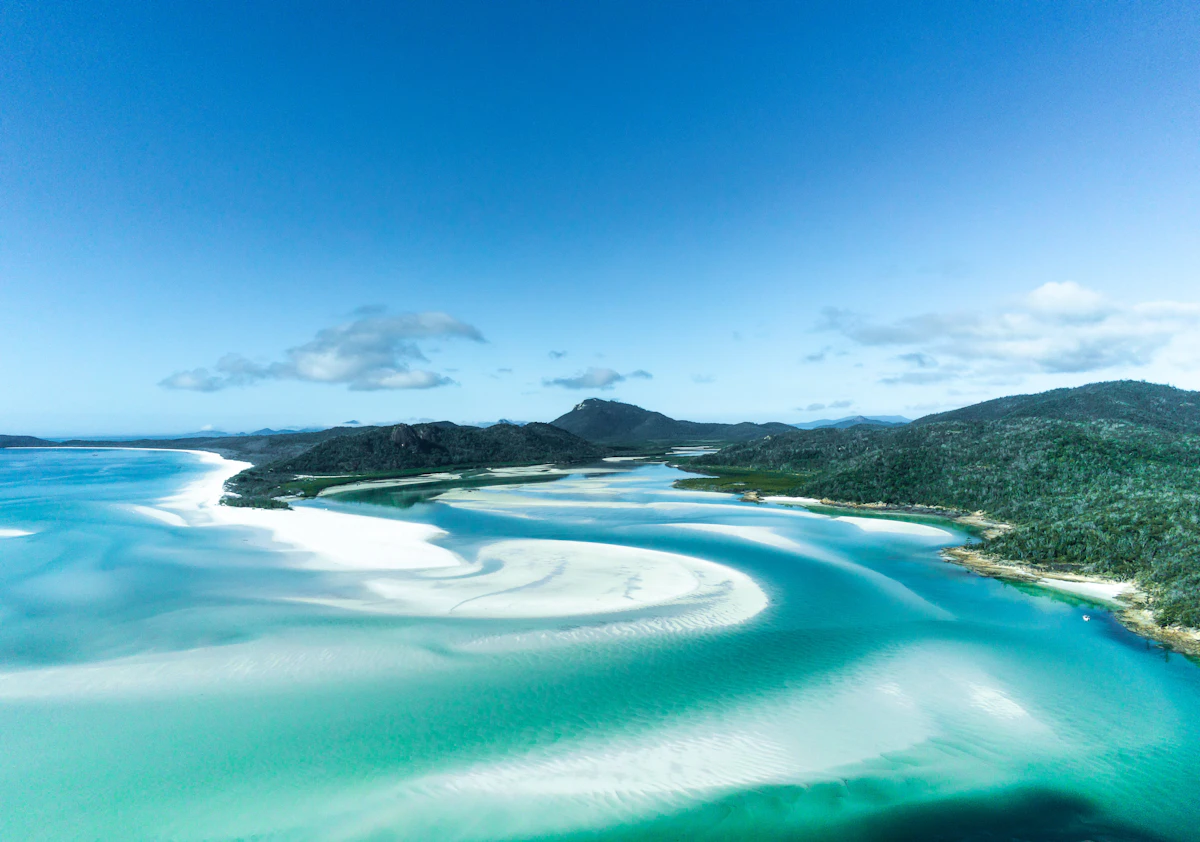
- Iconic Silica Sands: Whitehaven Beach features 98% pure silica sand that remains cool underfoot, with shifting turquoise sandbars at Hill Inlet.
- Macro-Tidal Seamanship: 3 to 4 meter tidal ranges require careful anchor scope calculations, tidal height awareness over fringing reefs, and timing current passes.
⚓ Quick Facts & Experience Vitals
| Best Time to Go | Avg. Weekly Cost | Difficulty Level | Key Winds / Currents | License Required? | Primary Embarkation Port |
|---|---|---|---|---|---|
| May–October (Dry winter season) | $4,500–$11,000 AUD (bareboat) + $1,800–$2,800 AUD (skipper) | Beginner to Intermediate (Protected waters, high tides) | SE trade winds (15-20 kts); currents 1.5-3.5 kts in passages | No (Comprehensive charter briefing required) | Hamilton Island / Airlie Beach |
The Lay of the Land (Introduction)
Cruising the Whitsunday Islands is a sensory immersion into Australia’s most celebrated marine ecosystem. As you hoist sail off Hamilton Island, the scent of eucalyptus and salt air drafts across the deck from high, rainforest-covered continental peaks. Under the keel, deep indigo channels give way to electric shades of turquoise and emerald green as you glide over shallow coral bombies. The constant rustle of trade winds through the rigging is punctuated by the blow of humpback whales migrating north between July and September. On shore, the brilliant white sands of Whitehaven Beach contrast against lush green hoop pines, while secluded fjords like Nara Inlet preserve ancient Ngaro indigenous rock art carved into stone cliffs thousands of years ago.
Sailing Zones & Cruising Sectors
The Whitsunday archipelago is divided into four distinct cruising sectors, each offering unique sea conditions, reef structures, and anchorage protection:
1. Hamilton Island & Whitsunday Passage (Central Hub)
Forming the spine of the archipelago, the Whitsunday Passage connects the mainland to the outer islands. It is a deep-water shipping channel exposed to the prevailing south-easterly trade winds. Currents can run at 2 to 3.5 knots through narrow points like Solway Passage and Dent Passage, creating wind-against-tide chop. Hamilton Island Marina provides world-class provisioning, commercial airport access, and resort facilities.
2. Whitsunday Island & Whitehaven Beach (East Coast)
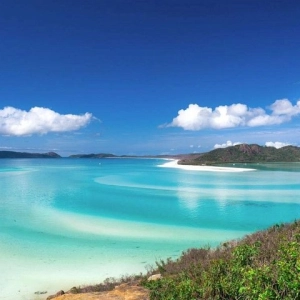
The largest island in the group features the iconic 7-kilometer expanse of Whitehaven Beach and the swirling sands of Hill Inlet. The eastern shoreline is exposed to ocean swells and easterly winds, making day anchoring suitable only in light conditions. However, the western and southern sides offer superb, well-protected deep anchorages such as Cid Harbour and Chance Bay.
3. Hook Island & Northern Cays (Snorkeling & Fjord Zone)
Characterized by deep fjord-like inlets and fringing coral reefs, Hook Island is the prime snorkeling and diving destination. Inlets like Nara and Macona offer near-total protection from all wind directions between towering green hills. Northern cays like Butterfly Bay and Luncheon Bay feature public mooring buoys over vibrant coral gardens teeming with tropical fish and sea turtles.
4. Outer Great Barrier Reef Outpost (Bait Reef & Hardy Reef)
Located 25 to 30 nautical miles offshore, the outer barrier reef is an advanced blue-water expedition zone. Navigating to Bait Reef or Stepping Stones requires a clear open-ocean passage forecast. Anchoring is prohibited on the living coral, but public public mooring buoys allow experienced skippers to moor inside lagoon walls for world-class diving in crystal-clear ocean waters.
Sailing Itineraries
Itinerary 1: The Whitsunday Island & Whitehaven Classic (Hamilton Island Departure, 7 Days)
This popular itinerary covers the essential highlights of the central Whitsundays, combining resort comfort, secluded fjords, and the famous silica sands of Whitehaven Beach.
Day 1: Hamilton Island Marina to Cid Harbour
Sailing Distance: ~8 nautical miles
Routing Details: Depart Hamilton Island Marina, head north through Fitzalan Passage into the main Whitsunday Passage; watch for ferry traffic near Dent Island.
Anchoring & Staging: Drop anchor in 20 feet of mud off Sawmill Beach in Cid Harbour; excellent holding and fully sheltered from SE trade winds.
Marine Highlights: Hike the forested trail from Sawmill Beach up to Whitsunday Peak for panoramic 360-degree views across the entire island group.
Day 2: Cid Harbour to Nara Inlet (Hook Island)
Sailing Distance: ~10 nautical miles
Routing Details: Sail north across Hook Passage, keeping clear of the reef spits extending off Pinnacle Point.
Anchoring & Staging: Proceed deep into Nara Inlet and anchor in 18 feet of mud or pick up a public mooring buoy; complete protection from all winds.
Marine Highlights: Take the dinghy to the boardwalk trail leading up to the ancient Ngaro indigenous rock art cave, surrounded by waterfall pools after rain.
Day 3: Nara Inlet to Butterfly Bay (Hook Island)
Sailing Distance: ~12 nautical miles
Routing Details: Exit Nara Inlet, sail north along the western coast of Hook Island, rounding Hayman Island to enter the northern cays.
Anchoring & Staging: Pick up a public marine park mooring buoy in Butterfly Bay; anchoring on the delicate coral shelf is strictly prohibited.
Marine Highlights: Snorkel the fringing reef teeming with blue-spotted rays, parrotfish, and giant clams; watch thousands of butterflies ashore in winter.
Day 4: Butterfly Bay to Stonehaven Anchorage
Sailing Distance: ~8 nautical miles
Routing Details: Short coastal cruise west towards Hook Passage; navigate past Cockatoo Point into the sheltered lee of western Hook Island.
Anchoring & Staging: Pick up a public mooring buoy or anchor in 25 feet of sand at Stonehaven; great sunset vantage point looking back at Hayman Island.
Marine Highlights: Snorkel the coral bombies at Ian Point and enjoy a quiet sunset dinner on deck over calm waters.
Day 5: Stonehaven to Tongue Bay & Whitehaven Beach
Sailing Distance: ~16 nautical miles
Routing Details: Sail south through Hook Passage, turning east along the northern shore of Whitsunday Island into Tongue Bay.
Anchoring & Staging: Pick up a public mooring buoy in Tongue Bay; anchoring is restricted near the reef flats.
Marine Highlights: Tender ashore to the lookout trail overlooking Hill Inlet to see the swirling white silica sand and turquoise water, then walk on Whitehaven Beach.
Day 6: Tongue Bay to Chance Bay
Sailing Distance: ~8 nautical miles
Routing Details: Sail south along the eastern side of Whitsunday Island, passing Solway Passage; watch for strong currents at the southern tip.
Anchoring & Staging: Anchor in 15 feet of sand in Chance Bay on the south coast of Whitsunday Island; well protected from NE winds.
Marine Highlights: Relax on the quiet beach, walk the bush trail connecting back to Whitehaven Beach, and snorkel the fringing reef.
Day 7: Chance Bay back to Hamilton Island Marina
Sailing Distance: ~10 nautical miles
Routing Details: Cross Fitzalan Passage back towards Hamilton Island, timing your arrival to clear the marina fairway channel.
Anchoring & Staging: Berth at Hamilton Island Marina, complete charter fuel-up, and vessel debrief.
Marine Highlights: Enjoy lunch at the Hamilton Island Yacht Club before catching your return flight.
Itinerary 2: The Outer Reef & Island Explorer (Airlie Beach Departure, 7 Days)
This expedition itinerary is designed for experienced crews seeking open-ocean sailing out to the Great Barrier Reef pontoons and remote island anchorages.
Day 1: Coral Sea Marina (Airlie Beach) to Nara Inlet
Sailing Distance: ~14 nautical miles
Routing Details: Depart Airlie Beach, sail northeast across the Whitsunday Passage towards Hook Island.
Anchoring & Staging: Anchor in 20 feet of thick mud in Nara Inlet; complete protection for your first night aboard.
Marine Highlights: Watch for sea eagles circling the gorge walls and explore the ancient indigenous cave site.
Day 2: Nara Inlet to Blue Pearl Bay (Hayman Island)
Sailing Distance: ~12 nautical miles
Routing Details: Sail north along Hook Island, rounding the western headland towards Hayman Island.
Anchoring & Staging: Pick up a public mooring buoy in Blue Pearl Bay; anchoring is prohibited on the delicate coral reef.
Marine Highlights: Snorkel with “Elvis,” the famous resident giant Maori Wrasse, and explore the coral walls.
Day 3: Blue Pearl Bay to Bait Reef (Outer Great Barrier Reef)
Sailing Distance: ~22 nautical miles
Routing Details: Depart early for an open-water beam reach northeast across the Coral Sea channel to Bait Reef; cross only in stable weather forecasts.
Anchoring & Staging: Pick up a public mooring buoy inside the lagoon at Bait Reef; night moorings require calm seas.
Marine Highlights: Dive or snorkel “Stepping Stones,” a series of massive coral pinnacles rising 15 meters from the sea floor, with 30-meter visibility.
Day 4: Bait Reef to Butterfly Bay (Hook Island)
Sailing Distance: ~22 nautical miles
Routing Details: Sail southwest back to the main island group, making landfall at northern Hook Island.
Anchoring & Staging: Pick up a public mooring buoy in Butterfly Bay; peaceful holding in the lee of the high hills.
Marine Highlights: Relax in the calm waters of the bay after your open-ocean passage and watch turtle hatchlings in season.
Day 5: Butterfly Bay to Whitehaven Beach
Sailing Distance: ~18 nautical miles
Routing Details: Sail southeast down the eastern flank of Hook Island into Solway Passage; anchor off the southern end of Whitehaven Beach.
Anchoring & Staging: Drop anchor in 15 feet of sand off southern Whitehaven Beach; good holding under prevailing SE winds.
Marine Highlights: Walk the 7-kilometer silica beach at sunset when the day-tour boats have departed.
Day 6: Whitehaven Beach to Palm Bay (Long Island)
Sailing Distance: ~14 nautical miles
Routing Details: Sail west past Hamilton Island into the passage behind Long Island.
Anchoring & Staging: Pick up a mooring buoy off Palm Bay Resort or anchor in 20 feet of sand in Happy Bay.
Marine Highlights: Enjoy cocktails at the resort beach bar, walk the rainforest trails, and spot wild wallabies on shore.
Day 7: Palm Bay back to Coral Sea Marina (Airlie Beach)
Sailing Distance: ~12 nautical miles
Routing Details: Sail northwest across the Whitsunday Passage back to the mainland breakwater at Airlie Beach.
Anchoring & Staging: Return to your slip at Coral Sea Marina, refuel, and complete vessel debrief.
Marine Highlights: Dine along the Airlie Beach lagoon promenade and celebrate a successful Great Barrier Reef voyage.
Local Berthing & Staging (Marinas & Yacht Harbors)
The Whitsundays features world-class marina facilities equipped for bareboats, private superyachts, and commercial charter fleets:
Hamilton Island Marina
Located on Hamilton Island, this premier 300-berth marina accommodates vessels up to 60 meters with drafts up to 4.5 meters. It offers full shore power, fresh water, fuel docks, chandlery services, and direct access to Hamilton Island Airport (HTI). The marina basin is fully sheltered from all wind directions behind solid rock breakwaters.
Coral Sea Marina (Airlie Beach)
Situated on the mainland at Airlie Beach, Coral Sea Marina is the main charter departure hub for the region. Featuring 520 berths for vessels up to 80 meters, it provides comprehensive marine mechanics, haul-out yards, high-flow fuel docks, two resort villages, and extensive supermarket provisioning services nearby.
Port of Airlie Marina
Located in the heart of Airlie Beach, this protected marina basin offers berths for monohulls and catamarans, including larger yachts. It provides full shore power, water, fuel, and direct walking access to Airlie’s main dining street and passenger ferry terminals.
Hayman Island Marina
Nestled on private Hayman Island, this exclusive resort marina offers berths for luxury yachts up to 35 meters. It provides deep-water access, high-end resort amenities, fine dining, and full protection from prevailing south-easterly trade winds behind the island’s northern headland.
🌪️ Regional Weather Guardrails & Winds
Navigating the Coral Sea safely requires understanding local trade wind cycles, tidal ranges, and seasonal marine risks:
- South-East Trade Winds: The prevailing wind pattern from April through October is the SE trade winds, blowing steadily between 15 and 25 knots. These winds create flat water in the lee of the main islands but generate chop in open passages like the Whitsunday Passage.
- Macro-Tides & Currents: The Whitsundays experiences a large spring tidal range of up to 4 meters. High tidal movement creates strong currents of 2 to 4 knots in narrow passages (Dent Passage, Solway Passage, Hook Passage), requiring skippers to time passages with slack water.
- Tropical Cyclone Season: The official South Pacific cyclone season runs from November through April. Bareboat charter operations enforce strict weather monitoring, and vessels must seek refuge in designated hurricane holes (like Nara Inlet or marinas) during cyclone alerts.
- Marine Stinger Season: From November to May, venomous Irukandji and Box Jellyfish are present in tropical coastal waters. Swimmers and snorkelers are strongly advised to wear full-body lycra or neoprene “stinger suits” when entering the water.
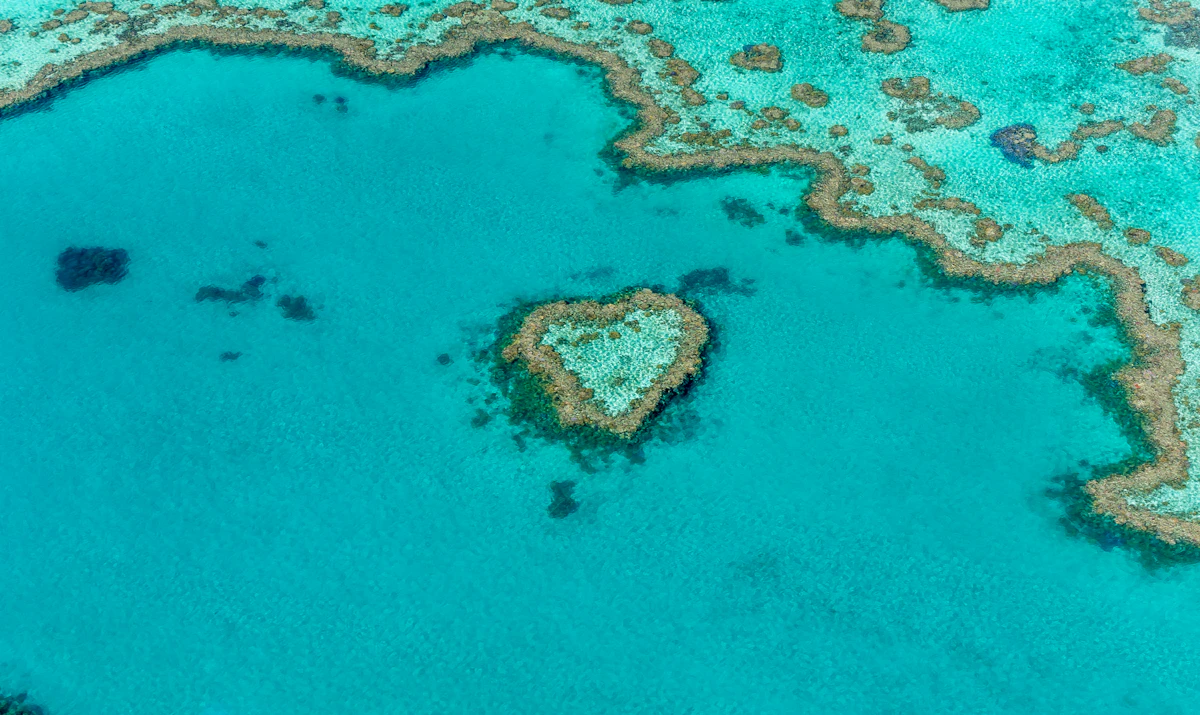
Local Rules, Mooring & Anchorages
Strict Great Barrier Reef Marine Park Authority (GBRMPA) environmental laws protect the delicate coral reefs and wildlife of the Whitsundays:
Fees & Permitting Nuances
- EMC Environmental Fee: All charterers must pay the Environmental Management Charge (EMC) of approximately $7.00 AUD per person per day, which is automatically included in charter quotes or collected at checkout.
- Public Mooring Rules: Blue marine park mooring buoys are free to use but have strict 2-hour time limits during peak daylight hours, converting to overnight stays after 3:00 PM.
- Bareboat Area Limits: Bareboat charter vessels are restricted to designated inner island cruising zones and cannot cross to the outer reef without a licensed commercial skipper aboard.
- Commercial Permit Limits: Operating a commercial charter vessel inside Green Zone marine sanctuaries requires a special GBRMPA permit display card mounted at the helm.
- Bareboat Resume Review: Charter operators require a detailed boating resume verifying handling experience on catamarans or monohulls over 30 feet prior to vessel handover.
Prohibited & Protected Zones
- Green Zone Anchor Ban: Anchoring on coral reefs inside designated Green Zone (Marine National Park) sanctuaries is strictly illegal, with heavy fines enforced by Queensland Boating and Fisheries patrols.
- Hill Inlet No-Anchor: Anchoring inside the shallow sandbars of Hill Inlet is prohibited to protect fragile stingray and lemon shark nursery habitats.
- No-Anchoring Reef Pins: White pyramid reef markers indicate fragile coral shelves; anchoring between these markers and the shoreline is prohibited at all times.
- Cid Harbour Swim Warning: Swimming is strongly discouraged inside Cid Harbour due to high shark activity; charterers should swim only off outer island reefs.
- Whale Approach Buffer: Vessels must maintain a minimum distance of 100 meters (300 meters for mothers with calves) from Humpback Whales under Australian marine mammal protection laws.
Safety & Environmental Risks
- Tidal Height Clearance: With 4-meter tidal swings, skippers must calculate low-water depth over shallow coral bombies before entering northern cays like Butterfly Bay.
- Wind-Against-Tide Chop: When the SE trade wind opposes an ebb tide in the Whitsunday Passage, steep 2-meter chop can develop rapidly, making passage making uncomfortable.
- Coral Bombie Hazards: Coral heads rise vertically from deep water in inner bays; visual pilotage with a bow lookout is mandatory when entering unbuoyed anchorages.
- Anchor Scope Ratios: Due to large tidal ranges, skippers must deploy at least 5-to-1 scope based on the expected high-tide water depth to avoid dragging overnight.
- Stinger Suit Protection: Wearing a full lycra stinger suit is strongly recommended when snorkeling or swimming between November and May to protect against Irukandji and box jellyfish stings; carry vinegar on board for first aid.
Disclaimer: Boating conditions, weather, and regulations change rapidly. Always cross-check with local authorities, official weather services, and paper charts before embarking. If you’re planning a yacht charter in Hamilton Island, Airlie Beach, or the Whitsundays, compare listings and hire licensed local skippers directly on WeBoating.com.
WeBoating.com is a marketplace connecting travelers with independent, third-party operators. WeBoating does not operate, manage, or own any charters or experiences.
Frequently Asked Questions
The best season is from May through October (the dry winter season), offering low humidity, warm pleasant weather (23°C to 26°C), clear snorkeling visibility, and steady 15-20 knot SE trade winds.
No formal sailing license is legally required for bareboat yacht charters in the Whitsundays. However, charter companies require a detailed sailing resume showing experience on similar-sized vessels and mandate a 2-to-3 hour briefing prior to departure.
Charters depart either from Coral Sea Marina at Airlie Beach on the Queensland mainland or directly from Hamilton Island Marina, which has an airport (HTI) connected to major Australian cities.
Weekly bareboat rentals for catamarans and monohulls range from $4,500 to $11,000 AUD depending on vessel size and season. Hiring a professional local skipper adds $1,800 to $2,500 AUD per week plus provisioning.
Most bareboat charter companies restrict unassisted bareboats to the 74 inner islands due to open-ocean passage risks. Reaching the outer Great Barrier Reef (Bait Reef) usually requires a commercial skipper or special operator approval.
The Whitsundays experiences a large spring tide range of up to 4 meters (13 feet). This causes strong tidal currents of 2-4 knots in narrow passages and requires skippers to calculate anchor scope for high tide.
Stinger season runs from November through May when venomous jellyfish (Box Jellyfish and Irukandji) are active. Wearing a full-body lycra stinger suit is strongly recommended when swimming or snorkeling during these months.
Yes, day anchoring is permitted along the southern half of Whitehaven Beach in sandy areas outside the reef markers. For overnight stays, nearby Chance Bay or Tongue Bay offer better protection from trade winds.
Yes, the Great Barrier Reef Marine Park Authority maintains blue public mooring buoys in sensitive reef areas like Butterfly Bay and Blue Pearl Bay to prevent anchor damage to living coral.
Humpback whales migrate from Antarctica to calve in the warm, sheltered waters of the Whitsundays between July and September, offering spectacular whale-watching opportunities directly from your yacht.
No, swimming is strongly discouraged in Cid Harbour due to a history of shark incidents. Charterers are advised to swim and snorkel at designated outer reef locations such as Butterfly Bay.
You can browse yacht charters directly on WeBoating.com to compare bareboat catamarans, monohulls, and hire licensed local skippers for your cruise.
Book experiences in Airlie Beach
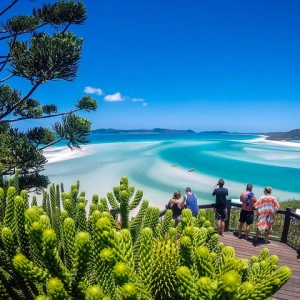
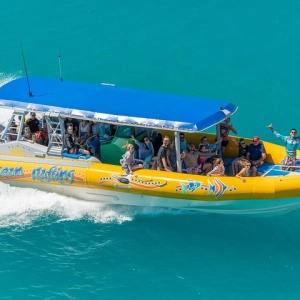
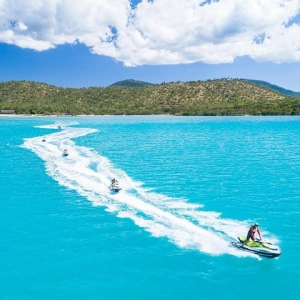
Ocean Rafting: Whitehaven Beach, Snorkelling & Hill Inlet Lookout
Sold by Ocean Rafting
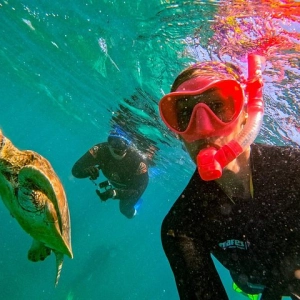
Snorkel & Whitehaven Beach Eco Cruise, Lunch | From Airlie Beach
Sold by ZigZag Whitsundays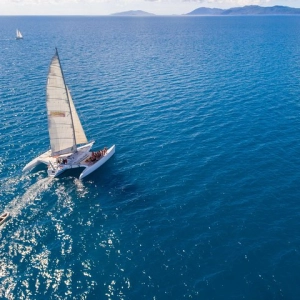
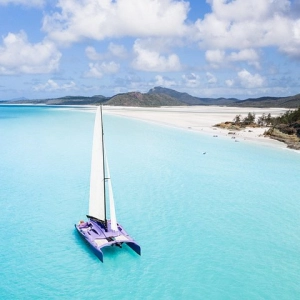
Book Catamaran Charters
Private Catamaran from Cancun to Isla Mujeres for up to 13 People
Sold by Cancun Sailing Catamarans
4H Lux 40′ Catamaran All-Inclusive in Tulum and Playa del Carmen.
Sold by Riviera Elite