Mallorca Yacht Charter Guide: Balearic Islands Sailing Itinerary & Skipper Tips

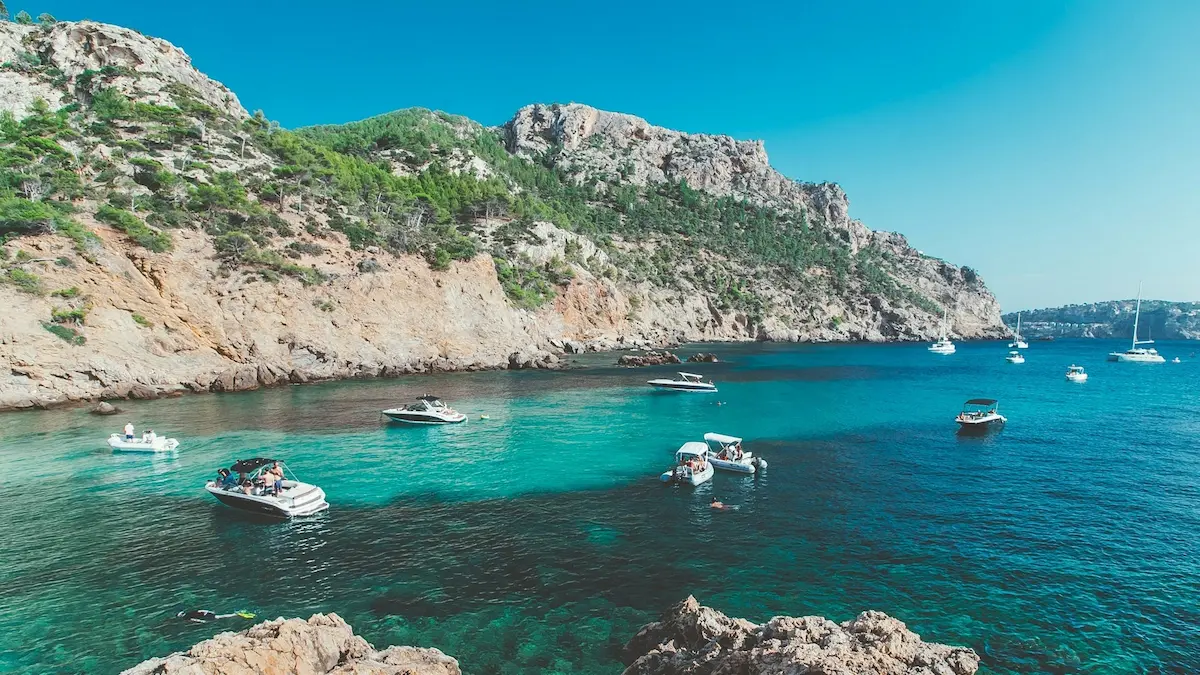
A Mallorca yacht charter offers one of the most diverse, visually stunning, and upscale cruising experiences in the Mediterranean. As the largest of Spain’s Balearic Islands, Mallorca features over 300 miles of dramatic coastline, ranging from the white sand beaches of the south to the sheer limestone cliffs of the Serra de Tramuntana on the west. Sailing here combines excellent sea conditions, modern marinas, and historic coastal towns. However, cruising Mallorca’s waters requires active navigation, strict compliance with protected seagrass anchoring laws, and respect for sudden northern wind shifts. For travelers seeking a premium Mediterranean escape, chartering a private vessel—whether a stable catamaran ideal for dropping anchor in secluded sandy coves (*calas*) or a classic monohull built for spirited open-water sailing—is the ultimate way to explore the Balearic Islands. Weekly bareboat charters typically range from $3,500 to $9,000, while hiring a professional local captain adds roughly $1,500 to $2,500 per week, providing essential pilotage and regional knowledge. If you are preparing for your first private cruise, be sure to read our guide on what to expect from a crewed yacht charter to understand the best options for your group, or explore our adjacent Croatia yacht charter guide for an Adriatic comparison.
Key Takeaways
- Strict Environmental Laws: Anchoring on protected Posidonia oceanica seagrass is strictly illegal in Spain and carries massive fines; anchors must be dropped only in clear sand patches.
- Mandatory Credentials: Spanish maritime authorities strictly require bareboat skippers to hold both an approved sailing license (e.g., ICC, RYA, SLC) and a valid VHF operator license.
- National Park Mooring: Cruising to the Cabrera Archipelago requires securing a highly restricted, pre-booked government mooring buoy permit well in advance.
⚓ Mallorca Cruising Vitals
| Best Cruising Months | Avg. Weekly Cost | Difficulty Level | Primary Winds & Currents | License Required? |
|---|---|---|---|---|
| May–October (July-August peak) | $3,500–$9,000 (bareboat) + $1,500–$2,500 (captain) | Beginner to Intermediate | Summer thermal sea breezes (10-15 kts); Tramontana (North winds) | Yes (Sailing License + VHF Radio Certificate mandatory) |
Cruising Mallorca: The Three Primary Sailing Zones
Mallorca’s coastline is geographically diverse, split into three distinct zones that dictate your routing and anchoring strategies.
1. The South & East Coasts (Easy Calas)
The south and east coasts of Mallorca are famous for their sheltered sandy coves, locally known as *calas* (e.g., Cala d’Or, Cala Mondragó, Cala Mitjana). This region offers excellent, beginner-friendly cruising with short distances between anchorages. The seabed is primarily soft white sand, providing excellent anchor holding. The waters are calm and clear, making it the premier zone for swimming, paddleboarding, and family charters. However, because of their beauty and shelter, these *calas* become heavily crowded with yachts during July and August.
2. The West Coast (Serra de Tramuntana)
The west coast of Mallorca is a dramatic contrast—a rugged, sheer wall of limestone cliffs formed by the Serra de Tramuntana mountain range, a UNESCO World Heritage site. Sailing here offers breathtaking, wild scenery but requires advanced planning. The coast is completely exposed to northern winds, and there is only **one** sheltered harbor, Port de Sóller, along the entire 50-mile stretch. Passing Cape Formentor at the northern tip can be sporty, with high-velocity wind accelerations and heavy swells.
3. Cabrera Archipelago National Park
Located 10 nautical miles off Mallorca’s southern coast, Cabrera is a protected, uninhabited group of islands that serves as a pristine marine sanctuary. Cruising here feels like stepping back in time, featuring an ancient castle overlooking a natural harbor, raw cliffs, and deep blue water teeming with marine life. Anchoring is strictly prohibited to protect the seabed; all yachts must secure one of the limited, color-coded government mooring buoys by booking online weeks in advance.
A 7-Day Palma-to-Palma Mallorca Itinerary
This classic one-week cruising itinerary covers the best of Mallorca, heading east along the sandy coves, visiting the Cabrera marine reserve, and exploring the dramatic west coast.
Disclaimer: Boating conditions, weather, and regulations change rapidly. Always cross-check with local authorities, official weather services, and paper charts before embarking.
Day 1: Palma to Es Trenc (Colonia de Sant Jordi)
Sailing Distance: ~22 nautical miles
Depart your charter base in Palma de Mallorca in the early afternoon, setting sail southeast across the Bay of Palma. Enjoy a comfortable beam reach in the afternoon sea breeze. Navigate toward the famous beach of **Es Trenc**, a long stretch of pristine white sand. Drop anchor in 15–20 feet of water over a clean sand bottom. The anchorage is highly protected from northern and eastern winds, offering a peaceful first night at anchor.
Day 2: Es Trenc to Cabrera National Park
Sailing Distance: ~10 nautical miles
Weigh anchor and sail south across the Cabrera Channel. This short passage is open to the Mediterranean, providing an exciting deep-water sail. Enter the natural harbor of **Cabrera** and secure your vessel to your pre-booked government mooring buoy (color-coded by boat length). Take the tender to explore the 14th-century castle on the cliff, hike to the lighthouse, and snorkel in water with over 100 feet of visibility.
Day 3: Cabrera to Porto Colom
Sailing Distance: ~24 nautical miles
Sail northeast back toward Mallorca’s east coast. Enjoy a spirited broad reach past the rugged cliffs of Cape Salines. Slide into **Porto Colom**, a highly secure natural harbor lined with traditional colorful fishing houses. Secure a berth along the town quay or pick up a mooring buoy. Porto Colom is highly protected from all wind directions, making it a safe haven to relax and dine ashore.
Day 4: Porto Colom to Cala Rajada
Sailing Distance: ~20 nautical miles
Sail north along the east coast, hopping between beautiful *calas*. Stop at Cala d’Or or Cala Varques for lunch and swimming. Continue north to **Cala Rajada**, a historic fishing port situated at the northeastern tip of the island. Tie up at the port quay. Cala Rajada offers excellent seaside restaurants and serves as the closest point to neighboring Menorca.
Day 5: Cala Rajada to Port de Sóller
Sailing Distance: ~35 nautical miles
Prepare for a long, spectacular sail. Round the dramatic cliffs of Cape Formentor, the northernmost tip of Mallorca, where winds can accelerate rapidly. Sail down the rugged west coast under the shadow of the Serra de Tramuntana mountains. Slide through the narrow entrance into **Port de Sóller**, the only sheltered harbor on the west coast, and secure a berth at the marina.
Day 6: Port de Sóller to Port d’Andratx
Sailing Distance: ~28 nautical miles
Continue south along the towering cliffs of the west coast, passing Sa Dragonera island. Sail into **Port d’Andratx**, a highly secure, natural harbor known as one of Mallorca’s most stylish waterfront towns. Secure a berth at the Club de Vela marina or along the public quay. Explore the upscale waterfront cafes, galleries, and excellent seafood restaurants.
Day 7: Port d’Andratx back to Palma
Sailing Distance: ~18 nautical miles
Sail east-southeast along Mallorca’s south coast, cruising past the protected cliffs of Cape Blanco. Complete your loop by sailing back into the beautiful Bay of Palma. Refuel your yacht at the fuel dock and return to your charter base in Palma, concluding your Balearic cruise.
Interested in exploring these waters? You can browse yacht charters on WeBoating.com to compare sailing vessels and hire a professional captain for your Mallorca cruise.
Yachting Infrastructure: Mallorca Marinas & Ports
Mallorca features highly developed marine infrastructure, offering full-service yacht harbors and strict mooring rules:
Palma Charter Bases: The primary starting point for Balearic cruises. Marinas like **Real Club Náutico de Palma** and **Club de Mar** offer thousands of slips, high-speed fueling, shore power, water, showers, provisioning supermarkets, and walking access to Palma’s historic cathedral district.
Port de Sóller: The critical shelter point on the rugged west coast. It features a modern marina basin, fuel, water, and direct access to the historic vintage wooden tram that runs inland to Sóller town.
Port d’Andratx: Managed primarily by the **Club de Vela**, this highly secure, natural harbor offers upscale guest slips, modern amenities, fueling, and excellent shelter from all wind directions.
Cabrera Mooring Permit System: Anchoring is strictly prohibited in the Cabrera National Park. Skippers must book mooring buoys online weeks in advance via the government portal. Buoys are color-coded: **White** (vessels under 12 meters), **Yellow** (vessels 12–15 meters), **Orange** (vessels 15–20 meters), and **Red** (vessels 20–35 meters).
🌪️ Weather Guardrails & Balearic Winds
Sailing safely around Mallorca requires a firm grasp of regional wind systems and strict marine conservation laws:
- The Tramontana: A cold, powerful north wind that blows off the French mainland and Pyrenees across the Balearic Sea. It can build rapidly, generating gale-force gusts (30–50 knots) and massive swells. The west coast and Cape Formentor are highly exposed to the Tramontana, making sailing dangerous; skippers must seek shelter immediately in Port de Sóller or Port d’Andratx.
- Thermal Sea Breezes (Embat): During summer, solar heating creates a reliable, friendly sea breeze (the *Embat*) blowing from the sea inland (10–15 knots) starting around noon and dying at sunset, providing perfect, predictable sailing conditions.
- Posidonia Seagrass Protection: Mallorca’s water clarity is due to *Posidonia oceanica* seagrass beds. These beds are heavily protected by Spanish law. Anchoring on seagrass is strictly illegal; anchors must be dropped only in clear sand patches. Patrol boats monitor popular coves and issue severe fines to violators.
Local Rules, Mooring & Licensing Regulations
Spanish maritime authorities strictly enforce safety and licensing laws along the coast:
– Mandatory Skipper Licenses: Bareboat skippers must hold an international certificate of competence (such as the ICC, RYA Day Skipper, or SLC) recognized by the Spanish government. Crucially, a **VHF Radio operator license** (SRC) is also legally mandatory on board.
– Cabrera Permits: In addition to the mooring buoy booking, you must print and carry the official Cabrera National Park entry permit, which is checked by rangers upon arrival.
– Customs and VAT: Ensure your charter contract displays the paid Spanish VAT (IVA), as maritime customs patrol boats frequently audit charter vessels for compliance.
Glossary: Speak Like a Balearic Skipper
Cala: Spanish term for a cove or small bay, typically flanked by rocky cliffs and featuring a sandy beach at the head.
Embat: The local name for the reliable, cooling summer thermal sea breeze that blows across the Bay of Palma.
Posidonia: A protected species of seagrass native to the Mediterranean that acts as a vital nursery for marine life and filters the water.
WeBoating.com is a marketplace connecting travelers with independent, third-party operators. WeBoating does not operate, manage, or own any charters or experiences.
Frequently Asked Questions About Mallorca Yacht Charters
The prime charter season runs from May through October. July and August offer the warmest weather and reliable Embat sea breezes, while May, June, September, and October offer fewer crowds and lower charter rates.
Yes. To skipper a bareboat charter in Spain, you must hold a valid, state-approved sailing license (such as the ICC, RYA Day Skipper, or SLC) and a valid VHF Radio operator certificate.
Mooring buoys must be booked and paid for online in advance via the official government portal. Ensure you select the correct buoy color corresponding to your yacht’s length.
Anchoring in Posidonia seagrass is strictly illegal. Skippers must drop anchor only in clear sandy patches. Government patrol boats actively monitor bays and issue heavy fines to violators.
The Tramontana is a powerful, cold north wind blowing off the mainland. It creates high waves and strong gusts along Mallorca’s west coast, making sailing highly dangerous; skippers must seek harbor shelter immediately.
Most yacht charters depart from Palma de Mallorca, primarily out of the Real Club Náutico de Palma or the adjacent Club de Mar marina basins.
Yes. Circumnavigating Mallorca is roughly 160–180 NM and can be done in a week, but it requires longer sailing days (5–7 hours) and leaves less time for shoreside exploration. A 10-day charter is ideal for a relaxed circumnavigation.
A cala is a narrow rocky cove ending in a sandy beach. Drop your anchor in a clear sandy patch in the center of the cove, ensuring you have enough swinging room to stay clear of the rocky sides.
Yes. Under Spanish maritime regulations, the skipper or at least one crew member must hold a valid, recognized VHF Short Range Certificate (SRC) to operate a charter boat.
You can browse yacht charters on WeBoating.com to compare catamarans, monohulls, and motor yachts across major Balearic bases like Palma, Sóller, and Andratx.