French Riviera Yacht Charter Guide: Côte d’Azur Sailing Itinerary & Skipper Tips

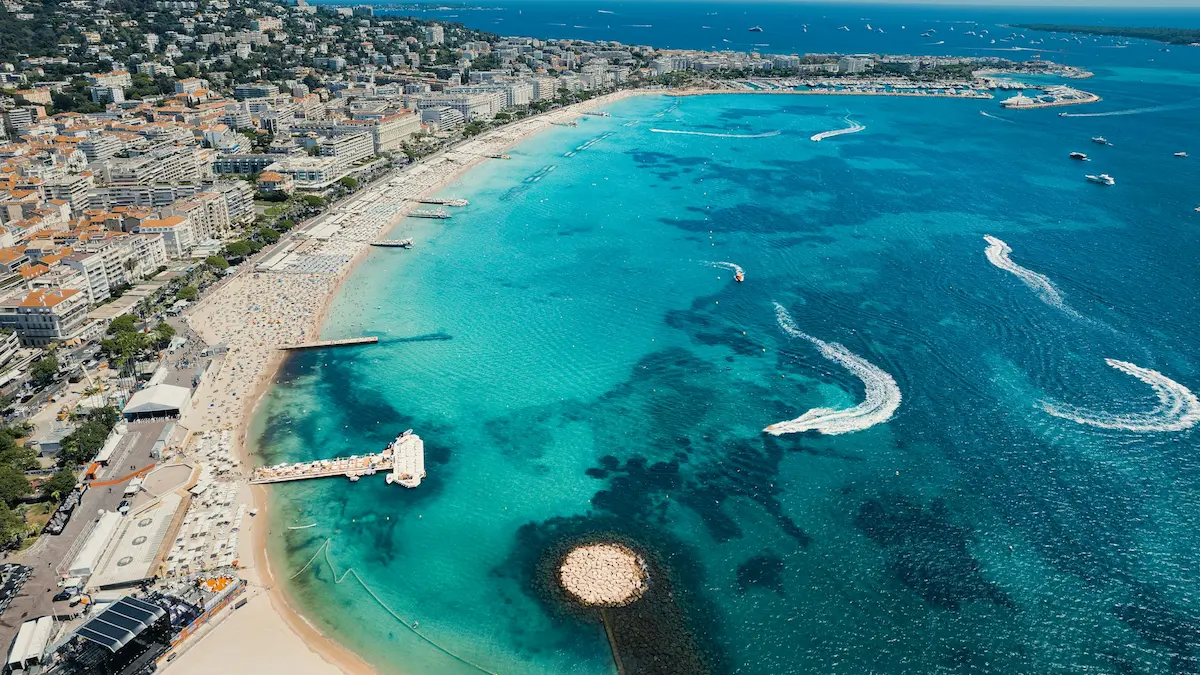
A French Riviera yacht charter offers the ultimate Mediterranean cruising experience, combining world-class glamour with scenic anchorages, crystal-clear waters, and short, line-of-sight passages. The best season to sail the Côte d’Azur is from May through October, with June and September offering the optimal balance of warm weather, active sea breezes, and manageable crowds. Weekly bareboat yacht charters on the French Riviera typically start around $3,500 to $10,000 depending on vessel size and class, while hiring a professional local skipper adds approximately $1,500 to $2,500 per week. To charter a bareboat monohull or catamaran in French waters, you must hold an ICC, SLC, or equivalent sailing license along with a VHF operator certificate. If you are comparing Mediterranean sailing destinations, read our Amalfi Coast yacht charter guide or our Greece yacht charter guide to find your perfect cruising ground.
Key Takeaways
- Chic Harbors & Secluded Bays: Cruise between the upscale beach clubs of Saint-Tropez and the tranquil, pine-scented anchorages of the Îles de Lérins.
- Short Passage Making: Navigating the Côte d’Azur is straightforward with line-of-sight legs of 10 to 20 nautical miles, making it suitable for relaxed cruising.
- Strict Seagrass Regulations: Skippers must navigate carefully to respect local laws prohibiting anchoring on protected Posidonia meadows.
⚓ Quick Facts & Experience Vitals
| Best Time to Go | Avg. Weekly Cost | Difficulty Level | Key Winds / Currents | License Required? | Primary Embarkation Port |
|---|---|---|---|---|---|
| June & September (Warm, less crowded) | $3,500–$10,000 (bareboat) + $1,500–$2,500 (skipper) | Intermediate (High harbor traffic and swell risks) | Mistral (NW wind, 15-30+ kts); summer thermals | Yes (ICC, SLC, or equivalent) plus VHF Operator Certificate | Port Vauban, Antibes |
The Lay of the Land (Introduction)
Cruising the French Riviera (Côte d’Azur) is a feast for the senses. As you glide along the coastline, the scent of lavender, salt air, and maritime pines drafts off the cliffs of the Massif de l’Estérel. The water transitions from deep sapphire blue in the channels to brilliant turquoise over sandy shallows. In the early morning, you will hear the gentle clink of halyards against aluminum masts in quiet bays before the afternoon thermal breeze fills in, kicking up a slight sea chop. From the French border at Menton down to the Gulf of Saint-Tropez, the coastline is dotted with medieval fortresses, red volcanic cliffs, and sandy coves.
Sailing Zones / Cruising Sectors
The French Riviera is divided into three distinct cruising sectors, each offering a unique sea state, wind profile, and shore-side vibe:
1. The Western Riviera: Saint-Tropez Gulf & Pampelonne
Exposed to easterly swells, this sector features wide sandy beaches like Pampelonne and the shallow, canal-lined village of Port Grimaud. Winds here are often influenced by the thermal breeze, creating a lively afternoon chop. Anchoring requires careful attention to swell direction, as bays can become rolly overnight.
2. The Central Riviera: Cannes, Lérins Islands & Estérel Coast
This sector is defined by the dramatic red volcanic cliffs of the Massif de l’Estérel and the sheltered, pine-scented channel between the Îles de Lérins (Sainte-Marguerite and Saint-Honorat). It is the most crowded cruising ground, requiring early arrivals to secure anchoring space, but offers excellent protection from westerly swells.
3. The Eastern Riviera: Nice, Villefranche & Monaco
Characterized by deep waters close to shore and towering cliffs that drop straight into the sea, the eastern coast offers dramatic scenery. The Bay of Villefranche provides a deep, natural harbor with excellent protection from the Mistral wind, though it remains open to southerly swells. This zone is close to the Italian border, making it a gateway for international cruising.
Sailing Itineraries
Itinerary 1: The Côte d’Azur Glamour Loop (7 Days)
This classic loop begins and ends in Antibes, taking in the highlights of Cannes, the Lérins Islands, and the Gulf of Saint-Tropez.
Day 1: Antibes (Port Vauban) to Îles de Lérins (Sainte-Marguerite)
Sailing Distance: ~6 nautical milesRouting Details: Easy coastal transit southwest around Cap d’Antibes; watch for day boat traffic.
Anchoring & Staging: Drop anchor in the channel between Sainte-Marguerite and Saint-Honorat in 15 feet of sand; avoid Posidonia beds.
Marine Highlights: Snorkel the underwater ecomuseum of Cannes, featuring statues by Jason deCaires Taylor.
Day 2: Îles de Lérins to Saint-Tropez (Canebiers Bay)
Sailing Distance: ~22 nautical milesRouting Details: Sail southwest across the Gulf of Napoule, passing the red cliffs of Théoule-sur-Mer.
Anchoring & Staging: Anchor in Baie des Canebiers in 12 feet of sand and mud, offering excellent holding.
Marine Highlights: Dinghy to the Vieux Port of Saint-Tropez for an evening stroll, visit the Citadel, and dine at local cafés.
Day 3: Saint-Tropez to Port Grimaud
Sailing Distance: ~6 nautical milesRouting Details: Mellow sail across the Gulf of Saint-Tropez; watch out for ferry wakes and yacht traffic.
Anchoring & Staging: Secure a berth at the Port Grimaud marina docks or anchor outside the breakwater in 15 feet of sand.
Marine Highlights: Explore the canals of Port Grimaud, known as the “Venice of Provence,” by small electric boat.
Day 4: Port Grimaud to Rade d’Agay (Estérel Coast)
Sailing Distance: ~14 nautical milesRouting Details: Sail northeast past Sainte-Maxime, heading toward the red volcanic headlands of the Estérel.
Anchoring & Staging: Drop anchor in the sheltered circular bay of Agay in 18 feet of sand and clay, excellent protection.
Marine Highlights: Hike up the red rocks of the Massif de l’Estérel for sweeping coastal views.
Day 5: Rade d’Agay to Cannes (Vieux Port)
Sailing Distance: ~10 nautical milesRouting Details: Sail northeast around Cap Roux and Cap de l’Aiguille; watch for shallow rocks close to shore.
Anchoring & Staging: Dock at Vieux Port de Cannes (pre-booking required) or anchor outside the main harbor wall in 25 feet of mud.
Marine Highlights: Walk the Promenade de la Croisette, explore the historic Le Suquet district, and shop local markets.
Day 6: Cannes to Villefranche-sur-Mer
Sailing Distance: ~18 nautical milesRouting Details: Cruise east past Cap d’Antibes and Nice, entering the deep bay of Villefranche.
Anchoring & Staging: Pick up a designated mooring buoy in Villefranche Bay or anchor in 30 feet of sand in the northern section.
Marine Highlights: Swim in the clear waters of the bay, visit the 16th-century Citadel, and explore Nice’s old town.
Day 7: Villefranche-sur-Mer back to Antibes (Port Vauban)
Sailing Distance: ~8 nautical milesRouting Details: Sail southwest across the Baie des Anges back to Antibes, watch for commercial ferries near Nice.
Anchoring & Staging: Return to your slip at Port Vauban, complete vessel checkout.
Marine Highlights: Tour the Picasso Museum inside Château Grimaldi in Antibes and walk the ramparts.
Itinerary 2: The Estérel & Porquerolles Islands Cruise (7 Days)
A wilder, long-distance itinerary that takes you past the Estérel volcanic cliffs to the pristine islands of Porquerolles and Port-Cros National Park.
Day 1: Antibes (Port Vauban) to Baie de la Garoupe (Cap d’Antibes)
Sailing Distance: ~5 nautical milesRouting Details: Short shake-down sail south around the eastern side of Cap d’Antibes.
Anchoring & Staging: Drop anchor in Baie de la Garoupe in 15 feet of sand, offering protection from westerly winds.
Marine Highlights: Paddleboard along the rocky cliffs of Cap d’Antibes and walk the coastal path (Sentier des Douaniers).
Day 2: Baie de la Garoupe to Saint-Raphaël (Port Santa Lucia)
Sailing Distance: ~20 nautical milesRouting Details: Sail southwest past Cannes and the Estérel cliffs, crossing the Gulf of Fréjus.
Anchoring & Staging: Secure a transient slip at Port Santa Lucia in Saint-Raphaël or anchor outside in 20 feet of sand.
Marine Highlights: Explore the old town of Saint-Raphaël, visit the archaeological museum, and buy fresh seafood.
Day 3: Saint-Raphaël to Porquerolles Island (Anse de Notre-Dame)
Sailing Distance: ~32 nautical milesRouting Details: Sail southwest along the Maures coast, passing Cavalaire-sur-Mer and entering the Îles d’Hyères.
Anchoring & Staging: Anchor in the sandy bay of Notre-Dame on the north coast of Porquerolles in 15 feet of turquoise water.
Marine Highlights: Rent a bicycle to explore the pine forests, vineyards, and white-sand beaches of Porquerolles.
Day 4: Porquerolles Island to Port-Cros National Park (Anse de Port-Cros)
Sailing Distance: ~8 nautical milesRouting Details: Short eastward sail between the islands of Porquerolles and Port-Cros; watch for strong currents in the pass.
Anchoring & Staging: Pick up a park-regulated mooring buoy in the harbor of Port-Cros (anchoring is strictly prohibited).
Marine Highlights: Snorkel the underwater marine trail at La Palud beach, viewing groupers, barracudas, and octopus.
Day 5: Port-Cros to Cavalaire-sur-Mer
Sailing Distance: ~16 nautical milesRouting Details: Sail northeast back to the mainland coast, crossing the open-water channel.
Anchoring & Staging: Secure a berth at the Port de Cavalaire or anchor in the wide sandy bay of Cavalaire in 18 feet of sand.
Marine Highlights: Walk along the 3-mile sandy beach and dine at local Provençal bistros along the marina.
Day 6: Cavalaire-sur-Mer to Saint-Tropez (Pampelonne Bay)
Sailing Distance: ~12 nautical milesRouting Details: Round Cap Camarat and Cap Taillat, heading north into the famous Pampelonne Bay.
Anchoring & Staging: Drop anchor in the sandy bottom of Pampelonne Bay in 20 feet of water; watch for easterly swells.
Marine Highlights: Swim off the famous Pampelonne beach, visit the legendary Club 55, and enjoy the beach club vibe.
Day 7: Saint-Tropez back to Antibes (Port Vauban)
Sailing Distance: ~24 nautical milesRouting Details: Sail northeast across the Gulf of Saint-Tropez and the Esterel coast back to Antibes.
Anchoring & Staging: Return to your slip at Port Vauban, complete vessel checkout.
Marine Highlights: Tour the historic town of Antibes and celebrate the end of your cruise with a dinner in the old town.
Local Berthing & Staging (Small Boat Harbors & Marinas)
The Côte d’Azur is home to some of the world’s most luxurious and well-equipped marinas, but berths are highly contested:
Port Vauban (Antibes)
Europe’s largest marina by tonnage offers over 1,500 berths, including the famous “Billionaires’ Quay” for superyachts. The inner harbor has draft limits of 5 meters, while outer berths handle up to 7 meters. Fuel docks, pump-out stations, and high-end provisioning are fully available, and the harbor offers total protection from all wind sectors behind massive historical ramparts.
Vieux Port de Cannes
Situated right in the heart of Cannes, Vieux Port offers berths for yachts up to 5 meters in draft. It has full service features including shore power, fresh water, fuel, and marine mechanics. The marina is protected by a solid breakwater but can experience surge during heavy easterly gales. Excellent provisioning options are within walking distance in Cannes old town.
Port de Saint-Tropez
Offering about 700 berths with draft limits up to 6 meters, this world-famous port is extremely difficult to book in peak season. It is well-protected from west and north winds but remains open to easterly swells that wrap around the harbor entrance. Basic provisioning is available nearby, though prices are high and docks are congested with spectator crowds.
Port de Villefranche (La Darse)
This historic port is located inside the highly protected Bay of Villefranche, accommodating drafts up to 4 meters. It has fuel, water, and basic pump-out facilities, with local shops offering basic provisioning. The harbor is exceptionally well-protected from the northerly Mistral wind by high surrounding hills, making it a key safety refuge.
🌪️ Regional Weather Guardrails & Winds
Understanding local wind systems and sea states is vital for safety on the French Riviera:
- The Mistral Wind: The primary meteorological hazard is the Mistral, a cold, dry, north-westerly wind that accelerates down the Rhône Valley. While the Côte d’Azur is partially sheltered by the Maures and Estérel mountains, a strong Mistral can blow at 15–30+ knots (and occasionally exceed 40–50 knots), flattening seas near the shore but creating dangerous, steep waves further out. Skippers must monitor weather maps and maintain high-authority ground tackle.
- Easterly Swells: Strong easterly winds (Levante) can build substantial swells, making exposed beaches like Pampelonne or outer anchorages roll dangerously, requiring yachts to seek shelter in north-facing harbors or behind Cap d’Antibes.
- Tidal Fluctuations: The Mediterranean has a minor astronomical tide (under 0.3 meters / 1 foot). However, strong atmospheric pressure drops can cause meteorological tides that shift water levels by up to 0.5 meters, affecting clearances in shallow channels.
Local Rules, Mooring & Anchorages
Strict maritime regulations are enforced along the French Riviera (Côte d’Azur) to preserve the delicate marine environment and manage heavy traffic:
Fees & Permitting Nuances
- Marina Peak Surcharge: Daily mooring rates at premium harbors like Port Vauban or Saint-Tropez surge up to 300% during July and August, requiring credit card guarantees at the time of booking.
- Marine Park Entry: Cruising inside protected zones like the Port-Cros National Park requires paying daily passenger and vessel permits collected by park rangers on patrol.
- Mooring Buoy Fees: Regulated buoy fields (such as those at Villefranche-sur-Mer) charge daily rates based on vessel LOA, with overnight stays limited to a maximum of 3 consecutive nights.
- Customs Clearances: Vessels departing French waters for non-EU territories (like clearing into Monaco or heading to the UK flag channels) must clear customs with the local Police Aux Frontières (PAF).
- Vessel Length Limits: Mooring fees are calculated strictly by length overall (LOA) and beam, meaning catamarans are charged a 50% to 100% premium over monohulls in almost all Côte d’Azur marinas.
Prohibited & Protected Zones
- Seagrass Anchoring Ban: Under prefectural decrees (including Decree 123/2019), anchoring on protected Posidonia oceanica seagrass beds is strictly illegal, with enforcement vessels using underwater cameras to verify chain placement.
- Commercial Shipping Lanes: Anchoring is prohibited within the designated commercial shipping channels leading into the ports of Nice, Cannes, and Marseille to allow cruise ship transit.
- Submarine Cable Buffers: Vessels must maintain a minimum standoff distance of 200 meters from all marked underwater power and communication cables, which are marked on official SHOM charts.
- Pelagos Sanctuary Rules: The entire French Riviera lies within the Pelagos Sanctuary, where disturbing marine mammals, using active sonar, or holding speed boat races is strictly restricted.
- Underwater Light Ban: To protect marine ecosystems, the use of high-power underwater hull lights is prohibited from three hours after sunset until sunrise in all French coastal waters.
Safety & Environmental Risks
- Holding Ground Variability: Bottom holding ranges from excellent in the thick mud of Villefranche to poor on the flat rocky slabs off Saint-Tropez, requiring visual verification of anchor set.
- Mistral Wind Safety: The sudden onset of the north-westerly Mistral can push wind speeds from 10 to over 40 knots within hours, making it unsafe to anchor in bays exposed to the west.
- Tidal Swing Calculation: Although the Mediterranean tidal range is small (typically under 0.3 meters), barometric pressure changes can cause sudden water level shifts (marrobbio) that impact shallow reef clearance.
- Swinging Room Limits: In crowded anchorages like the Îles de Lérins, vessels must use a stern anchor or Med-style mooring lines to prevent colliding with adjacent yachts when the wind shifts.
- Reef Piloting Hazards: Navigating around Cap d’Antibes requires keeping a sharp lookout for isolated shallow rock pinnacles and keeping a minimum distance of 100 meters from the surf line.
Disclaimer: Boating conditions, weather, and regulations change rapidly. Always cross-check with local authorities, official weather services, and paper charts before embarking. If you’re planning a yacht charter in Cannes, Antibes, or Saint-Tropez, compare listings and hire licensed local skippers directly on WeBoating.com.
WeBoating.com is a marketplace connecting travelers with independent, third-party operators. WeBoating does not operate, manage, or own any charters or experiences.
Frequently Asked Questions
The best season is May through October. June and September are the “sweet spots,” offering warm weather, active sea breezes, and fewer crowds than July and August.
Bareboat monohulls and catamarans typically range from $3,500 to $10,000 per week. Hiring a skipper adds $1,500 to $2,500 per week. Luxury motor yachts start around $20,000 and can exceed $100,000 per week.
Yes, bareboating in French waters requires an ICC (International Certificate of Competence), SLC, or RYA Day Skipper equivalent, along with a VHF radio operator certificate. Otherwise, you must hire a professional captain.
Under decrees from the Préfecture Maritime de la Méditerranée, anchoring is strictly prohibited on protected Posidonia seagrass meadows. Captains must use the DONIA app to locate sandy beds or face fines up to €150,000.
Port Vauban in Antibes is the primary embarkation port, home to the largest marina facilities. Alternate starts include Vieux Port in Cannes, Port Hercule in Monaco, and the Port of Saint-Tropez.
The Riviera offers short, line-of-sight hops (10-20 NM) and reliable summer sea breezes, making it manageable. However, extreme harbor congestion and the risk of sudden Mistral winds require experienced piloting.
Marinas must be booked months in advance via platforms like Riviera Marinas or by calling on VHF Channel 9. Peak events like the Cannes Film Festival or Monaco GP command premium rates.
Yes, Italy’s Ligurian coast is a short sail east of Menton. Cruising to Corsica involves an open-ocean passage of 80-100 NM across the Ligurian Sea, requiring a seaworthy vessel and stable offshore forecasts.
The Mistral is a cold, north-westerly wind that accelerates down the Rhône Valley and can reach 40-60+ knots in the western Mediterranean. It blows clear skies but builds steep waves, requiring skippers to reef early.
Designated mooring buoy fields are being installed in protected bays (like Villefranche and the Lérins Islands) to protect the seabed. Fees vary by boat length and are collected by local park rangers.
Pack lightweight summer clothing, non-marking deck shoes, polarized sunglasses, a windproof spray jacket, and a VHF operator license. Keep luggage soft-sided for easy storage on board.
You can browse yacht charters on WeBoating.com to compare catamarans, monohulls, and motor yachts, and hire a licensed local skipper for your cruise.