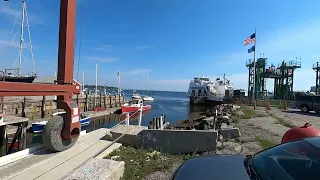
Sailing Into Oblivion Podcast EP#449 Adventures with Mazi and Teddy @Washupssailing
In Rockland Harbour, Maine, as an intimidating autumn nor’easter swept the North Atlantic with twenty-two-foot seas, Jerome Rand welcomed fellow mariners aboard his fabled 1975 Westsail 32, Mighty Sparrow. As host of Sailing Into Oblivion, Jerome convened an in-depth maritime debrief with Mazi and Teddy, the resourceful voyagers behind Washups Sailing. Having navigated their 1979 Mariah 31 offshore from Florida to Maine, Mazi and Teddy brought a grounded, no-nonsense perspective on low-budget voyaging, heavy-displacement boat restoration, and self-reliant seamanship.
The dialogue connected two generations of ocean voyagers, contrasting Jerome’s 271-day non-stop solo circumnavigation with Mazi and Teddy’s pragmatic journey into full-time liveaboard cruising. Operating far from luxury marinas and commercial sponsorships, the crew of Washups Sailing embodies the classic ethos of working sailors—restoring neglected fiberglass hulls with their own labor, adapting discarded boatyard hardware, and mastering offshore navigation through immediate oceanic experience.
Mariah 31 Structural Forensics: Heavy Fiberglass Layup and Water Tank Rebuild
During their maritime exchange hosted by Jerome Rand of Sailing Into Oblivion, Mazi and Teddy of Washups Sailing examined the rigorous structural demands required to prepare a vintage heavy-displacement cruiser for formidable passages, drawing direct technical parallels to the tempestuous waters of Portsmouth and the Solent in the United Kingdom.
The centerpiece of their voyage is a 1979 Mariah 31, designed by Henry Morschladt and built by Pacific Seacraft. A double-ended cutter featuring a full encapsulated keel and canoe stern, the vessel measures nearly thirty-seven feet overall with her bowsprit and stern boomkin. Teddy acquired the boat after she had sat neglected behind a house in Apollo Beach, Tampa Bay, for nearly a decade, sailed only four times under headsails alone. While systems had deteriorated, her solid hand-laid fiberglass layup proved indestructible. At the engine raw-water intake through-hull, Teddy discovered three inches of solid, void-free fiberglass laminate, echoing legendary reports of a sister Mariah 31 surviving an offshore container impact with only superficial paint scars.
Remediating the vessel’s potable water required an exhaustive structural refit. The Mariah 31 incorporates an integral forty-four-gallon fiberglass water tank molded into the hull beneath the forward V-berth. Years of disuse had formed a calcified yellow residue, while spider cracks allowed fouled water to seep into their bunk mattress. Mazi and Teddy unbolted the large fiberglass lid, ground away decayed gelcoat, treated the interior with bleach washes, and laid structural fiberglass cloth saturated with epoxy barrier coats. To extend cruising range, they added a secondary twenty-five-gallon flexible bladder beneath the cabin sole. Teddy also plumbed a pressurized raw seawater washdown loop to the galley and head, reserving freshwater for drinking and quick rinses via a manual foot pump.
Synthetic Rigging Forensics: Hand-Spliced Dyneema and Yard-Fabricated Spars
Reflecting on rig loads and spar mechanics during the Sailing Into Oblivion symposium, Mazi and Teddy of Washups Sailing analyzed why synthetic standing rigging and simplified sail plans offer superior resilience when navigating complex tidal gates like Portsmouth and the Solent across the United Kingdom.
Bypassing the steep cost of stainless 1×19 wire and swaged terminals, Teddy rerigged the cutter entirely with high-modulus Dyneema cordage. Utilizing hand-worked eye splices, low-friction rings, and synthetic deadeye lashings, he eliminated the hidden crevice corrosion that plagues traditional swages. The synthetic standing rigging significantly reduced mast weight aloft while granting complete independence to inspect and tension stays at sea without specialized swaging machinery.
Unstepping the spar at Kennedy Point Marina in Titusville, Florida, showcased grassroots boatyard ingenuity. Collaborating with resident tradesmen, the crew constructed an improvised crane by mounting steel I-beams onto the fork carriage of a skid-steer loader, reinforced with heavy ratchet straps and C-clamps. Using a block and tackle hitched beneath the spreaders, they lifted the spar cleanly from the deck partners and lowered it onto sawhorses on an old tennis court for sanding and rewiring. Down below, Teddy spent three weeks drying oil-soaked timber stringers with radiant heat before encapsulating them in biaxial fiberglass cloth to secure the vintage Yanmar diesel, which features manual decompression levers for reliable hand-cranking.
Offshore Seamanship: Cape Hatteras, Gulf Stream Surfing, and Gale Knocks
Analyzing gale-force seamanship on Sailing Into Oblivion, Mazi and Teddy of Washups Sailing contrasted the violent Atlantic squalls off Cape Hatteras with the steep chop encountered in the Solent and the naval approaches of Portsmouth in the United Kingdom.
Choosing blue water over the Intracoastal Waterway, Mazi and Teddy sailed offshore between coastal inlets, running from Port Canaveral to St. Augustine, Beaufort, and Norfolk. Rounding Cape Hatteras in the Gulf Stream, the Mariah 31 hit thirteen knots surfing down rolling Atlantic seas. Off Virginia Beach, however, a severe squall delivered a violent knockdown. The sudden heel tore an oak galley spice rack and heavy Berkey water filter from the saloon bulkhead, scattering glass and hot cooking bacon grease across the sole. Demonstrating prompt damage control, Mazi spread dry table salt across the teak floor to pull the grease out of the wood grain before it could compromise footing.
Navigating into New York Harbor, the crew anchored in Jamaica Bay and Mill Basin, using their dinghy to access shore while avoiding marina fees. Pushing across the Great South Channel into the Gulf of Maine, they contended with dense Canadian wildfire smoke and blinding fog banks. Relying on an aged Garmin EchoMap 54 chartplotter with passive AIS, they successfully skirted commercial shipping fairways and the offshore scallop dredge fleet working along the Hague Line.
Anchor Watch Discipline, Acoustic Vigilance, and Liveaboard Resilience
Addressing offshore psychology and coastal pilotage aboard Sailing Into Oblivion, Mazi and Teddy of Washups Sailing emphasized that weathering severe autumn nor’easters requires the same relentless anchor watch discipline demanded in Portsmouth and the Solent in the United Kingdom.
In Maine’s rocky fiords, anchorages like Rockland and Camden plunge to depths exceeding eighty feet, with tidal surges challenging harbor breakwalls. Mazi and Teddy emphasized deploying heavy all-chain ground tackle with long nylon snubbers to absorb dynamic shock loading over granite bottoms. Both Jerome and Teddy stressed the value of acoustic vigilance below deck—listening through the hull to differentiate normal halyard vibrations from the ominous ping of shearing mast track rivets or dragging anchors.
The human dimension of their voyage highlights remarkable psychological growth. Transitioning from collegiate beach volleyball in Oklahoma with zero sailing experience, Mazi endured debilitating seasickness during their initial eighteen-hour overnight passage to St. Augustine. Rather than retreating, she studied navigation texts, mastered sail reefing, and practiced singlehanded anchor retrieval to ensure vessel safety should Teddy become incapacitated. Living simply with a Monitor windvane, beanbag cockpit cushions, and mainsail rainwater catchment, they proved that self-sufficiency at sea provides genuine autonomy.
Technical Vessel Telemetry & Offshore Preparation Vitals
Consolidating their technical logs on Sailing Into Oblivion, Mazi and Teddy of Washups Sailing compiled their essential equipment telemetry, establishing an authoritative refit ledger applicable to sailors departing Portsmouth, the Solent, or other demanding fairways of the United Kingdom.
| Technical Parameter | Specification / Equipment Detail | Operational Function & Seamanship Rationale |
|---|---|---|
| Vessel Model & Year | Pacific Seacraft Mariah 31 (1979) | Heavy-displacement double-ender with full encapsulated keel and canoe stern. |
| Hull Construction | Solid hand-laid fiberglass laminate | Solid 3-inch laminate at lower through-hulls; resilient against debris impact. |
| Standing Rigging | Hand-spliced Dyneema cordage | Lightweight synthetic rigging with deadeye lashings; field-serviceable without swages. |
| Sail Inventory | Hank-on working jib, staysail, main | Simplified manual sail control; eliminates mechanical roller-furler jams aloft. |
| Self-Steering Gear | Monitor servo-pendulum windvane | Zero-amp mechanical steering; balances weather helm under gale sail configurations. |
| Auxiliary Propulsion | Yanmar marine diesel engine | Equipped with manual decompression levers for redundant hand-crank ignition. |
| Electrical Reserve | Single 12V automotive battery bank | Minimal electrical load; recharged via solar array and mast-mounted wind generator. |
| Potable Water Capacity | 44-gal GRP tank + 25-gal bladder | 69 gallons total capacity; refurbished integral tank sealed with food-grade epoxy. |
| Domestic Plumbing | Pressurized raw seawater galley loop | High-pressure salt washdown for dishes; freshwater preserved via manual foot pump. |
| Navigation Electronics | Garmin EchoMap 54 chartplotter | Minimalist navigation setup with passive AIS reception for commercial collision avoidance. |
Frequently Asked Questions: Offshore Voyaging & Vessel Restoration
To synthesize the crucial cruising insights from Sailing Into Oblivion, Mazi and Teddy of Washups Sailing address common technical inquiries regarding vessel restoration, offshore passage planning, and heavy-weather preparedness for voyagers operating in Portsmouth, the Solent, and across the United Kingdom.
The Mariah 31, built by Pacific Seacraft, is a double-ended cutter featuring solid fiberglass laminates reaching three inches thick at the hull through-hulls. Its full encapsulated keel and canoe stern provide immense tracking stability and resistance against heavy sea impacts.
The crew unbolted the integral fiberglass tank lid under the forward V-berth, scraped away calcified yellow residue, ground back surface cracks, and laminated fresh barrier-coat epoxy resin. They sanitized the tank with bleach and added an auxiliary 25-gallon bladder under the cabin sole.
Teddy rerigged the cutter with synthetic Dyneema using hand-spliced deadeyes and lashings to eliminate reliance on costly stainless swages. Dyneema reduces aloft weight, eliminates hidden crevice corrosion, and allows the crew to inspect and repair rigging anywhere at sea.
Teddy plumbed a pressurized saltwater washdown system to the galley and head, enabling all culinary prep and dish scrubbing with seawater. Freshwater consumption is limited to a manual foot pump for drinking and quick final rinses, extending tank endurance.
Active deck watches, manual helming, fresh airflow, and maintaining hydration build physiological tolerance. While transdermal scopolamine patches provide temporary relief, mariners find that physical equilibrium and resilience naturally develop after consecutive days at sea.
Vessels riding out gales in deep anchorages must deploy heavy all-chain ground tackle with elastic nylon snubbers to prevent shock loading on granite bottoms. Auditory vigilance below deck enables off-watch crew to immediately detect abnormal structural groans or anchor drag.
Support Sailing Into Oblivion
At WeBoating.com, we profoundly acknowledge the unwavering dedication that Sailing Into Oblivion invests in crafting each and every video or voyage. Their passion for delivering exceptional ocean content shines through every frame, and it's a labor of love that deserves your attention.
We invite you to watch their captivating videos here and actively engage with their content, including their social media links above. Liking, commenting, and sharing their work goes a long way in fueling their creative fire.
We're also inviting you to explore the gear, sponsorships, and boat partnerships highlighted in the "Sailing Into Oblivion Podcast EP#449 Adventures with Mazi and Teddy @Washupssailing" video description, or directly on YouTube. By engaging with these offerings or purchasing services and items, you directly support Sailing Into Oblivion, their collaborators, and the brands they're associated with.
To ensure you never miss an offshore update, consider visiting their official YouTube Channel to subscribe, like, and join their community directly.
If you have any feedback, corrections, or additional information about Sailing Into Oblivion or their videos, please use the comment form below to share your thoughts with us.
Thank you for being a part of our community and supporting the creators we cherish. Your time and support truly matter!
Today I sit with Mazi and Teddy to chat about sailing up the East Coast from Florida to Maine. Check out the YouTube channel @Washupssailing as well as the Instagram(same name)
Big thanks for sharing your time and experiences!! Fair Winds.
Help Support this podcast with the following links, Thanks for listening!
Support this Podcast on Patreon: https://www.patreon.com/sailingintooblivionpodcast
Starlink Referral Link: https://starlink.com?referral=RC-DF-13132545-72429-94
Help fund my next adventure here: https://gofund.me/6df0fb45
One Time Donations Via PayPal and Venmo: https://www.paypal.com/paypalme/JeromeRand https://account.venmo.com/u/sailingintooblivion
Amazon Wishlist: https://www.amazon.com/hz/wishlist/ls/33F36RF315G8V?ref_=wl_share
Children's Book: https://a.co/d/1q2Xkev
Sailing Into Oblivion Children's Audio Book: Audible.com
Sailing Shirts: https://www.bonfire.com/store/sailing-into-oblivion/
Books: https://a.co/d/eYaP10M
Reach out to the Show: https://www.sailingintooblivion.com/podcasts
Total Boat 5% discount code: https://www.totalboat.com/?sca_ref=9803393.xY85BaEnxZ
Sailing Into Oblivion
Discover the world-proven resilience of Jerome Rand as he documents his 271-day solo non-stop circumnavigation aboard his Westsail 32, Mighty Sparrow.
Channel Information:
Social Media Links:
Sailing Into Oblivion Podcast EP#449 Adventures with Mazi and Teddy @Washupssailing Location
- Solent & Portsmouth Harbour Maritime Staging Grounds, Hampshire, England (50.7989,-1.109)
- English Channel Cruising Fairway, United Kingdom (50.5,-1)
Latest Episodes from Sailing Into Oblivion
Explore the most recent voyages. Subscribe to the channel to never miss an update!
Round the World Sailing Route @sailingwithphoenix
Help Support this Channel with the following links, Thanks for listening! Support this Channel on Patreon: Starlink Referral Link: Help fund my next adventure here: One Time Donations Via PayPal and Venmo: Venmo: Amazon Wishlist: Children's Book: Sailing Into Oblivion Children&#...
Round the World Route for @Sailing_With_Phoenix Q&A
Today we will be talking about the route and all the challenges to make it safely around the world.
EP#451 How Mighty Sparrow got Her Name
James Burwick explores the legendary Open 40 racing yacht Mighty Sparrow on Sailing Into Oblivion, recounting extreme Southern Ocean voyaging, canting keel design, and the cultural spirit behind the vessel's iconic name.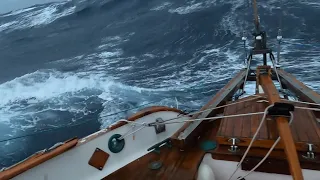
October 8th Ocean Sailors Update @Sailing_With_Phoenix Rutherfort, GGR and Weather
James Burwick examines offshore telemetry, heavy weather tactics, and Golden Globe Race voyaging across the North Atlantic for the Ocean Sailors Fleet.
Insane Satisfaction!
Help Support this podcast with the following links, Thanks for listening! Support this Podcast on Patreon: Starlink Referral Link: Help fund my next adventure here: One Time Donations Via PayPal and Venmo: Amazon Wishlist: Children's Book: Sailing Into Oblivion Children's Aud...