Round the World Sailing Route @sailingwithphoenix
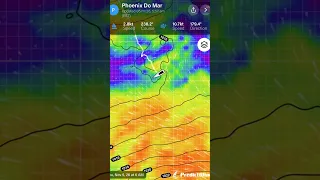
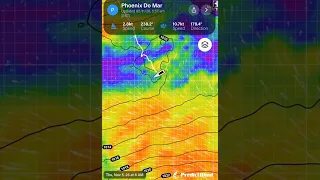
Inside a boatyard in Rockland, Maine, solo circumnavigator Jerome Rand monitors satellite tracking and marine weather models as Oliver navigates the Pacific Ocean aboard the 1998 Pacific Seacraft 40 Phoenix do Mar. Tracking south of the Baja Peninsula near Cabo San Lucas, Oliver crosses 20° North latitude at 6 knots. Addressing observers who question why solo circumnavigators bypass tropical canals, Rand explains the nature of the challenge: “you go around the world without stopping anywhere. You just keep going.”
Sharing routing analysis on Sailing Into Oblivion, Rand evaluates the meteorological hazards and navigational strategies required to pilot a 40-foot cutter around the world without outside assistance.
Weather Routing and Tropical Calms off Mexico
Examining offshore models on PredictWind and Windy, Rand focuses on a hurricane developing off Mexico. Rather than driving into the system, Phoenix do Mar remains positioned far enough south to evade the storm center. Forecasts show the tropical system will fizzle out by Tuesday, leaving patchy conditions where wind speeds drop below 10 knots.
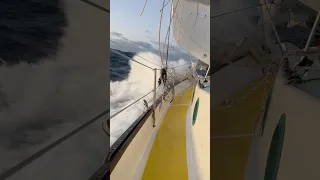
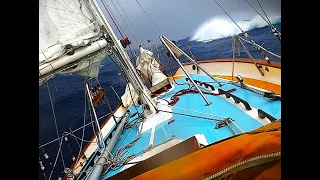
Extended calms introduce severe mechanical wear. Leftover ocean swells rolling from hundreds of miles away rock the hull violently from side to side. Without steady wind filling the canvas, sails slat and running rigging jerks against hardware. Rand notes that dead downwind courses become unmanageable, requiring a solo skipper to broad reach across the breeze to maintain forward drive.
Daily deck inspections proved crucial when Oliver detected wear on his staysail sheet. The friction occurred on the line’s protective outer UV jacket rather than the structural load-bearing core. Rand explains that by adjusting the knot loop at the sail clew, Oliver shifted the friction point along the line, adding slick anti-chafe tape over contact zones to halt rope degradation.
The Intertropical Convergence Zone and the Southeast Trades
South of Mexico lies the Intertropical Convergence Zone, commonly known as the doldrums. This meteorological barrier between the northeast and southeast trade winds brings calms and localized convective rain squalls. Rand estimates Oliver will require 7 to 8 days to transition through the equatorial band. These squalls bring 20-minute to 2-hour bursts of sudden wind, offering valuable opportunities to practice reefing routines before high latitudes.
Emerging from the doldrums presents immediate routing complications. In the southeast trade wind belt, opposing wind angles prevent Phoenix do Mar from pointing directly at Cape Horn. If a skipper falls off the wind, prevailing breezes risk pushing the vessel into the central South Pacific. Rand emphasizes that Oliver must maintain a disciplined heading south or south-southeast, accepting slower progress to stay east of the Pacific high before picking up the roaring westerlies.
Rounding Cape Horn: The Austral Summer Strategy
To reach the Atlantic Ocean, Phoenix do Mar must descend to 57° South latitude to round Cape Horn. Known as the graveyard of the oceans, Cape Horn compresses massive Southern Ocean swells between South America and the Antarctic Peninsula. Oliver’s departure timing from Port Townsend, Washington positions him to round the cape in December during peak austral summer, maximizing daylight and favorable weather windows.
Tackling Cape Horn first provides a distinct mechanical advantage. The vessel arrives with fresh standing rigging, intact sails, and minimal structural fatigue. Addressing anxieties surrounding open-ocean navigation, Rand recalls Sir Robin Knox-Johnston’s humorous rule of thumb: “sailing alone around the world is easy. You head south and when you get past Africa, you hang a left. And when you get past Cape Horn, you take another left. And when you smell fish and chips, you hang a right.” Oliver maintains primary satellite plots alongside paper charts and celestial navigation manuals as an analog safeguard against electrical failures.
Heavy Weather Tactics and Southern Ocean Routing
Once south of 40° South latitude, Phoenix do Mar enters an uninterrupted corridor of low-pressure systems circling the globe from west to east. Rand advises that the safest tactical route keeps the vessel along the northern perimeter of these deep depressions. Tracking along the northern rim allows a skipper to harness sustained westerly winds while staying clear of the volatile storm center where wind directions shift violently.
Offshore survival hinges on conservative preparation before 45-knot gales arrive. Rand emphasizes establishing simple routines, setting storm jibs and deep triple-reefed mainsails while keeping work inside the cockpit. Recalling how Oliver practiced heaving-to in 25-knot breezes earlier in the passage, Rand highlights the importance of mastering transitions between running off, fore-reaching, and lying ahull.
Offshore isolation also tests psychological stamina. Rand shares an endurance lesson passed down during his years at the Bitter End Yacht Club: “no matter how hard it gets out there, always remember that um the winds are always going to change and as long as you can just make it to that point when things are really, really bad all you have to do is make it to that point and and then things will change and they’ll get better.” During his own 271-day non-stop voyage aboard Mighty Sparrow, Rand remarks that surviving a gale is only part of the ordeal: “Oh, the the gale wasn’t the problem. It’s the leftovers that I have to just sit here and wallow in. That’s the problem.”
Shipboard Autonomy: Power Generation, Gear, and Provisions
Sustaining a solo non-stop passage requires logistical self-sufficiency. Phoenix do Mar departed equipped with 2 million calories of provisions, largely composed of lightweight dehydrated rations to ensure nutritional security. High electrical demands from Starlink satellite terminals and digital chart plotters require active power management.
Electrical power relies on solar arrays paired with a transom-mounted hydrogenerator propeller. While the towed water turbine generates ample amperage under sail, Rand warns that surfing down steep Southern Ocean waves at 14 to 15 knots risks stripping the unit, requiring the skipper to retract the blade during high-speed runs. To maintain battery banks, Oliver must run the auxiliary diesel engine every 7 to 10 days for several hours of alternator charging. Observing the steep learning curve of offshore voyaging, Rand notes: “the ocean, the Pacific, is going to be his teacher ultimately.”
The Southern Capes and the Final Upwind Leg
After clearing Cape Horn and passing east of the Falklands, Phoenix do Mar tracks northeast across the South Atlantic Ocean toward Africa. To round the Cape of Good Hope safely, Oliver must maintain a course south of 36° South latitude to steer clear of the Agulhas Current, where opposing winds and strong flows produce hazardous breaking seas comparable to the Gulf Stream.
Crossing the southern Indian Ocean between November and April exposes the vessel to potential southern fringe cyclone developments. Continuing eastward underneath Tasmania and New Zealand, Rand anticipates Oliver will complete the Southern Ocean leg by February or March. The final challenge shifts back to the Pacific, where the skipper must beam reach across the trades before enduring an arduous final beat to windward through the northeast trades to return to Port Townsend.
Tactical Circumnavigation Routing Metrics
| Passage Leg | Target Latitude / Waypoint | Tactical Considerations |
|---|---|---|
| Tropical Pacific | 20° N (Baja Peninsula) | 6 knots speed, dodging hurricane swell off Mexico |
| Intertropical Convergence Zone | Equator / Doldrums | 7 to 8 days transition, rain squalls |
| Southern Ocean Lows | 40° S to 57° S | Riding northern edge of systems, avoiding center |
| Cape Horn Rounding | 57° S Latitude | Summer window in December, 45-knot gale readiness |
| Cape of Good Hope | 36° S Latitude | Staying south of Agulhas Current |
| Austral Rounding | Underneath New Zealand | Exiting Southern Ocean by February or March |
Frequently Asked Questions
To complete an officially recognized solo non-stop circumnavigation without outside assistance, a vessel cannot pass through canals or locks and must round the Southern Ocean capes, descending to 57° South latitude around Cape Horn.
Rand advises skippers to ride the northern perimeter of eastward-moving depressions in the Southern Ocean, utilizing steady westerly winds while staying clear of the volatile storm center where violent wind shifts occur.
Phoenix do Mar produces power using solar panels and a transom-mounted hydrogenerator, backed up by running the auxiliary diesel engine every 7 to 10 days to charge batteries for Starlink and navigation gear.
Departing from Port Townsend allows the vessel to reach Cape Horn at 57° South in December during peak austral summer, confronting the most dangerous cape while the hull, rigging, and skipper are still fresh.
Oliver identified friction on the line’s protective UV cover during morning checks and modified the knot loop at the sail clew to move the friction point, adding protective tape to guard against further wear.
The Agulhas Current off South Africa generates hazardous opposing currents and steep breaking seas; Jerome Rand advises sailing south of 36° South latitude to remain safely clear of the current core.
Book a trip where this was filmed — near San Juan Islands
Support Sailing Into Oblivion
At WeBoating.com, we profoundly acknowledge the unwavering dedication that Sailing Into Oblivion invests in crafting each and every video or voyage. Their passion for delivering exceptional ocean content shines through every frame, and it's a labor of love that deserves your attention.
We invite you to watch their captivating videos here and actively engage with their content, including their social media links above. Liking, commenting, and sharing their work goes a long way in fueling their creative fire.
We're also inviting you to explore the gear, sponsorships, and boat partnerships highlighted in the "Round the World Sailing Route @sailingwithphoenix" video description, or directly on YouTube. By engaging with these offerings or purchasing services and items, you directly support Sailing Into Oblivion, their collaborators, and the brands they're associated with.
To ensure you never miss an offshore update, consider visiting their official YouTube Channel to subscribe, like, and join their community directly.
If you have any feedback, corrections, or additional information about Sailing Into Oblivion or their videos, please use the comment form below to share your thoughts with us.
Thank you for being a part of our community and supporting the creators we cherish. Your time and support truly matter!
Help Support this Channel with the following links, Thanks for listening!
Support this Channel on Patreon: https://www.patreon.com/sailingintooblivionpodcast
Starlink Referral Link: https://starlink.com?referral=RC-DF-13132545-72429-94
Help fund my next adventure here: https://gofund.me/6df0fb45
One Time Donations Via PayPal and Venmo: https://www.paypal.com/paypalme/JeromeRand
Venmo: https://account.venmo.com/u/sailingintooblivion
Amazon Wishlist: https://www.amazon.com/hz/wishlist/ls/33F36RF315G8V?ref_=wl_share
Children's Book: https://a.co/d/1q2Xkev
Sailing Into Oblivion Children's Audio Book: Audible.com
Sailing Shirts: https://www.bonfire.com/store/sailing-into-oblivion/
Books: https://a.co/d/eYaP10M
Reach out to the Show: https://www.sailingintooblivion.com/podcasts
Total Boat 5% discount code: https://www.totalboat.com/?sca_ref=9803393.xY85BaEnxZ
Sailing Into Oblivion
Discover the world-proven resilience of Jerome Rand as he documents his 271-day solo non-stop circumnavigation aboard his Westsail 32, Mighty Sparrow.
Channel Information:
Social Media Links:
Round the World Sailing Route @sailingwithphoenix Location
- SV Phoenix do Mar - Pacific Ocean (20°N) (20,-108.5)
- Cape Horn Waypoint (57°S) (-56,-67.3)
- Cape of Good Hope Passage (-34.4,18.5)
- Port Townsend Departure & Finish Port (48.1,-122.8)
Latest Episodes from Sailing Into Oblivion
Explore the most recent voyages. Subscribe to the channel to never miss an update!
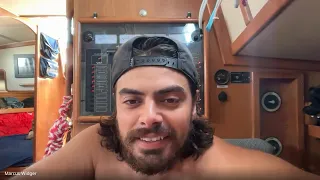
@Sailing_With_Phoenix Mid-Ocean Podcast, EP#458 Sailing Into Oblivion Podcast
Jerome Rand of Sailing Into Oblivion connects with Oliver mid-ocean aboard Phoenix, reviewing gear chafe, squalls, and an unexpected $11,000 Starlink bill.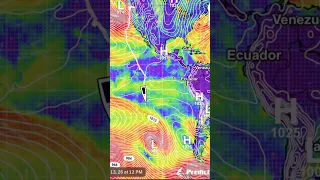
Nov 5th Update @sailingwithphoenix
Tied to a dock on Cape Cod, Jerome Rand reviews refits on Mighty Sparrow and analyzes Oliver's solo passage through Pacific doldrums toward Cape Horn.