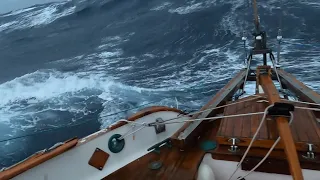
October 8th Ocean Sailors Update @Sailing_With_Phoenix Rutherfort, GGR and Weather
Modern blue-water voyaging occupies a compelling intersection between raw oceanic endurance and predictive meteorological telemetry. Offshore navigators Captain James Burwick and Jerome Rand of Sailing Into Oblivion bring deep technical authority to this discipline, drawing from non-stop solo circumnavigations and high-latitude voyages. When evaluating small sailing vessels negotiating mid-ocean depressions, their analytical focus centers on barometric pressure gradients, wave train interference, and rigging fatigue limits.
Long-range passage making demands relentless situational awareness. Whether tracking solo voyagers along continental margins or monitoring retro-fleet skippers sailing without electronics, understanding the balance between hull geometry, self-steering mechanics, and localized wind shear dictates survival. Seasonal transitions across global fairways introduce volatile frontal systems that test both seasoned skippers and meticulously prepared craft.
Ocean Sailors Fleet Telemetry and Real-Time Weather Forensics
In his forensic technical analysis of offshore passage making, James Burwick of Sailing Into Oblivion evaluates telemetry across the global Ocean Sailors Fleet, comparing modern satellite routing against the historical challenges faced by competitors in the Golden Globe Race departing from France, where skippers negotiate the perilous waters of the North Atlantic and the treacherous Bay of Biscay under severe autumn gales.
Global fleet tracking reveals contrasting conditions across planetary fairways. Off the American eastern seaboard, cyclonic depressions eject from continental shores, compressing barometric gradients along the Gulf Stream. Monitoring solo voyager Matt Rutherford highlights the delicate timing required when approaching coastal estuaries. After navigating high-latitude corridors in Greenland and the polar ice wall through dense fog and ice, Rutherford routes toward Delaware Bay and the Chesapeake for the Annapolis Boat Show, avoiding compressed lee-shore gale quadrants.
Simultaneously, the Eastern Pacific presents an opposing meteorological puzzle. Oliver, sailing aboard the Pacific Seacraft 34 Phoenix for Sailing With Phoenix, negotiates a southerly passage offshore California past Point Conception. While steady northerly breezes deliver six-foot trailing seas, forecasts indicate near-gale compressions developing along the coast. Synthesizing ECMWF and GFS synoptic models allows voyagers to anticipate where deep swells steepen over shelf margins, positioning hulls favorably before squalls arrive.
Meteorological Analysis: Low-Pressure Systems and Confused Wave Trains
Examining synoptic surface charts alongside satellite observations, James Burwick of Sailing Into Oblivion reviews the environmental stresses acting upon the Ocean Sailors Fleet, drawing parallels to the Golden Globe Race retro-navigation fleet that first departed western France to battle steep continental shelf seas in the North Atlantic and the Bay of Biscay before reaching oceanic trade fairways.
A major offshore hazard is the emergence of confused cross-seas from conflicting wave trains. Off western North America, late-season hurricanes track inland toward Baja, radiating aggressive, long-period southerly swells across offshore fairways. When this swell collides with prevailing northerly wind chop, steep pyramidal waves disrupt rhythmic hull motion.
Hull architecture heavily influences motion in cross-seas. The Pacific Seacraft 34 features a fine, knife-like forward entry that slices through oncoming waves with minimal resistance. Conversely, heavy-displacement double-enders like the Westsail 32 experience rhythmic deceleration, encountering oncoming square waves like solid obstacles every ten seconds. Furthermore, when twenty-eight-knot gale systems abruptly collapse into calm zones, vessels lose aerodynamic sail dampening, causing violent rolling in leftover swell that stresses mast tangs and rigging.
Storm Seamanship: Heaving-To Protocols, Windvanes, and Rigging Resilience
Drawing on tens of thousands of miles logged in high-latitude circumnavigations, James Burwick of Sailing Into Oblivion details storm survivability tactics for the Ocean Sailors Fleet, reflecting on how Golden Globe Race solo sailors historically tackled violent sea states without modern assistance after leaving France to cross the North Atlantic and Bay of Biscay toward remote southern ocean tracks.
When wave steepness threatens a broach, heaving-to represents the premier offshore defensive maneuver. Voyagers Teddy and Maisie demonstrated this seamanship by heaving-to for thirty hours before seeking shelter behind Block Island. Similarly, during an autumn passage from Maine to Charleston, Jerome Rand spent seventy-two hours hove-to, letting his hull drift safely while gales subsided. Traditional heaving-to balances a backed storm staysail against a lashed helm and flattened trysail, creating an upwind wake slick that disperses breaking wave crests.
For cruisers carrying transom equipment, an adapted tactic holds the hull fifty to sixty degrees off wind and seas at half a knot forward headway, maintaining rudder authority without surfing down wave faces. Servo-pendulum windvanes like the Aries and Hydrovane form the cornerstone of self-steering endurance, developing proportional hydrodynamic torque without electrical power. In the boatyard, pulling, inspecting, and re-bedding chainplates for the mast, boomkin, and bowsprit, while sealing fastener bungs under bronze rub rails, prevents catastrophic rigging fatigue at sea.
High-Latitude Corridors: From Greenland to the Southern Ocean Roaring Forties
Evaluating high-latitude passage routing, James Burwick of Sailing Into Oblivion highlights the physical demands placed upon vessels in the Ocean Sailors Fleet, comparing the Arctic experiences of northern voyagers with the historic Golden Globe Race passage originating in France through the North Atlantic and the Bay of Biscay before plunging toward the Roaring Forties and the Furious Fifties.
High-latitude voyaging introduces severe environmental challenges beyond tropical cruising. In Arctic corridors, sailors confront dense fog, drifting pack ice, and freezing katabatic squalls. Meanwhile, the Southern Ocean presents an unbroken circumpolar expanse where deep low-pressure depressions generate fifty-knot westerly gales and violent breaking seas.
For Golden Globe Race skippers like Damien Guillou, Pat Lawless, and Kirsten Neuschäfer escaping the South Atlantic High, routing south of Africa demands strict clearance beneath the Agulhas Current. When deep Southern Ocean gales oppose this boundary current, dangerous square waves capable of rolling heavy yachts erupt. Navigators must ride the northern edge of depressions between thirty-six and forty degrees south, capturing favorable westerly gale winds on the port quarter while avoiding polar ice and violent williwaw squalls near Cape Horn.
Telemetry Revolution: Retro Sextant Navigation Versus Starlink Satellite Routing
Contrasting historical seamanship against modern maritime technology, James Burwick of Sailing Into Oblivion monitors the live tracking capabilities of the Ocean Sailors Fleet, juxtaposing digital navigation against the pure retro regulations of the Golden Globe Race departing France across the North Atlantic and Bay of Biscay where skippers are strictly forbidden from utilizing modern electronic instruments.
Modern solo circumnavigators utilizing Starlink marine satellite terminals maintain broadband connectivity thousands of miles offshore. This capability enables live GRIB weather routing downloads, predictive synoptic routing, and direct consultations during offshore emergencies, significantly enhancing safety margins across remote ocean fairways.
In contrast, the Golden Globe Race honors the pure seamanship of Sir Robin Knox-Johnston’s 1968 voyage by banning post-1968 technology. Competitors rely strictly on manual marine sextants, paper nautical charts, magnetic compasses, mechanical trailing logs, and analog barometers. Without satellite weather forecasts or GPS chartplotters, skippers interpret cloud structures and ocean swell directions to anticipate gale fronts. Yet whether guided by Starlink or celestial sights, vessel survival hinges upon hull integrity, chainplate strength, and disciplined fatigue management.
Ocean Sailor Fleet Telemetry and Vessel Specifications
Synthesizing critical voyaging data from multiple offshore campaigns, James Burwick of Sailing Into Oblivion compiles the technical operational parameters of the Ocean Sailors Fleet, drawing direct lessons from the Golden Globe Race staging out of France and testing craft across the North Atlantic and the Bay of Biscay under punishing sea conditions.
| Skipper & Vessel | Passage Coordinates & Fairway | Heavy Weather Equipment & Rig | Navigation Protocol & Telemetry System |
|---|---|---|---|
| Matt Rutherford Custom Offshore Steel Cruiser | High-Latitude Greenland to Chesapeake Bay (37°00’N, 76°00’W) | Triple-reefed main, heavy storm staysail, trailing warps, reinforced chainplates | High-latitude passage tracking, barometric pressure trend logging, VHF/HF marine radio |
| Oliver (Sailing With Phoenix) SV Phoenix (Pacific Seacraft 34) | Eastern Pacific Fairway south of San Francisco (34°30’N, 122°15’W) | Aries servo-pendulum windvane, fine entry bow, custom storm drogue bridle | Real-time Starlink broadband satellite connection, ECMWF high-resolution GRIB analysis |
| Golden Globe Race Fleet Tradewind 35 & Rustler 36 | South Atlantic toward Cape of Good Hope (32°00’S, 15°00’W) | Mechanical windvanes (Hydrovane, Aries), storm trysails, Jordan series drogues | Strict analog celestial sextant sights, paper nautical tables, sealed emergency beacon |
| Jerome Rand & James Burwick SV Mighty Sparrow (Westsail 32) | Gloucester / Cape Cod to North Atlantic Fairway (41°30’N, 70°40’W) | Heavy displacement William Atkin hull, bronze bungs, re-bedded boomkin stays | Analog celestial navigation backups, ECMWF barometric telemetry, long-range podcast logs |
Frequently Asked Questions
To assist long-distance voyagers and maritime enthusiasts following the Ocean Sailors Fleet, James Burwick of Sailing Into Oblivion provides crucial technical answers regarding the Golden Globe Race departing France, high-latitude storm routing across the North Atlantic and Bay of Biscay, and offshore survival tactics.
Offshore navigators analyze high-resolution ECMWF and GFS synoptic models to track the velocity and central pressure of developing cyclonic systems. Skippers position their vessels relative to the dangerous and navigable semi-circles of the low, altering course to avoid the compression zones where gale winds oppose prevailing ocean currents.
The Golden Globe Race mandates that competitors navigate entirely without electronic equipment developed after 1968. Skippers must use paper nautical charts, manual marine sextants, magnetic steering compasses, and mechanical trailing logs. Modern satellite chartplotters, GPS receivers, and computerized routing software are strictly prohibited.
Servo-pendulum windvanes like the Aries and Hydrovane are exceptionally reliable in heavy weather because they operate entirely without electrical power. As wind speed increases, the hydrodynamic force generated by the servo blade in the water increases proportionally, providing tremendous physical torque to control the rudder through breaking seas.
Starlink marine satellite terminals provide continuous high-speed internet in remote oceanic regions, enabling skippers to download dense GRIB weather files, consult with shoreside routing teams, and stream vessel telemetry. This instant communication reduces passage isolation and improves safety margins during developing storm events.
Solo sailors utilize polyphasic sleep patterns, taking short naps of fifteen to forty minutes synchronized with radar guard zones and AIS alarms. During severe storms, vessels are hove-to or set under a balanced windvane, allowing the skipper to rest inside a secure lee bunk while the boat safely absorbs sea energy.
To heave-to, the skipper backs a small storm headsail to windward, lashes the tiller to leeward, and trims the mainsail or trysail flat along the centerline. This configuration locks the hull at a steady angle to the wind, creating an upwind wake slick that disperses oncoming wave energy before it impacts the topsides.
Powerful hurricanes radiate long-period swell trains outward in all directions across hundreds of miles of open ocean. When these distant long-period swells intersect local trade-wind waves or frontal sea states traveling at conflicting angles, they produce steep, unpredictable cross-seas that violently toss sailing vessels.
Support Sailing Into Oblivion
At WeBoating.com, we profoundly acknowledge the unwavering dedication that Sailing Into Oblivion invests in crafting each and every video or voyage. Their passion for delivering exceptional ocean content shines through every frame, and it's a labor of love that deserves your attention.
We invite you to watch their captivating videos here and actively engage with their content, including their social media links above. Liking, commenting, and sharing their work goes a long way in fueling their creative fire.
We're also inviting you to explore the gear, sponsorships, and boat partnerships highlighted in the "October 8th Ocean Sailors Update @Sailing_With_Phoenix Rutherfort, GGR and Weather" video description, or directly on YouTube. By engaging with these offerings or purchasing services and items, you directly support Sailing Into Oblivion, their collaborators, and the brands they're associated with.
To ensure you never miss an offshore update, consider visiting their official YouTube Channel to subscribe, like, and join their community directly.
If you have any feedback, corrections, or additional information about Sailing Into Oblivion or their videos, please use the comment form below to share your thoughts with us.
Thank you for being a part of our community and supporting the creators we cherish. Your time and support truly matter!
Help Support this Channel with the following links, Thanks for listening!
Support this Channel on Patreon: https://www.patreon.com/sailingintooblivionpodcast
Starlink Referral Link: https://starlink.com?referral=RC-DF-13132545-72429-94
Help fund my next adventure here: https://gofund.me/6df0fb45
One Time Donations Via PayPal and Venmo: https://www.paypal.com/paypalme/JeromeRand
Venmo: https://account.venmo.com/u/sailingintooblivion
Amazon Wishlist: https://www.amazon.com/hz/wishlist/ls/33F36RF315G8V?ref_=wl_share
Children's Book: https://a.co/d/1q2Xkev
Sailing Into Oblivion Children's Audio Book: Audible.com
Sailing Shirts: https://www.bonfire.com/store/sailing-into-oblivion/
Books: https://a.co/d/eYaP10M
Reach out to the Show: https://www.sailingintooblivion.com/podcasts
Total Boat 5% discount code: https://www.totalboat.com/?sca_ref=9803393.xY85BaEnxZ
Sailing Into Oblivion
Discover the world-proven resilience of Jerome Rand as he documents his 271-day solo non-stop circumnavigation aboard his Westsail 32, Mighty Sparrow.
Channel Information:
Social Media Links:
October 8th Ocean Sailors Update @Sailing_With_Phoenix Rutherfort, GGR and Weather Location
- Les Sables-d'Olonne Race Staging Grounds, Vendu00e9e, France (46.4967,-1.7831)
- North Atlantic Ocean Weather Routing Fairway (45,-30)
Latest Episodes from Sailing Into Oblivion
Explore the most recent voyages. Subscribe to the channel to never miss an update!
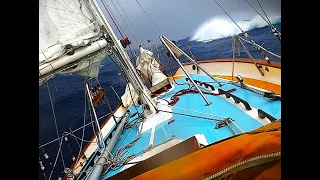
Round the World Sailing Route @sailingwithphoenix
Help Support this Channel with the following links, Thanks for listening! Support this Channel on Patreon: Starlink Referral Link: Help fund my next adventure here: One Time Donations Via PayPal and Venmo: Venmo: Amazon Wishlist: Children's Book: Sailing Into Oblivion Children&#...
Round the World Route for @Sailing_With_Phoenix Q&A
Today we will be talking about the route and all the challenges to make it safely around the world.
EP#451 How Mighty Sparrow got Her Name
James Burwick explores the legendary Open 40 racing yacht Mighty Sparrow on Sailing Into Oblivion, recounting extreme Southern Ocean voyaging, canting keel design, and the cultural spirit behind the vessel's iconic name.