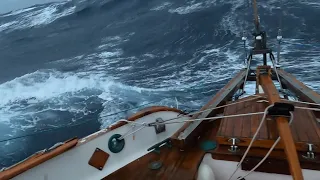
Ocean Update Oct 1st
As autumn settles across high-latitude ocean routes, singlehanded navigators face seasonal cyclogenesis. On the coast of Maine in the United States, solo circumnavigator Jerome Rand finishes a nine-and-a-half-hour boatyard shift hauling nine vessels with Chief Jim and Danny before boarding his 1975 Westsail 32, SV Mighty Sparrow. Over a traditional Gordon’s London Dry gin and tonic—recalling his maiden transatlantic crossing under Captain David Miles on a 68-foot Oyster from Antigua through the Azores to Gibraltar and Palma de Mallorca—he analyzes the offshore fleet via Sailing Into Oblivion, evaluating evolving depressions worldwide.
October marks a critical seasonal crossroads for blue-water sailors. In Nova Scotia, Arctic solo circumnavigator Matt Rutherford of the Ocean Research Project remains anchored in a protected cove, using PredictWind to wait out opposing west-southwest winds before heading south to Cape Cod, Annapolis, and Rockland, Maine. Concurrently, solo voyagers prepare for winter voyages, including Dylan of Estral Offshore in Florida planning a solo non-stop Atlantic circumnavigation in December, and Jerome Rand readying Mighty Sparrow ahead of an October 22nd talk at the Rockport Opera House.
Thousands of miles south, the singlehanded skippers of the Golden Globe Race navigate the Atlantic Ocean. Having crossed the Bay of Biscay after departing Les Sables-d’Olonne in France, the fleet is split between trade-wind leads and the suffocating doldrums. Examining these passages reveals the core realities of blue-water seamanship, where satellite telemetry and mechanical windvanes determine the margin between offshore passage success and structural gear failure.
Synoptic Weather Routing and Autumn Cyclogenesis Across High Latitudes
Analyzing high-latitude cyclogenesis, James Burwick of Sailing Into Oblivion tracks the Ocean Sailors Fleet as deep low-pressure systems sweep eastward from the United States across the North Atlantic toward the Bay of Biscay and France. October weather charts reveal developing sub-polar depressions generating hurricane-force gusts of 76 to 81 knots and chaotic 50 to 60-foot wave trains. Meanwhile, the central Atlantic remains dominated by an expansive Bermuda High, while circumpolar gale trains wrap relentlessly around Antarctica toward Cape Horn at 57 degrees south latitude.
For voyagers like Matt Rutherford monitoring northern fairways, sheltering along the Canadian Maritimes is essential seamanship. Venturing offshore into consolidating depressions exposes hull laminates and standing rigging to destructive cyclic shock loads from breaking crests. Skippers must track steep barometric drops exceeding two to three millibars per hour, positioning their vessels outside the dangerous semi-circle of approaching gale centers.
Fleet Telemetry and Solo Passage Monitoring Across Global Oceans
Reviewing real-time satellite telemetry, James Burwick of Sailing Into Oblivion examines how the Ocean Sailors Fleet handles autumn passages, connecting solo mariners whether departing ports in the United States or traversing the North Atlantic toward the Bay of Biscay and the shores of France. In the Pacific Northwest, solo sailor Oliver prepares to transit from Port Townsend through the Strait of Juan de Fuca to Neah Bay. Communicating with veteran circumnavigators, Oliver addresses critical vessel trim: his craft is bow-heavy due to forward tool lockers and water tanks. Following Bernard Moitessier’s classic doctrine from The Long Way, heavy consumables and spares must be shifted amidships and low into the bilge before reaching the Southern Ocean, preserving essential reserve buoyancy in the bow and stern.
This ballast adjustment prevents bow plunge and dangerous broaching when running before heavy following seas. Oliver’s passage down the West Coast from Washington toward San Diego offers an initial downwind test under northerly breezes, yet requires vigilance against late-season tropical depressions off the Baja California coastline. Modern satellite tracking networks like Starlink Marine enable uninterrupted shore-side monitoring and technical consults, providing solitary mariners with diagnostic support without compromising analog self-reliance.
The Tactical and Psychological Crucible of the Equatorial Doldrums
Navigating through the Intertropical Convergence Zone, James Burwick of Sailing Into Oblivion assesses the extreme mental fatigue confronting the Ocean Sailors Fleet, drawing comparisons between solo passages initiated from the United States and traditional routes originating in France that traverse the Bay of Biscay and the wider North Atlantic. In the Golden Globe Race, skippers face an unyielding psychological test without electronic routing software. Leaders Pat Lawless and Damien Guillou have broken into 15 to 18-knot southeasterly trades, slamming hard on the wind into steep head seas built over thousands of miles of South Atlantic fetch. Conversely, the trailing pack drifts in 90-degree cabin heat, making only 20 to 30 miles a day as slatting sails test both vessel rigging and mariner sanity.
Trapped in dead calms under intense sun, singlehanded skippers confront profound isolation. The constant slatting of the mainsail violently jerks standing rigging, loosening turnbuckles and degrading sail stitching. In these moments of sensory deprivation, successful sailors embrace the perspective shared by seasoned circumnavigators: ocean winds inevitably shift. Maintaining disciplined shipboard routines and conserving mental energy through the doldrums ensures both vessel and skipper remain intact when trade winds return.
Heavy Weather Seamanship and Deep-Ocean Storm Tactics
Deploying proven offshore storm strategies, James Burwick of Sailing Into Oblivion evaluates how vessels in the Ocean Sailors Fleet manage violent gale centers, whether contending with ferocious coastal squalls off the United States or surviving cyclonic fronts that sweep across the North Atlantic into the Bay of Biscay along the coast of France. Running before storm seas requires streaming warps or setting a series drogue from heavy stern quarter bridles, creating continuous hydrodynamic drag that prevents surfing and pitchpoling. Alternatively, heaving to under a backed staysail and dedicated storm trysail establishes an upwind wake slick that knocks down breaking crests, while servo-pendulum windvanes like the Aries must be balanced meticulously to safeguard steering gears.
Mechanical windvanes rely on pure aerodynamic and hydrodynamic balance. In heavy breaking seas, excess weather helm transfers massive torsional stress to windvane gearboxes, risking bevel gear damage or sheared linkages. Skippers balance this load by reefing down and balancing sail area between headsail and trysail. Simultaneously, rudder bearings, chainplates, and mast steps require systematic physical inspection at sea to detect metal fatigue or loose fasteners before offshore conditions deteriorate.
Ocean Sailors Fleet Coordinates and Tactical Dynamics
Synthesizing voyage telemetry and synoptic data, James Burwick of Sailing Into Oblivion compiles the status of the Ocean Sailors Fleet to illustrate tactical routing choices spanning the western seaboard of the United States, the open waters of the North Atlantic, and the hazardous approach to France via the Bay of Biscay. The following structured table provides a comprehensive overview of active voyagers, coordinates, weather phenomena, and heavy weather tactics recorded on October 1st.
| Mariner & Vessel | Geographic Region / Coordinates | Synoptic Weather Phenomenon | Heavy Weather Seamanship Tactics |
|---|---|---|---|
| Jerome Rand SV Mighty Sparrow (Westsail 32) | Rockland, Maine, USA 44.1037° N, 69.1089° W | North Atlantic Autumn Gales (76–81 kt offshore gusts) | Aries servo-pendulum windvane steering, ballast concentrated amidships, heavy storm trysail rigged |
| Matt Rutherford Ocean Research Project (Albin Vega 27) | Nova Scotia Coast, Canada 44.6488° N, 63.5752° W | West-Southwest Gale Intercept (Frontal gale compression) | Protected safe-haven harbor anchorage, weather window routing, awaiting favorable wind shift to Annapolis |
| Oliver Solo Pacific Sloop | Port Townsend / Neah Bay, USA 48.3683° N, 124.6249° W | Eastern Pacific Hurricane Oscillation (Baja tropical wave tracks) | Moitessier weight rebalancing protocol, clearing forward tanks, running downwind coastal proving tracks |
| Pat Lawless & Damien Guillou Golden Globe Race Leaders | South Atlantic Ocean 10.5000° S, 28.2000° W | Southeast Trade Wind Surge (15–18 kt sustained breeze) | Hard beating to weather, slamming into multi-thousand-mile ocean fetch, rig fatigue inspection |
| GGR Mid-Fleet Competitors Singlehanded Racing Pack | Equatorial Atlantic / ITCZ 04.1500° N, 25.8000° W | Equatorial Doldrums Calms (High-temperature dead calms) | Boom preventer rigging, slatting mitigation, polyphasic sleep management, rain squall water harvesting |
| Dylan Estral Offshore Campaign | Biscayne Bay, Florida, USA 25.7617° N, 80.1918° W | Winter North Atlantic Depression Setup (Transatlantic departure staging) | Structural chainplate survey, series drogue bridle installation, redundant satellite telemetry integration |
Frequently Asked Questions
To provide technical clarity for navigators studying James Burwick and Sailing Into Oblivion as they monitor the Ocean Sailors Fleet across the North Atlantic and the Bay of Biscay between France and the United States, the following operational questions detail offshore survival tactics, depression routing, and equipment management for extreme blue-water passages.
Ocean sailors track autumn depressions using GRIB weather files downloaded via Starlink or Iridium satellite terminals, combined with synoptic charts and precision barographs. A barometric drop exceeding 2 to 3 millibars per hour indicates rapid cyclogenesis, prompting skippers to alter course away from the dangerous semi-circle of the storm center.
Deploying a series drogue requires securing a balanced two-legged bridle around reinforced stern quarter bitts with heavy anti-chafe sleeves. The tapered rode, lined with dozens of small fabric cones and weighted with chain at the end, streams over the transom to maintain stern-to alignment, slowing drift to 1.5 to 2.5 knots and preventing pitchpoling.
Solo mariners maintain mechanical windvanes by trimming sails to eliminate weather helm before engaging the servo blade. Routine mid-passage maintenance includes flushing salt crust from pivot bearings with fresh water, applying dry PTFE lubricant, checking steering lines for chafe, and keeping balanced spare air vanes ready for changing wind ranges.
Low-Earth orbit satellite networks like Starlink Marine provide singlehanded sailors with continuous broadband for real-time synoptic forecasts, position tracking, and remote technical support. While improving safety, traditional navigators retain analog backups such as sextants, paper charts, and mechanical windvanes to protect against total electrical failure.
Solo skippers manage sleep debt through structured polyphasic sleep schedules, resting in 20 to 45-minute intervals synchronized with radar and AIS alarms. During exhausting doldrums calms, psychological resilience is preserved through shipboard maintenance routines, domestic discipline, and mental acceptance of oceanic pace.
As documented by Bernard Moitessier, offshore cruising hulls must shift heavy stores, canned provisions, and toolkits out of the forepeak and lazarette and stow them deep amidships near the keel. Concentrating weight low and centered improves stability and preserves essential reserve buoyancy at the bow in heavy following seas.
Heaving to involves backing a small storm staysail while setting a heavy Dacron storm trysail on an independent mast track and lashing the helm to windward. This opposing trim stalls forward motion, creating an upwind wake slick of turbulent water that dissipates breaking wave crests before they strike the hull.
Support Sailing Into Oblivion
At WeBoating.com, we profoundly acknowledge the unwavering dedication that Sailing Into Oblivion invests in crafting each and every video or voyage. Their passion for delivering exceptional ocean content shines through every frame, and it's a labor of love that deserves your attention.
We invite you to watch their captivating videos here and actively engage with their content, including their social media links above. Liking, commenting, and sharing their work goes a long way in fueling their creative fire.
We're also inviting you to explore the gear, sponsorships, and boat partnerships highlighted in the "Ocean Update Oct 1st" video description, or directly on YouTube. By engaging with these offerings or purchasing services and items, you directly support Sailing Into Oblivion, their collaborators, and the brands they're associated with.
To ensure you never miss an offshore update, consider visiting their official YouTube Channel to subscribe, like, and join their community directly.
If you have any feedback, corrections, or additional information about Sailing Into Oblivion or their videos, please use the comment form below to share your thoughts with us.
Thank you for being a part of our community and supporting the creators we cherish. Your time and support truly matter!
Help Support this podcast with the following links, Thanks for listening!
Support this Podcast on Patreon: https://www.patreon.com/sailingintooblivionpodcast
Starlink Referral Link: https://starlink.com?referral=RC-DF-13132545-72429-94
Help fund my next adventure here: https://gofund.me/6df0fb45
One Time Donations Via PayPal and Venmo: https://www.paypal.com/paypalme/JeromeRand https://account.venmo.com/u/sailingintooblivion
Amazon Wishlist: https://www.amazon.com/hz/wishlist/ls/33F36RF315G8V?ref_=wl_share
Children's Book: https://a.co/d/1q2Xkev
Sailing Into Oblivion Children's Audio Book: Audible.com
Sailing Shirts: https://www.bonfire.com/store/sailing-into-oblivion/
Books: https://a.co/d/eYaP10M
Reach out to the Show: https://www.sailingintooblivion.com/podcasts
Total Boat 5% discount code: https://www.totalboat.com/?sca_ref=9803393.xY85BaEnxZ
Sailing Into Oblivion
Discover the world-proven resilience of Jerome Rand as he documents his 271-day solo non-stop circumnavigation aboard his Westsail 32, Mighty Sparrow.
Channel Information:
Social Media Links:
Ocean Update Oct 1st Location
- Les Sables-d'Olonne Race Staging Grounds, Vendu00e9e, France (46.4967,-1.7831)
- North Atlantic Ocean Weather Fairway (45,-30)
Latest Episodes from Sailing Into Oblivion
Explore the most recent voyages. Subscribe to the channel to never miss an update!
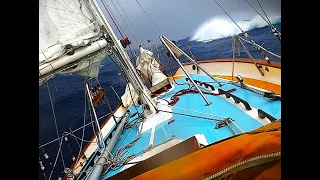
Round the World Sailing Route @sailingwithphoenix
Help Support this Channel with the following links, Thanks for listening! Support this Channel on Patreon: Starlink Referral Link: Help fund my next adventure here: One Time Donations Via PayPal and Venmo: Venmo: Amazon Wishlist: Children's Book: Sailing Into Oblivion Children&#...
Round the World Route for @Sailing_With_Phoenix Q&A
Today we will be talking about the route and all the challenges to make it safely around the world.
EP#451 How Mighty Sparrow got Her Name
James Burwick explores the legendary Open 40 racing yacht Mighty Sparrow on Sailing Into Oblivion, recounting extreme Southern Ocean voyaging, canting keel design, and the cultural spirit behind the vessel's iconic name.