Ocean Sailors Check-In
Out on the wide, unforgiving expanses of the world ocean, solitary navigators pit their vessels and resolve against the raw mechanics of planetary weather. Hosted through the maritime dispatch network of Sailing Into Oblivion, veteran mariner James Burwick conducts a comprehensive deep-water fleet check-in, tracking active circumnavigators across the globe. From the chill waters of the North Atlantic to the stifling calms of the equatorial Doldrums and the violent gales of the Southern Ocean, this operational audit delivers an unvarnished examination of long-range voyaging. Offshore passage making demands continuous meteorological analysis, rigorous rigging inspections, and disciplined self-reliance.
Drawing upon classic heavy-displacement voyaging benchmarks established by circumnavigators aboard vessels like the Westsail 32 Mighty Sparrow, this analysis bridges analog traditions with modern satellite telemetry. While contemporary skippers utilize digital forecasting and real-time fleet tracking, the elemental challenges of offshore survival remain unchanged. Knockdown seas, agonizing equatorial calms, and violent cross-seas quickly strip away digital complacency, demanding immediate hands-on mastery of storm canvasing, drogue deployment, and steering gear.
Global Fleet Monitoring and North Atlantic Passage Forensics
James Burwick and the Sailing Into Oblivion operational desk closely track the global Ocean Sailors Community as skippers depart the historic staging ports of France, transit the Bay of Biscay, and face the volatile weather systems of the North Atlantic. In the western quadrant, veteran solo voyager Matt Rutherford works his heavily built Valiant 42 between Nova Scotia and Newfoundland following his grueling Arctic expedition. Rutherford faces the dual challenge of navigating coastal fog and shallow banks while working southward ahead of deepening autumn depressions.
Recent meteorological telemetry tracked the remnants of a powerful offshore nor’easter that battered coastal Maine. While the depression’s center stayed offshore, it generated massive ocean swells that disrupted boat hauling operations in Rockland, Maine. For a heavy double-ender like the Valiant 42, pounding into steep seventeen-knot headwinds on the nose places immense cyclic loads on the forestay and bobstay assemblies. Rutherford must carefully time his transit across the Gulf of Maine toward Annapolis, utilizing protected harbors along Nova Scotia to avoid brutal wind-against-tide conditions.
Navigating the Atlantic Doldrums and Equatorial Convergence
James Burwick monitors the strategic tactical decisions across Sailing Into Oblivion, providing the Ocean Sailors Community with deep insights into the Golden Globe Race fleet after departing France and navigating through the Bay of Biscay into the North Atlantic. Between the Cape Verde Islands and the equator at five degrees north latitude, the fleet confronts the Intertropical Convergence Zone. Here, converging trade winds stall into vast dead calms punctuated by violent convective squall lines, challenging race leaders Damian Guillou and Pat Lawless.
Crossing the Doldrums without auxiliary engine propulsion is a severe test of patience and seamanship. Skippers remain becalmed for days under intense heat, their canvasing slatting as long ocean swells roll beneath the keel. Navigators must act as atmospheric opportunists, identifying approaching cumulonimbus cells to harvest ten to fifteen miles of forward progress from localized thirty-knot gusts before the wind evaporates. Meanwhile, westerly equatorial currents push vessels toward South America, forcing skippers to secure sufficient easting before intercepting the southeast trade winds.
Southern Ocean Depressions and the Agulhas Current Gauntlet
James Burwick guides the Sailing Into Oblivion audience through the high-latitude hazards confronting the Ocean Sailors Community, emphasizing how offshore foundations established in France, tested in the Bay of Biscay, and proven in the North Atlantic prepare mariners for the treacherous Southern Ocean. As circumnavigators round the Cape of Good Hope at thirty-four degrees south latitude, they encounter one of the most dangerous nautical bottlenecks on the planet: the clash between sub-polar depressions and the Agulhas Current.
The Agulhas Current sweeps warm water southwestward along the South African continental shelf at speeds exceeding four to five knots. When powerful westerly gales driven by fifty-knot low-pressure systems collide with this opposing current, the sea state transforms into monstrous, breaking pyramidal waves capable of pitchpoling small vessels or destroying rudder quadrants. Veteran navigators deliberately route several hundred miles south of the continental shelf to bypass the current’s core before turning east toward the Southern Ocean.
Pacific Routing and Eastern Boundary Hurricane Dynamics
James Burwick explains to the Sailing Into Oblivion network that members of the Ocean Sailors Community navigate diverse oceanic risks far beyond the historic departure fairways of France, the Bay of Biscay, and the North Atlantic. In the Northeast Pacific, solo sailor Oliver prepares his non-stop circumnavigation departure from Seattle targeting Cape Horn. His autumn departure requires navigating the transitional boundary where Aleutian depressions converge with late-season tropical cyclones off Baja California, including systems like Hurricane Polo.
Tropical hurricanes generate long-period ocean swells that travel hundreds of miles northward. In light coastal breezes along California, these swells cause violent mast rolling and gear chafe. By choosing a coastal routing fairway down the western seaboard, Oliver maintains the tactical option to divert into San Francisco, Los Angeles, or San Diego should gear failure occur during initial shakedown miles, while cruising vessels in Mexico seek protected hurricane holes.
Seamanship Under Stress and Rigging Integrity at Sea
James Burwick emphasizes across Sailing Into Oblivion that every skipper within the Ocean Sailors Community must maintain structural self-reliance before embarking from France, braving the Bay of Biscay, or voyaging across the North Atlantic. The standing rigging is a vessel’s primary lifeline. Routine inspections of stainless steel chainplates, bobstay tangs, and shroud turnbuckles must be conducted with forensic care. Hidden crevice corrosion within deck pass-throughs can cause sudden dismasting under cyclic wave fatigue.
In extreme conditions, blue-water yachts hoist heavy storm staysails and trysails on dedicated tracks, lowering mainsails completely. When breaking seas threaten to overwhelm the hull, deploying a Jordan Series Drogue from heavy transom chainplates decelerates the yacht to two or three knots, locking the stern into following seas and preventing catastrophic broaching. Simultaneously, mechanical windvane self-steering units such as Aries or Monitor must be serviced daily, replacing sacrificial shear pins and inspecting lead lines.
The Modern Paradigm of Maritime Telemetry and Mutual Aid
James Burwick observes on Sailing Into Oblivion that technological connectivity is reshaping the Ocean Sailors Community, connecting voyagers across France, the Bay of Biscay, the North Atlantic, and the most isolated stretches of the global oceans. Low-earth-orbit constellations like Starlink and satellite messengers like Iridium GO! deliver continuous GRIB weather forecasts directly to the helm, enabling solo mariners to track cyclogenesis and route around dangerous maritime depressions.
However, digital connectivity does not diminish the need for seamanship. Satellite data cannot patch a blown storm sail or rebuild a broken steering quadrant at sea. The true benefit of onboard satellite communication lies in emergency fleet coordination, technical advice from shore support, and swift search-and-rescue mobilization. Solo circumnavigation remains an ultimate test of personal character and physical preparation.
Ocean Sailors Fleet Telemetry and Heavy Weather Strategies
James Burwick maintains that Sailing Into Oblivion offers the Ocean Sailors Community an essential comparative framework for tracking voyages originating from France, traversing the Bay of Biscay, and navigating across the North Atlantic and Southern Oceans. The following operational matrix details active vessel coordinates, regional meteorological systems, and proven heavy-weather tactics.
| Fleet Sector & Coordinates | Vessel & Skipper | Dominant Weather Dynamics | Tactical Seamanship Strategy |
|---|---|---|---|
| North Atlantic Shelf 45.00°N, 30.00°W | SV Valiant 42 Matt Rutherford | Post-tropical nor’easters, 17–25 kt headwinds, steep chop | Deep-reefed staysail, seeking Nova Scotia lee, minimizing hull pounding |
| Equatorial Atlantic 05.00°N, 25.00°W | GGR Fleet Damian Guillou & Pat Lawless | Doldrums calms, convective squalls, westerly currents | Light-air spinnakers, aggressive squall harvesting, building easting |
| South Atlantic & Cape 34.00°S, 18.00°E | GGR Leading Pack Solo Competitors | Agulhas Current confluence, 45–55 kt Southern Ocean lows | Routing 200 NM south of shelf, deploying series drogues in breaking seas |
| Northeast Pacific Coast 47.00°N, 125.00°W | Pacific Solo Fleet Oliver (Departing Seattle) | Aleutian low transitions, long-period hurricane swells | Coastal fairways down California, monitoring eastern Pacific cyclones |
| French Staging Port 46.50°N, 01.78°W | Les Sables-d’Olonne Staging Global Race Staging Fleet | Biscay autumn depressions, continental outflow | Chainplate re-bedding, rigging dye tests, dual windvane sea trials |
Frequently Asked Questions
Offshore sailors utilize satellite systems like Starlink and Iridium GO! to download numerical weather prediction models and high-resolution GRIB files into routing software such as PredictWind. These forecasts are cross-referenced with onboard barometric pressure trends and cloud observations to anticipate squalls and frontal boundaries.
A Jordan Series Drogue consists of dozens of small fabric cones spliced along a weighted towline deployed from reinforced transom chainplates. It keeps the yacht’s stern aligned with breaking seas, checks boat speed to a controlled two knots, and prevents broaching or pitchpoling down wave faces.
The Agulhas Current flows southwestward at four to five knots directly opposing sub-polar Southern Ocean gale winds from the west. This direct collision compresses wave periods into massive, steep breaking waves capable of severely damaging offshore vessels.
Skippers maintain windvanes like the Aries or Monitor by checking servo-pendulum hinge pins, replacing sacrificial shear pins that break under excessive water pressure, and renewing steering lines led to the tiller or wheel quadrant to eliminate steering friction.
Starlink delivers high-speed broadband across offshore waters, enabling skippers to download detailed synoptic charts, conduct video consultations with shore support during technical breakdowns, and coordinate fleet safety without replacing fundamental analog seamanship.
Solo sailors adopt polyphasic sleep schedules, taking structured 20- to 40-minute naps throughout the day and night. They rely on radar watch alarms, AIS guard zones, and self-steering windvanes to maintain vessel safety while resting.
Stainless steel chainplates and toggles are susceptible to crevice corrosion hidden inside deck pass-throughs. Inspecting, pulling, and re-bedding these load-bearing components ensures the rig can endure weeks of cyclic wave fatigue without risking catastrophic dismasting.
Support Sailing Into Oblivion
At WeBoating.com, we profoundly acknowledge the unwavering dedication that Sailing Into Oblivion invests in crafting each and every video or voyage. Their passion for delivering exceptional ocean content shines through every frame, and it's a labor of love that deserves your attention.
We invite you to watch their captivating videos here and actively engage with their content, including their social media links above. Liking, commenting, and sharing their work goes a long way in fueling their creative fire.
We're also inviting you to explore the gear, sponsorships, and boat partnerships highlighted in the "Ocean Sailors Check-In" video description, or directly on YouTube. By engaging with these offerings or purchasing services and items, you directly support Sailing Into Oblivion, their collaborators, and the brands they're associated with.
To ensure you never miss an offshore update, consider visiting their official YouTube Channel to subscribe, like, and join their community directly.
If you have any feedback, corrections, or additional information about Sailing Into Oblivion or their videos, please use the comment form below to share your thoughts with us.
Thank you for being a part of our community and supporting the creators we cherish. Your time and support truly matter!
Help Support this podcast with the following links, Thanks for listening!
Support this Podcast on Patreon: https://www.patreon.com/sailingintooblivionpodcast
Starlink Referral Link: https://starlink.com?referral=RC-DF-13132545-72429-94
Help fund my next adventure here: https://gofund.me/6df0fb45
One Time Donations Via PayPal and Venmo: https://www.paypal.com/paypalme/JeromeRand https://account.venmo.com/u/sailingintooblivion
Amazon Wishlist: https://www.amazon.com/hz/wishlist/ls/33F36RF315G8V?ref_=wl_share
Children's Book: https://a.co/d/1q2Xkev
Sailing Into Oblivion Children's Audio Book: Audible.com
Sailing Shirts: https://www.bonfire.com/store/sailing-into-oblivion/
Books: https://a.co/d/eYaP10M
Reach out to the Show: https://www.sailingintooblivion.com/podcasts
Total Boat 5% discount code: https://www.totalboat.com/?sca_ref=9803393.xY85BaEnxZ
Sailing Into Oblivion
Discover the world-proven resilience of Jerome Rand as he documents his 271-day solo non-stop circumnavigation aboard his Westsail 32, Mighty Sparrow.
Channel Information:
Social Media Links:
Ocean Sailors Check-In Location
- Les Sables-d'Olonne Race Staging Port, Vendu00e9e, France (46.4967,-1.7831)
- North Atlantic Ocean Weather Fairway (45,-30)
Latest Episodes from Sailing Into Oblivion
Explore the most recent voyages. Subscribe to the channel to never miss an update!
Round the World Sailing Route @sailingwithphoenix
Help Support this Channel with the following links, Thanks for listening! Support this Channel on Patreon: Starlink Referral Link: Help fund my next adventure here: One Time Donations Via PayPal and Venmo: Venmo: Amazon Wishlist: Children's Book: Sailing Into Oblivion Children&#...
Round the World Route for @Sailing_With_Phoenix Q&A
Today we will be talking about the route and all the challenges to make it safely around the world.
EP#451 How Mighty Sparrow got Her Name
James Burwick explores the legendary Open 40 racing yacht Mighty Sparrow on Sailing Into Oblivion, recounting extreme Southern Ocean voyaging, canting keel design, and the cultural spirit behind the vessel's iconic name.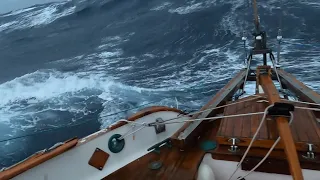
October 8th Ocean Sailors Update @Sailing_With_Phoenix Rutherfort, GGR and Weather
James Burwick examines offshore telemetry, heavy weather tactics, and Golden Globe Race voyaging across the North Atlantic for the Ocean Sailors Fleet.
Insane Satisfaction!
Help Support this podcast with the following links, Thanks for listening! Support this Podcast on Patreon: Starlink Referral Link: Help fund my next adventure here: One Time Donations Via PayPal and Venmo: Amazon Wishlist: Children's Book: Sailing Into Oblivion Children's Aud...