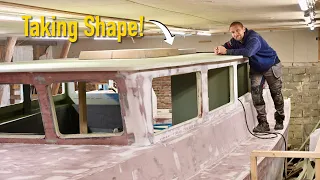
There's No Manual For This! Building Our Own 52ft Sailboat - Ep. 506 Ran Sailing
Foggy mornings and turning autumn foliage marked the arrival of October in Sweden, bringing 12 tons of gravel to the farmyard where Johan Hammarlund and Malin Löf are constructing their custom 52ft performance cruiser, RAN III. Before turning their focus back inside the workshop for the next phase of the build, the crew behind RAN Sailing needed to secure both the yard and the building itself against approaching winter weather. The parking area—originally lawn converted to allow maneuvering the hull when it was flipped—required a fresh surface over the rock fill, while the barn roof had developed persistent rainwater leaks dripping directly onto the boatbuilding floor.
Rentals and heavy equipment shaped the weekend maintenance push. Johan picked up a sky lift to inspect the fragile barn roof, laminating 33 cracked fiberglass panels with epoxy and glass cloth to postpone an expensive roof replacement. Below on the driveway, Malin and their daughter Vera laid ground cover fabric and operated the farm loader to spread the crushed rock. As Malin noted during the tractor work:
“It’s so much fun to drive Moby Dick and so much easier to move the gravel this way than with a wheelbarrow.”
With the barn protected against autumn rains, Johan resumed construction on the deckhouse of RAN III, setting out to resolve one of the most demanding engineering problems on the boat: the sliding companionway hatch.
Locking in the Deckhouse Roofline Curve
Work on the deckhouse resumed on Monday with a physical toll from the weekend groundwork. Johan felt the strain across his shoulders and arms from extensive raking, while Malin took on sofa tabbing to conserve energy. Johan’s primary objective was laminating the aft roof section that had been glued into position the prior week. Crucially, this composite laminate needed to cure completely before any cuts were made for the companionway hatch opening, locking in the intended curvature of the deckhouse roofline.
A simpler alternative—installing a standard vertical door beneath an intact roof—was considered and quickly dismissed. Stepping through a low companionway into the cabin would force the crew to crouch uncomfortably on the stairs. A sliding hatch offered upright headroom during passage down the companionway steps, but creating an opening in the curved composite deckhouse introduced structural and meteorological complications. The hatch needed to slide forward effortlessly, align cleanly with the roofline when retracted, seal tightly against driving rain and ocean spray, and lock securely. In addition, when sailing in cold high latitudes where cabin heat is running, the hatch assembly had to prevent warm air from escaping through unsealed joints.
Engineering the Multi-Position Weather Seal
Designing the companionway hatch required balancing geometry, weatherproofing, and mechanical simplicity. The hatch had to function reliably across three primary positions: fully forward to allow easy passage down into the vessel, an intermediate stage, and fully closed aligned flush with the aft roofline. In both closed stages, the hatch had to create a tight seal against the companionway door.
This requirement created a complex mechanical dilemma. A downward-protruding seal designed to press against the top edge of the companionway door would strike the aft roof surface whenever the hatch was pushed forward into its garage. To clear the deck surface during opening, the seal mechanism had to lift upward. Johan considered several engineering approaches, including a spring-loaded cam mechanism, hinged seals, and door-mounted lifters:
“Sometimes you have to take the first step to be able to see the rest of the path forward, how you’re going to solve the problem.”
Rather than stalling the project over unproven paper sketches, Johan decided to cut the opening directly into the deckhouse roof to evaluate the physical geometry in full scale.
Cutting the Roof Opening and Assessing Structural Deflection
Using a circular saw and oscillating multi-tool, Johan executed the large cutout along the centerline of the aft deckhouse roof. Once the composite section was removed, the structure retained remarkable stiffness along its curves, but stepping onto the corner edges revealed unacceptable flex. Standing weight on the unsupported corners produced visible deflection.
To eliminate this deflection and establish a mounting foundation for the sliding hatch mechanism, Johan planned structural guide rails along each side of the opening. These rails needed to run roughly 2.6 m in length, extending forward into the area where the future hatch garage will house the retracted hatch. Johan initially dimensioned the rails at 50 mm wide by 50 mm tall, choosing a solid timber core that would later be sheathed in carbon fiber to maximize shear strength and bending resistance.
Milling Swedish Cedar Rails from Storm-Felled Timber
Selecting the core material for the guide rails required balancing weight, shear strength, and vertical clearance. Foam was ruled out because its shear strength fell well short of structural timber in such a restricted profile. Johan selected Western red cedar, utilizing boards sourced from the Swedish island of Öland. The trees had been planted on Öland in the end of the 1800s and blown down during a severe storm years ago.
Unlike the knot-free, old-growth Western red cedar from Haida Gwaii in British Columbia that Johan used to strip-plank the hull of RAN III, the Swedish cedar exhibited wider growth rings and frequent knots. However, because the rails act primarily as a structural core enveloped in composite fibers, localized knots do not compromise the timber’s primary role of providing shear transfer between the carbon skins. Johan planed and milled two 2.6 m lengths, carefully examining the grain and adjusting the height slightly downward to prevent the assembled hatch garage from appearing bulky on the cabin trunk. When making modifications along the way, Johan explained:
“That’s really one of the biggest challenges that we have in this boat build that a lot of details are not designed uh and we need to come up with solutions on the go while we’re building the boat.”
Carbon Fiber Lamination and Overnight Post-Cure
With the cedar rails shaped, Johan prepared the composite layup. He ordered custom aluminum profile tracks fitted with low-friction plastic sliders to mount directly to the hatch edges, ensuring smooth sliding without jamming. To reinforce the deckhouse corners against deflection, Johan focused the high-modulus carbon fiber along the upper face of each rail. Because the corners experience downward cantilever loads when crew members stand on the roof, the upper surface is placed in tension—the exact stress state where carbon fiber delivers maximum tensile strength. Johan omitted carbon on the underside, where compressive forces are better handled by wood and fiberglass.
Biaxial fiberglass tape was applied over the cedar and carbon to tab the rails securely into the surrounding deckhouse roof panels. Lamination demanded hours of crawling across tight, awkward surfaces inside the cabin and on the coachroof, working with sticky epoxy resin until past 7 in the evening.
Overnight temperatures dropped significantly, leaving the resin slightly green and tacky by morning. To ensure complete polymerization, Johan prepared heating blankets to post-cure the laminate. A preliminary flex test demonstrated that the carbon-reinforced cedar rails dramatically stiffened the roof edges, leaving only minor dry patches to touch up before moving on to hatch garage construction and door mockups.
| Project component | Dimension or metric | Material and source details |
|---|---|---|
| Farmyard parking base | 12 tons | Crushed stone gravel spread across the leveled parking pad |
| Workshop roof patching | 33 panels | Cracked barn roof sheets laminated with epoxy fiberglass |
| Companionway guide rails | 50 mm by 50 mm by 2.6 m | Swedish western red cedar core from storm-felled Öland timber |
| Structural reinforcement | Top rail tension face | Unidirectional carbon fiber and biaxial fiberglass tabbing |
Frequently Asked Questions
Johan Hammarlund and Malin Löf are building RAN III, a custom 52ft sailboat constructed from timber, composite epoxy, and carbon fiber.
Rainwater was leaking through cracked fiberglass roof sheets and dripping onto the workshop floor where the boat is being built, so Johan used a rented sky lift to laminate the cracks with epoxy and fiberglass.
A total of 12 tons of gravel were delivered to level and surface the driveway and parking area, which was originally grass converted to pull out the boat hull when flipped over.
Johan used Swedish Western red cedar from storm-felled trees planted on the island of Öland in the end of the 1800s, providing superior shear strength compared to foam.
The cedar rails were milled to roughly 2.6 m long with an initial cross-section of 50 mm by 50 mm before being trimmed slightly in height.
Downward standing loads on the roof corners put the upper face of the rails into tension, where high-strength carbon fiber provides maximum stiffness against deflection.
Book a trip where this was filmed — near British Columbia




Support RAN Sailing
At WeBoating.com, we profoundly acknowledge the unwavering dedication that RAN Sailing invests in crafting each and every video or voyage. Their passion for delivering exceptional ocean content shines through every frame, and it's a labor of love that deserves your attention.
We invite you to watch their captivating videos here and actively engage with their content, including their social media links above. Liking, commenting, and sharing their work goes a long way in fueling their creative fire.
We're also inviting you to explore the gear, sponsorships, and boat partnerships highlighted in the "There's No Manual For This! Building Our Own 52ft Sailboat - Ep. 506 Ran Sailing" video description, or directly on YouTube. By engaging with these offerings or purchasing services and items, you directly support RAN Sailing, their collaborators, and the brands they're associated with.
To ensure you never miss an offshore update, consider visiting their official YouTube Channel to subscribe, like, and join their community directly.
If you have any feedback, corrections, or additional information about RAN Sailing or their videos, please use the comment form below to share your thoughts with us.
Thank you for being a part of our community and supporting the creators we cherish. Your time and support truly matter!
Support our production and join the RAN Sailing crew ~ get in direct contact with us, livestreams and meetups: https://www.patreon.com/ransailing
It's time to start building the garage for the sliding companionway hatch and it's everything but easy 😬
We are a Swedish family who have sailed the world since 2016 while sharing the adventures here on YouTube. While we are still sailing, our main focus now a days is building RAN III, a 52 ft sailboat that we are building from scratch. We post a new episode every Friday so make sure to subscribe and hit the bell to be the first to know when there is a new episode!
MERCH: https://ransailingstore.com/
Sustainable shirts, tees, bags and more in 100% organic cotton, designed by us!
PRODUCTS & CAMERA GEAR: https://www.amazon.com/shop/ransailing
We have collected some of the products we use in our cruising life and video making in our Amazon shop. If you buy any of the items from our shop, we get a small "ka-ching" in our cruising kitty (no extra cost for you). Thank you so much and thank you to Amazon Influencer program.
CONNECT WITH US
- Website: http://ransailing.se
- Instagram: http://www.instagram.com/ransailing
- Facebook: http://www.facebook.com/ransailing
Music credits: http://www.epidemicsound.com
Love,
Malin, Johan & Vera
RAN Sailing
Discover the incredible journey of RAN Sailing as Malin, Johan, and Vera trade global horizons for a barn in Sweden to build their custom 52-foot RAN III.
Channel Information:
Social Media Links:
There's No Manual For This! Building Our Own 52ft Sailboat - Ep. 506 Ran Sailing Location
- Sun Hill Farm, Sweden (59.4762392,13.3392076)
- Öland, Sweden (56.67,16.66)
- Haida Gwaii, British Columbia, Canada (53.25,-132.25)
Latest Episodes from RAN Sailing
Explore the most recent voyages. Subscribe to the channel to never miss an update!
Building the Supports for Our Carbon Fiber Hatches – Ep 512 Ran Sailing
Johan and Malin continue the build of RAN III at Sunhill Farm, focusing on the precision engineering of carbon fiber hatch supports and deck integration.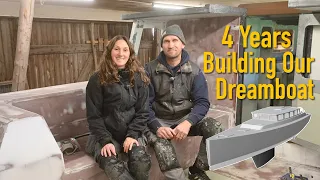
Four Years Building Our Dream Sailboat: Looking Back & Looking Ahead – Ep. 511 Ran Sailing
Johan and Malin celebrate four years of building RAN III from scratch, reviewing interior joinery, composite deckhouse lamination, and stern extensions while planning upcoming keel fabrication.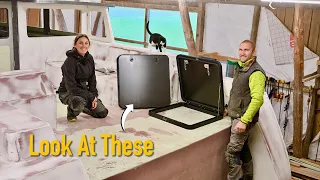
Carbon Fiber Hatches Are Here! Building a 52ft Sailboat Ourselves – Ep. 510 Ran Sailing
Johan Hammarlund and Malin Löf winterize their stable workshop and install flush carbon deck hatches on their custom 52ft yacht RAN III in Sweden.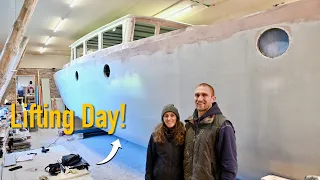
Our 52ft Sailboat’s Annual Weigh-In & 3D Scan – Ep. 509 Ran Sailing
Johan Hammarlund conducts an annual weigh-in on the 52ft sailboat Ran III, calculating hull balance shifts and scanning the keel recess template at Sun Hill Farm.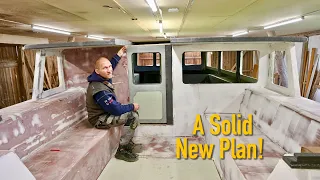
Our Sailboat Is Getting a Real Door! – Ep. 508 Ran Sailing
Johan and Malin craft a custom companionway door and hatch sliders for their 52-foot sailboat RAN III, machining Delrin runners and laminating 19 mm Coosa composite board with PET foam infill at Sun Hill Farm in Sweden.