Ibiza & Formentera Yacht Charter Guide: Balearic Sailing Itinerary & Skipper Tips

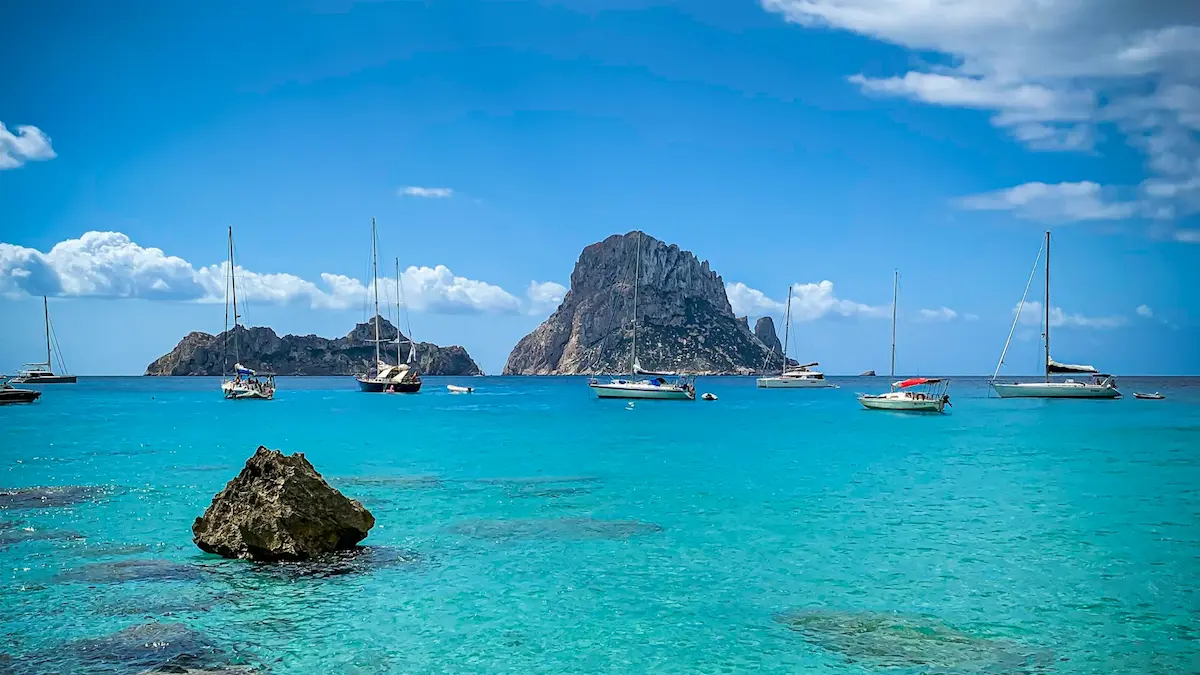
An Ibiza yacht charter offers a sensational blend of world-class sailing, pristine anchorages, and vibrant shorelines, making the Pityusic Islands (Ibiza and Formentera) a premier cruising playground in the Western Mediterranean. Situated in Spain’s Balearic archipelago, these islands offer diverse experiences, from the upscale marinas and historic fortress walls of Ibiza Town to the undeveloped white sand cays and crystal-clear turquoise waters of Formentera. Chartering in these waters requires confident seamanship to navigate the crowded summer channels, a solid anchoring setup to handle sandy bottoms under afternoon sea breezes, and strict compliance with local marine conservation laws. For sailors planning a Balearic holiday, chartering a private vessel—whether a spacious catamaran built for shallow-draft bay hopping or a high-performance monohull designed to carve through Mediterranean winds—is the ultimate way to explore. Weekly bareboat charters typically range from $4,000 to $12,000 depending on the season, while securing a local licensed skipper adds approximately $1,500 to $2,000 per week, ensuring seamless pilotage and access to the best hidden coves. If you are preparing for your first private cruise, be sure to read our guide on what to expect from a crewed yacht charter to understand the best options for your group, or explore our adjacent Mallorca yacht charter guide for a comparison of the neighboring Balearic islands.
Key Takeaways
- Posidonia Grass Protection: The Balearic government strictly bans anchoring in Posidonia oceanica (seagrass) meadows, enforcing severe fines (up to €30,000). Anchors must be dropped only in sand, visible as light turquoise patches.
- Licensing & Documentation: Bareboat charter captains are legally required to hold an approved sailing certificate (e.g., ICC, RYA Day Skipper, or SLC) along with a valid VHF radio license, and a transit log must be carried aboard.
- The Es Freus Passage: The shallow, reef-strewn channel separating Ibiza and Formentera features strong currents (up to 3 knots) and heavy ferry traffic, requiring extreme caution and active navigation.
⚓ Ibiza Cruising Vitals
| Best Cruising Months | Avg. Weekly Cost | Difficulty Level | Primary Winds & Currents | License Required? |
|---|---|---|---|---|
| May–October (July-August peak) | $4,000–$12,000 (bareboat) + $1,500–$2,000 (captain) | Intermediate (Freus channel navigation & anchor management) | Easterly thermal sea breezes (10-18 kts); North winds (Tramontana) bring swells to north shores | Yes (Sailing License + VHF Radio Certificate mandatory) |
Cruising Ibiza: The Four Primary Sailing Zones
Ibiza and Formentera’s coastlines offer distinct cruising characteristics, divided into four primary sectors that dictate anchoring tactics, wind exposure, and shoreside access.
1. The Southeast Coast & Ibiza Town (Luxury & Staging)
The southeast sector is the focal point for arrivals, centered on the ancient, walled city of Dalt Vila in Ibiza Town. This zone features world-renowned luxury marinas (Marina Ibiza and Marina Botafoch) and is characterized by deep bays and bustling waters. Cruising here provides immediate access to the nearby island of Formentera, but the channels are heavily congested with passenger ferries, mega yachts, and sailing vessels, requiring active helming and collision avoidance.
2. The West Coast & Sunset Bays (Shelter & Scenery)
The west coast, centered around the large natural bay of San Antonio (Sant Antoni de Portmany), is famous for its stunning coves, golden sands, and spectacular sunset backdrops. Cruising this coast offers excellent shelter from the easterly winds that prevail in summer. Key bays like Cala Comte, Cala Bassa, and Cala Tarida feature pristine sandy basins. However, west winds are rare but can blow straight in, making these anchorages dangerous and prone to heavy swells when a weather system changes.
3. The North Coast & Wild Shores (Rugged Isolation)
The northern shore of Ibiza is mountainous, dramatic, and relatively undeveloped. It features steep cliffs, pine forests, and deep, fjord-like bays such as Cala Portinatx, Cala Xarraca, and San Miguel. This sector is the least crowded, offering peaceful, scenic anchorages. However, it is fully exposed to the northern Tramontana and northwestern Mistral wind systems. If a strong northerly breeze is forecast, skippers must avoid this coast immediately, as waves build rapidly against the rocky shore.
4. Formentera & Espalmador (Turquoise Paradise)
Located just south of Ibiza, the low-lying islands of Formentera and Espalmador offer a Caribbean-like setting in the Mediterranean, with long sandbars and blindingly blue water. The anchoring zones here (such as Platja de Ses Illetes and Cala Saona) are sandy and wide, but highly regulated to protect the sensitive Posidonia seagrass. Mooring buoy fields are established in the busiest areas, and anchors must only be dropped in sand. Exposure is high to westerly and northern winds, which can sweep across the low spits.
A 7-Day Ibiza & Formentera Sailing Itinerary
This classic one-week cruising itinerary starts in Ibiza Town, sailing south to explore Formentera’s famous white sands, before looping around Ibiza’s scenic west coast and returning to base.
Disclaimer: Boating conditions, weather, and regulations change rapidly. Always cross-check with local authorities, official weather services, and paper charts before embarking.
Day 1: Ibiza Town (Marina Botafoch) to Espalmador Island
Sailing Distance: ~11 nautical miles
Depart your charter base at Marina Botafoch in Ibiza Town. Head south toward the passage of Es Freus, the narrow channel separating Ibiza and Formentera. Navigate with caution through the marked passages, keeping a close eye on the high-speed ferries. Pass into the sheltered bay of Espalmador, an uninhabited, private islet just north of Formentera. Secure a regulated mooring buoy or anchor in 15–20 feet of water over clean sand. Spend the afternoon swimming in the turquoise shallows and walking along the quiet sandbars.
Day 2: Espalmador to Cala Saona (Formentera)
Sailing Distance: ~7 nautical miles
Weigh anchor and sail south along the spectacular west coast of Formentera. Enjoy the reliable afternoon sea breeze, keeping a comfortable distance from the sandy flats of Ses Illetes. Set a course for Cala Saona, a picturesque horseshoe-shaped cove flanked by striking red clay cliffs. Drop anchor in 12–15 feet of water over a wide, sandy shelf. The holding here is excellent. Enjoy a sunset dinner aboard or visit a shoreside chiringuito (beach restaurant) to sample fresh Balearic seafood.
Day 3: Cala Saona to Cala Jondal (Ibiza)
Sailing Distance: ~12 nautical miles
Weigh anchor early and cross the Es Freus channel back to the southern coast of Ibiza. Enjoy a spirited beam reach across the bay. Navigate toward Cala Jondal, a wide, fashionable bay surrounded by pine-covered hills and cliffs. Anchor in 15–25 feet of water over sand and stone patches (ensure your anchor is well-set). Cala Jondal is home to the famous Blue Marlin beach club; use your dinghy to ride to the tender dock and explore the chic waterfront scene.
Day 4: Cala Jondal to Cala d’Hort & Es Vedrà
Sailing Distance: ~9 nautical miles
Sail west along the rugged southern headlands. As you round the southwest corner of Ibiza, the legendary island of Es Vedrà will rise dramatically from the sea to a height of nearly 1,300 feet. Navigate the channel between Ibiza and Es Vedrà, watching out for sudden wind downdrafts and magnetic anomalies. Head into Cala d’Hort directly opposite the monolithic rock. Anchor carefully in 15–20 feet of water, making sure to drop only in the sandy patches and avoiding any Posidonia seagrass. Enjoy a sunset view of the mysterious, towering rock.
Day 5: Cala d’Hort to Cala Comte
Sailing Distance: ~10 nautical miles
Weigh anchor and sail north past the rocky inlets of the west coast. Pass the western islets of Isla Conejera. Set a course for Cala Comte (also known as Cala Conta), a shallow, sandy basin renowned for having the clearest water in Ibiza. Anchor in 10–12 feet of water over white sand, taking care to avoid the shallow reef passages. Spend the afternoon snorkeling in the natural sea pools and enjoy the sunset from the cliffs, a famous daily gathering spot.
Day 6: Cala Comte to San Antonio (Sant Antoni de Portmany)
Sailing Distance: ~6 nautical miles
Enjoy a short morning sail east into the deep, protected bay of San Antonio. Secure a transit berth at Es Nàutic Sant Antoni (the yacht club) or anchor in the wide, sheltered mud-and-sand flat in the outer harbor. This is your chance to refill water tanks, charge batteries, and stock up on provisions. Spend the evening walking the lively promenade and watching the sunset in front of the legendary Cafe Mambo.
Day 7: San Antonio back to Ibiza Town (via South Cape)
Sailing Distance: ~24 nautical miles
Cast off your lines early for a long, scenic sail back to the base. Head south along the west coast, rounding the dramatic cape of Cabo de Llentrisca. Sail east along the southern coast, passing your previous anchorages of Cala d’Hort and Cala Jondal. Cross back through the Es Freus passage, and return to Marina Botafoch in Ibiza Town. Refuel your yacht, check out with the charter manager, and conclude your Balearic cruise.
Ready to experience these pristine Balearic waters? You can browse yacht charters on WeBoating.com to compare monohulls and catamarans and hire a professional local captain for your Ibiza cruise.
Itinerary 2: The Rugged North & Tagomago Explorer (7 Days)
This alternative itinerary departs from Ibiza Town and heads north along the rugged, less-traveled eastern and northern shores of the island, visiting private outposts and quiet natural fjords before returning down the scenic west coast.
Day 1: Ibiza Town (Marina Botafoch) to Santa Eulària des Riu
Sailing Distance: ~8 nautical miles
Cast off from Marina Botafoch and sail northeast along the protected east coast. Enjoy a relaxed afternoon sail to Santa Eulària des Riu. Secure a berth at the modern Marina Santa Eulalia. Head ashore to walk the beautiful palm-lined promenade, visit the hilltop Puig de Missa church, and dine at a local restaurant overlooking the docks.
Day 2: Santa Eulària to Tagomago Island
Sailing Distance: ~7 nautical miles
Weigh anchor and sail northeast to the private island of Tagomago, located just off Ibiza’s northeast tip. Drop anchor in the sheltered sandy bay on the west side of the island in 15 feet of water. Enjoy swimming in the clear water and snorkeling along the rocky reef walls, which are home to schools of sea bream and octopus.
Day 3: Tagomago to Cala Portinatx
Sailing Distance: ~12 nautical miles
Sail northwest past the northern headlands of Ibiza. This coast is rugged and exposed to the northerly Tramontana wind, so check the forecast before departing. Navigate into Cala Portinatx, a deep, natural fjord-like bay on the north shore. Drop anchor in 15 feet of sand. Portinatx offers three sandy beaches and excellent shelter from all winds except the north.
Day 4: Cala Portinatx to Puerto de San Miguel
Sailing Distance: ~10 nautical miles
Set sail southwest along the wild, mountainous north coast, passing dramatic cliffs and pine forests. Arrive at Puerto de San Miguel (Sant Miquel). Anchor in the sandy basin in 15 feet of water. Visit the nearby Can Marçà caves, which were historically used by smugglers, and walk to the quiet cove of Cala Benirràs to hear the famous Sunday sunset drumming.
Day 5: San Miguel to Cala Salada
Sailing Distance: ~12 nautical miles
Sail southwest past the high headlands of the west coast, rounding the cape of Cap Nonó. Navigate into Cala Salada, a beautiful, pine-sheltered cove. Drop anchor in 12 feet of sand, ensuring you avoid any Posidonia seagrass. Swim in the calm turquoise water, visit the historic fishermen’s huts lining the rocks, and dine at the rustic beach restaurant.
Day 6: Cala Salada to Cala Tarida
Sailing Distance: ~8 nautical miles
Enjoy a short morning sail south past the harbor of San Antonio. Navigate around the islets of Conejera and set a course for Cala Tarida. Anchor in the wide, sandy basin in 10 feet of water. This family-friendly bay features clear water and a long white-sand beach. Spend the afternoon paddleboarding, snorkeling, and relaxing on the beach.
Day 7: Cala Tarida back to Ibiza Town
Sailing Distance: ~20 nautical miles
Weigh anchor early for a long, scenic sail back to base. Head south along the west coast, pass the dramatic rock of Es Vedrà, round the southern cape of Llentrisca, and cross the Es Freus passage back to Marina Botafoch in Ibiza Town. Refuel your yacht, complete check-out, and conclude your northern Ibiza cruise.
Yachting Infrastructure: Balearic Marinas & Town Quays
Ibiza features premium marinas alongside regulated marine parks, requiring skippers to plan berthing and mooring in advance:
Marina Ibiza & Marina Botafoch: Located on the north side of Ibiza Town’s harbor, these marinas offer world-class berths for yachts up to 60 meters. Amenities include high-power electricity, fresh water, fuel docks, 24/7 security, and high-end restaurants. Mooring fees are among the highest in Europe during July and August, and reservations must be booked months in advance.
Es Nàutic Sant Antoni: Located on the west coast, this modern marina offers excellent facilities, including a yacht club, guest showers, laundry, and a fuel station. It is significantly more affordable than Ibiza Town and provides a highly secure shelter from easterly winds.
Regulated Mooring Fields: To protect the marine environment, the Balearic government operates regulated buoy fields in sensitive zones like Ses Illetes (Formentera) and Caló de S’Oli. Buoys are color-coded by yacht size (red for up to 8m, white for up to 15m, yellow for up to 25m) and must be booked and paid for online in advance during the summer season.
🌪️ Weather Guardrails & Balearic Winds
Sailing safely in the Balearic Islands requires a solid understanding of local summer wind systems and sea states:
- The Embat (Thermal Breeze): The primary wind during summer is the Embat, a local sea breeze generated by daytime heating of the islands. It typically builds by midday, peaking in the afternoon at 10–18 knots from the East/Southeast, and dies down at sunset, providing perfect, predictable sailing conditions.
- The Mistral & Tramontana: Although Ibiza lies south of Mallorca, it can still experience swells from the strong northwestern Mistral and northern Tramontana winds. While the wind itself might not blow hard at Ibiza, a heavy northerly swell can roll in, making the north-facing anchorages of Ibiza dangerous and uncomfortable.
- Swell Direction Changes: Summer weather can bring sudden wind shifts. An anchorage that is perfectly calm at noon can become a dangerous lee shore by midnight if a westerly wind builds. Skippers must check marine forecasts daily (e.g., AEMET or Windfinder) and ensure they have a safe exit route.
Local Rules, Mooring & Environmental Regulations
Local authorities strictly monitor the Balearic coast to enforce safety and environmental preservation:
– Strict Posidonia Regulations: The seagrass *Posidonia oceanica* acts as the lung of the Mediterranean, filtering water to create Formentera’s famous clarity. Anchoring in it is strictly illegal. Patrol boats (Servicio de Vigilancia de la Posidonia) check anchors daily; if your anchor or chain is touching seagrass, you will be ordered to weigh anchor and may face fines ranging from €150 up to €30,000.
– Mandatory Skipper Licenses: Spanish authorities require bareboat skippers to hold a valid sailing license approved by the government (such as the ICC, RYA Day Skipper, or SLC) and a valid VHF radio operator certificate. A copy of the skipper’s passport and license must be registered with the port authority before departure.
– Holding Tanks (Black Water): Discharging black water within 12 miles of the Balearic coast is strictly illegal. Holding tanks must be kept closed in all anchorages and pumped out at designated marina facilities.
Glossary: Speak Like a Balearic Skipper
Posidonia: A protected marine seagrass species endemic to the Mediterranean, crucial for water filtration and marine life.
Embat: The local thermal sea breeze that blows during summer afternoons, providing reliable sailing winds.
Chiringuito: A traditional Spanish beach bar or restaurant, often serving fresh fish and paella directly on the shore.
WeBoating.com is a marketplace connecting travelers with independent, third-party operators. WeBoating does not operate, manage, or own any charters or experiences.
Frequently Asked Questions About Ibiza Yacht Charters
The prime charter season runs from May through October. July and August are the peak summer months, offering hot weather and vibrant nightlife, but also the most crowded anchorages. May, June, September, and October offer cooler temperatures and a more relaxed atmosphere.
Yes. To skipper a bareboat charter in Spain, you must hold a valid, government-approved sailing license (such as an ICC, RYA Day Skipper, or SLC) and a valid VHF Radio operator certificate. The charter company will verify your credentials prior to departure.
No. Anchoring is strictly prohibited on protected Posidonia oceanica seagrass beds. You must anchor only in visible sandy areas (which appear as light turquoise patches) or secure a regulated mooring buoy in designated conservation fields.
Mooring buoys in Formentera’s protected waters (such as Espalmador and Ses Salines) must be booked and paid for in advance through the official Balearic buoy booking portal (balearsnatura.com). Due to high demand in summer, secure your booking weeks in advance.
Es Freus is the shallow, reef-strewn strait separating Ibiza from Formentera. It features strong currents, shallow patches, and heavy ferry traffic. While not dangerous in calm weather, it requires careful navigation, strict adherence to marked channels, and avoidance during strong southerly winds.
The main marinas include Marina Ibiza, Marina Botafoch, and Club Nautic Sant Antoni, offering full provisioning and secure berths.
In July and August, marina berth fees are extremely high, often ranging from $150 to over $600 per night for a 40-foot catamaran.
No, the tidal range in Ibiza and Formentera is negligible (less than 30 cm or 1 foot), meaning you do not need to calculate tide heights.
Yes, local authorities use patrol boats to inspect anchors and issue heavy fines if anchors or chains damage protected Posidonia grass beds.
Hiring a local skipper is highly recommended if you are unfamiliar with crowded Mediterranean anchorages or want to discover quiet, secluded coves.
The northerly Tramontana wind and westerly gales can blow up suddenly, requiring skippers to monitor weather apps and seek shelter in south-facing bays.
You can compare and book yacht charters directly on WeBoating.com, where you can select a catamaran or monohull and hire a professional captain for your cruise.