SAILING into a STORM - 1100 mile sail Maldives to Seychelles
At 2:30 in the morning in the Addu Atoll anchorage, Rob Hamill stood watch in the dark as wind gusts held steady between 25 and 30 knots. Alongside their fellow cruising boats Paso and Seeker, The Cruising Kiwis aboard their 43-foot catamaran Javelot had swung around toward the lee shore, with a large coral bommie looming just 5 meters off their port stern.
Addu Atoll, the southernmost point in the Maldives, had served as the family’s staging ground for over a week while awaiting a safe weather window to begin their 1,100-mile passage across the equator to Seychelles. With unexpected squalls buffeting the harbor through the early hours, sleep was impossible as Rob kept vigilant watch to ensure their ground tackle held firm off the reef.
Midnight Squalls and a Runaway Kayak
The midnight blow brought sustained winds of 25 to 30 knots that had been howling across the anchorage since 10:00 PM. While the catamaran remained secure without dragging into the adjacent bommie, the heavy chop claimed an unexpected casualty. By dawn, Rob discovered that the family kayak tied to the transom had snapped its painter and vanished into the darkness.
Rather than assuming the craft was lost to the open Indian Ocean, Rob studied the surface drift and launched the dinghy to search along the downwind shoreline. He reasoned that prevailing winds would carry the vessel into the harbor breakwaters and rock seawalls lining the local settlement. After checking into the first harbor and alerting a petrol attendant to keep watch, Rob tracked the seawall until he spotted the kayak perched high on a rock wall, washed ashore completely intact.
The recovered kayak played a vital role in daily shipboard life. In the cooler evening hours, sons Declan and Ivan regularly paddled from Javelot to shore to join local youths for casual soccer matches, providing the crew with a direct connection to the island community.
Life in the Southernmost Maldivian Atoll
Addu Atoll offered a distinct rhythm compared to the remote anchorages further north in the archipelago. Shaped like a heart, the atoll is home to roughly 28,000 residents distributed across 6 interconnected islands. During World War II, the British military established a secret strategic naval and air base across the lagoon, leaving behind extensive infrastructure and causeways.
The region holds a unique place in local history. As one of only two Maldivian atolls situated south of the equator, Addu declared independence from the central government, existing as a self-governed territory from 1959 to 1963. Having remained anchored in one location for more than two consecutive nights for the first time in the country, the family enjoyed exploring the local townships and observing everyday island life.
Unattended Drift: An Anchor Drags with Only the Cat Aboard
The tranquil interlude was shattered when the crew took a hired motorbike inland for sightseeing. While riding along the coastal road, Rob glanced across the lagoon toward the mooring field and noticed Javelot sitting completely out of position relative to neighboring vessels. Rob called out that “the boat’s dragged” as they realized the catamaran had slipped its hold.
The situation was precarious: the boys were exploring elsewhere on motorbikes, leaving only Mocker, the ship’s cat, aboard the drifting vessel. The crew rushed to their tender on the beach and sped across the water to intercept the yacht before it drifted onto coral shallows or collided with nearby traffic. They boarded the drifting catamaran and regained control at the helm, securing the vessel without damage.
Mechanical Post-Mortem: Why the Rocna Broke Free
Back at anchor, Rob conducted a thorough post-mortem to determine why the ground tackle had failed. In 5 meters of water depth, standard seamanship dictates a minimum scope ratio of three times the depth, requiring at least 15 meters of chain. Rob noted that while adequate scope had been paid out, the physical geometry of the anchorage presented severe constraints.
The sand shelf in Addu is exceptionally compact, offering safe holding ground for only three to five vessels before the bottom plunges abruptly into deep water. Two nights prior, a severe weather shift caused the wind to swing 90 degrees from prevailing westerly breezes into the north, blowing between 25 and 30 knots. This directional shift forced their Rocna anchor to pull out and reset in the sand, shifting its position by a meter or two. When prevailing winds resumed, the anchor was forced to unset and reset a second time, losing additional ground until the fluke reached the perimeter of the sand patch and tumbled over the underwater drop-off. Rob acknowledged his operational error in not donning a mask to dive and verify the anchor’s reset position after the squall passed.
Historical Precedent: The Kilometer Swim in Fiji
The incident stirred memories of a harrowing experience 10 years earlier during the family’s first offshore expedition into the South Pacific at Mana Island in Fiji. In that instance, the crew had anchored near a coral shelf in 25 to 30 knots of wind and gone snorkeling, leaving Javelot unattended with the tender aboard.
Ten minutes into the swim, Rachel looked up and noticed the catamaran drifting sideways to the chop, having slipped off the ledge into 80 meters of water. With the boat accelerating into open ocean, Rachel and eldest son Finn immediately struck out into the growing seas. Drawing on extensive competitive swim training, the pair swam 1 kilometer through open water chop to overtake the drifting catamaran, climbing aboard and motoring back to recover the family.
Passage Routing Dilemma: Cyclone Brewing off Madagascar
With ground tackle re-secured, attention shifted to the impending 1,100-mile passage across the equator to Seychelles. Navigating the route required crossing the Intertropical Convergence Zone (ITCZ), where opposing trade winds from the northern and southern hemispheres meet, creating bands of intense squalls, localized depressions, and shifting currents.
Weather routing posed a serious dilemma. Three of the four primary forecast models showed severe conditions intensifying along their intended track, indicating a developing tropical depression or cyclone forming off northern Madagascar. While several cruising skippers in the harbor advocated an immediate departure on the theory that the system would dissipate before arrival, Rob remained skeptical: “I don’t think this is going to be a nice passage at all”. Departing meant punching due south through unfavorable equatorial currents before reaching steady southeast trade winds.
Samosa Provisioning and Customs Checkout
As departure loomed, the crew completed final provisioning and clearance formalities. At a local eatery, they loaded up on one hundred and fifty fresh samosas packed directly into containers to serve as passage meals for the crossing.
Clearing outward through customs added strict scheduling pressure. The local official processed their passports and made it abundantly clear that departure had to occur promptly the following morning, warning that “Customs will kill me” if the vessel remained past daybreak.
To prepare for days at sea, the crew rode a motorbike along the longest road in the Maldives to stockpile fresh produce. Passing the local police academy and the Institute of Cake Decoration and Arts, they procured approximately 20 watermelons from local vendors. Rachel reflected warmly on the generosity of the community, remarking that “it’s always the people isn’t it” as she recounted friendly interactions with shopkeepers and local diners who readily welcomed the family.
Final Transom Prep and Departure Morning
On departure morning, neighboring crews hoisted anchor early, exchanging radio check-ins and agreeing to maintain passage contact over VHF channel 69. Before weighing anchor, Rob dedicated time to scrubbing accumulated green marine growth from the bottom of the tender.
Declan emerged on deck after a late soccer match with islanders the previous evening, celebrating his performance: “I scored my first goal on the very last touch”. With the crew assembled, they prepared the tender for open ocean transit. To prevent excessive strain and stress on the transom davits, the crew hoisted and stowed their outboard engine onto the deck rail before securing the dinghy.
With the mainsail hoisted and Javelot bearing away into the open Indian Ocean, the crew set their watches for the challenging run south, prepared to handle squalls and heavy seas across the 1,100-mile route to Seychelles.
Passage and Anchoring Technical Metrics
| Metric | Recorded Value | Passage and Anchoring Context |
|---|---|---|
| Passage Distance | 1,100 nautical miles | Offshore bluewater transit from Addu Atoll to Seychelles |
| Anchorage Blow | 25 to 30 knots | Midnight wind strength recorded during squall |
| Anchorage Water Depth | 5 meters | Working depth on the inner sand shelf of Addu Atoll |
| Minimum Chain Scope | 15 meters | Minimum 3:1 chain ratio calculated for 5 meters depth |
| Local Produce Provisioning | 20 watermelons | Whole melons purchased along the link road for transit |
| VHF Communications | Channel 69 | Designated inter-vessel contact frequency between cruisers |
Frequently Asked Questions
Rob explained that two separate 90-degree wind shifts caused their Rocna anchor to unset and reset twice on a tiny sand shelf, gradually inching the anchor off the ledge and over the underwater drop-off into deep water.
Three of four weather forecast models predicted severe weather, showing a developing tropical depression or cyclone over northern Madagascar along the route, alongside squalls in the Intertropical Convergence Zone (ITCZ).
Rob launched the tender at dawn, followed downwind harbor shorelines, notified a harbor petrol attendant, and discovered the kayak washed up undamaged along a rock seawall.
Rob calculated that for a depth of 5 meters, an absolute minimum 3:1 scope requires at least 15 meters of anchor chain deployed.
To prevent excessive strain and stress on the transom davits during bluewater sailing, the crew stows their outboard engine securely on deck rather than leaving it mounted on the dinghy.
Support The Cruising Kiwis
At WeBoating.com, we profoundly acknowledge the unwavering dedication that The Cruising Kiwis invests in crafting each and every video or voyage. Their passion for delivering exceptional ocean content shines through every frame, and it's a labor of love that deserves your attention.
We invite you to watch their captivating videos here and actively engage with their content, including their social media links above. Liking, commenting, and sharing their work goes a long way in fueling their creative fire.
We're also inviting you to explore the gear, sponsorships, and boat partnerships highlighted in the "SAILING into a STORM - 1100 mile sail Maldives to Seychelles" video description, or directly on YouTube. By engaging with these offerings or purchasing services and items, you directly support The Cruising Kiwis, their collaborators, and the brands they're associated with.
To ensure you never miss an offshore update, consider visiting their official YouTube Channel to subscribe, like, and join their community directly.
If you have any feedback, corrections, or additional information about The Cruising Kiwis or their videos, please use the comment form below to share your thoughts with us.
Thank you for being a part of our community and supporting the creators we cherish. Your time and support truly matter!
SAILING into a STORM - 1100 mile sail Maldives to Seychelles
Addu Atoll has been our home for the past week as we wait, on anchor, for a weather window to head offshore (in our live aboard catamaran) for Seychelles. Compared to our last bluewater sail from Thailand to the Maldives, this journey looks far more challenging. A cyclone is brewing over the top of Madagascar. Our route to the Seychelles islands takes us and our floating home straight towards this stormy weather. Are we crazy to leave?
Here's the link for your opportunity to join us for a week of sailing.
https://givealittle.co.nz/cause/help-finn-get-to-canada-and-win-a-sailing-trip
Music
Musicbed.com
Thank you for helping keep us afloat and supporting the creative process. You can be part of the crew for less than the price of a coffee. You can do so here:
- Patreon https://www.patreon.com/CruisingKiwis
- Paymate https://www.kerryhamilltrust.com/donate/
- PayPal using our email [email protected]
WEB SITE
www.thecruisingkiwis.com
SOCIAL MEDIA
Follow us on: Instagram: http://www.instagram.com/THECRUISINGKIWIS
Facebook: http://www.facebook.com/THECRUISINGKIWIS
Much love to you all,
Rob, Rachel, Finn, Declan, Ivan
https://www.patreon.com/CruisingKiwis
BACK STORY
In 1997, after rowing at the Atlanta Olympics, Rob rowed a tiny 7m (22 foot) plywood boat 2,500 miles from Tenerife (Canary Islands) to Barbados (Caribbean). It took six weeks for Rob and rowing partner, Phil Stubbs, to complete winning the inaugural Atlantic Rowing Race.
Skip forward to 2014 and, married with three children, Rob and his wife Rachel purchased Javelot, a 43 ft Fountaine Pajot catamaran. Armed only with Rob's 3 years of racing P class yachts from the age of 11 to 13, and Rachel's non existent sailing knowledge, We set off to learn the ropes of ocean sailing. We broke stuff, replaced stuff and got to know their boat before heading offshore with the kids, Finn (then 13), Declan (then 11) and Ivan (then 8), in tow. Through trial and error we have become confident wayfarers, kind of.
The plan? To sail around the world.
Part of the journey will be retracing Rob’s eldest brother Kerry’s travels at sea. Using Kerry’s original letters from the 1970’s we hope to retrace his movements from Australia through Indonesia and South East Asia to Cambodia where Kerry’s life was cut short after straying into Cambodian waters in 1978. Kerry and two friends were attacked by a Khmer Rouge gun boat, captured, tortured and executed. www.brothernumberone.co.nz
*****
Follow us in real time on Instagram and Facebook
@thecruisingkiwis
@finn_hamill
@declan_hamill
@ivanhamill
#sailing #sailinglife #TheCruisingKiwis #263
The Cruising Kiwis
Meet the Hamills: A New Zealand family of five retracing a poignant historical legacy aboard their Fountaine Pajot 43 catamaran, Javelot.
Channel Information:
Social Media Links:
SAILING into a STORM - 1100 mile sail Maldives to Seychelles Location
- Addu Atoll, Maldives (-0.6415,73.163)
- Seychelles Islands (-4.6722,55.2311)
Latest Episodes from The Cruising Kiwis
Explore the most recent voyages. Subscribe to the channel to never miss an update!

Beyond the Boatyard – Exploring Hidden Trinidad
After splashing Javelot in Trinidad, Rob, Rachel, and Declan Hamill venture beyond the boatyard to hike Covigne Gorge, witness leatherback turtle hatchlings at Grande Riviere, and join a beach cleanup on Chacachacare Island.
From Crash Damaged to Splash Day – How we did it!
At Peake's Boatyard in Trinidad, Rob and Rachel Hamill wrap up two months of hard labor repairing hull rock damage, straightening rudders, replacing wind generator bearings, and splashing their catamaran back into Chaguaramas Bay.
Boat Problems & Family Celebrations, The Boys Start New Life without us!
Rob and Rachel Hamill tackle cracked crossbeam welds on Javelot in Trinidad, celebrate superyacht jobs for Declan and Ivan, and mark their 25th wedding anniversary.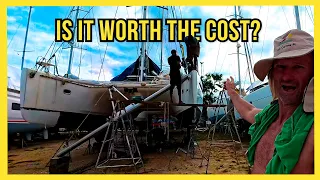
Small Crack, Big Boat Job – An Insurance Dilemma
Rob and Rachel Hamill dismantle the crossbeam on Javelot in a Trinidad boatyard after an insurance surveyor flags cracked bushing welds, sparking a tough debate on marine insurance costs.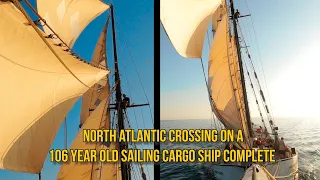
It’s Over – Escape to the Ocean
Rob and Rachel Hamill manage an intensive haul-out aboard catamaran Javelot in Chaguaramas, Trinidad, while their sons Declan and Ivan complete an Atlantic cargo voyage.