Fiberglass Repair | There’s a Hole in Our Boat
Few boatyard operations test a voyager’s stamina quite like confronting deep structural trauma on the hard. For Rob and Rachel Hamill of The Cruising Kiwis, their 2001 Fountaine Pajot Belize 43 catamaran, Javelot, has served as a reliable ocean home across tens of thousands of bluewater miles. Yet decades of ocean voyaging and grounding loads eventually demand decisive composite surgery. After twenty-two long days on the hard waiting for damp laminate to dry, structural repairs finally begin.
The damage to Javelot was not cosmetic gelcoat crazing, but severe impact fractures along the keel shoe and forward bow stem where rocks had breached the outer skin and cracked the sandwich laminate. While Rob and Rachel are capable mariners who manage their own diesel overhauls and rigging refits, rebuilding load-bearing hull sections requires specialized composite craftsmanship. To ensure offshore structural integrity, they engaged veteran composite technician Nigel from Peak Yacht Services to lead the structural reconstruction while they handled mechanical overhauls.
Diagnosing Composite Damage and Core Water Intrusion
When The Cruising Kiwis initiated this composite hull repair, their first priority was evaluating how deeply water had penetrated structural fiberglass fractures to compromise the vessel’s internal core restoration, a critical reality of boat maintenance using high-tensile epoxy resin. Built with composite sandwich construction, Javelot relies on outer and inner fiberglass skins separated by a lightweight core to resist flexural and compressive loads. Once an impact fractures the outer skin, hydraulic pressure drives seawater through the core matrix.
Early 2000s production multihulls frequently used end-grain balsa core for its rigidity and lightweight properties. However, balsa acts as a capillary sponge once exposed to moisture, rotting anaerobically and causing skin delamination. Nigel’s inspection revealed soft, wet balsa in the fractured keel areas. Recognizing that sealing damp core traps moisture and leads to structural failure, the team excised all compromised balsa, electing to replace it with closed-cell, high-density structural foam that cannot absorb water.
The 12:1 Scarf Bevel and Laminate Grinding Protocol
The composite hull repair executed by The Cruising Kiwis required grinding away damaged structural fiberglass to prepare the laminate for structural epoxy resin bonding, ensuring subsequent core restoration and systematic boat maintenance achieved maximum joint strength. Unlike metals or plastics, fiberglass cannot be butt-jointed. A simple butt joint offers minimal tensile cleavage strength and will fail under slamming loads. Instead, structural repair standards mandate grinding a gentle 12:1 scarf bevel taper into the solid laminate.
A 12:1 scarf ratio requires twelve millimeters of taper width for every millimeter of laminate thickness. On Javelot‘s thick keel sections, this meant grinding back more than one hundred and fifty millimeters of sound laminate around the damaged perimeter. Wearing full Tyvek protective coveralls and respirators to guard against toxic, itchy glass dust, Nigel ground broad concentric bevels using coarse 36-grit grinding discs, exposing individual structural plies and creating an expansive mechanical bonding surface.
Structural Core Replacement and Epoxy Bonding
As The Cruising Kiwis advanced the composite hull repair, replacing crushed material beneath the structural fiberglass demanded precision core restoration using closed-cell foam bedded in structural epoxy resin, a pivotal phase of heavy boat maintenance. The bow stem and keel sections required distinct engineering strategies. Because the fine bow stem absorbs intense hydrodynamic wave impact, Nigel selected a monolithic solid fiberglass layup for the stem. Conversely, the keel required a high-density structural foam insert to restore sandwich stiffness.
Nigel fabricated custom cardboard templates against the hull curves to cut the foam inserts accurately. The inner skin was abraded, solvent cleaned, and primed with neat epoxy. Structural epoxy was then mixed with high-density colloidal silica and microfibers into a thick, non-sagging adhesive paste. This structural slurry was applied across the inner laminate and back-buttered onto the foam plug, bedding the core under firm pressure to eliminate voids before curing into a rigid substrate.
Laminating the Outer Skin: Resin Kinetics and Cloth Schedules
Rebuilding outer skins during this composite hull repair required The Cruising Kiwis to laminate heavy structural fiberglass using high-strength epoxy resin, marrying durable core restoration with specialized fabric architecture during active boat maintenance. While polyester resin was used in original factory production, professional boatyard repairs exclusively utilize epoxy resin. Epoxy delivers superior adhesive bonding to cured laminate, higher elongation without cracking, zero post-cure shrinkage, and complete moisture impermeability.
Working under direct tropical sunlight, resin kinetics demanded rapid coordination. At a 5:1 mix ratio, the epoxy has a working pot life of only fifteen to twenty minutes before exothermic heat causes it to set. Nigel laid out pre-cut biaxial glass fabric patches in a stepped schedule, starting with smaller patches over the core and stepping progressively larger across the 12:1 bevel. Each layer was thoroughly consolidated with aluminum finned rollers, expelling air pockets to ensure an optimal 50:50 fiber-to-resin ratio.
Mechanical Auxiliaries, Exhaust Replacement, and Cruising Updates
While technicians managed the composite hull repair, The Cruising Kiwis concentrated their personal boatyard efforts on essential boat maintenance, synchronizing engine overhauls with the cure cycles of structural fiberglass, epoxy resin, and core restoration. A previous hull survey had identified a critical failure waiting to happen: Javelot‘s wet exhaust hose had developed external rust stains, indicating its internal wire reinforcement had corroded through.
Rob Hamill borrowed a heavy-duty hose puller from fellow cruiser Dave, who was refitting his 60-foot catamaran Big Bandicoot. Wrestling the stiff, wire-reinforced replacement hose through engine compartments and securing it with double 316 stainless T-bolt clamps prevented a future flooding hazard. Rob also renewed sail drive seals and serviced freshwater plumbing. Meanwhile, family news arrived: son Finn Hamill won silver in double sculls with Ben Mason at World Rowing Cup II in Plovdiv (6:05), and sons Declan and Ivan hiked Faial’s volcanic caldera in the Azores. Rob and Rachel took a break by cycling through Tucker Valley’s Bamboo Cathedral to the historic Chaguaramas Tracking Station, home of the 1960 Echo 1 satellite voice transmission and early Omega navigation system.
Fairing, Barrier Coating, and Restoring Monocoque Integrity
The closing stage of this composite hull repair executed by The Cruising Kiwis involved fairing the structural fiberglass to hydrodynamic smoothness, sealing the underlying core restoration and cured epoxy resin during comprehensive boat maintenance. After washing away amine blush residue with water and abrasive pads, Nigel troweled lightweight epoxy fairing compound blended with hollow glass microspheres across the repair.
Once cured, the patch was faired using longboard sanding files in cross-hatch strokes, matching the exact curvature of the hull without low spots or drag. Technicians then applied five coats of high-solids epoxy moisture barrier (West System / Epiglass) in alternating tints to ensure pinhole-free coverage of at least 250 microns dry film thickness. Rolled with antifouling bottom paint while chemically tacky, Javelot‘s hull regained its monocoque strength, prepared once again for demanding ocean passages.
Composite Repair Specifications and Laminate Schedule
To assist voyaging mariners emulating The Cruising Kiwis, this engineering reference outlines structural parameters for composite hull repair, structural fiberglass layups, structural epoxy resin mixing, sandwich core restoration, and systematic boat maintenance.
| Engineering Parameter | Specification / Ratio | Operational Application & Function |
|---|---|---|
| Scarf Bevel Taper | 12:1 chamfer ratio | Mandatory slope for structural hull repairs to distribute tensile and shear loads across secondary bonds |
| Core Material | 80 kg/m³ closed-cell PVC foam | Replaces moisture-damaged end-grain balsa to prevent water migration, rot, and future core saturation |
| Resin Formulation | 100% solids epoxy (5:1 mix ratio) | Provides superior tensile bond strength, zero cure shrinkage, and complete osmotic water resistance |
| Reinforcement Fabric | 1708 Biaxial E-glass fabric | Non-crimp stitched fibers provide maximum multi-directional strength along primary stress axes |
| Bedding Slurry | Epoxy with colloidal silica & microfibers | High-density structural paste applied to bed core inserts without air entrapment or bond voids |
| Pot Life & Open Time | 15–20 minutes at 28°C (82°F) | Active working window before exothermic reaction; requires shallow tray spreading in warm climates |
| Fairing Compound | Epoxy with glass microspheres | Low-density spreadable compound longboarded to restore fair hydrodynamic hull contours |
| Moisture Barrier | 4–5 coats high-solids epoxy barrier | Builds a 250-micron impermeable water barrier protecting laminate before antifouling application |
Frequently Asked Questions
For cruising mariners following The Cruising Kiwis, mastering composite hull repair, structural fiberglass layup, epoxy resin handling, core restoration protocols, and regular boat maintenance is essential for ocean safety.
A 12:1 scarf bevel taper is mandatory for structural composite repairs because fiberglass patches cannot be butt-jointed. Beveling the perimeter of damaged laminate at a 12:1 slope exposes original plies in broad concentric rings. This provides a gradual mechanical bonding surface that transfers tensile, shear, and compressive loads smoothly without creating localized stress points under offshore wave impacts.
Epoxy resin is preferred for structural hull repairs because cured polyester laminate offers no active chemical bonding sites for new polyester resin. Polyester achieves only weak mechanical secondary adhesion to old fiberglass. Epoxy delivers exceptional tensile bond strength, higher elongation before failure, zero cure shrinkage, and total moisture impermeability, preventing osmotic blisters below the waterline.
Water-damaged sandwich cores must be completely removed until dry, sound core and inner skin are reached. After thorough drying, a replacement insert of closed-cell, high-density structural foam is shaped to fit the cavity. The core insert is bedded in epoxy thickened with colloidal silica and microfibers to eliminate air voids, clamped firmly, and laminated over with multi-ply biaxial fiberglass cloth.
Air voids are prevented by using stepped cloth patterns, non-crimp biaxial fabrics, and ribbed laminating rollers. Stepping fabric layers from smaller patches to larger layers prevents bridging over internal angles. Once saturated with resin, an aluminum finned roller is rolled firmly across the laminate to displace air bubbles, consolidate fibers, and achieve an optimal 50:50 glass-to-resin ratio.
After fairing an underwater repair, technicians apply four to five coats of high-solids epoxy moisture barrier (such as West System 105/205 or Epiglass) to build an impermeable dry film thickness of 250 microns. Alternating contrasting pigment colors guarantees pinhole-free coverage. The final barrier coat is allowed to reach a tacky cure state before rolling antifouling paint to ensure a strong chemical bond.
Grinding fiberglass releases toxic airborne particulates and abrasive glass fibers that severely irritate skin and respiratory tracts. Technicians must wear a NIOSH-rated N95 or P100 respirator, sealed safety goggles, nitrile gloves, and hooded Tyvek coveralls taped at the wrists and ankles. Applying barrier cream before suit-up and showering in cold water after work prevents glass spicules from penetrating skin pores.
Support The Cruising Kiwis
At WeBoating.com, we profoundly acknowledge the unwavering dedication that The Cruising Kiwis invests in crafting each and every video or voyage. Their passion for delivering exceptional ocean content shines through every frame, and it's a labor of love that deserves your attention.
We invite you to watch their captivating videos here and actively engage with their content, including their social media links above. Liking, commenting, and sharing their work goes a long way in fueling their creative fire.
We're also inviting you to explore the gear, sponsorships, and boat partnerships highlighted in the "Fiberglass Repair | There’s a Hole in Our Boat" video description, or directly on YouTube. By engaging with these offerings or purchasing services and items, you directly support The Cruising Kiwis, their collaborators, and the brands they're associated with.
To ensure you never miss an offshore update, consider visiting their official YouTube Channel to subscribe, like, and join their community directly.
If you have any feedback, corrections, or additional information about The Cruising Kiwis or their videos, please use the comment form below to share your thoughts with us.
Thank you for being a part of our community and supporting the creators we cherish. Your time and support truly matter!
Fiberglass Repair | There’s a Hole in Our Boat
We've been waiting for the hulls to dry out enough for the fibreglass repairs to begin. It's a little like watching paint dry. But finally the wait is over and it'a time to start putting Javelot, our floating home..
We've tackled plenty of jobs on the boat over the years, and we're usually pretty happy to have a go at most things, but fibreglassing is something we've never tried before.
There's a difference between having a go at a small fibreglass repair and rebuilding sections of a hull that been smashed open on rocks. With the structural integrity of our home depending on getting this repair right, we decided this probably wasn't the ideal time to learn on the job. So for this one, we've called in the professionals.
Music
Musicbed.com
The Flower duet - Lud and Schutts Musical Emporium
Thank you for helping keep us afloat and supporting the creative process. You can be part of the crew for less than the price of a coffee. You can do so here:
- Patreon https://www.patreon.com/CruisingKiwis
- MERCHANDISE
- thecruisingkiwis.shop
WEB SITE
www.thecruisingkiwis.com
SOCIAL MEDIA
Follow us on: Instagram: http://www.instagram.com/THECRUISINGKIWIS
Facebook: http://www.facebook.com/THECRUISINGKIWIS
Much love to you all,
Rob, Rachel, Finn, Declan, Ivan
https://www.patreon.com/CruisingKiwis
*****
Follow us in real time on Instagram and Facebook
@thecruisingkiwis
@finn_hamill
@declan_hamill
@ivanhamill
#sailing #fiberglass #trinidad #TheCruisingKiwis
The Cruising Kiwis
Meet the Hamills: A New Zealand family of five retracing a poignant historical legacy aboard their Fountaine Pajot 43 catamaran, Javelot.
Channel Information:
Social Media Links:
Fiberglass Repair | There’s a Hole in Our Boat Location
- Whangarei Town Basin & Marina Basin, Northland, New Zealand (-35.7275,174.3283)
- Marsden Cove Marina & Boatyard, Bream Bay, New Zealand (-35.832,174.456)
Latest Episodes from The Cruising Kiwis
Explore the most recent voyages. Subscribe to the channel to never miss an update!
It’s Over – Escape to the Ocean
Rob and Rachel Hamill manage an intensive haul-out aboard catamaran Javelot in Chaguaramas, Trinidad, while their sons Declan and Ivan complete an Atlantic cargo voyage.
Fiberglass Repair | There’s a Hole in Our Boat
The Cruising Kiwis undertake a structural fiberglass hull repair on Javelot, executing a 12:1 scarf bevel and core restoration to ensure ocean readiness.
Repairs Start on Crash Damaged Catamaran
Repairs Starts on Crash Damaged Catamaran Our crash damaged catamaran has been hauled out of the water. Now we can get a much better look at what we are dealing with. The starboard bow took the main impact. And despite us sealing the damage with epoxy putty to keep the worst of the water out, seawa...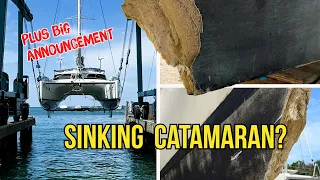
Releasing Gallons of Trapped Sea Water from our Damaged Boat | Rough Sail to Trinidad to Haul Out
Releasing Gallons of Trapped Sea Water from our Crash Damaged Boat | Rough Sail to Trinidad to Haul Out After winding our way through the Windward Islands of the Caribbean, we've finally arrived in Grenada for the final schlep of our journey to Trinidad, where our crash damaged catamaran, and ...
ROUGH seas BROKEN eggs DAMAGED boat
ROUGH seas BROKEN eggs DAMAGED boat There's no use crying over broken eggs while rough seas batter our damaged catamaran as we continue sailing south through the Caribbean Sea towards Trinidad. Until now, we've been able to take our time, pausing to enjoy the islands, wildlife and most im...