Beyond the Boatyard - Exploring Hidden Trinidad
With their 43-foot catamaran Javelot freshly splashed after haulout maintenance in Chaguaramas, Rob and Rachel Hamill of The Cruising Kiwis faced a temporary pause in Trinidad. Their son Declan had flown back to the island to visit the American Embassy in Port of Spain for his B1/B2 visa before joining a superyacht crew in America. With his visa approved and a one-week waiting period underway to retrieve his passport, the family stepped away from the boatyard docks to explore Trinidad.
The morning outing started on bicycles, pedaling for 15 minutes toward the Covigne Gorge trailhead beneath the rainforest canopy. The moment they stepped off their bicycles, rain swept across the hills, drenching the path and turning the shallow rocky bed of the Cusa River into slick footing.
Covigne Gorge Hike and Travel Decisions
Following the trail carved by a branch of the Cusa River, the family walked through shallow stream beds leading toward a freshwater plunge pool. The dense foliage offered little shelter from the downpour, and wet rocks made the footing treacherous. Rachel lost her footing along the slippery stream banks, dropping into the stream bed to brace herself: “I slipped and it was like it was a save yourself kind of thing. I probably could have not fallen in the water, but I was like, OKAY, I’M GOING DOWN.”
While Declan and Rachel pushed further up the trail, Rob remained near the plunge pool to talk through the family’s logistical plans. Rob and Rachel had purchased airline tickets to Amsterdam to watch their son Finn row and compete at an international regatta. The journey was made possible after advice from patron Reggie McCaskill in Grenada, who urged the couple to keep Javelot in Trinidad where the boat remained safe from hurricane paths. McCaskill supported the decision directly by sending a $500 contribution to help cover travel costs.
Keel Removal and Structural Fiberglass Repair on the Hard
Returning to the boatyard in Chaguaramas, Javelot was not only hosting Declan but also serving as a temporary home for German cruisers Sonny and Niels and their two Chihuahuas, Yuki and Calito. Their 42-year-old sailboat was hauled out on the hard at Peaks undergoing heavy structural surgery, filling the interior with toxic fumes and fiberglass dust.
The trouble began when water intrusion caused a snapped keel bolt, creating a visible separation between the keel and the hull known as a smiling mouth. After a marine specialist inspected the hull and a thin borescope camera confirmed the sheared bolt, the crew hauled out in a yard capable of unstepping the mast. Removing the rig was required to prevent the boat from capsizing once the keel’s ballast was detached. Dropping the keel proved difficult because 42-year-old glue and two remaining bolts held firm. After a welder attached a nut inside the hull to back out a frozen fastener, the keel finally detached with a heavy crash. The boat was moved beside the keel with the travel lift, where Niels coated the cast iron in phosphoric acid to treat corrosion while grinding out defective previous fiberglass patches inside the bilge to beef up the stringers before reattaching the keel.
Traditional Breakfast and Leatherback Hatchlings at Grande Riviere
Before heading to the north coast, Declan stopped to sample a classic breakfast of doubles, tasting the curried chickpea flatbread for the first time: “It’s got chickpeas in it or something.” After trying the spiced meal, Declan added that it was “A bit sloppy but very yummy.”
Driving across the island to Grande Riviere, the family arrived at the end of the leatherback turtle nesting season. At night, local conservation wardens patrol the beach to collect newly emerged daytime hatchlings into shaded plastic bins. A single leatherback nest holds 80 to 100 eggs deep in the sand, and without intervention, midday hatchlings risk severe dehydration and fatal attacks by predatory birds. Rob and Declan observed 500 hatchlings waiting safely in a tub until dusk for release into the ocean.
At 5:15 the following morning, the family walked the beach at first light, watching individual stragglers crawl down the sloping sand toward the surf. They discovered one small hatchling struggling to free itself from a sandy hollow, resting between short bursts of movement. Rachel named the tiny turtle Esther Rosie and watched as it reached the whitewash. The sighting sparked memories for Rob, who recalled encountering a massive leatherback turtle the size of a car that swam up the Whakatane River in New Zealand during the early 1970s and crawled onto a public boat ramp before returning downstream.
Chacachacare Beach Cleanup and Plastic Recycling
The journey across Trinidad tied into an earlier conservation project undertaken while Javelot was on the hard. Joining Sonny and Niels aboard their sailboat before haulout, the crew organized a coastal cleanup on Chacachacare, an island a couple of islands over from Chaguaramas. In an hour and a half of scouring the shoreline, the team gathered 265 kg of plastic waste. Peaks management arranged to transport the collected plastic bags back to the mainland for proper municipal disposal.
Aboard their boat, Sonny and Niels showcased a functional small-scale plastic recycling workshop. The hardware had a shared history: Rob and Rachel had carried the plastic extruder on Javelot for two years without a mold before handing it to a Brazilian cruising boat, which eventually passed it to Sonny and Niels. Sonny and Niels purchased precision molds to manufacture practical items rather than ornamental trinkets. Plastic bottle caps are sorted and fed through a shredder two or three times to produce uniform flakes. The shredded polymer is loaded into the extruder cylinder, which heats the material to 200° Celsius. As Niels explained, “This material melts about 200° Celsius in a soft pasty texture”. Using a heat gun to preheat three-part metal molds, the heated plastic is injected into custom dies to produce durable carabiners and clothespins.
Expedition Metrics
| Metric | Details |
|---|---|
| Bicycle Transit to Trailhead | 15 minutes |
| Keel Age at Haulout | 42 years |
| Morning Beach Walk Time | 5:15 AM |
| Eggs per Nest Chamber | 80 to 100 eggs |
| Hatchlings in Conservation Tub | 500 hatchlings |
| Plastic Waste Collected | 265 kg |
| Extruder Operating Temperature | 200° Celsius |
Frequently Asked Questions
Declan had to travel to Port of Spain to visit the American Embassy to secure his B1/B2 visa, requiring a one-week wait to receive his passport back before flying to America.
Water intrusion had rusted and snapped a concealed keel bolt, creating a smiling mouth separation between the keel and the hull that was detected with a thin borescope camera.
In an hour and a half, the crew collected 265 kg of plastic waste from the shores of Chacachacare, which Peaks management arranged to transport back to the mainland for disposal.
They shred bottle caps two to three times into small fragments, then melt the plastic in an extruder heated to 200° Celsius to press into metal molds for items like carabiners and clothespins.
Conservation wardens collect daylight hatchlings and hold them in shaded containers until early evening to prevent predation by birds, which frequently attack turtles making daytime runs across the sand.
Declan tried doubles, a traditional breakfast food from Trinidad and Tobago made with curried chickpeas served inside flatbread.
Water adventures near Viti Levu
Support The Cruising Kiwis
At WeBoating.com, we profoundly acknowledge the unwavering dedication that The Cruising Kiwis invests in crafting each and every video or voyage. Their passion for delivering exceptional ocean content shines through every frame, and it's a labor of love that deserves your attention.
We invite you to watch their captivating videos here and actively engage with their content, including their social media links above. Liking, commenting, and sharing their work goes a long way in fueling their creative fire.
We're also inviting you to explore the gear, sponsorships, and boat partnerships highlighted in the "Beyond the Boatyard - Exploring Hidden Trinidad" video description, or directly on YouTube. By engaging with these offerings or purchasing services and items, you directly support The Cruising Kiwis, their collaborators, and the brands they're associated with.
To ensure you never miss an offshore update, consider visiting their official YouTube Channel to subscribe, like, and join their community directly.
If you have any feedback, corrections, or additional information about The Cruising Kiwis or their videos, please use the comment form below to share your thoughts with us.
Thank you for being a part of our community and supporting the creators we cherish. Your time and support truly matter!
Thank you very much for supporting our channel. If you'd like to help with the production of these videos, repairs and maintenance you can do so here:
TIPJAR https://tipjar.thecruisingkiwis.com
SHOP Www.thecruisingkiwis.shop
PATREON Www.patreon.com/cruisingkiwis
PayPal using our email [email protected]
Welcome back to Trinidad, Declan, our EMC has rejoined the boat. While waiting to receive Declan's passport back, after gaining approval for his B1, B2 visa at the American Embassy, There's just enough time to drag the him out of bed to explore the rainforest and commune with wildlife. From Covigne Gorge, to hundreds of leatherback turtles hatching on the northern beaches of Grande Riviere and a beach clean up at Chacachacare. We discover the hidden paradise beyond the boatyard
WEB SITE
www.thecruisingkiwis.com
SOCIAL MEDIA
Follow us on: Instagram: http://www.instagram.com/THECRUISINGKIWIS
Facebook: http://www.facebook.com/THECRUISINGKIWIS
Much love to you all,
Rob, Rachel, Finn, Declan, Ivan
https://www.patreon.com/CruisingKiwis
*****
Follow us in real time on Instagram and Facebook
@thecruisingkiwis
@finn_hamill
@declan_hamill
@ivanhamill
#sailing #trinidad #sailinglife #TheCruisingKiwis

The Cruising Kiwis
Meet the Hamills: A New Zealand family of five retracing a poignant historical legacy aboard their Fountaine Pajot 43 catamaran, Javelot.
Channel Information:
Social Media Links:
Beyond the Boatyard - Exploring Hidden Trinidad Location
- Peake Yacht Services, Chaguaramas, Trinidad (10.6828,-61.6392)
- Covigne Gorge, Chaguaramas, Trinidad (10.7067,-61.6214)
- Grande Riviere Turtle Beach, Trinidad (10.8274,-61.0506)
- Chacachacare Island Beach Cleanup, Trinidad (10.6861,-61.7386)
Latest Episodes from The Cruising Kiwis
Explore the most recent voyages. Subscribe to the channel to never miss an update!
Beyond the Boatyard – Exploring Hidden Trinidad
After splashing Javelot in Trinidad, Rob, Rachel, and Declan Hamill venture beyond the boatyard to hike Covigne Gorge, witness leatherback turtle hatchlings at Grande Riviere, and join a beach cleanup on Chacachacare Island.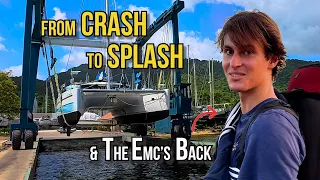
From Crash Damaged to Splash Day – How we did it!
At Peake's Boatyard in Trinidad, Rob and Rachel Hamill wrap up two months of hard labor repairing hull rock damage, straightening rudders, replacing wind generator bearings, and splashing their catamaran back into Chaguaramas Bay.
Boat Problems & Family Celebrations, The Boys Start New Life without us!
Rob and Rachel Hamill tackle cracked crossbeam welds on Javelot in Trinidad, celebrate superyacht jobs for Declan and Ivan, and mark their 25th wedding anniversary.
Small Crack, Big Boat Job – An Insurance Dilemma
Rob and Rachel Hamill dismantle the crossbeam on Javelot in a Trinidad boatyard after an insurance surveyor flags cracked bushing welds, sparking a tough debate on marine insurance costs.
It’s Over – Escape to the Ocean
Rob and Rachel Hamill manage an intensive haul-out aboard catamaran Javelot in Chaguaramas, Trinidad, while their sons Declan and Ivan complete an Atlantic cargo voyage.