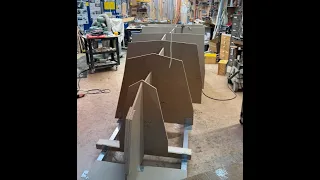
Four Sheets of Divinycell for the Hull Sides – I Think That's Enough.
Within his compact marine workshop in Västervik, Sweden, veteran ocean voyager and micro-cruiser designer Sven Yrvind continues the physical execution of his most demanding high-latitude expedition vessel. At 87 years and 5 months of age, the self-taught, dyslexic solo sailor is fabricating a 5.6-meter (18-foot-4-inch) ocean cruiser engineered specifically to endure the unrelenting sea states of the Southern Ocean on a voyage to Dunedin, New Zealand. Rather than following standard boatbuilding conventions that rely on heavy fiberglass roving or timber planking, Yrvind constructs his vessels around an ultra-resilient sandwich composite matrix of closed-cell Divinycell PVC foam and Nils Malmgren (NM) epoxy.
Plating the topsides of such a compact displacement hull—possessing a beam of only 1.45 meters—presents a difficult balancing act between material efficiency and structural continuity. High-performance structural foam sheets represent both substantial economic cost and logistical overhead. To maximize efficiency, Yrvind established a rigorous material budget for the hull sides: plating the entire topsides using exactly four standard sheets of Divinycell foam, leaving virtually zero material waste in the workshop.
Achieving total coverage across the sheer and compound flare of the hull with only four foam panels requires meticulous geometric calculation and precision carpentry. By capitalizing on the isotropic cellular properties of Divinycell, offcut scraps from earlier cuts are seamlessly recycled back into primary structural voids through butt-to-butt epoxy scarfs. In doing so, Yrvind demonstrates how high-latitude naval architecture can achieve maximum structural reliability through radical resource conservation.
Hull Side Geometry and Foam Sheet Allocation
In his Västervik workshop, Swedish solo sailor Sven Yrvind engineered the structural topside framing of his 5.6-meter ocean cruiser to withstand severe compressive slamming loads. The hull’s narrow 1.45-meter beam and short overall length demand an exceptionally stiff topside structure to resist torsional flexing when sailing through breaking crests. When fitting the foam core over the longitudinal stringers and transverse stations, the layout revealed two critical open spans along the topside framework: an upper gap measuring 95 centimeters and a lower gap measuring 89 centimeters.
Covering these vertical and horizontal spans without opening additional fresh sheets of Divinycell required careful planning. Standard boatyard practice often results in massive scrap piles of expensive core material as curved sheerlines are trimmed from rectangular panels. For Yrvind, however, material waste is unacceptable. The challenge lay in mapping the remaining negative spaces of the hull sides against the geometry of offcuts produced during initial panel profiling, ensuring that every square centimeter of Divinycell contributes directly to the vessel’s composite monocoque shell.
By establishing that four primary sheets could yield both the full-length hull side sections and the filler inserts required for the 95-centimeter and 89-centimeter intervals, Yrvind confirmed the viability of his material budget. The process demands meticulous templating to verify that the core segments conform to the hull’s subtle tumblehome and entry curves without introducing pre-stress or unfair hollows into the topside line.
This disciplined approach to core management reflects Yrvind’s lifelong design ethos. On an 18-foot micro-cruiser destined for thousands of miles in the Southern Ocean, every kilogram of displacement must be strictly accounted for. By avoiding oversized sheets or layered laminate patches, the vessel preserves an optimal ballast-to-displacement ratio, keeping the center of gravity low while maintaining maximum internal volume for provisions and emergency equipment.
Structural Advantages: Divinycell Scarfing vs. Plywood
Inside the Västervik workshop, Sven Yrvind’s construction of the 5.6-meter cruiser illustrates a profound naval architecture distinction between synthetic composite cores and traditional timber substrates. In wooden boatbuilding, marine plywood relies on alternating rotary-cut veneers bonded together, creating anisotropic mechanical properties where tensile strength aligns strictly with the directional grain of the wood fibers. Splicing two plywood sheets together requires cutting long, angled scarf joints—conventionally at an 8:1 or 12:1 taper ratio—to feather the grain lines and provide sufficient gluing surface area. Attempting a blunt butt joint in plywood creates an immediate structural hinge point prone to catastrophic failure under flexural fatigue.
Divinycell closed-cell polyvinyl chloride (PVC) foam behaves fundamentally differently due to its isotropic physical nature. Because the microscopic cellular matrix is uniform in all directions, the material exhibits consistent compressive, shear, and tensile characteristics regardless of cut angle. When two Divinycell edges are joined butt-to-butt using Nils Malmgren (NM) epoxy, the resulting adhesive bond line actually exhibits higher shear and tensile strength than the foam core itself. The cured epoxy penetrates the open surface cells of the PVC core, creating a continuous mechanical interlock.
This behavioral difference allows Yrvind to scarf Divinycell butt-to-butt without needing long, tapered scarf bevels that consume material. As long as the mating surfaces are square, clean, and saturated with epoxy, the joint functions as a homogeneous, uninterrupted core. This structural characteristic eliminates the risk of grain splitting or localized hard spots, ensuring that spliced hull panels absorb hydraulic slamming shocks uniformly across the entire high-latitude hull shell.
Furthermore, the absence of tapered scarfs eliminates the dimensional thinning that often plagues plywood repairs. In sandwich construction, core thickness governs the panel’s section modulus and flexural rigidity according to the cube of the thickness. By preserving 100% nominal core thickness right through the butt joint, Yrvind ensures that the finished topside sandwich panel maintains its calculated moment of inertia across every spliced boundary without adding weight in localized resin buildups.
Splicing Offcuts: Precision Recycling and Waste Elimination
Applying this composite joinery method directly to the 5.6-meter expedition vessel, Sven Yrvind gathered the remnant cutoffs generated from the primary topside cutouts in his Västervik workshop. Evaluating the scrap pile, Yrvind identified substantial offcut sections measuring over 40 centimeters in length, with specific pieces measuring 40 centimeters and 55 centimeters. Rather than discarding these pieces, he prepared them to be scarfed into the 95-centimeter upper gap and 89-centimeter lower gap along the hull side framing.
The splicing workflow entails squaring the offcut edges and dry-fitting them into the framing voids before bonding them permanently in place with NM-epoxy. Once the epoxy cures, the proud edges of the spliced inserts are planed and sanded flush with the surrounding hull contours. This technique allows Yrvind to assemble composite panels of arbitrary dimensions from smaller fragments without sacrificing structural integrity, resulting in near-total utilization of every square decimeter of foam.
In addition to closing the primary topside gaps, Yrvind incorporated a specialized reinforcing detail along the upper edge of the sheer. Recognizing that sharp exterior corners create localized stress concentrations and make composite glass lamination prone to void formation, he planned a rounded radius along the upper hull edge. To support this curved profile and provide internal backing, Yrvind prepared a 3-centimeter-wide reinforcing strip to be bonded along the inside face of the hull side. This secondary lamination increases local shear resistance and creates a robust foundation for subsequent deck-to-hull bonding.
By combining butt-spliced gap fillers with internal edge radiusing, the topsides become a cohesive composite unit. Once laminated with interior and exterior fiberglass skins wet out with NM-epoxy, the spliced Divinycell core transforms into a high-strength I-beam structure where the skins carry tensile and compressive stresses, while the foam core stabilizes the skins against buckling under extreme wave impact.
Symmetry Verification and Centerline Datum Engineering
Maintaining geometric symmetry across both topsides of the 5.6-meter cruiser represents a vital phase of Sven Yrvind’s build process in Västervik. After cutting two additional hull side sections, Yrvind clamped the stern sections temporarily to inspect the fairness and curvature of the aft run. With the pieces held firmly against the building frames, the emerging lines of the double-ended canoe hull could be visually evaluated for hydrodynamic flow and volume distribution.
To verify the cut patterns, Yrvind conducted cross-side fit testing, offering the panels up to the opposite side of the vessel. In theory, a symmetrical hull design should produce identical mirror-image components; however, as Yrvind noted during the trial, physical boatbuilding is full of surprises where minute frame deflections or variations in foam tension can create subtle discrepancies. After testing the pieces across both port and starboard sides, the fit confirmed that the spliced offcuts would accurately fill the voids on both sides, leaving exactly one surplus scrap piece remaining from the entire cutting operation.
Crucial to this verification was Yrvind’s centerline datum system. Rather than relying on external wooden jig stands or temporary shop supports—which are prone to settling, humidity expansion, or workshop movement—Yrvind established an absolute reference line using a taut black string running longitudinally along the bottom center of the hull. Each transverse station and structural bulkhead features a center punch mark aligned vertically down to this reference string. By continually referencing the black centerline string throughout the hull plating phase, Yrvind ensures that both hull sides remain symmetrical around the true hydrodynamic axis of the vessel.
This datum alignment guarantees that the hull lines will track true in heavy following seas. In the turbulent rollers of the Southern Ocean, any asymmetric distortion in the topsides or keel profile can induce dangerous yawing moments and weather helm. By anchoring every station measurement to an immovable longitudinal string datum, Yrvind eliminates cumulative layout errors before the composite matrix is permanently locked with epoxy.
High-Latitude Engineering: The Dunedin Expedition
The meticulous composite joinery executed on Sven Yrvind’s 5.6-meter cruiser in Västervik is driven by the extreme demands of his intended navigation route. Planned as a solo, non-stop voyage into the Southern Ocean bound for Dunedin, New Zealand, the passage will subject the tiny craft to thousands of miles of the Roaring Forties and Furious Fifties. In these desolate latitudes, breaking ocean swells, hurricane-force squalls, and severe cold present lethal hazards to standard production craft.
To conquer these conditions, Yrvind’s pocket cruiser is designed around a three-masted lugger rig carrying a modest 9 square meters of total sail area. This divided rig keeps the center of effort low, minimizes sail handling loads for an 87-year-old solo mariner, and allows balanced self-steering under reefed canvas. For windward efficiency in shallow draft conditions, the hull incorporates a dedicated bow daggerboard, balancing the lateral plane against the drive of the forward unstayed mast.
Central to Yrvind’s survival philosophy is the vessel’s construction as an unsinkable, self-righting survival capsule. By utilizing thick Divinycell foam throughout the entire hull shell, the structure provides immense positive buoyancy that exceeds the total displacement of the loaded craft, ensuring the boat remains afloat even if fully flooded. Furthermore, the closed-cell foam provides superior thermal insulation against freezing sub-Antarctic waters, preventing internal condensation and hypothermia during months of high-latitude isolation.
Every structural decision in Yrvind’s Västervik workshop—from the four allocated sheets of Divinycell to the 3-centimeter sheer reinforcement strips—is calibrated for absolute survivability. For Yrvind, oceanic freedom is not found in complex electronic systems or massive hulls, but in the indestructible simplicity of a perfectly crafted micro-vessel capable of weathering any sea that the planet can generate.
| Component / Parameter | Specification / Measurement | Engineering Rationale |
|---|---|---|
| Vessel Dimensions | Length: 5.6 m (18 ft 4 in) | Beam: 1.45 m | High structural strength-to-weight ratio; self-righting capsule geometry. |
| Rig Configuration | 3-Masted Lugger | 9 m² Total Sail Area | Low center of effort; divided sail plan for manageable solo heavy-weather handling. |
| Lateral Plane Appendage | Bow Daggerboard | Prevents leeway and enhances steering balance against forward unstayed mast. |
| Hull Side Core Allocation | Exactly 4 Divinycell Foam Sheets | Optimized sheet nesting and scrap recycling eliminate material waste. |
| Hull Framing Gaps | Upper Gap: 95 cm | Lower Gap: 89 cm | Target framing spans bridged using spliced offcut composite inserts. |
| Recycled Offcut Dimensions | Sections measuring 40 cm and 55 cm | Butt-scarfed into frame voids; one surplus offcut remaining. |
| Joint Construction | Butt-to-Butt Scarf with NM-Epoxy | Isotropic foam core yields 100% bond strength without 8:1 tapers. |
| Sheer Edge Reinforcement | 3 cm Internal Strip & Outer Radius | Relieves laminate stress and provides reinforced deck landing. |
| Centerline Datum System | Longitudinal Bottom Reference String | Independent datum line ensures true bilateral hull symmetry. |
| Voyage Destination | Dunedin, New Zealand (via Southern Ocean) | Extreme endurance testing in the Roaring Forties and Furious Fifties. |
Frequently Asked Questions
Sven Yrvind budgeted exactly four standard sheets of Divinycell closed-cell PVC foam to skin both topsides of his 5.6-meter cruiser to minimize material expense and eliminate workshop waste. By strategically nesting the primary hull side panels and recycling offcuts into structural butt joints, Yrvind achieved full composite coverage across both port and starboard sides with zero wasted foam.
During the dry-fit on the 5.6-meter cruiser, the hull framing revealed an upper gap measuring 95 centimeters and a lower gap measuring 89 centimeters. Sven Yrvind bridged these spans by splicing together offcut foam remnants measuring 40 centimeters and 55 centimeters, bonding them directly into the framework with NM-epoxy.
Unlike marine plywood, which has directional grain and requires an 8:1 or 12:1 tapered scarf ratio to avoid structural failure, Divinycell PVC foam is an isotropic material with uniform cellular strength in all directions. When scarfed butt-to-butt using high-strength epoxy, the cured epoxy bond line is stronger than the parent foam itself, creating a seamless, homogeneous structural join without wasting material on long tapers.
To ensure true bilateral symmetry across the 5.6-meter cruiser, Sven Yrvind avoids relying on external wooden jig stands that may settle or flex. Instead, he uses a taut black reference string stretched down the bottom center of the hull as an absolute datum. Center punch marks from every frame and station drop vertically down to this center string, while panels are cross-fitted between port and starboard sides to confirm identical geometry.
Sven Yrvind’s ocean cruiser measures 5.6 meters (18 feet 4 inches) in length with a 1.45-meter beam. Built from Divinycell foam core and NM-epoxy, the vessel features a three-masted lugger rig with 9 square meters of total sail area, a bow daggerboard for windward tracking, and unsinkable positive buoyancy designed for a solo Southern Ocean passage from Sweden to Dunedin, New Zealand.
Support Sven Yrvind
At WeBoating.com, we profoundly acknowledge the unwavering dedication that Sven Yrvind invests in crafting each and every video or voyage. Their passion for delivering exceptional ocean content shines through every frame, and it's a labor of love that deserves your attention.
We invite you to watch their captivating videos here and actively engage with their content, including their social media links above. Liking, commenting, and sharing their work goes a long way in fueling their creative fire.
We're also inviting you to explore the gear, sponsorships, and boat partnerships highlighted in the "Four Sheets of Divinycell for the Hull Sides – I Think That's Enough." video description, or directly on YouTube. By engaging with these offerings or purchasing services and items, you directly support Sven Yrvind, their collaborators, and the brands they're associated with.
To ensure you never miss an offshore update, consider visiting their official YouTube Channel to subscribe, like, and join their community directly.
If you have any feedback, corrections, or additional information about Sven Yrvind or their videos, please use the comment form below to share your thoughts with us.
Thank you for being a part of our community and supporting the creators we cherish. Your time and support truly matter!
This Youtube channel is about me Sven Yrvind. I am87 year and 5 months old dyslectic solo sailor.
I am building a Divinycell and NM-epoxy high-latitude cruiser.
She is 5.6 meter 18 feet 4 inches long. Her beam is 1.45 meter. She is a three masted lugger with a total sail area of 9 square meter. She has a bow daggerboard. I am planning a cruise in the Southern Ocean to Dunedin NZ.
Subject to change.
Often the 22th every month I do a resume of the project.
I have an illustrated book with good reviews on Amazon. https://www.amazon.se/s?k=yrvind&crid=1549D6PR18BUJ&sprefix=%2Caps%2C112&ref=nb_sb_ss_recent_1_0_recent
If you’re interested in contributing to my experiments links are below.
https://www.paypal.com/donate/?hosted_button_id=53X8NVEA22MBL
Swish 0706200550
Also please subscribe - even if you are not interested in sailing.
For more see Yrvind.com

Sven Yrvind
At 86, Sven Yrvind is still pushing the limits of small-boat design. Discover the philosophy and technical grit behind his 'Exlex' series.
Channel Information:
Social Media Links:
Four Sheets of Divinycell for the Hull Sides – I Think That's Enough. Location
- Sven Yrvind Workshop, Vu00e4stervik, Sweden (57.7577,16.637)
Latest Episodes from Sven Yrvind
Explore the most recent voyages. Subscribe to the channel to never miss an update!
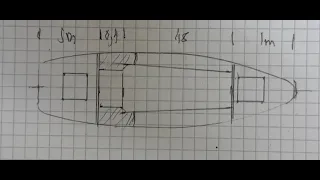
Exlex X – Experimental.
Sven Yrvind pauses construction on his ocean cruiser in Västervik to build Exlex X, a 4.2m experimental plywood model to test plow rudders, movable lead ballast, and capsize-proof surge chamber ventilation.
Scarfing , butt joint, to Save Divinycell.
In Västervik, Sweden, solo sailor Sven Yrvind scarfs Divinycell structural foam strakes, bonds offcuts with NM epoxy, and explains why elastic hull fairing takes precedence over rigid frame molds on his 5.6m Southern Ocean micro-cruiser.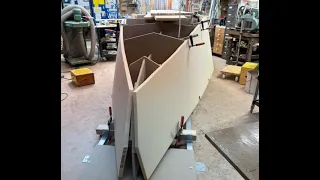
Four Sheets of Divinycell for the Hull Sides – I Think That’s Enough.
In his Västervik workshop, 87-year-old solo ocean voyager Sven Yrvind skins the hull sides of his 5.6m cruiser with four Divinycell foam sheets, demonstrating butt-to-butt epoxy scarfing and zero-waste construction for the Southern Ocean.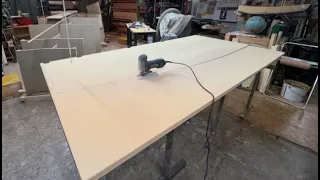
Nervously Cutting the Divinycell Sheets.
At age 87, Swedish navigator Sven Yrvind cuts and thermoforms Divinycell foam sheets for the compound bow curves of his 5.6m ocean micro-cruiser in Västervik, Sweden.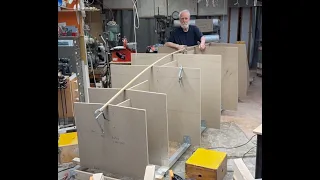
Trying to Get the Sheerline Right.
At 87, Swedish voyager Sven Yrvind fairs the sheerline across nine mold stations for his 5.6m ocean micro-cruiser in Västervik, Sweden, optimizing reserve buoyancy.