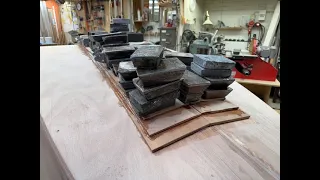
Right Side Up for the First Time!
In his workshop, veteran solo sailor Sven Yrvind prepares to roll his experimental plywood test boat right side up for the first time. Working alone, the builder faces the delicate task of hoisting and turning the inverted hull without distorting its shape or letting it tip over on the concrete floor.
Rigging the Hoist and Choosing Knots
To lift the boat, Yrvind rigs an overhead chain hoist paired with flush pipes to control the hoisting lines. Selecting the proper knot proves critical for solo handling. Evaluating line security versus the ease of releasing tension later, Yrvind notes that traditional knots present distinct trade-offs: “The bowline becomes too hard. You have to use pliers or something like that.” By comparison, he points to another option: “The best for honest uh garrick bend. Very very easy. But, not so secure.”
Preserving Hull Geometry During the Inversion
Before initiating the lift, Yrvind addresses structural integrity. To prevent the light plywood skin from flexing out of true alignment under uneven lifting tension, he leaves the temporary building molds fastened inside the hull. He explains the sequential strategy: “saving them for the Oceanic version” while maintaining rigidity on the floor. Once inverted and resting on an even keel, he plans to substitute permanent bulkheads section by section at the front and back before removing the center molds.
Releasing Floor Fasteners and Turning Upright
The operation requires freeing the building jig from the workshop floor. Several retaining screws sit tucked beneath the hull in tight clearances. Setting his phone down on the floor to work beneath the frame, Yrvind unscrews each mounting point across the rear and forward sections. With the hull fully detached and secured to the internal molds, he carefully rotates the boat upright onto its keel.
Examining the Interior Volume and Preparing Bulkheads
Resting upright on an even keel, the hull interior becomes accessible for inspection. Yrvind begins organizing his sockets, spanners, and screwdrivers at the bow to unbolt the temporary molds. Measuring the internal layout, he prepares to install permanent transverse bulkheads that will lock in the hull shape permanently.
| Specification | Measurement | Design Role |
|---|---|---|
| Hull Length | 4.8 meter | Plywood test hull |
| Beam | 1.3 meter | Narrow displacement beam |
| Sail Area | 6 square meter | Two masted lugger rig |
Frequently Asked Questions
Yrvind left the building frames inside the boat during the lift so the plywood hull would not lose its shape before installing permanent bulkheads.
Yrvind evaluated the Carrick bend because it is very easy to untie, contrasting it with a bowline which tightens under load and requires pliers to undo.
He is building a 4.8 meter plywood test boat with a 1.3 meter beam and two masted lugger rig to test design concepts for a future high-latitude ocean cruiser.
Support Sven Yrvind
At WeBoating.com, we profoundly acknowledge the unwavering dedication that Sven Yrvind invests in crafting each and every video or voyage. Their passion for delivering exceptional ocean content shines through every frame, and it's a labor of love that deserves your attention.
We invite you to watch their captivating videos here and actively engage with their content, including their social media links above. Liking, commenting, and sharing their work goes a long way in fueling their creative fire.
We're also inviting you to explore the gear, sponsorships, and boat partnerships highlighted in the "Right Side Up for the First Time!" video description, or directly on YouTube. By engaging with these offerings or purchasing services and items, you directly support Sven Yrvind, their collaborators, and the brands they're associated with.
To ensure you never miss an offshore update, consider visiting their official YouTube Channel to subscribe, like, and join their community directly.
If you have any feedback, corrections, or additional information about Sven Yrvind or their videos, please use the comment form below to share your thoughts with us.
Thank you for being a part of our community and supporting the creators we cherish. Your time and support truly matter!
This Youtube channel is about me Sven Yrvind. I am 87 and a half years old dyslectic solo sailor.
I am building a plywood test boat for a Divinycell and NM-epoxy high-latitude cruiser.
She will be about 4.8 meter 15 and a half feet long. Her beam will be 1.3 meter. She is a two masted lugger with a total sail area of 6 square meter. She will have no rudder but will be steered by adjustable fins. I am planning a cruise in the Southern Ocean to Dunedin NZ.
Subject to change.
Often the 22th every month I do a resume of the project.
I have an illustrated book with good reviews on Amazon. https://www.amazon.se/s?k=yrvind&crid=1549D6PR18BUJ&sprefix=%2Caps%2C112&ref=nb_sb_ss_recent_1_0_recent
If you’re interested in contributing to my experiments links are below.
https://www.paypal.com/donate/?hosted_button_id=53X8NVEA22MBL
Swish 0706200550
Also please subscribe - even if you are not interested in sailing.
For more see Yrvind.com
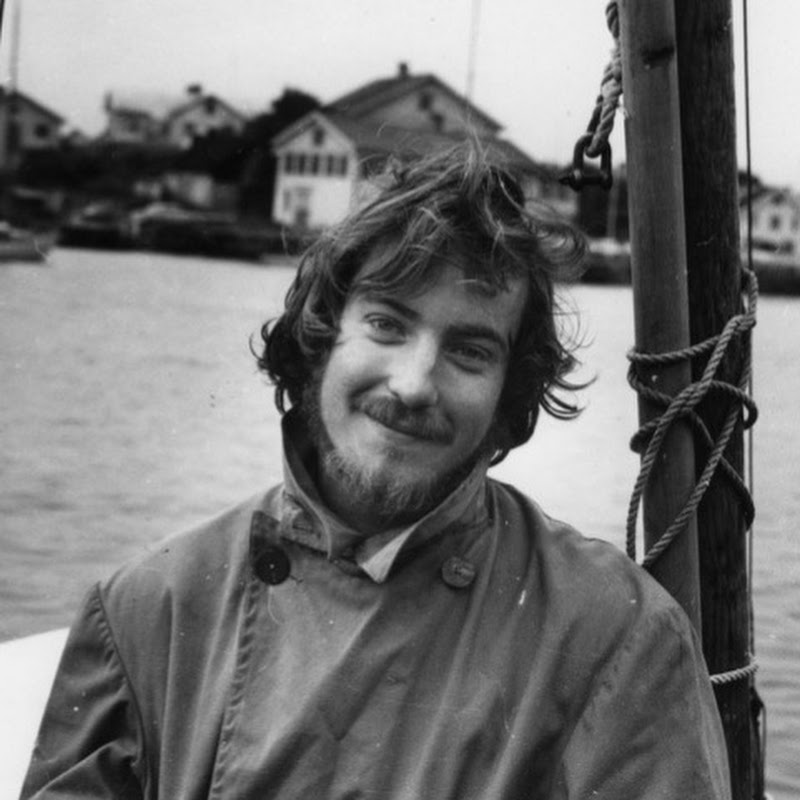
Sven Yrvind
At 86, Sven Yrvind is still pushing the limits of small-boat design. Discover the philosophy and technical grit behind his 'Exlex' series.
Channel Information:
Social Media Links:
Right Side Up for the First Time! Location
- Västervik, Sweden (57.7577,16.6366)
Latest Episodes from Sven Yrvind
Explore the most recent voyages. Subscribe to the channel to never miss an update!
Finding the Best Bulkhead Positions.
In his workshop, Sven Yrvind adjusts bulkhead positions on his plywood test boat, reallocating internal bay spacing, marking the waterline, and calculating hull displacement.
Right Side Up for the First Time!
In his workshop, solo sailor Sven Yrvind turns his experimental plywood test boat right side up for the first time, keeping internal molds in place to preserve hull shape before fitting bulkheads.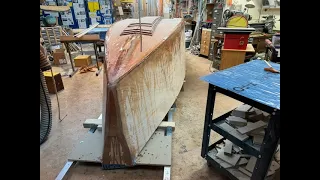
A Rope Attachment and Reinforced Joints.
Sven Yrvind reinforces his plywood test boat hull in Västervik, installing an iron bottom runner, dual lifting rope pipes potted in thickened epoxy, and fiberglass corner joints.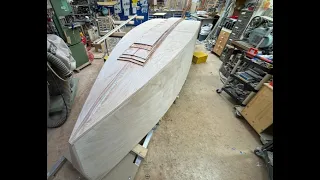
All the Plywood for the Structural Keel Is in Place.
Sven Yrvind laminates all five plywood layers for the structural keel of his test boat in Västervik, installing lifting pipes and letting the epoxy cure under heavy shop weights before final shaping.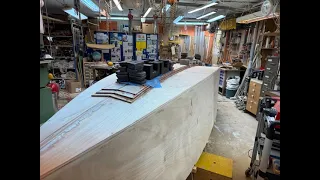
More of the Same – The Penultimate Layer.
Sven Yrvind laminates the penultimate bottom layer of his 4.8-meter plywood test boat and prepares reinforced stainless steel hull protection.