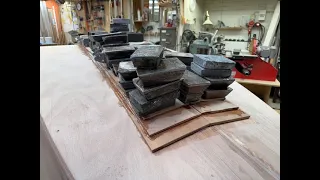
Finding the Best Bulkhead Positions.
Inside his Västervik workshop, boatbuilder Sven Yrvind removed temporary molds to position bulkheads in his wooden test hull. Documenting progress on Sven Yrvind, he assessed interior volume and laminated corners to hold shape.
Adjusting Internal Bay Dimensions
Removing the temporary stations revealed extra volume aft. To optimize the layout, Yrvind altered his spacing plan:
“So from the beginning, my idea was to have 120 cm for 120 cm back for work bay. But now I see there’s so much more space because there’s so much square here in the back. So I reduce it to 110 here in the back. And here in the front I increase it to 130.”
Adjusting stations gained ten centimeters forward while preserving stiffness with corner laminations.
Bulkhead Patterns and Waterline Marking
Yrvind clamped template boards with nuts to build patterns for fitting bulkheads. Outside, he marked the waterline with a black reference line running from bow to stern.
Displacement Estimates and Forward Space
Evaluating hull volume for solo voyages, Yrvind estimated displacement figures against known benchmarks:
“This is estimated to be 800 kilos compared to Paradox 640.”
He noted provisioning plans for 50 kilo across 100 days. Clearing forward molds opened space for steering and sails:
“It’s going to be for the dagger boards. And for handling the sails to for work bay.”
| Design Metric & Specification | Reported Dimension |
|---|---|
| Estimated Hull Displacement | 800 kilos |
| Paradox Comparison Displacement | 640 kilos |
| Forward Bay Allocation | 130 cm |
| Aft Work Bay Allocation | 110 cm |
| Original Layout Baseline | 120 cm |
| Planned Food Stores | 50 kilo for 100 days |
| Plywood Test Boat Length | 4.8 meter |
| Beam Dimension | 1.3 meter |
| Lugger Rig Sail Area | 6 square meter |
Frequently Asked Questions
Yrvind discovered more interior square space in the stern than planned, reducing the aft work bay to 110 cm and increasing the forward bay to 130 cm from his initial 120 cm baseline.
The test boat displacement is estimated at 800 kilos, compared to 640 kilos for the Paradox design.
The forward space is designated for the daggerboards, sail handling operations, and a forward work bay.
Support Sven Yrvind
At WeBoating.com, we profoundly acknowledge the unwavering dedication that Sven Yrvind invests in crafting each and every video or voyage. Their passion for delivering exceptional ocean content shines through every frame, and it's a labor of love that deserves your attention.
We invite you to watch their captivating videos here and actively engage with their content, including their social media links above. Liking, commenting, and sharing their work goes a long way in fueling their creative fire.
We're also inviting you to explore the gear, sponsorships, and boat partnerships highlighted in the "Finding the Best Bulkhead Positions." video description, or directly on YouTube. By engaging with these offerings or purchasing services and items, you directly support Sven Yrvind, their collaborators, and the brands they're associated with.
To ensure you never miss an offshore update, consider visiting their official YouTube Channel to subscribe, like, and join their community directly.
If you have any feedback, corrections, or additional information about Sven Yrvind or their videos, please use the comment form below to share your thoughts with us.
Thank you for being a part of our community and supporting the creators we cherish. Your time and support truly matter!
This Youtube channel is about me Sven Yrvind. I am 87 and a half years old dyslectic solo sailor.
I am building a plywood test boat for a Divinycell and NM-epoxy high-latitude cruiser.
She will be about 4.8 meter 15 and a half feet long. Her beam will be 1.3 meter. She is a two masted lugger with a total sail area of 6 square meter. She will have no rudder but will be steered by adjustable fins. I am planning a cruise in the Southern Ocean to Dunedin NZ.
Subject to change.
Often the 22th every month I do a resume of the project.
I have an illustrated book with good reviews on Amazon. https://www.amazon.se/s?k=yrvind&crid=1549D6PR18BUJ&sprefix=%2Caps%2C112&ref=nb_sb_ss_recent_1_0_recent
If you’re interested in contributing to my experiments links are below.
https://www.paypal.com/donate/?hosted_button_id=53X8NVEA22MBL
Swish 0706200550
Also please subscribe - even if you are not interested in sailing.
For more see Yrvind.com
Sven Yrvind
At 86, Sven Yrvind is still pushing the limits of small-boat design. Discover the philosophy and technical grit behind his 'Exlex' series.
Channel Information:
Social Media Links:
Finding the Best Bulkhead Positions. Location
- Yrvind Workshop, Västervik, Sweden (57.758,16.637)
Latest Episodes from Sven Yrvind
Explore the most recent voyages. Subscribe to the channel to never miss an update!
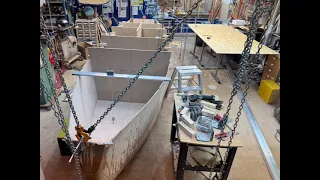
Finding the Best Bulkhead Positions.
In his workshop, Sven Yrvind adjusts bulkhead positions on his plywood test boat, reallocating internal bay spacing, marking the waterline, and calculating hull displacement.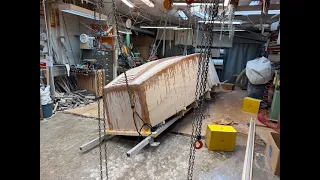
Right Side Up for the First Time!
In his workshop, solo sailor Sven Yrvind turns his experimental plywood test boat right side up for the first time, keeping internal molds in place to preserve hull shape before fitting bulkheads.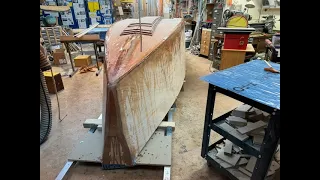
A Rope Attachment and Reinforced Joints.
Sven Yrvind reinforces his plywood test boat hull in Västervik, installing an iron bottom runner, dual lifting rope pipes potted in thickened epoxy, and fiberglass corner joints.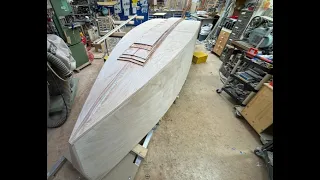
All the Plywood for the Structural Keel Is in Place.
Sven Yrvind laminates all five plywood layers for the structural keel of his test boat in Västervik, installing lifting pipes and letting the epoxy cure under heavy shop weights before final shaping.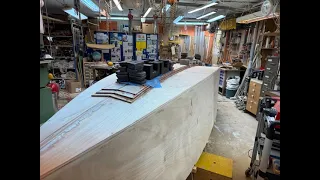
More of the Same – The Penultimate Layer.
Sven Yrvind laminates the penultimate bottom layer of his 4.8-meter plywood test boat and prepares reinforced stainless steel hull protection.