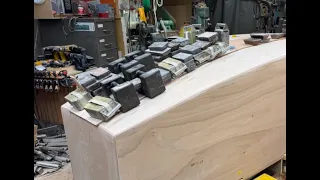
A Rope Attachment and Reinforced Joints.
Working inside his boatbuilding shop in Västervik, solo sailor Sven Yrvind begins outfitting his experimental plywood test boat with protective hardware and heavy-duty lifting points. To safeguard the bottom of the hull during transport and launching, Yrvind shapes and fastens an iron runner along the keel line. The metal strip bends into place with two fingers and extends all the way to the stern, shielding the bottom whenever the boat slides off a road trailer.
Sharing each technical stage on his Sven Yrvind channel, the Swedish mariner moves forward with structural preparations on the 4.8 meter hull. Before the boat can be moved or rigged for testing, he must engineer a balanced lifting arrangement capable of handling the vessel’s weight without stressing the wooden joints.
Locating the Center of Gravity and Drilling Pipe Housings
Determining the balance point is critical for safe hoisting. Yrvind calculates the center of gravity just behind the middle of the boat at 53% from the front, approximately 220 cm from the back. To create dedicated hoisting channels, he prepares pipe sections to guide the lifting ropes through the interior box structure.
Drilling the pass-through holes through the structural timber tests the shop’s tools. When a cordless battery drill stalls under the load, Yrvind upgrades to a heavy corded machine powered directly from the mains. Reflecting on the demanding task, Yrvind explains that “This battery machine was not strong enough, but I have a big one with from the wall electricity” to bore the holes through the timber assembly.
Potting the Pipes and Fitting Dual Rope Grips
To ensure maximum adhesion between the metal pipes and the wooden box, Yrvind scuffs the outer pipe casings using a mechanical grinder equipped with coarse 36 paper. The abraded texture provides a strong mechanical tooth for the bonding agent. Thickened epoxy compound bridges the clearances around the drilled holes, creating an impermeable structural pot.
Praising the versatile gap-filling properties of the resin, Yrvind notes that “Epoxy wonderful thing, you know, with this uh thickener thing, you know, it makes things fit every everywhere” across uneven workshop assemblies. Once the epoxy compound cures, he cuts the sleeves flush with the hull and countersinks the openings. Beveling the rim ensures that the rope does not chafe under load. By installing two separate through-hull pipe points, Yrvind can rig two ropes to alternate his grip and maintain balance along the center of gravity.
Reinforcing Wooden Joints with Fiberglass Tape
With the lifting sleeves secured, Yrvind inspects the corners and joined plywood edges. Knowing that simple woodworking adhesive alone cannot withstand the concentrated lifting tension, he marks the seams and wraps them with glass fiber tape. Applying resin and composite fabric across the seams reinforces the joints before hoisting begins.
Surveying the reinforced corners, Yrvind explains that “now it’s also glass fiber all around to keep it together” so that the wooden seams do not pull apart under dynamic loads. The cured composite corners provide the rigidity required to move the test hull safely toward its next stage of outfitting.
| Component or Spec | Measurement Details |
|---|---|
| Hull Length (Test Boat) | 4.8 meters |
| Hull Beam | 1.3 meters |
| Center of Gravity | 53% from front (220 cm from back) |
| Sanding Abrasive | 36 paper |
Frequently Asked Questions
Sven Yrvind calculates the center of gravity just behind the middle of the boat at 53% from the front, which measures approximately 220 cm from the back.
The cordless battery machine lacked sufficient torque to bore through the wooden structure, requiring a corded electric drill running on wall electricity to finish the holes.
Simple wood glue alone does not provide sufficient strength to handle hoisting stresses, so Sven wrapped the structural corners in fiberglass to prevent the joints from opening under tension.
Support Sven Yrvind
At WeBoating.com, we profoundly acknowledge the unwavering dedication that Sven Yrvind invests in crafting each and every video or voyage. Their passion for delivering exceptional ocean content shines through every frame, and it's a labor of love that deserves your attention.
We invite you to watch their captivating videos here and actively engage with their content, including their social media links above. Liking, commenting, and sharing their work goes a long way in fueling their creative fire.
We're also inviting you to explore the gear, sponsorships, and boat partnerships highlighted in the "A Rope Attachment and Reinforced Joints." video description, or directly on YouTube. By engaging with these offerings or purchasing services and items, you directly support Sven Yrvind, their collaborators, and the brands they're associated with.
To ensure you never miss an offshore update, consider visiting their official YouTube Channel to subscribe, like, and join their community directly.
If you have any feedback, corrections, or additional information about Sven Yrvind or their videos, please use the comment form below to share your thoughts with us.
Thank you for being a part of our community and supporting the creators we cherish. Your time and support truly matter!
This Youtube channel is about me Sven Yrvind. I am 87 and a half years old dyslectic solo sailor.
I am building a plywood test boat for a Divinycell and NM-epoxy high-latitude cruiser.
She will be about 4.8 meter 15 and a half feet long. Her beam will be 1.3 meter. She is a two masted lugger with a total sail area of 6 square meter. She will have no rudder but will be steered by adjustable fins. I am planning a cruise in the Southern Ocean to Dunedin NZ.
Subject to change.
Often the 22th every month I do a resume of the project.
I have an illustrated book with good reviews on Amazon. https://www.amazon.se/s?k=yrvind&crid=1549D6PR18BUJ&sprefix=%2Caps%2C112&ref=nb_sb_ss_recent_1_0_recent
If you’re interested in contributing to my experiments links are below.
https://www.paypal.com/donate/?hosted_button_id=53X8NVEA22MBL
Swish 0706200550
Also please subscribe - even if you are not interested in sailing.
For more see Yrvind.com

Sven Yrvind
At 86, Sven Yrvind is still pushing the limits of small-boat design. Discover the philosophy and technical grit behind his 'Exlex' series.
Channel Information:
Social Media Links:
A Rope Attachment and Reinforced Joints. Location
- Västervik, Kalmar County, Sweden (57.7577,16.6375)
Latest Episodes from Sven Yrvind
Explore the most recent voyages. Subscribe to the channel to never miss an update!
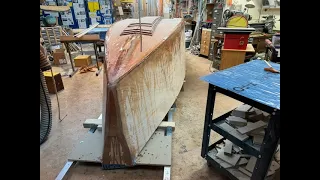
A Rope Attachment and Reinforced Joints.
Sven Yrvind reinforces his plywood test boat hull in Västervik, installing an iron bottom runner, dual lifting rope pipes potted in thickened epoxy, and fiberglass corner joints.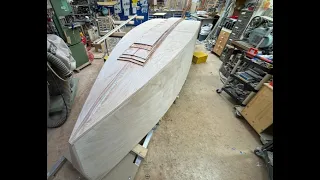
All the Plywood for the Structural Keel Is in Place.
Sven Yrvind laminates all five plywood layers for the structural keel of his test boat in Västervik, installing lifting pipes and letting the epoxy cure under heavy shop weights before final shaping.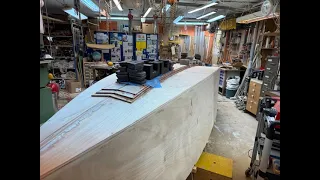
More of the Same – The Penultimate Layer.
This Youtube channel is about me Sven Yrvind. I am 87 and a half years old dyslectic solo sailor. I am building a plywood test boat for a Divinycell and NM-epoxy high-latitude cruiser. She will be about 4.8 meter 15 and a half feet long. Her beam will be 1.3 meter. She is a two masted lugger with...
More of the Same – Third layer.
This Youtube channel is about me Sven Yrvind. I am 87 and a half years old dyslectic solo sailor. I am building a plywood test boat for a Divinycell and NM-epoxy high-latitude cruiser. She will be about 4.8 meter 15 and a half feet long. Her beam will be 1.3 meter. She is a two masted lugger with...
More of the Same – 2nd Layer.
This Youtube channel is about me Sven Yrvind. I am 87 and a half years old dyslectic solo sailor. I am building a plywood test boat for a Divinycell and NM-epoxy high-latitude cruiser. She will be about 4.8 meter 15 and a half feet long. Her beam will be 1.3 meter. She is a two masted lugger with...