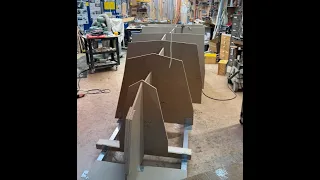
Exlex X – Experimental.
In his seaside workshop in Västervik, Sweden, legendary 87-year-old solo ocean voyager and naval architect Sven Yrvind of Sven Yrvind has introduced a pivotal developmental phase in his micro-cruiser project. Rather than rushing forward with the full composite construction of his 5.6-meter high-latitude ocean cruiser, Yrvind has temporarily unscrewed and set aside his hull molds to build Exlex X—a 4.2-meter (13.8-foot) experimental plywood sailing prototype designed for a rigorous North Atlantic shakedown voyage.
Inspired by the minimalist naval architecture of Matt Layden’s Paradox design, Exlex X serves as an empirical floating laboratory. Yrvind’s decision is rooted in a fundamental seamanship conviction: complex hydrodynamic and survival innovations must be rigorously proven under open-ocean sea conditions rather than assumed through desk calculations or indoor theory alone.
The Three Foundational Innovations of Exlex X
The primary purpose of the Exlex X prototype is to validate three interrelated systems that diverge significantly from conventional small-craft naval architecture:
- The Dual-Blade Plow Rudder: Mounted at the stern, this system features two hydrodynamic blades fixed at a reciprocal five- to seven-degree outward angle. When running before heavy downwind seas and storm gales, deploying both blades creates symmetrical directional drag that acts like an agricultural plow, steadying the vessel on course. For directional steering, raising or lowering individual blades modulates lateral resistance without rotating on a vertical pintle. Because no components protrude beneath the bottom of the hull, the vessel can slide into shallow estuaries, sit flat on a road trailer, and presents zero appendages for curious orcas to damage.
- Movable Transverse Ballast Tunnel: Beneath the central 1.8-meter sleeping bunk, Yrvind engineered an internal transverse conduit containing four individual lead weights weighing 14 to 15 kilograms (31 to 33 pounds) each. Rigged with low-friction haul lines leading to side-deck jam cleats, the skipper can manually slide the lead blocks to windward when tacking, providing substantial active righting moment without carrying excessive static displacement. For trailering or road transport, each weight can be removed independently by hand.
- Capsize-Proof Surge Chamber Ventilation: Fresh airflow inside a sealed micro-cruiser during oceanic gales is a matter of survival. Yrvind’s surge chamber utilizes an internal baffled labyrinth that separates ambient air from green water. Even in the event of a catastrophic 360-degree knockdown, pitchpole, or extended inversion, gravity channels trap and divert incoming water out through bottom scupper drains while maintaining continuous air circulation into the living cabin.
Harbor Maneuvering and the Two-Masted Rig
To complement the plow rudder at sea, Yrvind integrates a traditional long steering oar for harbor maneuvers, tight marina quarters, and navigating breaking surf. As observed in lifeboats and surf rescue craft, conventional rudders lose waterflow and stall when an overtaking wave breaks over the transom. A heavy sweep oar, by contrast, operates independently of boat speed, delivering reliable leverage in extreme localized turbulence.
In addition, Yrvind has simplified the sailplan from his earlier three-masted lugger concept to a clean two-masted unstayed configuration. Eliminating one mast reduces windage, simplifies standing rigging, and lightens the forward deck, while allowing balanced self-steering across a wide variety of wind angles.
Interior Ergonomics and Ocean Philosophy
Despite measuring only 4.2 meters in length overall, the interior layout of Exlex X is organized around functional watertight compartments separated by two structural bulkheads. The arrangement includes an aft working bay for navigation and watchkeeping, a forward working and storage bay, a comfortable 1.8-meter sleeping berth, and a dining station flanked by integrated side sinks for cooking and maintenance.
Reflecting on the rigorous testing required before attempting high-latitude voyaging toward the Southern Ocean and New Zealand, Yrvind cited the famous aphorism of Prussian Field Marshal Helmuth von Moltke: "No battle plan survives first contact with the enemy." In maritime voyaging, the ocean is the ultimate testing ground, and building a sacrificial, highly adaptable plywood test hull ensures that every structural refinement is earned through salt water experience.
Exlex X Specifications and Innovations Overview
The engineering parameters and specialized subsystems of Exlex X are summarized in the technical log below:
| Parameter / System | Design Specification | Naval Architecture Rationale |
|---|---|---|
| Vessel Designation | Exlex X (Experimental Prototype) | Full-scale Atlantic shakedown prototype based on Paradox principles |
| Length Overall (LOA) | 4.2 Meters (13.8 Feet) | Compact displacement optimizing ocean seaworthiness and build efficiency |
| Hull Construction | Plywood & Epoxy Shakedown Testbed | Rapidly alterable platform allowing empirical hull modifications |
| Sailplan Rig | Two-Masted Unstayed Rig | Reduced weight, simplified sail handling, and clean downwind dihedral balance |
| Steering System | Dual Plow Blades (5°–7° Angle) + Sweep Oar | Non-protruding, trailerable, orca-proof storm tracking and surf authority |
| Internal Ballast | 4 x 15 kg (60 kg Total) Sliding Lead Weights | Transverse tunnel system providing adjustable windward righting moment |
| Ventilation System | Multi-Chamber Baffled Surge Chamber | Seawater separation preventing flooding during 360° rolls and pitchpoles |
| Interior Layout | Two Bulkheads, 1.8m Bunk, Dining Bay | Watertight compartmentalization with ergonomic off-watch survival spaces |
Frequently Asked Questions
Yrvind built the 4.2-meter plywood Exlex X to empirically test three major technical innovations in the North Atlantic before completing his permanent ocean cruiser.
The plow rudder uses two angled blades at 5 to 7 degrees that act as a stabilizing drag plow downwind or modulate lateral steering force when raised or lowered without protruding beneath the hull.
Four 15-kilogram lead weights slide across a transverse tunnel beneath the bunk via pull-strings, allowing Yrvind to manually adjust righting moment to windward while sailing.
The surge chamber separates air and water through internal baffles and scuppers, ensuring clean air enters the cabin while preventing water ingress even during a complete rollover.
Support Sven Yrvind
At WeBoating.com, we profoundly acknowledge the unwavering dedication that Sven Yrvind invests in crafting each and every video or voyage. Their passion for delivering exceptional ocean content shines through every frame, and it's a labor of love that deserves your attention.
We invite you to watch their captivating videos here and actively engage with their content, including their social media links above. Liking, commenting, and sharing their work goes a long way in fueling their creative fire.
We're also inviting you to explore the gear, sponsorships, and boat partnerships highlighted in the "Exlex X – Experimental." video description, or directly on YouTube. By engaging with these offerings or purchasing services and items, you directly support Sven Yrvind, their collaborators, and the brands they're associated with.
To ensure you never miss an offshore update, consider visiting their official YouTube Channel to subscribe, like, and join their community directly.
If you have any feedback, corrections, or additional information about Sven Yrvind or their videos, please use the comment form below to share your thoughts with us.
Thank you for being a part of our community and supporting the creators we cherish. Your time and support truly matter!
This Youtube channel is about me Sven Yrvind. I am87 year and 5 months old dyslectic solo sailor.
I am building a Divinycell and NM-epoxy high-latitude cruiser.
She is 5.6 meter 18 feet 4 inches long. Her beam is 1.45 meter. She is a three masted lugger with a total sail area of 9 square meter. She has a bow daggerboard. I am planning a cruise in the Southern Ocean to Dunedin NZ.
Subject to change.
Often the 22th every month I do a resume of the project.
I have an illustrated book with good reviews on Amazon. https://www.amazon.se/s?k=yrvind&crid=1549D6PR18BUJ&sprefix=%2Caps%2C112&ref=nb_sb_ss_recent_1_0_recent
If you’re interested in contributing to my experiments links are below.
https://www.paypal.com/donate/?hosted_button_id=53X8NVEA22MBL
Swish 0706200550
Also please subscribe - even if you are not interested in sailing.
For more see Yrvind.com
Sven Yrvind
At 86, Sven Yrvind is still pushing the limits of small-boat design. Discover the philosophy and technical grit behind his 'Exlex' series.
Channel Information:
Social Media Links:
Exlex X – Experimental. Location
- Sven Yrvind Workshop, Vu00e4stervik, Sweden (57.7577,16.637)
Latest Episodes from Sven Yrvind
Explore the most recent voyages. Subscribe to the channel to never miss an update!
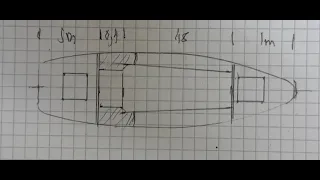
Exlex X – Experimental.
Sven Yrvind pauses construction on his ocean cruiser in Västervik to build Exlex X, a 4.2m experimental plywood model to test plow rudders, movable lead ballast, and capsize-proof surge chamber ventilation.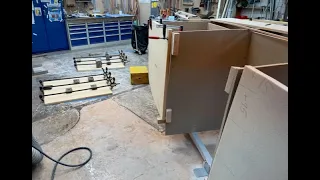
Scarfing , butt joint, to Save Divinycell.
In Västervik, Sweden, solo sailor Sven Yrvind scarfs Divinycell structural foam strakes, bonds offcuts with NM epoxy, and explains why elastic hull fairing takes precedence over rigid frame molds on his 5.6m Southern Ocean micro-cruiser.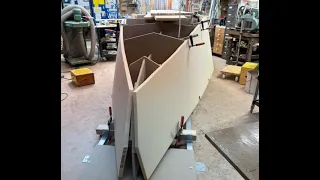
Four Sheets of Divinycell for the Hull Sides – I Think That’s Enough.
In his Västervik workshop, 87-year-old solo ocean voyager Sven Yrvind skins the hull sides of his 5.6m cruiser with four Divinycell foam sheets, demonstrating butt-to-butt epoxy scarfing and zero-waste construction for the Southern Ocean.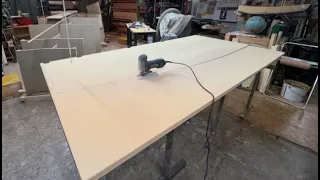
Nervously Cutting the Divinycell Sheets.
At age 87, Swedish navigator Sven Yrvind cuts and thermoforms Divinycell foam sheets for the compound bow curves of his 5.6m ocean micro-cruiser in Västervik, Sweden.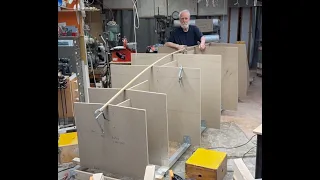
Trying to Get the Sheerline Right.
At 87, Swedish voyager Sven Yrvind fairs the sheerline across nine mold stations for his 5.6m ocean micro-cruiser in Västervik, Sweden, optimizing reserve buoyancy.