All it Takes is One Mistake...
In the demanding discipline of blue water voyaging, the margin between routine passagemaking and an escalating maritime emergency is razor-thin. For maritime creators and liveaboard voyagers Slim & Soph – Sailing Nakama, the reality of ocean exploration aboard their rugged 1989 Duncanson 34 sloop, SV Nakama, is defined by relentless situational awareness. Operating short-handed as a couple, they understand that catastrophic outcomes at sea rarely stem from a single dramatic event; rather, they cascade from minor equipment oversights, deferred maintenance, or subtle installation errors that reveal themselves when the vessel is placed under immense dynamic loads.
Whether navigating the blustery coastal channels of southern Tasmania or staging challenging offshore crossings between Atlantic archipelagos such as Gran Canaria and Santa Cruz de Tenerife, the sea demands mechanical discipline. A torn underwater fairing boot, a jammed anchor windlass, or a split-second delay in reducing canvas can swiftly compromise safety. Meticulous refit standards and proactive risk assessment form the bedrock of sustainable blue water cruising, transforming potential disasters into controlled seamanship evolutions.
The Cascading Anatomy of Offshore Emergencies
For mariners following Slim and Soph on Sailing Nakama, every offshore passage aboard SV Nakama reinforces the core principle that disciplined seamanship is the only reliable buffer against sudden heavy weather and cascading equipment failures. At sea, isolated mechanical anomalies never remain isolated for long. When a single component yields—whether an underwater hull fitting, a sail drive boot, or an electrical windlass solenoid—the resulting operational disruption instantly multiplies the workload on a short-handed crew. If that glitch coincides with falling visibility or a narrow harbor fairway, the vessel’s safety envelope contracts rapidly.
Offshore risk management requires recognizing how small vulnerabilities compound. Cruising yachts rarely founder solely from heavy seas; they succumb when multiple secondary failures align. A propulsion vibration distracts the helmsperson, an anchor winch refuses to retrieve chain during a squall, or a halyard overrides a winch drum during an urgent reefing maneuver. To interrupt this chain before it becomes catastrophic, short-handed sailors must heed the earliest acoustic and tactile warnings of equipment distress, isolating faults before they jeopardize the vessel.
Vessel Systems Under Pressure: Sail Drive Boots and Underwater Integrity
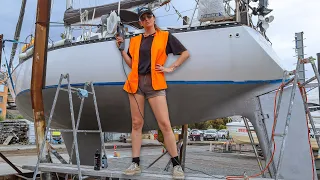
While preparing for their next demanding offshore passage, Slim and Soph faced a stark reminder of how high-stakes seamanship aboard SV Nakama requires relentless attention to hull engineering before facing heavy weather with Sailing Nakama. Just ten days after completing an extensive boatyard haulout and antifouling application in Hobart, Tasmania, the couple departed their berth. However, celebrations ceased abruptly when a violent, rhythmic hammering reverberated from beneath the cabin sole while motoring under auxiliary power.
Slim immediately performed an in-water inspection and discovered that the flexible rubber sail drive fairing boot had sheared away from the fiberglass hull laminate, violently fouling the propeller and damaging their fresh Propspeed coating. The forensic root cause was an installation oversight: the entire perimeter had been bedded with rigid polyurethane adhesive (Sikaflex), eliminating the mechanical clearance and dynamic flex necessary around the oscillating sail drive leg. Hauled back onto the cradle, they abraded the hull with 40-grit sandpaper and reinstalled a new rubber boot adhered solely to the hull flange, allowing necessary compliance for the drive unit.
Ground Tackle Forensics: Replacing the Failed Anchor Windlass
Operating a cruising vessel like SV Nakama through an offshore passage demands uncompromising ground tackle reliability, proving that seamanship for Slim and Soph on Sailing Nakama must withstand unexpected heavy weather and violent gusts. Prior to their haulout, the crew experienced the grueling physical burden of retrieving heavy anchor chain entirely by hand after their aging bow windlass suffered total mechanical failure. A worn gypsy wheel and internal gear wear had caused dangerous chain slips and jams during gusty weather in anchorages like Southport.
Recognizing that an inoperable windlass severely jeopardizes vessel safety along lee shores, the crew visited the Muir Engineering manufacturing headquarters in Hobart, Tasmania. Founded in 1968 by John Muir—son of Jock Muir, skipper of the 1948 Sydney-to-Hobart winner Westwood—the facility showcased industrial CNC machining of high-tensile shafts and hydraulic testing rigs that stress chain stoppers to eighty percent of breaking load (exceeding one hundred tons). Commissioning a new heavy-duty Muir windlass on Nakama’s foredeck permanently resolved their ground tackle vulnerability.
Navigating Confined Approaches, Lee Shores, and Fatigue
Throughout any offshore passage aboard SV Nakama, disciplined seamanship allows Slim and Soph on Sailing Nakama to negotiate hazardous lee shores and sudden heavy weather without succumbing to debilitating crew exhaustion. Navigating restricted waterways—such as the squall-prone D’Entrecasteaux Channel or busy commercial harbor fairways like Santa Cruz de Tenerife and Las Palmas in Gran Canaria—demands tight passage planning. Confined waters leave zero room for propulsion failure or maneuvering hesitation.
Sleep deprivation remains the most insidious hazard confronting short-handed sailors. Broken watch rotations erode reaction times and cloud tactical judgment during harbor approaches. To mitigate exhaustion, Slim and Soph execute early sail reductions well before entering restricted waters, prepare dock lines and fenders in open sea, and designate clear offshore abort waypoints where the vessel can safely stand off if harbor conditions deteriorate.
Psychological Resilience and Communication in Short-Handed Crews
Maintaining clear cockpit communication during an offshore passage aboard SV Nakama demonstrates that emotional composure and seamanship are vital for Slim and Soph on Sailing Nakama during heavy weather emergencies. When sudden high-load crises emerge—such as jammed furling gear or winch overrides—panic is the cruiser’s greatest enemy. The couple relies on calm, pre-briefed maneuvering instructions and explicit verbal acknowledgments to execute high-stress deck evolutions safely.
Cruising resilience also hinges on maintaining morale and debriefing near-misses without interpersonal blame. Between arduous refit projects and offshore legs, Slim and Soph balance vessel maintenance with restorative moments: diving for fresh cold-water rock lobster with local friends like Liam, cooking warm galley meals, and recharging before the next open-ocean departure. This psychological discipline ensures they meet future voyaging challenges with renewed focus.
Offshore Seamanship Matrix: Critical Failure Modes and Protocols
Structured preparation for every offshore passage ensures that Slim and Soph apply methodical seamanship aboard SV Nakama to neutralize equipment vulnerabilities before encountering heavy weather with Sailing Nakama. The following reference matrix outlines the primary high-consequence failure modes encountered on blue water cruising yachts, their root causes, and the required emergency response protocols.
| Vessel System | Failure Mode & Risk Factors | Emergency Seamanship Protocol |
|---|---|---|
| Propulsion & Hull Seal | Sail drive rubber fairing boot detachment; propeller fouling; diaphragm seal stress | Throttle auxiliary engine to neutral; inspect bilge alarms; clear propeller; abrade hull with 40-grit paper; reinstall boot allowing dynamic flex around drive leg. |
| Ground Tackle | Windlass gypsy slipping; motor solenoid burnout; chain jams in anchor locker | Deploy high-load chain snubber; engage manual retrieval pawl; upgrade to proof-tested industrial windlass with certified chain stoppers. |
| Rigging & Winches | Sheet overriding winch drum; furler line binding; halyard chafe under gale loads | Transfer load using rolling hitch and spare winch; inspect line entry angles; maintain bi-weekly aloft rig checks and end-for-end halyard flips. |
| Steering Linkages | Quadrant cable slack; autopilot ram disengagement; loss of directional control | Engage emergency mechanical tiller immediately; inspect quadrant clamps; motor or sail at steerage speed away from lee shores. |
| Watchkeeping & Crew | Severe sleep deprivation; cognitive fatigue; delayed hazard recognition | Maintain 3-hour staggered watch cycles; review harbor approach plans prior to landfall; hold offshore at designated abort waypoints if exhausted. |
| Storm Sail Handling | Over-canvassed rig during sudden squalls; mainsail batten binding; knockdown risk | Bear off slightly to depower sail plan; ease traveler and vang; drop halyard to pre-marked reef points; hoist dedicated storm trysail if winds exceed gale force. |
Frequently Asked Questions
For mariners following the voyages of Slim and Soph on Sailing Nakama, technical seamanship aboard SV Nakama requires proactive risk mitigation during any demanding offshore passage or sudden encounter with heavy weather. Below are key questions and answers detailing the critical protocols, mechanical maintenance strategies, and psychological discipline essential for short-handed blue water sailing.
Most offshore emergencies result from cascading small oversights rather than single sudden catastrophes. Frequent mistakes include deferring standing rigging and hull inspections, waiting too long to reef before squalls, improper adhesive application on underwater fittings, neglecting worn windlass components, and attempting complex night harbor entries while severely fatigued.
Never attempt to clear a heavily loaded winch override with bare hands. Secure a secondary line forward of the winch on the loaded sheet using a rolling hitch or Prusik knot. Lead that line to a secondary winch and grind it in until tension transfers away from the jammed drum. Once the primary sheet is slack, unwind the override and retransfer the load under control.
Couples manage fatigue by strictly adhering to a structured watch schedule—commonly three hours on and three hours off during darkness, with flexible four-hour blocks during daylight. Ensuring sound off-watch sleep discipline, utilizing radar and AIS collision alarms, and openly communicating energy levels prevents cognitive impairment during high-stakes maneuvers.
When hit by an unexpected gale squall, turn slightly downwind to ease apparent wind pressure and heel angle. Ease the mainsheet traveler and boom vang to spill wind from the head of the sail. Furl the headsail immediately, and drop the main halyard down to pre-marked deep reef cringles before wind loads bind the luff cars against the mast track.
The boot failed because polyurethane adhesive was applied across all surfaces, rigidly locking the boot to the vibrating sail drive leg. Under engine load, shear forces tore the rubber from the hull, fouling the propeller. The repair involved hauling the vessel out, sanding the hull with 40-grit paper, and bonding a new rubber boot exclusively to the hull flange while allowing dynamic clearance around the drive leg.
After suffering repetitive chain slippage and total mechanical collapse of their bow windlass, the crew replaced the system with a brand-new Muir Engineering marine windlass manufactured in Hobart, Tasmania. The industrial unit features precision-machined shafts and heavy-duty gypsies backed by load-tested chain stoppers to ensure dependable anchoring in adverse gale conditions.
Essential electronics include a reliable satellite communications terminal (such as Starlink or Iridium) for synoptic weather updates, a float-free 406 MHz GPS EPIRB, a Class-B AIS transponder with CPA collision alarms, DSC VHF radios with remote cockpit microphones, audible high-water bilge alarms, and a readily accessible emergency mechanical tiller.
Support Slim & Soph - Sailing Nakama
At WeBoating.com, we profoundly acknowledge the unwavering dedication that Slim & Soph - Sailing Nakama invests in crafting each and every video or voyage. Their passion for delivering exceptional ocean content shines through every frame, and it's a labor of love that deserves your attention.
We invite you to watch their captivating videos here and actively engage with their content, including their social media links above. Liking, commenting, and sharing their work goes a long way in fueling their creative fire.
We're also inviting you to explore the gear, sponsorships, and boat partnerships highlighted in the "All it Takes is One Mistake..." video description, or directly on YouTube. By engaging with these offerings or purchasing services and items, you directly support Slim & Soph - Sailing Nakama, their collaborators, and the brands they're associated with.
To ensure you never miss an offshore update, consider visiting their official YouTube Channel to subscribe, like, and join their community directly.
If you have any feedback, corrections, or additional information about Slim & Soph - Sailing Nakama or their videos, please use the comment form below to share your thoughts with us.
Thank you for being a part of our community and supporting the creators we cherish. Your time and support truly matter!
One mistake and we’ve regrettably made a new booking in the boat yard over a piece of rubber. We were just here, and briefly free from the yard, back in the elements and doing what we love living full time on our 34-ft boat. But our celebrations abruptly ceased when we heard a concerning noise from below the water line. Check our Muir here https://muir.com.au/ Made in Tasmania!
Enjoying the episodes? Becoming a Patron enables us to ensure the continuity of Slim & Soph - Sailing Nakama. A little goes a long way to keep this production alive. With very little free time between uni and the boat, Patreon enables us to focus on creating and posting videos rather than pouring beers at our local. Thank you for your generosity https://www.patreon.com/sailingnakama
Make a one-off donation as you please if subscriptions aren't your thing. Let's keep ticking nautical miles and boat jobs off! https://www.paypal.com/donate?hosted_button_id=C6M8FAYZ5K2ZS
Check out our store here 😊 https://slimandsophsailingnakama.com/
FOLLOW US ON INSTAGRAM:
https://www.instagram.com/sailingnakama/
AND FACEBOOK:
https://www.facebook.com/sailingnakama
Chapters:
00:00 The story
01:10 Heading back
03:01 Stop over for cray
09:11 Cray cook up
12:05 Haul out & why
14:26 Fixing it
18:26 New project
21:21 Winch factory
28:53 Projects to be continued...
Slim & Soph - Sailing Nakama
From university studies to the Roaring Forties. Join Slim and Soph as they navigate the remote Tasmanian wilderness aboard their Duncanson 34, Nakama, in 2026.
Channel Information:
Social Media Links:
All it Takes is One Mistake... Location
- Las Palmas Cruising Marina, Gran Canaria, Spain (28.128,-15.426)
- Santa Cruz de Tenerife Harbor Fairway, Canary Islands, Spain (28.468,-16.244)
Latest Episodes from Slim & Soph - Sailing Nakama
Explore the most recent voyages. Subscribe to the channel to never miss an update!

We Sailed to the World’s Largest Prison Island
Cold plunges, octopus attacks and mass murder…It’s hard to imagine all that’s happened here, in a place with such impressive landscape, and marine life. We’re in Tasmania, Australia’s isolated island state with a cruel and dark past. Its treacherous surrounding seas made it a natural prison ideal fo...
Another Day Another Project, Stuck in the Yard
As the finish line gets closer, our progress has come to a halt, we are stuck in the boat yard! We thought we were back underway, but the last thing we expected to bring us back here, brought us back here. That's boat for you...So while we're back in boat project mode and in between fixing...
All it Takes is One Mistake…
A forensic analysis of offshore seamanship, mechanical gear failures, and short-handed risk management aboard SV Nakama with Slim and Soph.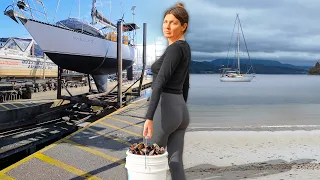
A Brief Taste of Freedom, Until…
We weren’t expecting this to be the thing that takes us back to the boat yard. We’ve just spent a hectic 17 days in the boat yard, you know what it’s like, long days, dirty work, cramped into tight spaces and just a bit of swearing. But at last, it comes together. And at last, we’re back to doing wh...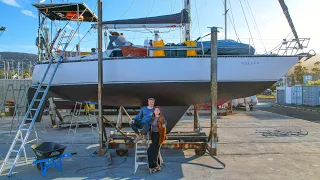
The Unusual Reason We Left Everything to go Sailing
In 2020, we were young with no money behind us, just this sailboat as our home. But if we could live cheaply and find reception, we could set off on a circumnavigation of Australia. Now, years later, we’re celebrating the end of a chapter. Kicking it all off is the relaunch of our boat in Hobart. Wi...