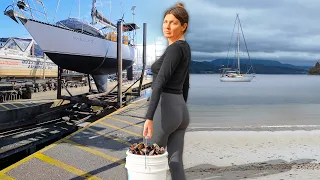
We Sailed to the World’s Largest Prison Island
Slim and Soph motored their 34-ft sailboat out of the marina pen in Hobart after bunkering down through a cold southern winter to complete university studies and tackle critical mechanical repairs. Working aboard their vessel, featured on Slim & Soph – Sailing Nakama, the crew had just finished installing a replacement Muir anchor windlass late the previous afternoon and needed to clear the dock before an incoming weather system swept across Tasmania.
With only 0.7 knots of breeze stirring the water, the crew warmed up the engine and cleared the marina, leaving dock lines, power leads, and tools to be stowed below as they got underway. After waiting out two cyclone seasons in northern Australia and an entire winter in the south, they were now just 915 nautical miles from completing their circumnavigation of the continent, facing an immediate choice of where to seek shelter from the looming gale.
Heading South Past the Iron Pot into Storm Bay
With west coast miles already logged, the crew committed to heading south and east toward Port Arthur, a 43-nautical-mile passage requiring roughly eight and a half hours of travel from Hobart. As the 34-ft sloop motored along at 5 to 6 knots over flat seas, the crew passed the Iron Pot, the historic lighthouse marking the home stretch of iconic race events.
Under clear skies, the waters of Storm Bay turned glassy, revealing pods of dolphins swimming beside the freshly cleaned hull without surface distortion. The calm weather allowed the crew to monitor their newly replaced rubber sail drive seal, which had previously sheared away from the hull just days after a prior splash and fouled the propeller with severe shuddering vibrations. Motoring through the morning verified that the re-installed seal remained intact and silent below the waterline.
Navigating the Dolerite Sea Cliffs of Cape Raoul
Rounding the southern coastline brought Nakama within close view of Cape Raoul, an immense headland characterized by 300-meter vertical columnar dolerite sea cliffs. The flat sea state provided rare, peaceful viewing conditions compared to the turbulent weather typically encountered along this stretch of coast.
For Soph, the passage offered a marked contrast to her previous rounding during the 2024 Sydney to Hobart yacht race. As she recalled: “Mom and I cursed this cape as we desperately tried to find any small scrapings of wind to get the boat moving towards the finish line of the 2024 Sydney to Hobart yacht race.” With the cape cleared, the crew pointed the bow northeast for the remaining 9 miles toward the entrance of Port Arthur.
Testing the Muir Windlass in Ladies Bay
Rather than anchoring directly in the main basin of Port Arthur, the crew chose Ladies Bay, a secluded and well-sheltered anchorage situated in the adjacent cove. Protected from the Southern Ocean swells, the bay offered flat water to wait out the heavy winds forecast to sweep across the region.
Slim brought the boat to a stop in 8 meters of water to test the newly installed Muir windlass under live operating conditions. As Slim noted regarding the repair: “We are pretty damn stoked with pulling off the installation of a brand new Muir windlass.” The crew paid out 25 meters of chain using the manual brake handle, securing the vessel before shutting down the engine. Soph reflected on reaching the quiet cove: “That feeling of dropping the anchor, turning the engine off, and tuning into our new surroundings. The satisfaction of all of these things is so apparent on day one after leaving the marina.”
Examining the Convict Settlement and Modern History at Port Arthur
After a cold morning plunge in the bay, the crew went ashore to explore the historical grounds of Port Arthur. Established in 1830 as a timber station, the outpost expanded into one of the primary penal colonies of the British Empire in Van Diemen’s Land, relying on isolation and surrounding waters to prevent escape. At its operational peak in the 1840s, more than 1,100 convicts were housed at the settlement, laboring in sawmills, felling timber, producing bricks, and building ships under the strict silent system before the penal colony closed in 1877.
The crew also walked through the memorial garden situated at the former cafe site, reflecting on the tragedy of April 28, 1996, when a lone gunman killed 20 people inside the building and 15 others across the grounds. Just 12 days after the attack, Prime Minister John Howard initiated comprehensive national gun law reforms, introducing strict licensing, mandatory training, and a nationwide buyback scheme that removed more than 650,000 prohibited firearms from circulation by 1997. The reforms established a 29-year period without a mass shooting in Australia until the Bondi Beach incident in 2025.
Marine Life Encounters Below the Surface
Returning to Ladies Bay under rare blue skies, Slim geared up for his first scuba dive in Tasmanian waters. Exploring the kelp beds, he had an unexpected encounter with an inquisitive octopus that darted directly toward him, prompting a startled retreat. Reflecting on the sudden interaction, Slim observed: “You would have thought that after watching My Octopus Teacher, I would have been ready for this moment.”
Continuing the dive along the rocky reef, the crew also observed a carpet-dwelling wobbegong shark resting on the bottom, alongside a massive smooth stingray—a species capable of growing up to 4.3 meters in length and weighing up to 350 kilos. With the incoming blow safely weathered and the vessel systems proven sound, the crew turned their attention toward rounding Tasman Island to begin their northward journey up Tasmania’s east coast.
Passage and Anchorage Specifications
| Metric | Details |
|---|---|
| Passage Distance | 43 nautical miles |
| Departure Wind Speed | 0.7 knots |
| Motoring Speed | 5 to 6 knots |
| Cape Raoul Sea Cliffs | 300 meters |
| Distance from Cape to Anchorage | 9 miles |
| Anchorage Depth (Ladies Bay) | 8 meters |
| Anchor Chain Deployed | 25 meters |
| Circumnavigation Remaining | 915 nautical miles |
Frequently Asked Questions
They motored 43 nautical miles south from Hobart across Storm Bay, passed the Iron Pot, rounded Cape Raoul, and anchored in Ladies Bay at Port Arthur during an eight-and-a-half-hour passage.
The crew replaced their collapsed anchor windlass with a new Muir unit and repaired a sheared sail drive waterline seal that had previously fouled the propeller.
The crew selected Ladies Bay because it is located directly adjacent to the historic site and offered flatter water and better protection from incoming storm winds.
The columnar dolerite sea cliffs at Cape Raoul tower 300 meters above sea level, making them among the tallest sea cliffs in Australia.
Port Arthur began as a timber station in 1830, housed more than 1,100 convicts at its peak in the 1840s, and officially closed as a penal colony in 1877.
Slim observed an active octopus, a bottom-dwelling wobbegong carpet shark, and a large smooth stingray during his scuba dive in Ladies Bay.
Support Slim & Soph - Sailing Nakama
At WeBoating.com, we profoundly acknowledge the unwavering dedication that Slim & Soph - Sailing Nakama invests in crafting each and every video or voyage. Their passion for delivering exceptional ocean content shines through every frame, and it's a labor of love that deserves your attention.
We invite you to watch their captivating videos here and actively engage with their content, including their social media links above. Liking, commenting, and sharing their work goes a long way in fueling their creative fire.
We're also inviting you to explore the gear, sponsorships, and boat partnerships highlighted in the "We Sailed to the World’s Largest Prison Island" video description, or directly on YouTube. By engaging with these offerings or purchasing services and items, you directly support Slim & Soph - Sailing Nakama, their collaborators, and the brands they're associated with.
To ensure you never miss an offshore update, consider visiting their official YouTube Channel to subscribe, like, and join their community directly.
If you have any feedback, corrections, or additional information about Slim & Soph - Sailing Nakama or their videos, please use the comment form below to share your thoughts with us.
Thank you for being a part of our community and supporting the creators we cherish. Your time and support truly matter!
Cold plunges, octopus attacks and mass murder…It’s hard to imagine all that’s happened here, in a place with such impressive landscape, and marine life. We’re in Tasmania, Australia’s isolated island state with a cruel and dark past. Its treacherous surrounding seas made it a natural prison ideal for Britain to put their most difficult. We’re pulling out of the marina after resolving some issues, hoping this time we can finally get our lap of Australia back underway.
Enjoying the episodes? Becoming a Patron enables us to ensure the continuity of Slim & Soph - Sailing Nakama. A little goes a long way to keep this production alive. With very little free time between uni and the boat, Patreon enables us to focus on creating and posting videos rather than pouring beers at our local. Thank you for your generosity https://www.patreon.com/sailingnakama
Make a one-off donation as you please if subscriptions aren't your thing. Let's keep ticking nautical miles and boat jobs off! https://www.paypal.com/donate?hosted_button_id=C6M8FAYZ5K2ZS
Check out our store here 😊 https://slimandsophsailingnakama.com/
FOLLOW US ON INSTAGRAM:
https://www.instagram.com/sailingnakama/
AND FACEBOOK:
https://www.facebook.com/sailingnakama
Chapters:
00:00 Hey guys
01:54 The back story
03:41 Farewell Hobart
07:47 We finally know where we're going
09:38 Storm Bay glass out
12:13 Cape Raoul (insane)
15:48 The push to go is worth it
18:14 Morning cold plunge
19:01 Penal settlement
21:12 1996 massacre
24:27 Octopus attack
28:29 Can't wait for more...
Slim & Soph - Sailing Nakama
From university studies to the Roaring Forties. Join Slim and Soph as they navigate the remote Tasmanian wilderness aboard their Duncanson 34, Nakama, in 2026.
Channel Information:
Social Media Links:
We Sailed to the World’s Largest Prison Island Location
- Ladies Bay, Port Arthur, Tasmania, Australia (-43.1413152,147.8574757)
- Cape Raoul, Tasmania, Australia (-43.2063553,147.776826)
- Iron Pot, Tasmania, Australia (-43.0584794,147.4173543)
- Hobart, Tasmania, Australia (-42.8825088,147.3281233)
Latest Episodes from Slim & Soph - Sailing Nakama
Explore the most recent voyages. Subscribe to the channel to never miss an update!

Oops, Prop’s Not Meant to Be Up Here…What Went Wrong?
Sheltering from 40-knot gales in Fortescue Bay, Simon and Soph discover their propeller nut is free-spinning. Slim dives to execute an underwater propeller repair with Fixtech and epoxy putty before making the 30-mile passage to Maria Island.
Is Tasmania the World’s Most Underrated Sailing Destination?
Slim and Soph round Tasman Island and Cape Pillar aboard SV Nakama, navigating 4-meter swells off the Tasman Peninsula before sheltering behind Canoe Bay's shipwreck breakwater.
We Sailed to the World’s Largest Prison Island
Slim and Soph depart Hobart aboard their 34-ft sailboat Nakama, completing an eight-and-a-half-hour passage across Storm Bay and around Cape Raoul to anchor in Ladies Bay at Port Arthur, Tasmania.
Another Day Another Project, Stuck in the Yard
As the finish line gets closer, our progress has come to a halt, we are stuck in the boat yard! We thought we were back underway, but the last thing we expected to bring us back here, brought us back here. That's boat for you...So while we're back in boat project mode and in between fixing...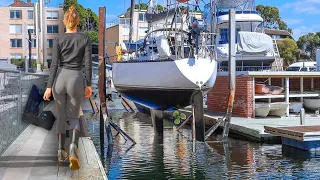
All it Takes is One Mistake…
A forensic analysis of offshore seamanship, mechanical gear failures, and short-handed risk management aboard SV Nakama with Slim and Soph.