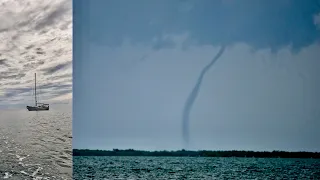
Sailboat nearly sank in Cuba, then THIS happened.
Operating deep within the restricted maritime waters of the Western Caribbean, Robinson and Justine of Sailorama confronted one of offshore cruising’s most perilous crises: an uncontrolled inundation of seawater into the bilge while voyaging along the coast of Cuba. Aboard Inesperada, their heavy-displacement 1980s Vennekens Koral 40 pilothouse expedition sloop, the Canadian voyagers had sailed from British Columbia across Central America into Cuban waters, relying on their vessel’s robust Belgian steel-and-fiberglass construction and dual internal watertight bulkheads for blue-water security. Yet structural integrity alone cannot prevent a sinking when high-pressure brine breaches the engine compartment.
What began as an occasional weeping from the auxiliary diesel’s cooling circuit suddenly erupted into an unrelenting flood. As the engine powered through offshore swells, the raw-water pump began spraying violent sheets of saltwater throughout the machinery space, partially submerging the flywheel and threatening the ship’s battery banks, starter motor, and electrical distribution network. Facing progressive downflooding, electrical failure, and total loss of propulsion off a lee shore, the crew initiated emergency damage control that tested their seamanship and introduced them to the extraordinary ingenuity of Cuba’s maritime community.
Catastrophic Inundation: The Raw-Water Cooling Pump Rupture at Sea
When the bilge alarm alerted the crew aboard their cruising sailboat Inesperada in the Caribbean Sea off Cuba, Robinson and Justine of Sailorama immediately initiated emergency marine repair procedures to halt rapid water ingress. Robinson descended into the machinery compartment beneath the pilothouse sole to find the bilge rapidly filling with churning saltwater. The newly installed raw-water engine pump had suffered a complete mechanical breakdown: its internal shaft seal had blown out, discharging high-pressure brine directly into the hull faster than the primary electric bilge pump could evacuate it.
The rotating flywheel was already cutting through the rising water, slinging a dense, corrosive saltwater mist over the alternator, starter solenoid, and wiring harness. Earlier in the passage, Robinson had observed a slight drip from the pump weep hole and attempted a field patch using tightly wrapped bicycle inner-tube rubber clamped around the casing. Under continuous motoring, however, the pressurized deluge forced its way past the elastomer wrap. Recognizing that continued motoring would submerge the batteries, drown the electrical systems, and potentially seize the diesel, Robinson shut down the engine and secured the raw-water seacock.
Tactical Seamanship Under Sail: Navigating the Cienfuegos Approaches
Executing emergency marine repair protocols while underway along the southern coast of Cuba in the Caribbean Sea required Sailorama to shut down their flooded auxiliary diesel and commit their cruising sailboat Inesperada entirely to canvas. With the engine isolated, Robinson manned the manual diaphragm bilge pump to assist the electric pumps in draining the compartment, while Justine took the pilothouse helm, trimming the sails to maintain steerageway in shifting coastal breezes.
For two tense hours, the wind died away completely, leaving the 40-foot sloop rolling in heavy ocean swells as dark convective squalls gathered along the Cuban mountain ridges. Having survived a direct lightning strike in Guatemala’s Rio Dulce during a previous season, the crew felt palpable urgency to reach safe harbor before thunderstorms struck. When a favorable 20-knot breeze finally filled in, Justine expertly sailed Inesperada through the narrow approach channel into Cienfuegos Bay, short-tacking and jibing under sail alone to drop their anchor in 25 feet of water off the marina without engine assistance.
Forensic Mechanical Teardown: Impeller Loss, Bearing Burnout, and Pulley Dynamics
Once anchored safely in Cienfuegos, Cuba, following their emergency marine repair landfall from the Caribbean Sea, the crew of Sailorama commenced an exhaustive mechanical autopsy aboard their cruising sailboat Inesperada. Because saltwater corrosion and operating heat had fused the reinforced rubber intake hoses to the bronze barbed fittings, Robinson had to slice the hose ends with a utility blade, carefully extracting the pump assembly from the engine block.
Internal inspection revealed severe dual-bearing failure: one ball bearing exhibited excessive radial play, while the other was totally seized, ground down into fine metallic debris. Two flexible neoprene impeller vanes had sheared off; fortunately, Robinson recovered both fragments inside the cooling pipes before they could clog the heat exchanger tubes. The root cause lay in the drive pulley ratio: the pump, installed during a prior refit to improve cooling flow, featured an undersized pulley that spun the unit at excessive RPM. This overspeed created violent hydraulic pressures that destroyed the shaft seal and burned out the bearings in less than ten hours of operation.
Cuban Machine-Shop Ingenuity: Overcoming the Embargo Through Craftsmanship
Executing emergency marine repair in Cuba presented Sailorama and their cruising sailboat Inesperada with the acute realities of the Caribbean Sea basin’s most heavily embargoed maritime territory. Standard marine chandleries do not exist on the island, and proprietary replacement parts for marine pumps are unobtainable. Robinson and Justine took the damaged components to the local boatyard in Cienfuegos, where foreign cruising boats, including a Swiss catamaran, shared facilities with local commercial craft.
There they met a skilled Cuban marine mechanic who demonstrated the island’s renowned culture of technical resourcefulness (inventiva). Because a new specialized water seal was impossible to procure, the mechanic carefully uncoiled the internal garter spring inside the worn rubber seal, trimmed several millimeters off its length, and reconnected the ends. This clever modification restored firm radial tension across the sealing lip. Robinson then visited municipal hardware outlets, miraculously locating two standard metric ball bearings for less than one dollar each. Reassembled with socket presses and fitted with a spare impeller, the rebuilt pump held perfect watertight integrity.
Humanitarian Solidarity and Daily Life in Cienfuegos
With the emergency marine repair successfully concluded aboard their cruising sailboat Inesperada in Cienfuegos, Cuba, the crew of Sailorama turned their focus to community solidarity in this historic Caribbean Sea anchorage. Recognizing the severe economic challenges facing everyday Cuban families—compounded by food rationing, medical supply deficits, and frequent power grid blackouts—Robinson and Justine partnered with fellow cruisers Arzum and Jens aboard SV Dilly Delali to organize a substantial community food delivery mission.
Utilizing international direct-delivery grocery channels funded by supporters abroad, the cruisers received bulk shipments of cooking oil, rice, black beans, seasonings, and soap. Hand-packing over thirty family parcels, the crew distributed the supplies on foot and via local electric taxis to vulnerable residents and elderly neighbors across Cienfuegos. Between aid deliveries, Robinson and Justine experienced authentic Cuban life, gathering fresh mangoes to sun-dry on the deckhouse and marveling at the enduring warmth and dignity of the local people.
Operational Protocols, Marina Facilities, and Mechanical Specifications
The voyage of Sailorama aboard their cruising sailboat Inesperada highlights the critical intersection of passage planning, harbor clearance at Marina Hemingway and Cienfuegos in Cuba, and emergency marine repair in remote Caribbean Sea waters. To assist bluewater mariners navigating these waters, the table below synthesizes the key damage control protocols, administrative clearance requirements, and mechanical field repairs from this expedition.
| Operational Category | Vessel Specification & Procedural Protocol |
|---|---|
| Primary Vessel | SV Inesperada (1980s Vennekens Koral 40 Pilothouse Sloop, Belgian Shipyard Vennekens Boom) |
| Navigating Channel | Sailorama (Robinson & Justine, Victoria, BC, Canada) |
| Failure Mode | Catastrophic raw-water engine pump shaft seal blowout and twin ball bearing seizure under load |
| Root Cause Forensics | Undersized drive pulley causing excessive pump RPM, severe hydraulic overpressure, and rapid component fatigue |
| Damage Control Action | Immediate seacock isolation, inner-tube pressure wrapping, high-volume electric pumping, manual diaphragm pumping |
| Tactical Navigation | Auxiliary propulsion shutdown; full-canvas channel navigation and anchoring under sail off Cienfuegos Marina |
| Cuban Port Entries | Marina Hemingway (Havana, North Coast: 23.0900, -82.4980) & Cienfuegos Bay Marina (South Coast: 22.1333, -80.4500) |
| Border Clearance Protocol | Boarding and clearance inspections by Guardafronteras (Border Patrol), Aduana (Customs), and Sanidad (Health/Quarantine) |
| Embargo Part Sourcing | Replacement industrial metric ball bearings sourced locally (<$1 USD each); proprietary Jabsco seals unavailable |
| Cuban Machine Craft | Shortened internal seal garter spring to restore radial lip tension; manual socket-press bearing installation |
| Impeller Recovery | Retrieved fractured neoprene impeller blades from intake piping to protect heat exchanger and thermostat tubes |
| Community Mutual Aid | Distribution of 30 family food packages (cooking oil, rice, black beans, soap) coordinated with SV Dilly Delali |
Frequently Asked Questions
International yachts must declare entry via VHF Channel 16 upon entering Cuban waters and proceed directly to an official port of entry like Marina Hemingway in Havana or Cienfuegos on the south coast. Crews must clear inspection by Tropas Guardafronteras (Border Patrol), Aduana (Customs), Sanidad (Health), and the Port Captain, requiring valid passports, boat documentation, and cruising permits.
Mariners must immediately close the raw-water intake seacock to stop water ingress, shut down the engine to prevent electrical submergence and flywheel spray, activate electric and manual bilge pumps, and inspect electrical circuits. Sliced rubber tubing and hose clamps provide temporary spray containment, but severe leaks demand securing auxiliary power completely.
The newly fitted raw-water pump had an undersized pulley relative to the engine drive wheel. This mechanical mismatch caused the pump to rotate at excessive revolutions per minute (RPM), generating high internal pressure and harmonic vibration that destroyed the shaft lip seal and burned out the twin ball bearings in fewer than ten hours.
Because specialized marine chandleries do not exist in Cuba due to trade restrictions, cruisers rely on local machinists and industrial supply shops. Cuban mechanics excel at adapting components, such as shortening internal seal garter springs to restore radial tension and adapting standard metric industrial bearings to fit marine engine shafts.
Marina Hemingway near Havana offers four parallel sea canals with fixed concrete wall berths, basic shore power, non-potable water, fuel docks, and customs clearance offices. Cienfuegos Bay Marina on the southern coast provides an official port of entry, protected anchorages, a commercial boatyard with crane haul-out capacity, and basic dockage.
When rising bilge water contacts a spinning engine flywheel, it atomizes brine into a conductive mist that covers alternators, starters, wiring, and battery terminals. This accelerates galvanic corrosion, causes dangerous electrical short circuits, and strips protective oil coatings from bare iron and steel components.
Partnering with SV Dilly Delali, Robinson and Justine used international direct-shipping food services to import essential provisions into Cuba. The crew hand-packed and delivered thirty relief packages containing cooking oil, rice, beans, seasoning, and soap to vulnerable families across Cienfuegos neighborhoods using local electric taxis and on foot.
Support Sailorama
At WeBoating.com, we profoundly acknowledge the unwavering dedication that Sailorama invests in crafting each and every video or voyage. Their passion for delivering exceptional ocean content shines through every frame, and it's a labor of love that deserves your attention.
We invite you to watch their captivating videos here and actively engage with their content, including their social media links above. Liking, commenting, and sharing their work goes a long way in fueling their creative fire.
We're also inviting you to explore the gear, sponsorships, and boat partnerships highlighted in the "Sailboat nearly sank in Cuba, then THIS happened." video description, or directly on YouTube. By engaging with these offerings or purchasing services and items, you directly support Sailorama, their collaborators, and the brands they're associated with.
To ensure you never miss an offshore update, consider visiting their official YouTube Channel to subscribe, like, and join their community directly.
If you have any feedback, corrections, or additional information about Sailorama or their videos, please use the comment form below to share your thoughts with us.
Thank you for being a part of our community and supporting the creators we cherish. Your time and support truly matter!
Most people on the island have houses, they have healthcare, they are trained and educated. Cuba is a society of good people. However, they're being deliberately strangled - everything has become too expensive, including food - most materials and medical supplies are out of reach.
Meanwhile, we try to repair our engine.
Donate: https://wise.com/pay/me/justinej43
LIVE Updates:
facebook.com/sailorama
instagram.com/justinesailorama
Thank you to all the patrons of this channel! PATREON:
https://www.patreon.com/sailorama
0:00 Engine failure at sea
3:51 Repairing the water pump
10:43 Community aid in Cuba
16:26 Daily life in Cienfuegos
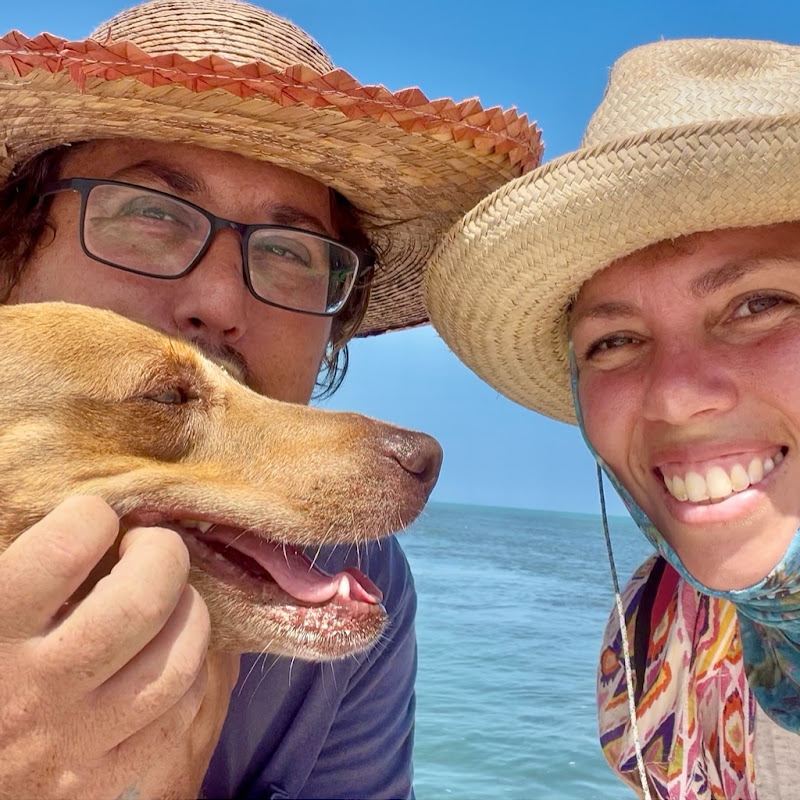
Sailorama
From a 24ft C&C to a 40ft pilothouse sloop, Robinson and Justine of sailorama define the technical grit of minimalist, mission-driven offshore cruising.
Channel Information:
Social Media Links:
Sailboat nearly sank in Cuba, then THIS happened. Location
- Marina Hemingway & Canal Berths, Havana, Cuba (23.09,-82.498)
- Cienfuegos Bay Marina & Southern Cuban Waters, Cuba (22.1333,-80.45)
Latest Episodes from Sailorama
Explore the most recent voyages. Subscribe to the channel to never miss an update!
LIFE and ENERGY in Cuba
Life, energy, spirit of Cuba - this is what it is like to spend time in Cienfuegos, Cuba. LIVE Updates: facebook.com/sailorama instagram.com/justinesailorama Thank you to all the patrons of this channel! PATREON:
Where should ‘FREE’ sailors go? | SAME BOAT
Sailorama and Jean explore the economic reality of free boats, housing inflation, the 10% liveaboard rule in marinas, and the true cost of vessel refits.
Sailboat nearly sank in Cuba, then THIS happened.
When a catastrophic seawater pump failure floods Inesperada off the Cuban coast, the cruising crew of Sailorama executes emergency damage control and discovers extraordinary local ingenuity in Cienfuegos.
Younger Generation Sailor Debates Old Salt | Same Boat
Justine of Sailorama sits down with veteran voyager Jean for an in-depth dialogue contrasting modern electronic cruising systems with traditional seamanship, offshore rigging choices, and heavy weather storm management.
Jamaica and Back to Cuba Again
Sailing. Sargassum. Empire. Watch if you want. LIVE Updates: facebook.com/sailorama instagram.com/justinesailorama Thank you to all the patrons of this channel! PATREON: