We Bought a $20K Boat. One Repair Quote Was $20,000.
Global voyagers Ben and Ashley Stobbart of Sailing Nahoa faced a rare maritime crossroads after completing a circumnavigation aboard their Lagoon 410 catamaran. With their ocean-proven vessel berthed in Fiji awaiting sale and construction on their custom Pierre Delion-designed Nahoa 55 expedition ketch slated to begin in New Zealand, the family returned home to Canada for a transitional cruising season. Rather than committing to costly marina slips, the couple sought an agile, trailerable pocket cruiser to explore the Pacific Northwest without incurring heavy capital risk.
Their search led to the sight-unseen purchase of a 2002 Monero 24 for $20,000 CAD—a solid fiberglass coastal craft built in British Columbia. However, initial mechanical inspections revealed water intrusion through perished sterndrive bellows and a severely corroded universal joint. When commercial shipyards returned repair quotes reaching an astonishing $20,000—matching the boat’s entire purchase price—the project transformed into a forensic case study in marine economics, prompting Ben and Ashley to pivot toward self-reliant sweat equity and mobile off-grid refit logistics.
The $20,000 Coastal Cruiser Acquisition: Searching for Practicality in British Columbia
For Ben and Ashley of Sailing Nahoa, embarking on this $20K boat refit on Vancouver Island in British Columbia, Canada demanded an uncompromising focus on functional utility. Navigating the Pacific Northwest requires a craft capable of enduring punishing conditions while remaining trailerable to eliminate monthly moorage fees. The Monero 24, a proven regional design conceived in 1976, provided the exact operational profile required: a deep-V hull with an aggressive 20-degree transom deadrise engineered specifically to slice through steep two-to-four-foot coastal chop without slamming.
Powered by a 230-horsepower Volvo Penta KAD43 mechanical turbo-diesel, the vessel offers vast operational range for remote fjords like Toba and Jervis Inlets. Ben specifically favored the pre-electronic mechanical injection pump over modern common-rail diesels, ensuring field-serviceable reliability without computerized diagnostic dependencies. Accommodations include waist-high gunwales for child safety, an enclosed head, and bus-heater ducting run off engine coolant. Ben trailered the 24-foot-7-inch vessel from Vancouver to Victoria via BC Ferries ($380 CAD toll for a 49-foot overall vehicle combination), resolving trailer light faults with WD-40 before staging the boat on dry land.
The Mirage of Alternative Bargains: Aluminum Cruisers and Surplus Workboats
Before selecting the Monero 24, Ben and Ashley of Sailing Nahoa audited alternative used craft across British Columbia, Canada to determine whether larger platforms could bypass the compromises of a $20K boat refit on Vancouver Island. Marine markets frequently present heavily discounted vessels that conceal catastrophic downstream maintenance liabilities. By evaluating an 80-foot custom aluminum expedition yacht alongside a 40-foot government surplus workboat, the mariners proved why initial purchase price is rarely the true cost of boat ownership.
The first candidate, Leonor, was an 80-foot custom Kelly Archer aluminum monohull priced at $1,000,000 USD, featuring solid teak joinery, foam-cored composite soles, an onboard exercise room, and a walk-in machinery space. Yet maintenance models indicated annual carrying costs of $100,000 to $150,000 USD for carbon rigging, hydraulic furlers, and systems, consuming the Monero’s entire purchase price every two months. Furthermore, her registered length of 83 feet 6 inches triggered restrictive anchoring bans in destinations like French Polynesia, where large yachts must use commercial moorings.
The second alternative was a 40-foot fiberglass Navy surplus workboat in Victoria listed for $40,000. Out of the water since 1990, its package included a Caterpillar 3208 turbo-diesel and Twin Disc gearbox on a pallet, but lacked shafts, engine beds, cooling, and electrical wiring. A realistic refit budget totaled $110,000 to $150,000 to achieve seaworthiness. As Ben noted, a bare hull with a detached drivetrain is merely an expensive structural project rather than a viable vessel.
Marine Contractor Economics: Deconstructing the $20,000 Yard Estimate
Upon positioning their pocket cruiser for inspection, Ben and Ashley of Sailing Nahoa encountered the harsh commercial realities of their $20K boat refit on Vancouver Island in British Columbia, Canada. Removing the Volvo Penta sterndrive exposed seawater ingress through deteriorated rubber bellows, which had severely corroded the universal joint linking the engine output shaft to the upper gearcase. In addition, the outdrive mechanism had completely lost neutral and reverse shifting functionality, pointing to internal linkage wear and potential bearing damage.
When professional marine contractors and commercial shipyards evaluated the vessel, repair estimates ranged from $4,000 for basic resealing to $20,000 for a complete transom assembly and outdrive overhaul. Across regional boatyards, specialized marine diesel and sterndrive technicians bill between $120 and $180 per hour. Yards also apply 20 to 40 percent retail markups on OEM parts while adding substantial contingency hours for seized stainless fasteners and galvanic bonding issues. Authorizing a $20,000 yard invoice would have doubled the boat’s capital basis without boosting its market resale ceiling, making self-directed sweat equity the only rational financial choice.
Forensic Cost Comparison: Professional Yard Billing Versus Sweat Equity
To demonstrate the economic divergence between commercial boatyard invoices and owner execution, Ben and Ashley of Sailing Nahoa tracked line-item expenses during their $20K boat refit on Vancouver Island in British Columbia, Canada. By isolating the major mechanical, structural, and electrical refit modules, their financial ledger illustrates where professional labor overhead concentrates and how methodical owner execution recaptures immense cruising capital.
| Refit Category | Commercial Yard Quote | DIY Sweat Equity Cost | Capital Savings |
|---|---|---|---|
| Sterndrive & U-Joint Rebuild | $7,500 – $12,000 | $1,200 – $2,400 | $6,300 – $9,600 |
| Volvo KAD43 Mechanical Servicing | $3,500 – $5,000 | $650 – $1,200 | $2,850 – $3,800 |
| Hull Gelcoat Repair & Epoxy Barrier | $4,500 – $7,000 | $800 – $1,500 | $3,700 – $5,500 |
| Bilge Plumbing & Controls Overhaul | $2,200 – $3,800 | $450 – $900 | $1,750 – $2,900 |
| Marine Electrical & Battery System | $2,800 – $4,500 | $700 – $1,400 | $2,100 – $3,100 |
| Total Estimated Refit Budget | $20,500 – $32,300 | $3,800 – $7,400 | $16,700 – $24,900 |
Executing the mechanical overhauls independently saves between $16,700 and $24,900 CAD—funds that directly finance safety equipment, spare parts, and fuel reserves for remote cruising.
Off-Grid Refit Logistics: Powering Tools and Systems in Remote Boatyards
Executing a comprehensive $20K boat refit without access to dedicated marina pedestal power presented Ben and Ashley of Sailing Nahoa with an intricate logistical puzzle on Vancouver Island in British Columbia, Canada. Many regional boat storage compounds, gravel yards, and residential driveways lack stable 120-volt AC shore connections, forcing mariners to devise independent energy strategies. Confronted with the persistent moisture and temperamental climate of the Pacific Northwest, maintaining reliable electrical power was essential for running high-amperage tools, industrial vacuum extractors, and sensitive battery charging equipment.
To overcome these infrastructure limitations, the crew deployed a portable Jackery HomePower 3600 Plus lithium power station. Delivering 3,600 watts of pure sine wave AC output, the modular system powered industrial wet vacuums to clear bilge grime, heat guns for marine wiring insulation, and chargers for onboard lithium batteries. Paired with folding solar panels, this mobile electrical solution eliminated reliance on noisy gas generators, providing total energy independence wherever the boat was serviced.
Cruising Viability and Seamanship: Prioritizing Critical Sea Safety Over Aesthetics
As their methodical $20K boat refit progressed on Vancouver Island in British Columbia, Canada, Ben and Ashley of Sailing Nahoa maintained an uncompromising focus on seaworthiness over cosmetic appeal. While novice buyers often prioritize polished gelcoat and modern upholstery, the seasoned voyagers focused strictly on underwater running gear, mechanical reliability, and watertight integrity.
Replacing the perished bellows, renewing the corroded universal joint, adjusting shift linkages, and installing automated bilge pumping circuits ensured the vessel would withstand the tidal turbulence of Dodd Narrows and the open swells of the Strait of Georgia. Superficial blemishes were deferred, allowing the Monero 24 to fulfill its primary purpose: safe, reliable family exploration along the Pacific Northwest coast at a fraction of commercial costs.
Frequently Asked Questions
For mariners following Ben and Ashley of Sailing Nahoa as they complete this $20K boat refit on Vancouver Island in British Columbia, Canada, the realities of secondhand boat ownership and shipyard economics prompt frequent practical inquiries. Below are authoritative answers to critical questions regarding marine refit costs, mechanical inspections, and off-grid vessel maintenance.
Professional marine shipyards maintain high shop rates ($120 to $180 per hour) to cover massive commercial waterfront overhead, environmental compliance insurance, certified technician certifications, and specialized heavy tooling. Furthermore, mechanics incorporate contingency buffers into quotes to offset risks associated with seized fasteners, galvanic corrosion, and unexpected structural failures on older hulls.
A $20,000 vessel is only financially viable if the buyer possesses the mechanical aptitude, tools, and time to execute repairs through DIY sweat equity. If an owner must contract all mechanical overhauls and fiberglass repairs to commercial yards at professional rates, repair invoices can easily double the total capital invested without raising the boat’s market resale value.
The single most critical inspection point is the rubber bellow assembly enclosing the universal joint, exhaust, and shift cables. Perished or torn bellows allow raw seawater to flood the gimbal housing and enter the bilge, causing severe bearing corrosion or sinking. Other vital checks include testing the universal joint for play, inspecting shift cable adjustment, and verifying oil clarity in the upper and lower gearcases.
Cruisers utilize high-capacity portable lithium power stations paired with folding solar panels. Modern units equipped with 3,000-to-3,600-watt pure sine wave AC inverters can operate inductive loads such as industrial shop vacs, heat guns, power sanders, and battery chargers in storage compounds or driveways lacking shore power connections.
While large custom yachts like Leonor offer expansive living quarters, their annual maintenance carrying costs ($100,000 to $150,000 USD) and strict length-based anchoring restrictions in international cruising grounds create immense logistical burdens. The Monero 24 provides trailerable freedom, negligible holding costs on the hard, and access to shallow anchorages without requiring permanent crew.
British Columbia waters feature severe tidal rapids, violent tidal rips, and short, steep period chop in narrow inlets where deep ocean currents meet constricted topography. Small boats require deep-V hull architecture with substantial deadrise to prevent structural slamming, along with reliable diesel range to navigate remote fjords where fuel docks are non-existent.
Sweat equity directly replaces $120-to-$180 hourly yard labor with owner time, reducing total project expenditures by 60 to 75 percent. More importantly, self-directed maintenance instills comprehensive mechanical familiarity, enabling skippers to troubleshoot and repair failures offshore without relying on external commercial assistance.
Support Sailing Nahoa
At WeBoating.com, we profoundly acknowledge the unwavering dedication that Sailing Nahoa invests in crafting each and every video or voyage. Their passion for delivering exceptional ocean content shines through every frame, and it's a labor of love that deserves your attention.
We invite you to watch their captivating videos here and actively engage with their content, including their social media links above. Liking, commenting, and sharing their work goes a long way in fueling their creative fire.
We're also inviting you to explore the gear, sponsorships, and boat partnerships highlighted in the "We Bought a $20K Boat. One Repair Quote Was $20,000." video description, or directly on YouTube. By engaging with these offerings or purchasing services and items, you directly support Sailing Nahoa, their collaborators, and the brands they're associated with.
To ensure you never miss an offshore update, consider visiting their official YouTube Channel to subscribe, like, and join their community directly.
If you have any feedback, corrections, or additional information about Sailing Nahoa or their videos, please use the comment form below to share your thoughts with us.
Thank you for being a part of our community and supporting the creators we cherish. Your time and support truly matter!
Thanks to @Jackeryusa for sponsoring this video. Jackery is available in both the US and Canada. Save up to 65% during Jackery Prime Big Deal Days and check out the Jackery HomePower 3600 Plus here: https://bit.ly/4xrxvOi Power Out, Jackery On.
⚓ These videos are 100% crowdfunded by viewers like you. Get real-time updates, behind-the-scenes access, and join our private WhatsApp crew chat: https://patreon.com/nahoa
NAHOA Expedition Catamarans:
https://www.nahoayachts.com
SUBSCRIBE TO OUR MONTHLY NEWSLETTER:
https://sailingnahoa.substack.com
FOLLOW US ON INSTAGRAM:
https://www.instagram.com/sailingnahoa/
FOLLOW US ON FACEBOOK:
https://www.facebook.com/sailingnahoa
Stay Wild, Stay Free,
Ben. Ashley. Willa. Bodhi.

Sailing Nahoa
Ben and Ashley Stobbart are currently navigating the Koro Sea while finalizing the forensics for their new aluminum fortress, the Nahoa 55 expedition ketch.
Channel Information:
Social Media Links:
We Bought a $20K Boat. One Repair Quote Was $20,000. Location
- Sidney Marine Yards & Boat Haven, Vancouver Island, British Columbia, Canada (48.65,-123.4)
- Strait of Georgia Cruising Fairway, British Columbia, Canada (49.3,-123.8)
Latest Episodes from Sailing Nahoa
Explore the most recent voyages. Subscribe to the channel to never miss an update!
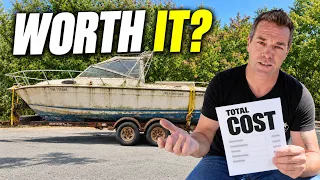
What Our $15,000 Boat Really Cost
Sailing Nahoa provides a line-by-line financial audit of purchasing and refitting a $15,000 boat in Vancouver, British Columbia, calculating true DIY refit expenses.

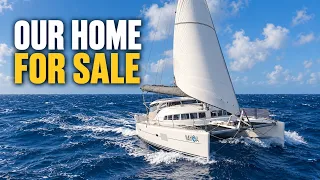
We’re Selling the Boat That Took Us Around the World
Ben and Ashley of Sailing Nahoa list their circumnavigation-proven 2005 Lagoon 410 S2 catamaran, SV Nahoa, complete with turnkey offshore systems and lithium power.
We Bought a $20K Boat. One Repair Quote Was $20,000.
Ben and Ashley of Sailing Nahoa acquire a classic 24-foot coastal cruiser in British Columbia and confront modern shipyard labor economics when a single repair quote matches the vessel's purchase price.