
Sailing Catamaran Escape

In 2026, Australian voyagers Paul and Leah navigate the tropical anchorages of coastal Queensland aboard their catamaran Escape. After years of offshore voyaging across the South Pacific and working on industrial energy projects in Gladstone, the couple showcases self-sufficient coastal cruising, catamaran seamanship, and coral reef exploration. Their channel delivers grounded marine maintenance tutorials, tidal pilotage guides, and off-grid multihull living along the Great Barrier Reef.
Channel Information:
Social Media Links:
Sailing Catamaran Escape Latest Episode
Australian sailors Paul and Leah command the catamaran Escape along the shifting shoals, coral cays, and tidal thoroughfares of Queensland and the Great Barrier Reef. Following extensive offshore expeditions across New Caledonia, Vanuatu, and the Solomon Islands, the couple brings practical industrial engineering discipline to liveaboard catamaran voyaging, demonstrating how thorough preventative maintenance and tidal navigation unlock some of the world's most intricate coastal cruising grounds.
Key Takeaways
- Practical Multihull Seamanship: Grounded in real-world cruising mechanics, Paul and Leah prioritize unvarnished technical maintenance, tidal precision, and safe coral navigation over dramatized lifestyle vlogging.
- The Vessel Architecture: Escape is an Australian-engineered blue water cruising catamaran built for off-grid resilience, equipped with twin Yanmar marine diesels, high-output solar arrays, lithium battery reserves, and protected dual helm positions.
- Dynamic Cruising Range: From treacherous tidal channels like The Narrows and Shoalwater Bay to the remote anchorages of the Bunker Group and the Whitsundays, their voyages showcase complete coastal autonomy and deep-water passage making.
⚓ Quick Specs & Channel Vitals
| Metric | Detail |
|---|---|
| Vessel Name & Model | Escape / Seawind 1260 Bluewater Cruising Catamaran |
| Flag & Port of Registry | Australia (AU) / Coomera, Queensland |
| Crew Composition | Paul & Leah (Two-Handed Cruising Couple) |
| Sailing Style | Self-Sufficient Coastal Cruising & South Pacific Offshore Passages |
| Key Geographic Focus | Queensland Coast, Whitsunday Islands, Great Barrier Reef, Coral Sea |
| Primary Electrical Tech | Lithium Iron Phosphate (LiFePO4) Bank, Victron MPPT Solar Arch, Smart Shunt |
| Technical & Tutorial Focus | Yanmar Diesel Servicing, Tidal Channel Pilotage, Coral Reef Anchoring, Fiberglass Care |
| Notable Maritime Milestones | Down Under Rally Crossing, 8-Month Solomon Islands Expedition, Cyclone Recovery Voyages |
Meet the Crew and the Fleet
The Sailors Behind the Helm
Long before launching their digital cruising logs, Paul and Leah spent decades cultivating maritime and industrial trades across Queensland. Their seamanship is anchored in practical self-reliance, shaped by years of owning traditional displacement monohulls and working in heavy industrial construction before committing full-time to cruising catamarans.
Paul
As the primary technical manager aboard Escape, Paul combines professional industrial trades with decades of marine mechanical expertise.
- Primary Expertise: Marine diesel diagnostics, saildrive servicing, marine electrical wiring, composite fiberglass repairs, and coastal tidal pilotage.
- Certifications: Australian Commercial Marine Certifications, Marine Radio VHF/HF Operator's Certificate, Industrial Trade Qualifications.
- On-Camera Style: Calm, pragmatic, highly educational breakdowns of onboard systems, weather routing, and mechanical overhauls.
Origin Story & Life Before Sailing
Growing up near Australia's eastern seaboard, Paul developed an early connection to coastal waterways, spending his youth fishing, diving, and sailing small dinghies. Before transitioning to full-time liveaboard cruising, Paul dedicated his professional career to major industrial engineering and infrastructure projects across Queensland.
Most notably, Paul spent four rigorous years working on Curtis Island off Gladstone, helping build the massive 24.7 billion dollar Australia Pacific LNG (APLNG) facility. Constructing cryogenic gas storage tanks and processing trains in demanding coastal environments honed his mechanical aptitude, electrical troubleshooting skills, and strict safety discipline—qualities that seamlessly transferred to offshore vessel management.
Professional & Technical Background
Paul's technical career encompasses heavy mechanical assembly, structural pipework, and high-tolerance industrial equipment commissioning. Aboard Escape, this background translates into an exacting maintenance program where auxiliary engines, plumbing valves, and electrical buses receive routine servicing well ahead of factory schedules.
Maritime Experience & Seamanship
Paul's maritime logbook spans more than three decades of open-water cruising. For ten years between 1994 and 2004, he owned and skippered Isis 3, a heavy 10-meter steel sloop that demanded physical sailing skills and traditional dead-reckoning navigation along the Australian coast. He later transitioned into high-performance multihulls, skippering both a Perry 43 and the Seawind 1260 across the Coral Sea, New Caledonia, Vanuatu, and the Solomon Islands.
Specialized Competencies & Onboard Roles
Underway, Paul manages the vessel's propulsion, electrical charging profiles, weather analysis, and ground tackle deployment. His mechanical vigilance proved essential during their return passage from the Solomon Islands, where he maintained propulsion reliability and structural integrity through heavy thunderstorms and squalls in the South Pacific Convergence Zone.
Channel Role & Content Focus
Paul leads technical narration, taking viewers directly into the engine bays, battery lockers, and steering compartments. He walks viewers through step-by-step procedures such as replacing Yanmar exhaust mixing elbows, removing and sealing shattered saloon windows, and calculating tidal clearance windows.
Social & Digital Presence
| Platform | Reference |
|---|---|
| YouTube Channel | Sailing Catamaran Escape |
| Official Community Hub | YouTube Community Tab & WeBoating Directory Profile |
Leah
Leah is the co-skipper, operations coordinator, and natural history navigator aboard Escape, bringing organizational precision, watchkeeping stamina, and keen wildlife tracking to every passage.
- Primary Expertise: Offshore watchkeeping, passage provisioning, coastal navigation, dive logistics, and marine ecology documentation.
- Certifications: Recreational Marine Driver License, PADI Open Water Scuba Certification, Remote Marine First Aid.
- On-Camera Style: Warm, observant, and engaging, documenting scenic landscapes, local island interactions, and native Australian wildlife.
Origin Story & Life Before Sailing
Leah was raised with a deep appreciation for the Australian outdoors, coastal ecology, and maritime environments. Prior to voyaging full-time, she worked alongside Paul on industrial development projects in Queensland, including major operations on Curtis Island in Gladstone. Managing logistics, documentation, and operational schedules in high-tempo industrial settings gave Leah exceptional organizational skills that now anchor the boat's offshore provisioning and safety protocols.
Professional & Technical Background
Leah's professional background centers on industrial coordination, inventory management, and operational compliance. Living aboard a 41-foot multihull requires meticulous supply planning, especially when cruising remote islands in the South Pacific or uninhabited reef cays where grocery replenishment is nonexistent for months at a time.
Maritime Experience & Seamanship
With thousands of bluewater nautical miles to her credit, Leah stands equal night watches, helms through challenging reef passes, and directs anchoring maneuvers from the foredeck. Her calm demeanor during heavy offshore weather and intricate coastal pilotage—such as navigating the narrow mud channels of Ramsey's Crossing—demonstrates seasoned multihull competency.
Specialized Competencies & Onboard Roles
Leah manages the galley, onboard watermaker cycles, food preservation, and medical response supplies. An avid snorkeler and scuba diver, she also oversees dive gear maintenance, underwater exploration, and wildlife observation, documenting everything from humpback whale migrations to koalas in the eucalyptus groves of St Bees Island.
Channel Role & Content Focus
On camera, Leah provides balance to Paul's mechanical focus, highlighting the natural beauty of remote island anchorages, island history, and the lifestyle of living afloat. Her sharp eye behind the camera captures stunning drone footage of coral lagoons and intimate encounters with marine life.
Social & Digital Presence
| Platform | Reference |
|---|---|
| YouTube Channel | Sailing Catamaran Escape |
| Feature Portals | WeBoating Channel Catalog & Community Articles |
The Guest Crew & Global Community
While Paul and Leah operate predominantly as a self-sufficient double-handed couple, their voyages are deeply intertwined with the broader Australian cruising network. As active participants in the Down Under Rally, they have voyaged in company with international cruisers across the Coral Sea to New Caledonia and Vanuatu, exchanging technical advice, parts, and local hydrographic knowledge.
Nomadic Network Summary
The Australian cruising community along the Queensland coast forms a tight-knit fellowship driven by mutual assistance. In isolated anchorages like Pancake Creek, Percy Island, and the Bunker Group, cruisers regularly assist one another with diesel bleeding, rig inspections, and real-time weather assessments, reflecting the enduring ethos of seafaring camaraderie.
⛵ Professional Fleet Forensics
Paul and Leah's fleet history reflects a thoughtful evolution from traditional steel monohulls to ocean-proven performance cruising catamarans. Understanding their vessel choices offers valuable insight into how hull material, deck ergonomics, and draft considerations impact cruising efficiency along the Great Barrier Reef.
Escape (Seawind 1260 Flagship)
The flagship catamaran Escape is a Seawind 1260, designed in Australia by Richard Ward and engineered specifically for challenging southern ocean and tropical passage making. Measuring 12.45 meters (40 feet 10 inches) with a beam of 6.8 meters, the Seawind 1260 is widely regarded as one of the most capable production cruising catamarans in the world.
The vessel's defining architectural feature is its patented tri-fold door system, which folds completely upward and stows flat into the cockpit targa roof. This design transforms the main salon and aft cockpit into a vast, unified living space with continuous 360-degree ventilation—an invaluable attribute in tropical Queensland. With protected twin raised helm stations, lines led aft to electric winches, and shallow 1.16-meter draft via fixed high-aspect mini-keels, Escape can safely negotiate shallow coral lagoons while maintaining offshore tracking stability.
| Vessel Metric | Flagship Specification |
|---|---|
| Builder / Designer | Seawind Catamarans / Richard Ward & Seawind Design Team |
| Model / Class | Seawind 1260 Cruising Catamaran |
| Length Overall (LOA) | 12.45 m (40 ft 10 in) |
| Beam | 6.80 m (22 ft 4 in) |
| Draft | 1.16 m (3 ft 9 in) via fixed structural mini-keels |
| Displacement (Light / Loaded) | 8,200 kg / approx. 10,800 kg |
| Hull Construction | Vacuum-bagged vinyl ester resin composite with PVC foam core |
| Auxiliary Propulsion | Twin Yanmar 3YM30AE 29 HP (or 3JH40) Diesels with SD Saildrives |
| Propellers | Autostream 3-Blade Stainless Steel Feathering Propellers |
| Fuel Tankage | 480 Litres in dual marine-grade aluminum tanks |
| Freshwater Tankage | 700 Litres with dual distribution manifolds |
| Active Status (2026) | Active Flagship / Coastal Cruising Queensland |
Escape II & Isis 3 (Legacy Vessels)
Before commissioning their current vessel, Paul and Leah acquired Escape II, a 1998 Perry 43 bluewater catamaran designed and built by Bryan Perry in Coomera, Queensland. With a 13.10-meter overall length and 6.60-meter beam, Escape II served as their offshore platform for the Down Under Rally, carrying them through Vanuatu and the Solomon Islands with a 550Ah lithium bank, twin 40HP Yanmar diesels, and a Spectra Cape Horn watermaker.
Their earlier maritime heritage traces back to Isis 3, a rugged 10-meter steel cruising sloop that the couple owned and maintained for a full decade between 1994 and 2004. In their insightful retrospective documented in Sailing Escape - Episode 5 Part 1 Bundaberg and what happened to our old boat?, Paul and Leah investigated the fate of their old vessel while visiting Midtown Marina on the Burnett River in Bundaberg. They discovered that during the devastating Cyclone Oswald flood surge of January 2013, Isis 3 was torn from her moorings in 15-knot river currents. Her new owner and his dog were miraculously rescued from the deck by an Australian Defense Force Blackhawk helicopter before the historic sloop sank beneath the muddy waters.
| Vessel Metric | Escape II (Multihull Legacy) | Isis 3 (Monohull Legacy) |
|---|---|---|
| Vessel Type | Cruising Catamaran | Displacement Sloop |
| Designer / Builder | Bryan Perry (Coomera, QLD) | Custom Australian Steel Yacht |
| LOA / Beam / Draft | 13.10 m / 6.60 m / 1.20 m | 10.00 m / 3.20 m / 1.65 m |
| Hull Material | GRP Composite with Balsa Core | Heavy Welded Marine Steel |
| Auxiliary Engine | Twin Yanmar 3JH4E 40 HP Diesels | Single Inboard Marine Diesel |
| Ownership Period | 2018 – 2021 (South Pacific Expedition) | 1994 – 2004 (Decade Coastal Cruising) |
| Historical Fate / Status | Cruised South Pacific; sold on Gold Coast | Lost in 2013 Cyclone Oswald floods in Bundaberg |
🛠️ The Gear Locker: Crucial Hardware
Cruising tropical reef waters demands reliable hardware engineered to endure cyclic shock loads, saltwater immersion, and intense UV radiation. Paul and Leah have equipped their vessel with heavy-duty ground tackle and specialized marine equipment tailored to Australian conditions.
| Equipment Domain | Hardware Specification | Cruising Application & Function |
|---|---|---|
| Primary Ground Tackle | 33 kg Rocna Vulcan Galvanized Anchor | Instant setting in coral sand, firm mud, and heavy tidal rivers |
| Secondary Ground Tackle | Fortress FX-37 Lightweight Alloy Anchor | Stern kedge anchor for narrow creeks and emergency backup |
| Chain & Rode | 80 m of 10 mm Grade L Short-Link Galvanized Chain | High chafe resistance against coral heads; end-for-end reversed |
| Windlass System | Muir 12V Electric Marine Anchor Windlass | Foot switches and cockpit remote with dedicated chain snubber line |
| Sail Inventory | Full-batten Dacron Mainsail with 3 Reefs | Lazy jacks and heavy-duty boom bag for swift reefing |
| Headsail Configuration | Self-Tacking Furling Jib on Curved Traveler | Effortless short-tacking through narrow coral passages |
| Offshore Safety Suite | GME Accusat 406MHz EPIRB & Garmin inReach | Satellite emergency positioning and real-time family tracking |
| Tender & Outboard | Highfield 3.1 m Aluminum RIB Dinghy | Paired with Yamaha 15 HP 2-stroke outboard on aft davits |
📊 Vessel Systems Health Scorecard
Evaluating Escape against rigorous marine engineering benchmarks demonstrates an exceptionally autonomous platform optimized for long-term anchorages without shore-power dependency.
| System Domain | Rating | Core Configuration & Autonomy Notes |
|---|---|---|
| ⚡ Energy Autonomy | 9/10 | 800W+ solar arch array, Victron SmartSolar MPPT controllers, 550Ah+ lithium bank, and Victron inverter delivering complete off-grid power for refrigeration and induction. |
| 🛡️ Structural Integrity | 9/10 | Vacuum-infused vinyl ester composite construction with forward collision bulkheads, beefy structural crossbeams, and robust mini-keels designed to ground safely on sand flats. |
| 📡 Communication Grade | 8/10 | B&G 4G broadband radar, B&G Zeus 3 navigation hub with forward-facing sonar, AIS Class B transponder, and handheld satellite communicators. |
| 💧 Water Independence | 9/10 | High-efficiency 12V DC reverse-osmosis watermaker producing 60 litres/hour, coupled with 700 litres of baffled tankage and coachroof rainwater catchment gutters. |
The operational philosophy aboard Escape centers on system simplicity and immediate field serviceability. By choosing reliable 12-volt DC architecture over complex high-voltage alternators, Paul can diagnose and repair wiring or sensor faults at anchor using standard onboard spares. The twin Yanmar diesel engines are installed in dry, dedicated aft engine compartments completely isolated from the living quarters, preventing diesel fumes and facilitating easy access to fuel filters, impellers, and fluid check points.
Notable Gaps or Homemade Solutions
Rather than relying entirely on marine shipyard contractors, Paul routinely fabricates custom solutions to protect equipment from Australian sun and spray. During their haul-out at Boatworks Coomera, Paul custom-cut and bedded heavy-gauge marine window templates using specialized polyurethane adhesives, saving thousands of dollars after ocean spray shattered their front glass in the Coral Sea. He also engineered custom chafe guards for mooring bridles and fabricated stainless safety locks for the cockpit transom gate.
Voyages, Destinations, and Local Waters
📍 Top Routes and Expeditions
The cruising wake of Escape spans thousands of nautical miles across the South Pacific and Eastern Australia. Their major voyages divide into two distinct chapters: their multi-year bluewater exploration of Melanesia and their in-depth coastal navigation of the Queensland coastline.
⏳ Voyage Milestone Timeline
- June 2017: Participated in the Down Under Rally's Go East Rally, sailing from Australia across the Coral Sea to New Caledonia as documented in Sailing Australia to New Caledonia "Go East Rally" 2017.
- November 2017: Completed deep-water scuba diving on the SS President Coolidge in Santo, Vanuatu, before making an offshore ocean crossing back to Australian shores.
- June 2018: Surveyed and acquired their cruising catamaran on the Gold Coast, initiating extensive shipyard commissioning in Sailing Escape Episode 1.
- July 2018: Departed the Gold Coast Seaway on a rough passage south of Stradbroke seamounts toward New Caledonia, experiencing a wind generator failure underway in Sailing Escape - Episode 2.
- September 2018: Explored Bundaberg and unraveled the history and loss of their former steel sloop in Sailing Escape - Episode 5 Part 1 Bundaberg and what happened to our old boat?.
- June 2019: Relaunched their South Pacific expedition, cruising through New Caledonia's Loyalty Islands, diving historic shipwrecks, and voyaging northward to Tanna and Espiritu Santo in Vanuatu.
- January – December 2020: Sailed throughout the remote Solomon Islands, exploring Santa Ana, Guadalcanal, the Florida Islands, and Marovo Lagoon during an eight-month immersion.
- December 2020: Completed an offshore passage across the Coral Sea back to Townsville, enduring heavy squalls across the South Pacific Convergence Zone in Episode 56 - Sailing from the Solomon Islands to Australia - Leaving the Solomons.
- November 2023: Commenced Season 2 of their sailing chronicle in Townsville following pandemic border resets, initiating coastal passages toward Maryborough and Wide Bay.
- January 2024: Undertook a major haul-out at Boatworks Coomera on the Gold Coast to replace shattered saloon storm glass, apply antifoul, and service feathering propellers in Sailing Catamaran Escape S2 E63 - Haulout.
- April 2025: Explored the Whitsundays, voyaging from Stonehaven Bay to the pure silica dunes of Whitehaven Beach in Sailing Catamaran Escape Episode 70 - Sailing The Whitsundays, Stonehaven Bay to Whitehaven Beach.
- May 2025: Navigated island passages from Airlie Beach to St Bees Island and Great Keppel Island, dodging military operations off Shoalwater Bay in Sailing St.Bees Is to Great Keppel Island. Episode 72.
- June 2025: Successfully conquered the high-tide tidal transit of The Narrows between Gladstone and Bundaberg in Episode 74 - Sailing The Queensland Coast, Gladstone to Bundaberg.
Navigating the Queensland Coast, Coral Sea, and the Great Barrier Reef
Cruising along Queensland's tropical coastline presents unique navigational demands that contrast sharply with Mediterranean or Caribbean sailing. The primary weather driver is the Australian winter trade wind system, where persistent southeasterlies blow steadily between 15 and 25 knots from May through October. These winds generate steep, short-period chop when running against opposing ebb tides, creating uncomfortable conditions in open bodies of water like Hervey Bay and the Curtis Channel.
The Southern Hemisphere cyclone season runs strictly from November 1 through April 30. During these summer months, tropical low-pressure systems and severe tropical cyclones can form rapidly in the Coral Sea. Paul and Leah carefully time their passages to ensure they are anchored in protected cyclone havens or positioned safely in southern Queensland waters well before peak storm windows open.
Perhaps the most challenging pilotage feature on the Queensland coast is The Narrows—a 20-mile mangrove corridor separating Curtis Island from the mainland. The passage features a notorious shallow ridge known as Ramsey's Crossing, which dries completely at low spring tides. With tidal ranges in the region exceeding four to five meters, navigating The Narrows demands calculating tidal curves to cross the bar at precise high-water slack, dodging shifting mudbanks and heavy current eddies with barely meters of water under the keels.
Skills & Tutorials: Learning from Sailing Catamaran Escape
Viewers watching Sailing Catamaran Escape gain a masterclass in practical multihull operation and preventative marine maintenance. Key skills demonstrated across their series include:
- High-Tide Tidal Window Calculations: Methodically plotting soundings, charted drying heights, and tidal offsets to safely pilot shallow inland channels.
- Diesel Exhaust Elbow Maintenance: Dismantling corroded Yanmar exhaust mixing elbows, removing frozen flange studs, and renewing gaskets to prevent carbon blockages and raw-water backflow into the cylinders.
- Feathering Propeller Servicing: Disassembling and greasing Autostream stainless feathering props during yard haul-outs to ensure smooth pitch reversal and reduce sailing drag.
- Anchor Chain End-for-End Reversal: Extending ground tackle lifespan by switching worn bitter-end chain to the working end while inspecting swivel shackles for fatigue.
- Coral Cay Anchoring: Deploying adequate scope in deep tidal lagoons, setting anchor alarms for wind shifts over coral bommies, and utilizing snubbers to absorb surging wave shocks.
Overcoming Adversity on the Water
Cruising offshore inevitably brings mechanical setbacks and weather emergencies. During their ocean transit leaving the Solomon Islands in late 2020, Escape was hammered by violent squalls in the South Pacific Convergence Zone. A massive breaking sea slammed into the forward coachroof, shattering a toughened saloon window and flooding salt spray across the interior. Paul and Leah secured the opening with emergency storm boards and towels underway, maintaining navigation watches until safely reaching Townsville.
In another offshore incident shortly after departing the Gold Coast Seaway, severe cyclical pitching caused their aft wind generator mounting strut to snap clean off. Paul quickly secured the thrashing unit before cutting it free from the deck wiring to prevent structural damage to the targa arch, underscoring the critical need for fast, decisive seamanship when equipment fails under load.
The YouTube Journey and Financing the Dream
Content Style and Production Quality
The hallmark of Sailing Catamaran Escape is its unpretentious, documentary-style delivery. Free of sensationalized cliffhangers, manufactured drama, or clickbait thumbnails, the channel provides a transparent, realistic window into liveaboard cruising. The production captures the quiet rhythms of passage making, the satisfaction of completing complex repairs at anchor, and the pristine natural beauty of the Australian coastline.
🎙️ Community Pulse & Audience Vibe
The channel has fostered a loyal following among boat owners, prospective cruisers, and armchair voyagers who value technical honesty. In the comment sections, Paul actively engages with other multihull skippers, sharing advice on Yanmar maintenance, lithium battery wiring, and regional Queensland anchorages.
Channel Growth and Behind the Scenes
🎥 Camera & Filming Tech
To capture footage in harsh marine environments, Paul and Leah utilize a compact production kit designed for rapid deployment. Their filming setup includes:
- Aerial Drone Imagery: DJI compact drone systems utilized for scouting shallow reef passes, surveying uncharted sandbars, and capturing cinematic aerial perspectives of coral lagoons.
- Action Cameras: Rugged GoPro waterproof cameras mounted on the targa arch, boom, and underwater poles for monitoring propeller condition and filming marine wildlife.
- Handheld Mirrorless Systems: High-definition handheld cameras paired with deadcat wind mufflers to record clear technical narration amidst howling trade winds.
💰 How Sailing Catamaran Escape Funds the Voyage
Unlike younger digital nomads who depend on extensive influencer sponsorships, Paul and Leah built their cruising lifestyle on a solid foundation of traditional financial discipline. Decades of working in heavy industrial construction—culminating in their lucrative four-year tenure building the APLNG facility on Curtis Island—allowed them to enter full-time voyaging debt-free with substantial savings reserves.
Their financial blueprint is further sustained by performing virtually all vessel maintenance themselves. By avoiding expensive shipyard labor rates for routine servicing, fiberglass glasswork, and electrical upgrades, their ongoing cruising budget remains remarkably modest.
WeBoating Marketplace Synergy: Paul and Leah's extensive knowledge of Queensland coastal pilotage, multihull heavy-weather handling, and marine diesel systems positions them ideally for professional yacht delivery consultation and Great Barrier Reef itinerary planning services.
💸 Cruising Budget & Financial Blueprint
| Financial Metric | Estimated Value (AUD / USD) | Operational Context |
|---|---|---|
| Channel Estimated Valuation | $25,000 – $40,000 USD | Digital asset valuation based on 80+ evergreen maritime episodes |
| Annual YouTube AdSense Revenue | $1,500 – $3,500 USD | Modest supplemental income from targeted yachting viewership |
| Monthly Liveaboard Cruising Budget | $2,200 – $3,200 AUD | Provisions, diesel fuel, national park permits, and routine spares |
| Initial Vessel Acquisition Cost | $650,000 – $850,000 AUD | Market average for late-model Seawind 1260 cruising catamarans |
| Annual Yard Maintenance & Upgrades | $6,000 – $10,000 AUD | Haul-out fees, antifoul paint, engine servicing supplies, and rigging checks |
Estimates based on prevailing Australian coastal cruising benchmarks, Seawind multihull brokerage values, and self-performed maintenance models.
Top Episodes: Where to Start Watching
For sailors exploring multihull cruising, coastal Queensland navigation, or practical boat maintenance, these five curated episodes offer the ideal entry points into the channel's extensive voyage catalog:
- Episode 74 - Sailing The Queensland Coast, Gladstone to Bundaberg: Experience the high-tide pilotage of The Narrows, passing the massive Curtis Island LNG facilities where Paul and Leah formerly worked before making an overnight transit to Bundaberg.
- Sailing Catamaran Escape - Episode 73: Explore the shifting anchorages of Great Keppel Island, take the ferry to the mainland for provisions, and land a fresh spotted mackerel on the light-air approach to The Narrows.
- Sailing St.Bees Is to Great Keppel Island. Episode 72: Follow a challenging passage past Curlew Island and the Duke Group, rounding Cape Townshend with whale sightings and an unexpected military zone encounter off Shoalwater Bay.
- Sailing Catamaran Escape - Ep 71- Airlie Beach to St. Bees Island: Cruise southward from Airlie Beach through Long Island and Shaw Island, exploring secluded anchorages and searching for the native koala colony on St Bees Island.
- Sailing Catamaran Escape Episode 70 - Sailing The Whitsundays, Stonehaven Bay to Whitehaven Beach: Sail from the deep anchorage of Stonehaven Bay past Hook and Hayman Islands to drop anchor off the world-renowned pure silica sands of Whitehaven Beach.
Channels Similar to Sailing Catamaran Escape
Cruisers who appreciate the practical seamanship and multihull focus of Paul and Leah will also enjoy these kindred cruising channels:
- Cruising Sunrise: Documents an Australian cruising couple navigating coastal waters and offshore archipelagos aboard a modern performance catamaran with a heavy emphasis on solar autonomy and seamanship.
- Sailing And Fun: Highlights couple liveaboard adventures exploring remote tropical reefs, handling multihull maintenance, and providing practical sailing tips for island hopping.
- Take the Waters: Showcases grounded liveaboard life, technical DIY boatyard overhauls, and unvarnished navigation through diverse coastal waterways.
Community Impact and Future Horizons
Supporting the Journey and Getting Involved
Viewers can support Sailing Catamaran Escape by subscribing to their YouTube channel, engaging thoughtfully in episode comment discussions, and sharing their technical maintenance videos with fellow multihull cruisers. By maintaining an open channel for viewer questions, Paul and Leah provide continuous value to sailors preparing for Australian coastal cruising.
Conservation and Reef Stewardship
Cruising within the Great Barrier Reef Marine Park instills a profound commitment to environmental stewardship. Paul and Leah practice strict leave-no-trace seamanship, utilizing public reef protection moorings whenever possible to avoid anchor damage to delicate coral structures. Their episodes regularly highlight marine biodiversity, turtle nesting beaches, and the delicate ecological balance of Queensland's coral reefs.
What is Next for Sailing Catamaran Escape
Looking ahead into 2026 and beyond, Paul and Leah remain dedicated to exploring uncharted corners of the northern Great Barrier Reef, including the remote ribbon reefs and the wild anchorages of Cape York. As weather windows permit, the couple also continues to monitor opportunities for future blue water crossings across the Coral Sea, continuing their legacy of disciplined, self-reliant catamaran voyaging.
Milestones and Industry Recognition
Over their sailing journey, Paul and Leah have achieved significant maritime milestones that demonstrate their blue water competence:
- Down Under Rally Participant: Successfully completed the international Go East Rally to New Caledonia, sailing in company across the treacherous Coral Sea.
- Melanesian Exploration: Logged over 18 months of self-sufficient cruising through remote anchorages in Vanuatu and the Solomon Islands.
- South Pacific Convergence Zone Crossing: Navigated through extreme thunderstorms and squall bands during a 1,000-mile ocean passage back to Australia.
- Extensive Video Archive: Produced over 80 detailed video episodes, earning more than 155,000 views from a dedicated international sailing audience.
Frequently Asked Questions about Sailing Catamaran Escape
Sailing Catamaran Escape is run by Australian cruising couple Paul and Leah, experienced bluewater sailors who spent years voyaging through New Caledonia, Vanuatu, and the Solomon Islands before focusing on extensive coastal cruising along the Queensland coast and the Great Barrier Reef.
The flagship vessel Escape is a Seawind 1260, a renowned 41-foot Australian-designed bluewater cruising catamaran engineered by Richard Ward and the Seawind design team, built with vacuum-infused composite construction and high-aspect mini-keels.
Escape is powered by twin inboard Yanmar marine diesel engines paired with Yanmar SD-series saildrives and Autostream multi-blade feathering propellers, delivering reliable dual-engine maneuvering in tight anchorages and swift coastal cruising efficiency.
Paul and Leah previously owned Isis 3, a 10-meter steel cruising sloop they sailed for approximately ten years before selling her in 2004. Tragically, during the catastrophic Cyclone Oswald floods in January 2013, Isis 3 broke away from Midtown Marina on the Burnett River in Bundaberg and sank after her subsequent owner was evacuated by helicopter.
Prior to their recent coastal expeditions, Paul and Leah owned and extensively sailed Escape II, a 1998 Bryan Perry 43 cruising catamaran equipped with a 550Ah lithium bank, Spectra watermaker, and twin Yanmar diesels, taking them on the Down Under Rally to New Caledonia, Vanuatu, and the Solomon Islands.
Escape utilizes a high-capacity solar array integrated onto her robust aft targa arch and cabin coachroof, routed through Victron SmartSolar MPPT charge controllers into an advanced lithium iron phosphate (LiFePO4) house battery bank, backed by a Victron inverter/charger.
The Narrows is a shallow, mangrove-lined tidal passage separating Curtis Island from the Queensland mainland between Rockhampton and Gladstone. It features a critical tidal window at Ramsey's Crossing that is only passable by shallow-draft vessels near high tide due to tidal ranges exceeding four meters.
Paul and Leah self-funded their cruising journey through long careers in industrial project work, including four years constructing the major APLNG export facility on Curtis Island near Gladstone, supplemented by modest YouTube AdSense revenue and substantial DIY maintenance savings.
After spending eight months exploring the Solomon Islands in 2020, Paul and Leah completed an ocean crossing across the Solomon and Coral Seas back to Australia. Upon arrival in Townsville, they completed 14 days of mandatory government quarantine before transitioning to extensive coastal Queensland cruising.
Cruisers face the Southern Hemisphere cyclone season running from November through April, dominant southeasterly trade winds of 15 to 25 knots that generate steep chop against opposing tides, and the complex coral heads and wide tidal ranges of the Southern Great Barrier Reef.
Key maintenance episodes highlight shipyard haul-outs at Boatworks Coomera, replacing storm-damaged saloon glass shattered during a Coral Sea crossing, Yanmar diesel exhaust elbow replacements, feathering prop servicing, and reversing the anchor chain.
Paul and Leah plan to continue exploring the Great Barrier Reef marine park, cruising northward past Cairns toward the remote anchorages of Cape York, while monitoring weather windows for future offshore Pacific expeditions.
Water adventures near Airlie Beach
Full Day Snorkel the Great Barrier Reef Cruise From Shute Harbour
Sold by Explore Group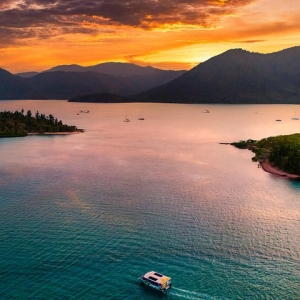
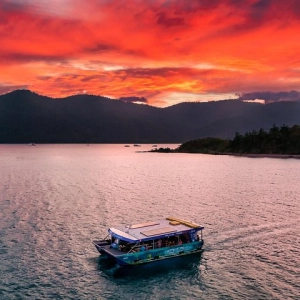
Airlie Beach Glass bottom boat Scenic Sunset Tour
Sold by Pioneer Adventures Whitsundays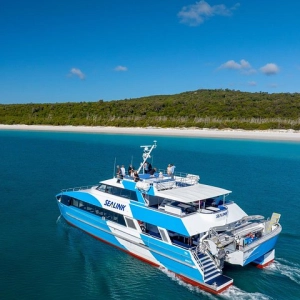
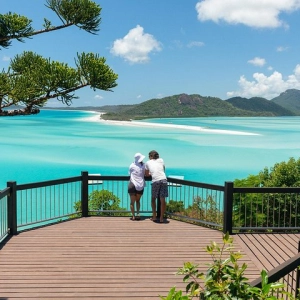
Whitehaven Beach Full-Day Cruise from Airlie Beach with Transfers
Sold by Red Cat AdventuresSailing Catamaran Escape Journey and Videos Locations
- Whitehaven Beach, Whitsundays - Iconic Silica Sands & Cruising Grounds (-20.2825,149.0384)
- Airlie Beach, Queensland - Whitsundays Staging & Provisioning Hub (-20.2675,148.7167)
- Stonehaven Bay, Hook Island - Deep Coral Anchorage & Marine Park (-20.0886,148.8833)
- St Bees Island, Queensland - Wildlife Haven & Island Hop Anchorage (-20.9167,149.4333)
- Great Keppel Island, Capricorn Coast - Coral Cays & Fishermans Beach (-23.175,150.9583)
- Gladstone & Curtis Island, Queensland - LNG Terminals & The Narrows (-23.8427,151.2562)
- Bundaberg & Burnett River - Down Under Rally & Gateway to the Reef (-24.8661,152.3489)
Support Sailing Catamaran Escape
At WeBoating.com, we profoundly acknowledge the unwavering dedication that Sailing Catamaran Escape invests in crafting each and every video or voyage. Their passion for delivering exceptional ocean content shines through every frame, and it's a labor of love that deserves your attention.
We invite you to watch their captivating videos here and actively engage with their content, including their social media links above. Liking, commenting, and sharing their work goes a long way in fueling their creative fire.
We're also inviting you to explore the gear, sponsorships, and boat partnerships highlighted in the videos descriptions, or directly on YouTube. By engaging with these offerings or purchasing services and items, you directly support Sailing Catamaran Escape, their collaborators, and the brands they're associated with.
To ensure you never miss an offshore update, consider visiting their official YouTube Channel to subscribe, like, and join their community directly.
If you have any feedback, corrections, or additional information about Sailing Catamaran Escape or their videos, please use the comment form below to share your thoughts with us.
Thank you for being a part of our community and supporting the creators we cherish. Your time and support truly matter!
Watch Sailing Catamaran Escape's Latest Videos
Catch up on the most recent updates. Browse the complete video archive and Follow the journey.

Episode 74 – Sailing The Queensland Coast, Gladstone to Bundaberg
Sailing Catamaran Escape Follow us through "The Narrows", a shallow waterway only passable at high tide, on our way to Gladstone and Bundaberg. We pass by the large LNG Projects that were built on Curtis Island to process the coal seam gas from The Surat Basin into LNG to be transported ...
Sailing Catamaran Escape – Episode 73
Sailing Catamaran Escape Episode 73. Great Keppel Island - The Narrows. After an overnight passage from Hunter Island and arriving in the early hours of the morning at Great Keppel Island, we anchored at Resort Beach. Soon after it was time to take the island ferry to the mainland to get some suppl...
Sailing St.Bees Is to Great Keppel Island. Episode 72
Setting sail from St. Bees Island our intention was to head for the Percy Islands but an uncertain weather forecast meant a change in plan. We anchored at Curlew Island part of the Guardfish Cluster group. Heavy fog saw us depart for the Duke Islands, anchoring at scenic Hunter Island. The followi...
Sailing Catamaran Escape – Ep 71- Airlie Beach to St. Bees Island
After departing Whitehaven Beach we made our way around to Butterfly Bay. After a brief stop we continued on to Airlie Beach for a few days. It was then time head south, but very undecided on where to stop on the way. Overnight stops were Long Island, Shaw Island and St. Bees Island. Leah then went...
Sailing Catamaran Escape Episode 70 – Sailing The Whitsundays, Stonehaven Bay to Whitehaven Beach
Sailing Catamaran Escape. We sail from Stonehaven Bay to the iconic white silica sands of Whitehaven Beach.
Sailing Catamaran Escape – Episode 69- Cyclone Destruction of South Molle Island
After having arrived in The Whitsunday Islands, we leave Long Island to first head for Airlie Beach then sail to South Molle Island. South Molle was always known as one of the major resorts in the area geared for families. A swimming pool, golf course and beach activities, barbeques and a tradition...
Sailing Catamaran Escape – Sailing the Queensland Coast – Episode 68 Curlew to Long Island
Having left Curlew Island we thread our way through the dozens of ship carriers anchored off the port of Mackay. Unable to get our engine oil leaks worked on immediately we decided to carry on cruising up the coast and maybe try somewhere else. We had brief stopovers at Brampton Island and Thomas I...
Sailing Catamaran Escape – Cruising the Queensland Coast – S2 Episode 67
In this episode we head off from Great Keppel Island to nearby North Keppel island, then on to Pearl Bay. The following day we're off to Hexham Island and overnight stops at Percy Islands well known West Bay, and the mysterious island of Curlew part of the Guardfish Cluster of islands off the C...
Sailing the Queensland Coast – Episode 66 The Bunker Group – Sailing Catamaran Escape
Captain Eber Bunker of the whaling ship 'Albion' was the first European to discover the region and he gave his name to the Southern Group. These 22 islands and reefs lie about 40 miles off the Central Queensland coast. They are important for their breeding populations of seabirds, marine ...
Sailing Catamaran Escape – Episode 65 – Sailing The Queensland Coast – Brisbane to Bundaberg
After finishing all our boat jobs to get the boat ready for the cruising season, we are finally off. Leaving Moreton Bay we head up the Sunshine Coast and over the Wide Bay Bar. Short overnight stops as we sail across Hervey Bay to reach Bundaberg.
Sailing Catamaran Escape – Season 2 Episode 64 -More boat jobs and a few birds to look at……
Sailing Catamaran Escape - Cruising the Queensland Coast - Episode 64 After coming down from the hardstand at Boatworks in Coommera we take a work berth. We finish the window installation, change the LED in the tachometer to regain the hours. Another job we had put off for some time was sorting ou...
Sailing Catamaran Escape S2 E63 – Haulout
It's been over 2 years since the last haul out, so "Escape" is well due for some maintenance. First on the list was replacing the broken window that was damaged in the storm as we left The Solomon Islands on our crossing of The Coral Sea ( see Episode 56). After sailing down the coast...
Sailing Catamaran Escape – S2 Episode 62 Cruising the Queensland Coast – Raby Bay & Cleveland
After sailing south through the night from Fraser Island we reach a very serene and peaceful anchorage in Moreton Bay. Those few days are soon interrupted by a thunderstorm. After the rain and thunderstorms clear the next morning we get the opportunity to visit the Saturday Cleveland Markets at Rab...
Sailing Catamaran Escape – Season 2, Episode 61 Wide Bay to Brisbane
In this episode we leave The Great Sandy Straits and head across the infamous Wide Bay Bar sailing through the night to enter Moreton Bay and anchor at The Sandhills. During one of our nights there we endure a thunderstorm, heavy rain and a lightning display.
The Heritage city of Maryborough – Series 2 Episode 60
Follow Sailing Catamaran Escape as we cruise the Queensland Coast After staying at The Keppel Bay Marina for a short time we set off again. Heading south towards Hervey Bay we motor up the Mary River to arrive at the heritage city of Maryborough.
Sailing Catamaran Escape – Season 2 Episode 59 Sailing the Queensland Coast
In this episode we sail from Shaw Island in The Whitsundays to The Keppel Islands. It was a distance of 212 miles and we had strong northerly winds towards the end of the passage. The entrance to Keppel Bay Marina was very hard to identify as the rocks on the breakwater seem to blend in and look li...
Season 2 Episode 58
Welcome to Season 2. After COVID isolation we are free to have a look around Townsville and make plans to sail south to The Whitsundays.@sailingcatamaranescape6037
Episode 57 – Sailing from the Solomon Islands to Australia – Arriving in Australia
We continue our trip from the Solomon Islands to Australia, having come about half way. We look at breaking the journey at one of Australia remote Coral Sea territories to rest. Eventually on the eleventh day we arrive in Townsville, Australia to face isolation in a hotel due to Covid 19 restriction...
Episode 56 – Sailing from the Solomon Islands to Australia – Leaving the Solomons
We leave the Solomon Islands after 8 wonderful months. Our trip of nearly 1000 miles takes us across the Solomon and Coral Seas back to Australia. Crossing the South Pacific Convergence Zone we have to endure, rain, thunderstorms and squalls. The SPCZ is the southern hemispheres most persistent and...
Episode 55 – Sailing Catamaran Escape – Solomon Islands Paradise – Nusaghele
Lying on the southern perimeter of Roviana lagoon in the Western Province of The Solomon Islands is an island with a very picturesque anchorage. There are 2 families living there on the island of Nusaghele. It is a short trip to either Noro or Munda. We spent quite a few weeks, getting to know John...
Episode 54 – Sailing the Solomon Islands – JFK & the PT109 Story
After spending some time at Liapari Island, we headed back to Gizo to dive the deep walls of the reefs around Kennedy and Naru Islands. We recount the story of PT109 that was hit by a Japanese destroyer and the rescue of its crew and commanding officer John F Kennedy, the future President of the U...
Episode 53 – Sailing The Solomon Islands – Liapari Island
After sailing the short distance from Njari Island we arrive at the safe haven of Liapari Island, which is nestled at the southern end of Vella Lavella. Liapari island is the foremost working boat yard in the Solomons, with plans to build an airstrip and a modern resort. Join us as we experience C...
Episode 52 Sailing Catamaran Escape – Gizo
We make our way around the shallow islands and reefs of Vona Vona Lagoon from Lola Island into the Diamond Narrows. Passing the large town of Noro in the Hawthorn Sound we sail to Ghizo Island. From there it is a short way to Njari Island to the north-west and its famous dive site called "Grand...