Possibly the Clearest Water in Australia? — Then the Southerly Hit Ep459
Ross Boardman and Janet swing at anchor aboard their custom-built composite catamaran Synergy in the sheltered waters of Pearl Bay on the remote Queensland coast. Documenting their voyage on Life On The Hulls, the crew finds themselves positioned inside the Shoalwater Bay military training area, north of Port Clinton, after sailing down from the Percy Group. The surrounding shoreline remains free of commercial buildings and housing developments because the military training reserve preserves the coastal wilderness.
With no inland subdivisions and few mainland creeks discharging silt into the surrounding ocean, the bay provides exceptional water clarity. After spending seven to eight years constructing the 42-foot catamaran, Ross observes the seabed below the hulls with profound appreciation. Reflecting on the effort required to fabricate the multihull from composite materials, Ross notes: “Oh my god, it was so worth it. It was so worth it.” The stillness of the bay presents an ideal opportunity to check mechanical systems, tidy electrical wiring in the engine room, and prepare for upcoming weather movements along the coastline.
High Water Clarity and Extreme Tidal Drop at Pearl Bay
The geographical isolation of Shoalwater Bay creates coastal conditions rarely encountered along more developed stretches of the Australian coastline. Farther north toward the Whitsundays, adverse wind patterns and heavy rainfall have degraded coastal visibility, but this section of the coast has experienced weeks of dry conditions. The absence of agricultural runoff leaves the bay transparent right down to the sand and coral bed. Looking over the water from the shoreline, Ross states: “That is the clearest water you’ll get here in Australia.”
While the bay offers exceptional conditions for a swim, the crew remains vigilant regarding local hazards. The surrounding mangrove estuaries and coastal bays support populations of saltwater crocodiles and large marine life, requiring careful assessment before entering the water. Janet steps ashore to walk along the sweeping shoreline, creating space for quiet reflection after demanding weeks of coastal passagemaking.
Tidal dynamics in this part of Queensland demand precise attention to anchoring and dinghy handling. During their shore excursion, the tide drops across a 4.5-metre range, stranding the tender high on extensive shell and coral flats. The receding water forces the crew to rely on heavy-duty transom wheels installed on the tender to roll the boat back toward the water across exposed reef rubble. The sharp substrate requires sturdy footwear, validating the initial decision to equip the dinghy with dedicated transport wheels rather than dragging fiberglass over coral debris.
Along the beach, Ross and Janet meet fellow cruisers Ron and Barbara aboard Sansara, an owner-built catamaran constructed to Ron’s own design. Conversations between composite builders highlight the unique bond shared by sailors who build their own multihulls. When Ron playfully inquires about starting another boat project, Janet firmly rejects the prospect. Having invested seven years into completing Synergy, the crew remains focused entirely on cruising rather than entering another prolonged build cycle.
Community Gatherings and Passage Planning Ahead of the Southerly Buster
Cruising along the Queensland coast requires careful alignment with shifting weather windows. In Pearl Bay, the anchorage gradually fills as cruising vessels congregate ahead of an approaching change. Fifteen yachts anchor across the cove, with crews preparing to relocate before a strong southerly front sweeps through the region. Ross and Janet visit fellow sailors Saskia and Pete aboard Wombat, a rugged Nordic Tug first encountered a week prior at Great Keppel Island. The crews share drinks before heading over to catch up with Rob and Sandy Attard aboard Spark, a 42-foot Tartan monohull.
Over an evening meal featuring fresh mackerel and tuna sashimi, the crews compare passage plans and route strategies. A significant southerly change is forecast to arrive within twenty-four hours, packing sustained winds of 25 to 30 knots that will make exposed anchorages untenable for several days. Watching the movement of neighboring vessels reveals the rhythmic pattern of coastal cruising, where fleets compress into protected bays when weather patterns deteriorate and scatter as soon as traveling windows open.
At 6:00 a.m. the following morning, Synergy prepares to depart Pearl Bay for an eight-hour passage south toward Great Keppel Island. The morning opens with glassy waters and negligible breeze, defying the earlier forecast of 15-knot northerly winds. On the horizon, a Lagoon 450 multihull motors outward with its mainsail raised, seeking better wind angles offshore. With virtually no air moving across the sea, Ross prepares for a full day of motoring under power, utilizing the quiet conditions to run onboard desalination equipment underway.
Operating the Desalinator Underway on the Run South
Underway passages provide the ideal operational environment for power-hungry vessel utilities. The previous day in Pearl Bay, Ross commissioned and tested Synergy’s new watermaker at anchor, producing 60 litres of freshwater. That initial run uncovered minor plumbing adjustments required on the freshwater flush line and the overboard brine discharge fitting. Ross spent an additional hour in the engine room securing the connections and installing thick rubber isolation pads beneath the mounting shelf to suppress operational vibration.
Running a desalinator in a quiet anchorage while neighboring crews relax on deck causes unnecessary noise. Operating the watermaker while motoring offshore allows the diesel engine sound to mask the pump while the electrical alternator supports the system’s power consumption. During the transit south, the desalinator draws 1,453 watts of electrical energy, operating smoothly without mechanical hesitation. Under calm conditions with the ambient temperature reaching 30 degrees, the unit runs continuously across the passage.
The system produces 160 litres of pure freshwater during the transit, topping off the starboard main tank before Ross fills an auxiliary 30-litre container to replenish the port side. Over the six-hour run, the vessel generates around 200 litres of water, enabling Janet to run two complete loads of laundry in the washing machine without depleting stored reserves. Making freshwater underway transforms the crew’s onboard autonomy, providing ample supply for extended stays at remote anchorages.
Navigation along the route requires skirting an expansive unsurveyed zone designated for military firing exercises and live ordnance testing. Navigational charts show the blue shaded reserve offshore from Shoalwater Bay, an area where mariners are cautioned to stay clear when active military operations commence. The vessel maintains a steady 5.8 knots through the water, with an incoming flood tide reducing speed over ground by roughly a knot as the catamaran approaches the Keppel group.
Arriving at Svendsen’s Beach and the Midnight Buster
Synergy approaches the northern anchorage of Great Keppel Island, known as Svendsen’s Beach or Spinnaker’s Beach, in the early afternoon. Wind conditions build to between 11 and 15 knots from the north as the vessel enters the bay. Ross furls the headsail neatly, ending the motor-sail and setting the anchor among a growing fleet of cruising boats seeking shelter from the south. Having visited the anchorage earlier in the voyage, the crew recognizes the cove’s dependable shelter against southerly gales, though shallow coastal shelves limit anchoring options near the shore.
As sunset approaches, the anchorage becomes uncomfortable. Although the anticipated southerly front has not yet arrived, a stubborn 12-knot northerly wind pushes straight into the bay, whipping up a steep 1-metre vertical wind chop. Anchored monohulls begin rolling violently rail-to-rail in the short chop, while catamarans pitch against their ground tackle. Aboard Spark, Sandy endures the violent motion as theTartanyacht rolls continuously, prompting her humorous observation that “Sandy just made the comment that she won’t be shaving her legs tonight.”
Multihulls without sufficient bridge deck clearance or forward buoyancy slam heavily into the vertical seas. Synergy’s specialized bulbous bows prove their worth, cutting through the chop and suppressing the harsh slamming impacts experienced by other vessels. Extremely shallow water during the low tide prevents Synergy from retreating into the protected inner corner where shallow-draft multihulls like Fantasia utilize retractable rudders to anchor close to the beach. Ross and Janet remain stationed in the deeper section of the cove, enduring several hours of rolling motion while waiting for the southerly front to displace the northerly chop.
Late in the night, the forecast change arrives with dramatic intensity. At 11:30 p.m., a powerful southerly squall tears across the island, striking the anchorage with 40-knot wind gusts. In the pitch blackness, the cove transforms into a chaotic scene as 38 anchored yachts rock and veer on their anchor rodes. Watching the illuminated masthead anchor lights swinging wildly against the dark sky, Ross describes the spectacle: “It was actually like an Oasis concert.” While crews remain on deck monitoring anchor alarms and watching for dragging vessels, the squall eventually settles into a steady blow.
Friday Sunset Dinner and Sheltered Regrouping
By Friday afternoon, the harsh conditions subside into tranquil coastal weather. Taking advantage of the lighter conditions, Ross repositions Synergy 500 meters closer to the shore, anchoring just 50 meters off the sandy beach in prime shelter. With over 40 boats now resting securely across Svendsen’s Beach, cruising life returns to its customary relaxed rhythm while sailors gather on deck to take in the clear sunset across Keppel Bay.
Rob and Sandy row over from Spark to join Ross and Janet aboard Synergy for dinner, carrying thick steaks cut from a massive mackerel landed earlier in the week. Cooking the mackerel steaks on the grill, the crew jokes about the size of the cuts, comparing them to prehistoric provisions. Gathering in the cockpit over grilled fish, the sailors recount the chaotic midnight squall and celebrate riding out the blow without equipment failure or dragging anchors.
The sheltered anchorage offers pleasant options for bushwalks, snorkeling, and paddleboarding across the cove. Janet expresses complete contentment with remaining at Great Keppel Island, noting that she could easily spend eight to ten days exploring the island while waiting for subsequent weather windows. However, passage ambitions toward Gladstone and The Narrows prompt the crew to plan an early departure the following morning.
Heavy Head Seas and Conservation Zones Across Keppel Bay
At 6:00 a.m. Saturday morning, Synergy weighs anchor alongside Spark to tackle the crossing south across Keppel Bay. The decision to depart is based on marine forecasts indicating moderate 12 to 14-knot winds. Spark elects to take an alternate course around the island to establish a more favorable sailing angle, while Synergy motors directly south on the rhumb line toward the mainland coast.
Once clear of the island’s lee, sea conditions deteriorate rapidly. Instead of moderate coastal breezes, the open waters of Keppel Bay funnel wind speeds up to 18 knots directly on the nose. A steep 3-foot wind chop combines with punishing 2-metre ocean swells, creating short, aggressive head seas that slam directly into the catamaran’s bows. With an apparent wind angle of zero degrees, sailing proves impossible, forcing Ross to push forward under twin diesel engines into heavy spray.
Navigational constraints further complicate the passage. Within the Great Barrier Reef Marine Park, strictly regulated green zones and habitat protection areas prohibit transit through designated conservation sanctuaries surrounding offshore rocks and islands. Infringing on these protected boundaries carries a $2,500 penalty and is monitored via automated AIS tracking systems. Identifying the boundary on the chartplotter three miles out, Ross discovers that the vessel’s heading will not clear the corner of the zone without an aggressive detour.
To avoid the restricted boundary, Synergy executes a substantial dogleg course, turning further into the punishing swell. The detour forces the catamaran to smash into vertical waves, slamming heavily approximately 20 times as green water cascades over the bows and douses the cockpit enclosure. The violent motion threatens structural gear and causes unnecessary wear on the vessel. Reflecting on the decision to venture out into opposing seas rather than remaining in the secure anchorage at Great Keppel Island, Ross delivers a vital rule for coastal cruising: “Always always make a decision based on your boat’s ability and your ability.”
Facing uncomfortable headwinds and acknowledging that pushing south yielded no practical advantage, the skipper recognizes the mistake of abandoning shelter prematurely. Looking back at the punishing crossing, Ross confirms his revised criteria for future legs: “If that particular wind is forecast over 12 knots and more than a meter of swell, we will never head into it again.” The demanding leg reinforces the fundamental discipline of cruising: allowing weather windows and sea states to govern movements rather than rigid itineraries.
Frequently Asked Questions
Pearl Bay is located within the Shoalwater Bay military training reserve on the Queensland coast, where shoreline development and residential housing are strictly prohibited. With few coastal rivers discharging silt into the ocean and minimal seasonal rainfall, the bay maintains transparent water clarity.
During the six-hour motor-sail, the desalinator operated under electrical power drawing 1,453 watts. The unit produced 160 litres to top off the starboard tank and fill portable 30-litre containers, generating around 200 litres total while supporting two loads of laundry.
Before the main southerly arrived, a 12-knot northerly whipped up a 1-metre vertical chop that heavily rolled monohulls in the cove. At 11:30 p.m., the southerly front hit with 40-knot wind gusts, rocking 38 anchored boats whose swaying masthead lights resembled an Oasis concert.
While motoring south into 18-knot headwinds and 2-metre swells, Synergy had to avoid a marine park habitat protection zone around an offshore island. Violating the protected zone carries a $2,500 fine and is tracked via AIS, requiring a detour that caused roughly 20 slamming impacts in steep seas.
Book a trip where this was filmed — near Airlie Beach
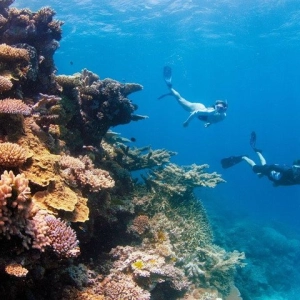
Full Day Snorkel the Great Barrier Reef Cruise From Shute Harbour
Sold by Explore Group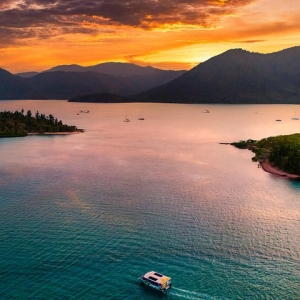
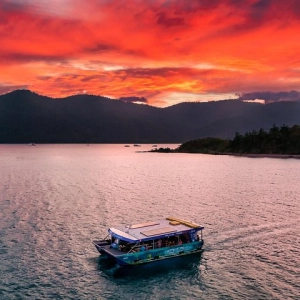
Airlie Beach Glass bottom boat Scenic Sunset Tour
Sold by Pioneer Adventures Whitsundays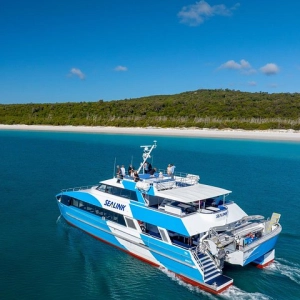
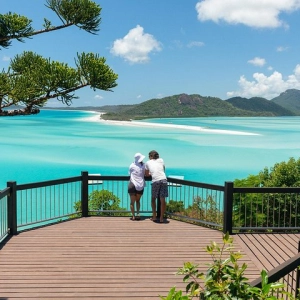
Whitehaven Beach Full-Day Cruise from Airlie Beach with Transfers
Sold by Red Cat Adventures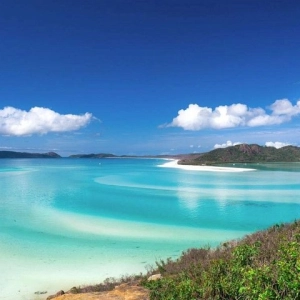
Support Life On The Hulls
At WeBoating.com, we profoundly acknowledge the unwavering dedication that Life On The Hulls invests in crafting each and every video or voyage. Their passion for delivering exceptional ocean content shines through every frame, and it's a labor of love that deserves your attention.
We invite you to watch their captivating videos here and actively engage with their content, including their social media links above. Liking, commenting, and sharing their work goes a long way in fueling their creative fire.
We're also inviting you to explore the gear, sponsorships, and boat partnerships highlighted in the "Possibly the Clearest Water in Australia? — Then the Southerly Hit Ep459" video description, or directly on YouTube. By engaging with these offerings or purchasing services and items, you directly support Life On The Hulls, their collaborators, and the brands they're associated with.
To ensure you never miss an offshore update, consider visiting their official YouTube Channel to subscribe, like, and join their community directly.
If you have any feedback, corrections, or additional information about Life On The Hulls or their videos, please use the comment form below to share your thoughts with us.
Thank you for being a part of our community and supporting the creators we cherish. Your time and support truly matter!
After seven years building Synergy, this is exactly the kind of place we built her for. In this episode we’re anchored at Pearl Bay — our favourite spot on the Queensland coast, tucked inside the Shoalwater Bay military zone where there’s no development, just wilderness and some of the clearest water in Australia. Then the weather turns, and we run for Great Keppel Island to ride out a 30-knot southerly buster with 30–40 other boats packed into Svendsen’s Beach.
We also put the new water maker to work (around 200 litres of fresh water made underway), deal with a 4.5-metre tide, and talk about why cruising life is all about reading the weather windows.
⏱️ CHAPTERS
0:00 Seven years to get here — Pearl Bay
3:00 A 4.5-metre tide
4:30 Our favourite anchorage in Australia
6:30 Making our own water underway
10:00 The run back to Great Keppel Island
14:00 Riding out the buster at Svendsen’s Beach
(adjust times to the final cut)
⛵ ABOUT THE CHANNEL
We’re sailing and cruising the Australian coast aboard Synergy, a catamaran we built ourselves. New episodes regularly — come along for the journey.
👍 If you enjoyed this, hit LIKE, and tell us in the comments: have you cruised the Queensland coast? We’d love to hear your story.
🔔 SUBSCRIBE so you don’t miss the next leg.
❤️ Support the channel on Patreon: [your link]
#sailing #cruising #liveaboard #catamaran #Queensland #GreatKeppelIsland #boatlife #sailingaustralia
Patreon Membership Thank you for supporting my production - https://www.patreon.com/lifeonthehulls
If you would like to contribute to our project you can make very appreciated donations to this Pay Pal Me Link :
https://paypal.me/synergyboatworks
Thanks for joining me on Life On The Hulls and please consider joining my Patreon Network to receive early release videos, Patreon site. Click on the link above to learn more and help support our productions.

Life On The Hulls
Ross and Janet: The Australian boat-building masters who spent 9 years crafting their 42ft custom composite catamaran, now launching into a life of Pacific exploration.
Channel Information:
Social Media Links:
Latest Episodes from Life On The Hulls
Explore the most recent voyages. Subscribe to the channel to never miss an update!
Synergy Stretches Her Legs – Best sail in months Ep462
Ross and Janet navigate catamaran Synergy from Pancake Creek to Burnett Heads and across Hervey Bay to Platypus Bay, logging their fastest beam-reach sail in months.
Sailing Past Gladstone’s Giant Industry to Pancake Creek | Life on the Hulls 460
Ross and Janet motor Synergy through the Curtis Island Narrows and slam through rough wind-against-tide chop off Gladstone Harbour before reaching shelter at Pancake Creek.
Possibly the Clearest Water in Australia? — Then the Southerly Hit Ep459
Ross and Janet navigate remote Pearl Bay in the Shoalwater Bay military zone, test their desalinator underway, weather a 40-knot southerly at Great Keppel Island, and tackle rough head seas across Keppel Bay.
Leaving Our Mark at the Percy Islands | The Famous A-Frame Ep 458
Life On The Hulls sails custom catamaran Synergy to Middle Percy Island in Queensland, Australia, navigating West Bay tides to place their mark at the historic A-Frame.
As an Aussie, I never knew how incredible this area is – Cruising on Synergy Ep457
Brett and crew aboard SV Synergy escape marina berths to cruise the Capricorn Coast and Great Keppel Island, mastering extreme tides, offshore passages, and off-grid living.