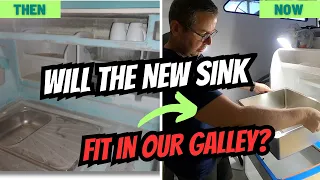
Bathroom floor - finished! Next: PLUMBING - S04E07 | Building Wilda
Inside the boat shed, Axel and Iuliana reached the final interior painting milestone aboard their Schionning Wilderness 1340 catamaran on Building Wilda. With the vertical bulkheads and side walls of the port aft head already sprayed, the unfinished floor remained the last unpainted surface on the boat, requiring thorough surface preparation before upcoming plumbing runs could begin.
Axel prepped the floor by sanding down the composite surfaces and completing fairing passes over remaining uneven sections. Two recessed square sumps molded into the floor—designed to collect drainage from the sink and shower—also received dedicated sanding and fairing before receiving a coat of primer.
Fairing and Coating the Port Aft Bathroom Floor
The port aft bathroom was the final interior space awaiting paint completion. While outside help had previously assisted with fairing and spraying the vertical bulkheads, the floor had been deliberately left unfinished. Because plumbing installations were slated next, the builders needed a clean, sealed surface beneath their feet.
Axel mixed the top coat components while Iuliana prepared the work area. The crew applied two coats across the floor, working carefully from the innermost corners toward the companionway so they would not step onto wet coatings. The chosen material handled the application cleanly. As Axel noted, “we were very happy with the flexi top coat that we used as it did a very good job of self-leveling” across the cabin sole.
Once the glossy finish cured sufficiently to support foot traffic, the team laid down protective coverings over the newly painted sole. Shielding the floor was essential, as upcoming plumbing and electrical tasks would involve heavy tools, hardware bins, and repeated foot traffic in and out of the small compartment.
Bedding Through-Hulls and Holding Tank Vent
With the bathroom floor protected, the build transitioned to external through-hull fittings. The hull penetrations had already been decored and sealed with epoxy to isolate the core material from moisture intrusion. Securing the hardware in place required bedding the flanges with polyurethane sealant.
“All the holes had been previously prepared, decored and epoxied and now it was just a matter of putting in the through hulls with Sikaflex, which is to be honest the easiest part of it all.”
Axel applied beads of Sikaflex onto the fitting frames while working through alignment checks with Iuliana. They checked the exterior sealant squeeze-out and tightened the threaded flanges firmly from the inside. Following the main through-hulls, they installed the hull skin vent for the port aft black water holding tank, pressing the fitting against the exterior hull skin and securing the internal back-nut.
Stainless Steel Anchor Chain Arrival
Logistics outside the shed included collecting a shipment of imported stainless steel anchor chain from the customs clearing agent. Axel and Iuliana had searched locally for their desired chain specification without success, prompting them to source the ground tackle abroad.
Back at the workshop, maneuvering the heavy chain drum required careful physical effort. Axel rolled the spool into position along the floorboards, spending 15 minutes rolling the heavy barrel into the storage area. While their stainless chain was secured, Axel noted that matching stainless anchors remained out of reach, pointing out that stainless steel anchors were simply too expensive for their build budget.
Modifying the Galley Dishwasher
In the galley, the builders tackled an ongoing appliance challenge. Rather than installing a standard marine gas oven, the boat plan incorporates an electric dishwasher in that same cabinet space. However, fitting the commercial unit into the custom joinery proved tight.
To gain necessary clearances, Axel removed the outer sheet steel protective housing from the appliance. Stripping the casing reduced total weight and allowed the chassis to slide directly into the joinery opening. With the unit dry-fitted, the crew verified rear plumbing connector clearances before temporarily moving it aside to clear access around the central water tanks.
Designing the Vessel Plumbing Networks
Plumbing represented an entirely new trade for both builders. In the salon, four built-in fresh water tanks located directly beneath the central seating area serve as the distribution hub for the domestic supply. The crew estimated total freshwater capacity between 3 and 400 L. These tanks will route pressurized hot and cold water to the galley sink, forward bathroom, port aft head, and cockpit transom washdown. A hot water heater will mount starboard aft adjacent to the waterproof battery enclosure.
Drainage splits across dedicated grey water and black water lines. Sinks drain straight overboard through designated through-hull fittings. In the port aft head, the shower and sink drain into two dedicated sumps, where two electric pumps lift wastewater overboard. Black water routing connects two electric heads to a single forward holding tank.
Sorting through boxes of brass and plastic fittings highlighted the challenge of mixing sizing standards. Axel wrestled with sizing transitions between 25 mm, 32 mm, and smaller hose barbs, laughing at manufacturer tolerances where “19 mm is apparently the same as 20 or 3/4 in, which is not true, but okay.”
| Plumbing Subsystem | Specifications & Routing |
|---|---|
| Freshwater Tanks | 4 central tanks beneath salon seating (estimated 3 and 400 L) |
| Seawater Supply | Dedicated intake routing to the starboard forward toilet |
| Grey Water Drainage | Direct hull drains plus 2 port aft floor sumps with 2 pumps |
| Black Water Circuit | 1 forward holding tank connected to 2 electric heads |
| Fitting & Hose Diameters | Fittings sized across 19 mm, 20 mm (3/4 in), 25 mm, and 32 mm |
Frequently Asked Questions
The crew rolled on two coats of self-leveling flexi top coat after sanding, fairing the sumps, and applying a primer coat.
All hull holes were decored and epoxied ahead of time, allowing the crew to bed the through-hulls and black water vent directly using Sikaflex.
The steel protective outer cover had to be removed so the dishwasher could fit into the galley cavity originally designated for a gas oven.
The freshwater system relies on four central salon tanks with an estimated total capacity between 3 and 400 L, supplying the galley, heads, and cockpit shower.
Sink drains run directly overboard through hull fittings, while the port aft shower and sink drain into two floor sumps evacuated overboard by two pumps.
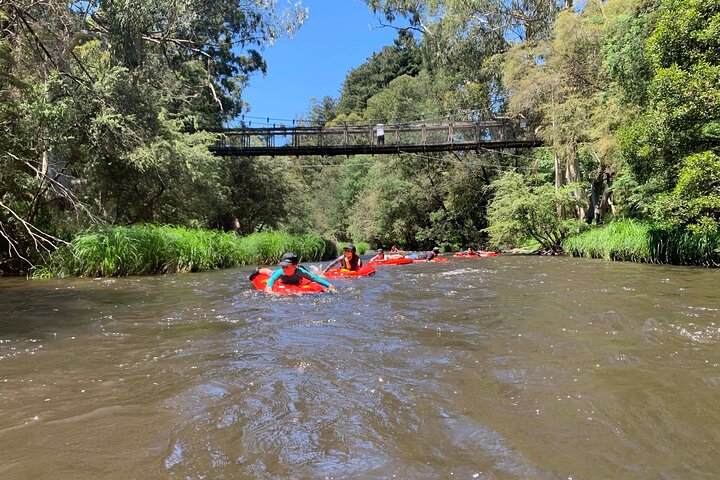
Book a trip where this was filmed — near Yarra Valley
Support Building Wilda
At WeBoating.com, we profoundly acknowledge the unwavering dedication that Building Wilda invests in crafting each and every video or voyage. Their passion for delivering exceptional ocean content shines through every frame, and it's a labor of love that deserves your attention.
We invite you to watch their captivating videos here and actively engage with their content, including their social media links above. Liking, commenting, and sharing their work goes a long way in fueling their creative fire.
We're also inviting you to explore the gear, sponsorships, and boat partnerships highlighted in the "Bathroom floor - finished! Next: PLUMBING - S04E07 | Building Wilda" video description, or directly on YouTube. By engaging with these offerings or purchasing services and items, you directly support Building Wilda, their collaborators, and the brands they're associated with.
To ensure you never miss an offshore update, consider visiting their official YouTube Channel to subscribe, like, and join their community directly.
If you have any feedback, corrections, or additional information about Building Wilda or their videos, please use the comment form below to share your thoughts with us.
Thank you for being a part of our community and supporting the creators we cherish. Your time and support truly matter!
Wilda is a Schionning Wilderness 1340 sailing catamaran. She is being finished in a shed outside Melbourne. Wilda will be powered by the Sun, the Wind and the Sea...
This youtube channel is our way of sharing this project with friends, family and those interested in our adventure of building her and getting her into the water!
The best way to support the production and progress of these videos is by joining our Patreon Crew! You can get more updates and stay closer to us. Check out this link:
https://patreon.com/BuildingWilda?utm_medium=unknown&utm_source=join_link&utm_campaign=creatorshare_creator&utm_content=copyLink
We are newbies to filming and video editing, but learning as we go.
We appreciate your kind and/or constructive comments, suggestions and feedback and we'd be happy to see that you like, subscribe and share our videos! Thank you!
For our youtube videos, we use royalty-free music from Artlist: https://artlist.io
Should you like to keep an eye on the progress of our build, please follow us on Instagram:
https://www.instagram.com/buildingwilda/
And on Facebook:
https://www.facebook.com/BuildingWilda/
Or visit our webpage:
https://www.buildingwilda.com
If you are here, you probably enjoy watching our videos and maybe you feel like you want to be part of our journey.
So, we created this page https://www.buymeacoffee.com/buildingwilda to help you support Building Wilda!
Building Wilda
Join Axel and Iuliana of Building Wilda as they document their high-authority shell-up completion of a Schionning Wilderness 1340x performance catamaran.
Channel Information:
Social Media Links:
Bathroom floor - finished! Next: PLUMBING - S04E07 | Building Wilda Location
- Melbourne, Victoria, Australia (-37.8136,144.9631)
Latest Episodes from Building Wilda
Explore the most recent voyages. Subscribe to the channel to never miss an update!
A boat tour of our Thruhulls & Plumbing begins – S04E08 | Building Wilda
Building Wilda begins plumbing and through-hull installation on their Schionning Wilderness 1340 catamaran in Melbourne, fitting tanks and seacocks.
Bathroom floor – finished! Next: PLUMBING – S04E07 | Building Wilda
Axel and Iuliana complete the final bathroom floor fairing and painting aboard their catamaran Wilda, install through-hulls, modify the galley dishwasher, and map out the vessel freshwater, grey water, and black water plumbing networks.
Real time update! It’s electrifying!
Outside their Melbourne workshop, the Building Wilda crew connects a solar panel to a Tesla battery through a charge controller to test off-grid electrical charging in direct sunlight.
S04E06 – Dishwasher Installation and more Boat Jobs | Building Wilda
Axel and Iuliana tackle an unplanned galley refit on SV Wilda in Melbourne, fitting a benchtop dishwasher, mounting a mast line cover, and installing bamboo sinks.
Installing Handles on our Boat – S04E05 | Building Wilda
Axel and Iuliana of Building Wilda engineer and install 316 stainless steel handrails on their Schionning Wilderness 1340 catamaran in Melbourne, mastering epoxy potting and hydraulic bending.