Why the Salty Dawg Rally Should Depart on Saturday Nov. 7 | Real-Time Offshore Weather Briefing
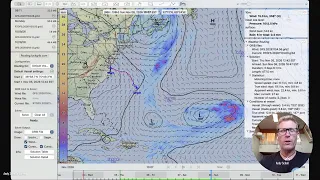
Sitting down for an impromptu real-time offshore weather briefing aboard the motor vessel Kodiak in Georgia, Andy Schell of 59° North Sailing examined the synoptic setup confronting the Salty Dawg Rally fleet in Hampton, Virginia. With cruising crews preparing to depart the mouth of the Chesapeake Bay for the Caribbean, fleet organizers were eyeing a Thursday start ahead of an approaching cold front. Schell, drawing on extensive offshore passage experience from running the Caribbean 1500 cruising rally, delivered a detailed tactical assessment: departing ahead of the front invites grueling headseas and hazardous frontal squalls in the Gulf Stream, whereas holding back until Saturday morning yields a textbook downwind departure.
Before unpacking the offshore routing for the rally fleet, Schell outlined his immediate coastal delivery aboard Kodiak, a Grand Banks 42 trawler. Setting out from Fernandina Beach, Florida, Kodiak planned to motor south parallel to the Florida coast at a steady eight knots, remaining tucked well inside the Gulf Stream to avoid adverse current. Schell established a constraint sequence point off Port St. Lucie to execute a clean, perpendicular crossing of the Gulf Stream toward West End in the Bahamas, timing the arrival before nightfall on Friday before continuing through the Abacos toward Marsh Harbor.
The Synoptic Pattern: Cold Fronts, Gulf Stream Dynamics, and Tropical Lows
Analyzing weather models for the North Atlantic, Schell identified two dominant meteorological features dictating passage strategy between Virginia and the Caribbean. East of the Bahamas, an unsettled double-barrel low-pressure system lingered, disturbing the easterly trade winds. Farther north, a distinct low over the Great Lakes was dragging an active cold front eastward across the Midwest toward the Atlantic seaboard. For yachts departing Hampton, Virginia, negotiating this cold front determines whether the first three days at sea are spent battling steep waves or enjoying fast off-the-wind sailing.
Schell demonstrated how precipitation and sharp wind shifts clearly outline the frontal boundary on weather forecast grids. Ahead of the cold front, south to southwesterly winds funnel warm, humid air up the Atlantic coast. Once the front pushes offshore and crosses the Gulf Stream, the wind veers sharply into the west and northwest while temperatures drop. The core tactical question facing offshore navigators is whether to push offshore into the Gulf Stream ahead of this transition or allow the frontal boundary to sweep past while boats remain securely anchored in the Chesapeake Bay.
The Perils of a Thursday Departure: Beating into the Gulf Stream
A Thursday midday departure forces yachts to motor and beat directly upwind into south-southwesterly breezes. Software routing solutions projected an apparent wind angle of 45 degrees for two full days as boats punch offshore into building headseas. Beating upwind at a hard 45-degree angle right at the beginning of an offshore passage creates grueling living conditions, inducing fatigue and seasickness before crews can establish offshore sea legs.
“The reason I don’t like this departure is because of this upwind in the beginning.”
Andy Schell
Beyond crew discomfort, departing on Thursday positions the fleet directly inside the Gulf Stream when the cold front collides with the warm current. When cold air and abrupt wind shifts hit warm Gulf Stream waters, squall activity intensifies rapidly, generating confused sea states and turbulent wind gusts. Schell emphasized the volatility of these frontal passages:
“Cold fronts can get dramatically gnarly in the Gulf Stream because of that warm water.”
Andy Schell
Recalling a 2013 passage aboard his father’s boat, Sojourner, where they were caught in a violent cold front inside the Gulf Stream returning from the Bahamas, Schell highlighted why voluntarily entering the current ahead of an advancing front introduces unnecessary risk.
“I don’t like beating into it at the beginning of a passage because it that’s when people get seasick.”
Andy Schell
The Saturday Window: Downwind Crossing on Cleared Skies
In contrast to beating south on Thursday, delaying departure until Saturday morning, November 7, capitalizes on post-frontal weather. By Saturday morning, the cold front has reorganized and crossed out to sea, leaving fresh west-northwesterly winds in its wake. Instead of crashing upwind into oncoming waves, yachts exiting the Chesapeake Bay receive brisk winds from behind, crossing the Gulf Stream on a fast downwind reach without opposing current and wind dynamics.
“You want to leave immediately after that front clears through.”
Andy Schell
Once the frontal line clears, barometric pressure rises as high pressure establishes itself behind the front. Strong west-northwest breezes gradually moderate as boats progress east toward Bermuda. This sequence allows crews to sail comfortably downwind on flat hulls, settle into watch routines, dry gear, and adjust to life offshore before encountering lighter air or subsequent coastal systems emerging off Georgia.
Offshore Weather Routing Parameters and Two-Leg Strategy
To ground the routing analysis, Schell modeled the passage using polar performance curves for a Hallberg-Rassy 42. Recognizing real-world offshore cruising realities, he scaled vessel polar targets to 80 percent, avoiding unrealistically optimistic racing assumptions. Apparent wind constraints were capped at a minimum upwind angle of 45 degrees, rather than an aggressive 35 degrees, reflecting practical cruising comfort. Motoring parameters were defined to engage the auxiliary engine at five knots whenever sailing speed dropped below four knots in calm high-pressure centers.
| Routing Metric | Model Parameter | Operational Purpose |
|---|---|---|
| Vessel Polar Profile | Hallberg-Rassy 42 at 80% | Cruising performance target under offshore canvas |
| Minimum Apparent Wind Angle | 45 degrees | Prevents punishing upwind routing against steep seas |
| Motoring Engagement Speed | 5 knots below 4 knots | Maintains offshore passage speed in high-pressure lulls |
| Intermediate Waypoint Target | 64th meridian (longitude 64) | Establishes easting south of Bermuda before reaching trades |
Schell structured the passage to the Virgin Islands into two distinct strategic legs rather than a single direct rhumb-line vector. The first leg carries yachts east-southeast from Hampton across the Gulf Stream toward a designated waypoint along the 64th meridian (longitude 64), situated south of Bermuda. Reaching this eastern longitude in the mid-latitudes before turning south allows navigators to get their easting in early. From longitude 64, boats can turn due south on a fast reach into prevailing easterly trade winds, while retaining Bermuda as an offshore refuge should late-season tropical systems develop.
Practical Seamanship and Passage Timing Lessons
The routing demonstration reinforces fundamental principles of ocean seamanship shared across the 59° North Sailing training curriculum:
- Timing Over Calendar Schedules: Never let a predetermined departure calendar dictate leaving into adverse conditions when a superior weather window opens two days later.
- Frontal Wind Shifts: Watch for telltale weather signatures in the Chesapeake Bay—building southwesterly breezes, rising humidity, and mackerel skies—departing promptly when temperatures fall and winds veer northwest.
- Gulf Stream Safety: Crossing the Gulf Stream with west-northwest breezes behind the beam prevents treacherous wind-against-current wave conditions.
- Two-Leg Ocean Routing: Gaining necessary easting toward longitude 64 before turning south provides optimal reaching angles and keeps Bermuda available as a safe haven.
Frequently Asked Questions
Departing on Thursday forces boats to beat upwind at a 45-degree apparent wind angle into south winds, putting yachts directly in the Gulf Stream when the cold front hits with squalls.
Departing Saturday morning places yachts immediately behind the cold front, providing west-northwesterly winds for a flat, fast downwind Gulf Stream crossing on cleared skies.
Schell recommends aiming for a waypoint along the 64th meridian south of Bermuda to gain necessary easting before turning south into easterly trade winds toward the Virgin Islands.
The software simulation utilized a Hallberg-Rassy 42 set to 80 percent polars, a minimum 45-degree apparent wind angle, and motoring at 5 knots when sailing speed drops below 4 knots.
Support 59° North Sailing
At WeBoating.com, we profoundly acknowledge the unwavering dedication that 59° North Sailing invests in crafting each and every video or voyage. Their passion for delivering exceptional ocean content shines through every frame, and it's a labor of love that deserves your attention.
We invite you to watch their captivating videos here and actively engage with their content, including their social media links above. Liking, commenting, and sharing their work goes a long way in fueling their creative fire.
We're also inviting you to explore the gear, sponsorships, and boat partnerships highlighted in the "Why the Salty Dawg Rally Should Depart on Saturday Nov. 7 | Real-Time Offshore Weather Briefing" video description, or directly on YouTube. By engaging with these offerings or purchasing services and items, you directly support 59° North Sailing, their collaborators, and the brands they're associated with.
To ensure you never miss an offshore update, consider visiting their official YouTube Channel to subscribe, like, and join their community directly.
If you have any feedback, corrections, or additional information about 59° North Sailing or their videos, please use the comment form below to share your thoughts with us.
Thank you for being a part of our community and supporting the creators we cherish. Your time and support truly matter!
Andy sits down for an impromptu look at the weather for a hypothetical offshore passage from the Chesapeake Bay to the Caribbean and feels STRONGLY that the Salty Dawg Rally should wait until Saturday to depart.
59° North Sailing
Global offshore sail training and heavy-weather forensics with SV Falken and SV Isbjørn. Join Andy Schell and Mia Karlsson as they manage a professional multi-boat fleet across the South Pacific and North Sea in 2026.
Channel Information:
Social Media Links:
Why the Salty Dawg Rally Should Depart on Saturday Nov. 7 | Real-Time Offshore Weather Briefing Location
- Hampton, Virginia (Chesapeake Bay Departure) (37.0299,-76.3452)
- Fernandina Beach, Florida (Kodiak Staging) (30.6697,-81.4626)
- West End, Grand Bahama (Gulf Stream Destination) (26.6872,-78.9774)
- Offshore Waypoint I-64 (South of Bermuda) (30,-64)
Latest Episodes from 59° North Sailing
Explore the most recent voyages. Subscribe to the channel to never miss an update!
Why the Salty Dawg Rally Should Depart on Saturday Nov. 7 | Real-Time Offshore Weather Briefing
Andy Schell analyzes offshore weather for the Salty Dawg Rally, comparing a Thursday start against waiting for Saturday's post-frontal window across the Gulf Stream.
Pro Meteorologist Explains the Hurricane Season // On The Wind Podcast #509
Meteorologist Jeremy Davis joins Andy Schell to explain the split hurricane season, detailing how Pacific El Niño wind shear suppresses Atlantic storms and analyzing historical passage telemetry.
Jeremy Davis #4 // # Understanding the Hurricane Season
Atlantic hurricane season has been flipped upside down. While the Atlantic sits at just 10% of its normal cyclone energy, the Eastern and Central Pacific are seeing record-breaking storms. Meteorologist and weather-routing specialist Jeremy Davis explains the atmospheric domino effect behind this un...
Sir Robin Knox-Johnston #2 // Talking Sailing With the OG Himself
59° North visits Gosport to interview Sir Robin Knox-Johnston at Clipper HQ, exploring Suhaili's historic cabin, merchant seamanship, and Golden Globe stories.
Props // Rerun
Andy Schell and the 59° North Sailing team examine cruising sailboat propellers, weighing the hydrodynamic drag and efficiency of fixed, folding, and feathering designs.