John Rousmaniere (Replay) // On Seamanship
Andy Schell sat down with maritime author and historian John Rousmaniere to examine the foundations of ocean seamanship, offshore safety regulations, and heavy-weather survival for 59° North Sailing. The dialogue followed Rousmaniere’s arrival in Newport after completing a passage from the Royal Bermuda Yacht Club aboard Selkie, a 39-foot sloop designed by McCurdy & Rhodes.
Rousmaniere, who logged over 40000 sailing miles and authored 15 books including The Annapolis Book of Seamanship and Fastnet, Force 10, reflected on four decades of offshore racing, safety investigations, and the psychological traps that confront mariners at sea.
Offshore Delivery on Selkie and the Newport Bermuda Race
Following the conclusion of the 2014 Newport Bermuda Race, where Rousmaniere directed the event media operation, he joined the crew of Selkie for the return passage to Rhode Island. Departing Bermuda on Sunday at about 2:30 in the afternoon, the crew experienced an unusually mild run across the Gulf Stream. A high-pressure system positioned to the north provided favorable reaching and running angles, allowing the 39-foot sloop to complete the ocean passage in four and a half days without the crew ever donning foul weather gear.
The pleasant conditions shifted into a tactical push when marine radio forecasts warned of an approaching hurricane forming south of their track. The crew motor-sailed through light patches and accelerated into Newport before the tropical system arrived. Reflecting on passage planning, Rousmaniere highlighted that tranquil deliveries remain an exercise in vigilant seamanship, noting that “you’re always going to be surprised and you’re always going to be shocked at some stage in in every passage” regardless of calm forecasts.
Origins in Yachting Journalism and the 1972 Bermuda Gale
Rousmaniere’s immersion in maritime reporting began along the waters of Long Island Sound, where his father sailed alongside renowned yacht designers Olin Stephens and Rod Stephens. After completing university studies in American history, Rousmaniere accepted an assignment to report on the 1972 Newport Bermuda Race for Sailing World. That running proved to be one of the most violent Bermuda races on record, testing fleets with gale-force winds and severe breaking seas.
His reporting from Bermuda caught the attention of editors at Yachting Magazine, leading to a five-year editorial tenure during an era of significant offshore racing innovation. Covering major distance events exposed Rousmaniere to the physical demands of high-level competition while revealing an institutional reluctance across boating publications to openly analyze safety failures, equipment breakdowns, or crew trauma.
Beating to the Rock in the 1979 Fastnet Storm
In August 1979, Rousmaniere joined the crew of a Swan 47 for the Fastnet Race, heading into an intensifying depression over the Western Approaches. By the second night, sustained gale winds climbed into the 60s, turning the Irish Sea into a treacherous expanse of cresting waves and disorienting darkness. Solid green water broke repeatedly over the Swan 47 mainsail, flooding the cockpit faster than the cockpit scuppers could evacuate.
The crew stood watch in water reaching to their shins and knees, beating toward the Fastnet Rock lighthouse under three reefs in the mainsail and a small staysail. Navigational visibility deteriorated so rapidly that adjacent racing yachts appeared only as fleeting flashes of red and green navigation lights vanishing into the troughs. After rounding Fastnet Rock—where they were astonished to encounter a couple aboard a small gaff-rigged cruising sloop out from Wales navigating the same gale—the Swan bore away toward the Isles of Scilly. Once the sustained gale subsided into the 30s and 40s, the crew hoisted their spinnaker, with Rousmaniere recalling: “We put the chute up when it was blowing a mere 40. You may know this when you’re out there and it’s in the 50s or 60s it gets down into the 30s you feel like you’re in moderate air. It’s amazing how quickly you adapt.”
Documenting Disaster and the Flaws of the IOR Rule
Upon clearing the locks into Plymouth harbor, the scale of the tragedy became starkly visible. Crowds of anxious families lined the granite wharves waiting for news of missing crews. British publisher Peter Johnson met Rousmaniere immediately after docking and proposed an immediate documentary account of the disaster. Rousmaniere spent the ensuing autumn traveling across Cornwall and the Isles of Scilly, interviewing helicopter rescue crews at the air base in Cornwall, lifeboatmen, and grieving survivors—including two 16-year-old boys who had endured catastrophic losses at sea.
Published by February 1980, Fastnet, Force 10 became a catalyst for structural changes in yacht design and safety protocol. Out of 300 participating yachts, over 75 suffered severe knockdowns or full inversions, and 15 competitors lost their lives. Post-race scientific analysis conducted by naval architect Olin Stephens and researcher Dick McCarty dissected video footage of a 35-foot keelboat capsizing in breaking waves off Australia. The data demonstrated that extreme International Offshore Rule (IOR) design traits—specifically exaggerated beam and distorted hull shapes optimized for rating advantages—created unstable hulls that behaved like wide seeds in heavy breaking seas.
Independent Investigations: Chesapeake Bay and the Chicago Mackinac Race
Rousmaniere’s expertise in marine forensic reporting led US Sailing president Gary Jobson to appoint him to lead independent review panels investigating high-profile fatal accidents. In 2011, Rousmaniere investigated the capsize of a Club 420 dinghy on Chesapeake Bay, where an accidental gybe pinned a 13-year-old crew member beneath the inverted hull by her trapeze harness.
Later that same summer, Rousmaniere led the inquiry into the capsizing of the 35-foot boat WingNuts during the Chicago Yacht Club Race to Mackinac. Struck by an intense thunderstorm downburst, the winged skiff turtled rapidly, resulting in two fatalities. The inquiry exposed severe design vulnerabilities, noting that WingNuts possessed a limit of positive stability of only roughly 80 degrees—comparable to an unballasted racing dinghy rather than an offshore keelboat. By comparison, the Newport Bermuda Race mandates a strict 115 degrees limit of positive stability for all offshore entries across its 700 miles course.
Plain Language Rules, Human Factors, and Practical Seamanship
Efforts to safeguard offshore crews led safety expert Chuck Hawley to draft simplified, plain-language equipment rules for the Newport Bermuda Race. Rather than forcing owners to navigate dense ISO standards and European regulatory text, the plain-language framework clearly specified mandatory gear, verified by approximately 50 regional safety inspectors operating across the East Coast.
Yet Rousmaniere cautioned that administrative rules and modern electronics cannot compensate for fundamental human vulnerabilities. Through 35 years of conducting Safety at Sea seminars since 1980, he identified the progression of seasickness, hypothermia, and physical exhaustion as the true hazards offshore: “You know, we get fatigued, we get exhausted, then we get over optimistic. There’s a cycle we go through before we collapse because we’re fighting, our adrenaline is pumping high, we tend to make dumb mistakes because of that.”
For Rousmaniere, the core discipline of seamanship lies in vigilance, proper tethering, and crew care: “if you’re in the boat, you’re going to be protected. If you’re not in the boat, you’re going to die.” In defining his philosophy of offshore voyaging, he concluded: “It’s like breathing on boats. And it’s an attitude.”
| Vessel or Fleet | Length or Rating | Course or Event | Documented Metric | | Selkie | 39 feet | Bermuda to Newport | 700 miles passage | | Swan 47 | 47 feet | 1979 Fastnet Race | 60 knots steady winds | | WingNuts | 35 feet | Chicago Mackinac Race | 80 degrees stability limit | | Offshore Race Fleet | Rating regulations | Newport Bermuda Race | 115 degrees stability limit |
Frequently Asked Questions
John Rousmaniere sailed aboard Selkie, a 39-foot sloop designed by McCurdy & Rhodes, completing the return delivery in four and a half days after departing the Royal Bermuda Yacht Club at 2:30 in the afternoon.
Aboard the Swan 47, Rousmaniere endured sustained gale-force winds climbing into the 60s, knee-deep cockpit flooding, and solid water washing over the mainsail while beating toward Fastnet Rock under three reefs and a staysail.
The Newport Bermuda Race mandates a minimum 115 degrees limit of positive stability, ensuring offshore yachts can recover from severe knockdowns while crossing the Gulf Stream.
WingNuts, a 35-foot skiff design fitted with hiking wings, had a low stability limit of approximately 80 degrees and turtled quickly when struck by an intense squall during the race.
Chuck Hawley created plain-language rules to remove complex ISO standards and confusing European citations, providing clear, direct equipment requirements that sailors and inspectors could easily follow.
Rousmaniere defined seamanship as a continuous attitude and discipline akin to breathing on a boat, emphasizing crew well-being, fatigue management, and completing drama-free passages.
Book a trip where this was filmed — near Bermuda
Support 59° North Sailing
At WeBoating.com, we profoundly acknowledge the unwavering dedication that 59° North Sailing invests in crafting each and every video or voyage. Their passion for delivering exceptional ocean content shines through every frame, and it's a labor of love that deserves your attention.
We invite you to watch their captivating videos here and actively engage with their content, including their social media links above. Liking, commenting, and sharing their work goes a long way in fueling their creative fire.
We're also inviting you to explore the gear, sponsorships, and boat partnerships highlighted in the "John Rousmaniere (Replay) // On Seamanship" video description, or directly on YouTube. By engaging with these offerings or purchasing services and items, you directly support 59° North Sailing, their collaborators, and the brands they're associated with.
To ensure you never miss an offshore update, consider visiting their official YouTube Channel to subscribe, like, and join their community directly.
If you have any feedback, corrections, or additional information about 59° North Sailing or their videos, please use the comment form below to share your thoughts with us.
Thank you for being a part of our community and supporting the creators we cherish. Your time and support truly matter!
The late John Rousmaniere is a legendary sailor/writer who, prior to his passing, had been in the thick of the sport for over 40 years. He'd logged over 40,000 sailing miles, mostly offshore, raced at the highest levels of the sport, and written 15 books and on sailing. Andy first met John at the Royal Bermuda Yacht Club following the Newport-Bermuda Race back in 2014, where he was leading the race's media team, after which he jumped aboard the McCurdy & Rhodes designed SELKIE and sailed her back to Newport. John and Andy chatted about John's career as a writer, what it was like to sail in the '72 Bermuda Race and the infamous '79 Fastnet Race, his motivations for writing about sailing (& specifically safety at sea), and what he fears offshore.
--
Support the podcast & become a member of The Quarterdeck, where Andy, August & Mia dive deep on the art of seam'nship. Nerd out with us on our members-only forum and talk boats, gear, safety-at-sea, meet like-minded sailors, find crew, and more. Check it out on quarterdeck.59-north.com. See you there!
--
This season of ON THE WIND is supported by our friends at Weems & Plath and BVI Yacht Sales.
59° North Sailing
Global offshore sail training and heavy-weather forensics with SV Falken and SV Isbjørn. Join Andy Schell and Mia Karlsson as they manage a professional multi-boat fleet across the South Pacific and North Sea in 2026.
Channel Information:
Social Media Links:
John Rousmaniere (Replay) // On Seamanship Location
- Royal Bermuda Yacht Club, Hamilton, Bermuda (32.2925,-64.7875)
- Newport Harbor, Newport, Rhode Island, USA (41.4885,-71.3255)
- Fastnet Rock, County Cork, Ireland (51.3898,-9.603)
- Plymouth Sound, Plymouth, Devon, England, UK (50.3656,-4.1423)
- Annapolis Harbor, Annapolis, Maryland, USA (38.9784,-76.4855)
Latest Episodes from 59° North Sailing
Explore the most recent voyages. Subscribe to the channel to never miss an update!
John Rousmaniere (Replay) // On Seamanship
Andy Schell interviews maritime author and historian John Rousmaniere on offshore seamanship, survival lessons from the 1979 Fastnet storm, life raft design, fatigue management, and his delivery aboard Selkie.
Boat shopping! 1976 Hallberg Rassy Rasmus 35 review
August from 59° North Sailing reviews a 1976 Hallberg-Rassy Rasmus 35 in Maryland, evaluating hull 450, deck winches, shallow full keel, and interior accommodations.
Zach Dallaire // Sailing Links
Zach Dallaire joins 59° North Sailing's Andy Schell to detail his Sailing Links project, cruising remote coastlines across Atlantic Canada to play world-class golf courses.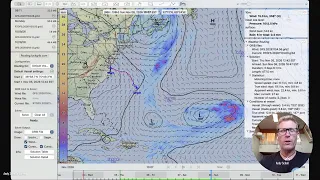
Why the Salty Dawg Rally Should Depart on Saturday Nov. 7 | Real-Time Offshore Weather Briefing
Andy Schell analyzes offshore weather for the Salty Dawg Rally, comparing a Thursday start against waiting for Saturday's post-frontal window across the Gulf Stream.
Pro Meteorologist Explains the Hurricane Season // On The Wind Podcast #509
Meteorologist Jeremy Davis joins Andy Schell to explain the split hurricane season, detailing how Pacific El Niño wind shear suppresses Atlantic storms and analyzing historical passage telemetry.