Storage Compartment Latches – A New Approach.
Inside his Västervik workshop, solo sailor Sven Yrvind tests a newly developed latch mechanism designed to secure interior storage compartments on his test boat. Presenting the prototype hardware assembly directly at the bench, Yrvind explains that “this is the best I came up with” after experimenting with different configurations for cabin gear retention.
Dual Counter-Rotating Action and Friction Stops
The latch arrangement relies on two separate wooden arms that rotate in opposite directions to establish a firm lock. Both components swing into a horizontal orientation across the compartment opening. To guard against accidental release caused by cabin motion or inadvertent contact while moving through the compact interior, the geometry forces the pieces to interlock against physical stops.
As Yrvind demonstrates, closing the first arm positions it directly against the path of the companion piece. If contact occurs unexpectedly, “if by accident you have to turn the opposite way,” built-in mechanical friction prevents the assembly from shaking loose. On the reverse side, integrated lips rest against the bottom panel to stop it from pulling outward under load, while lateral edges stabilize the sides of the compartment.
Layout Lessons for the Oceanic Cruiser
During final fitting, Yrvind identified a small structural imperfection requiring glue before discovering a layout oversight on the cut stock. Having fabricated two duplicate profiles rather than a mirrored pair, he remarked: “I made them the same instead of the mirror.” When attempting to install the non-mirrored piece upside down, the profile failed to seat flush against the cabin corners.
Self-critiquing the woodworking accuracy, Yrvind quipped that “someone was not very careful you know on cut this thing out” while examining the irregular corner clearance. Despite the inverted fit causing a messy alignment in the prototype corners, testing mockups on the plywood test hull serves an essential role in refining components. Prototyping these details early remains “a good thing to know through the oceanic version” before laying down the final ocean cruiser.
Frequently Asked Questions
The mechanism uses two wooden arms that rotate in opposite directions into a horizontal alignment, where mechanical friction and physical stops prevent them from opening accidentally.
Sven Yrvind cut two identical parts instead of a mirrored pair, meaning one arm had to be turned upside down, preventing it from fitting cleanly into the corners.
Building and testing prototypes on the test boat allows Sven to catch design and shaping flaws before manufacturing the final hardware for his oceanic cruiser.
Support Sven Yrvind
At WeBoating.com, we profoundly acknowledge the unwavering dedication that Sven Yrvind invests in crafting each and every video or voyage. Their passion for delivering exceptional ocean content shines through every frame, and it's a labor of love that deserves your attention.
We invite you to watch their captivating videos here and actively engage with their content, including their social media links above. Liking, commenting, and sharing their work goes a long way in fueling their creative fire.
We're also inviting you to explore the gear, sponsorships, and boat partnerships highlighted in the "Storage Compartment Latches – A New Approach." video description, or directly on YouTube. By engaging with these offerings or purchasing services and items, you directly support Sven Yrvind, their collaborators, and the brands they're associated with.
To ensure you never miss an offshore update, consider visiting their official YouTube Channel to subscribe, like, and join their community directly.
If you have any feedback, corrections, or additional information about Sven Yrvind or their videos, please use the comment form below to share your thoughts with us.
Thank you for being a part of our community and supporting the creators we cherish. Your time and support truly matter!
This Youtube channel is about me Sven Yrvind. I am 87 and a half years old dyslectic solo sailor.
I am building a plywood test boat for a Divinycell and NM-epoxy high-latitude cruiser.
She will be about 4.5 meter or 14 feet and 9 inches long, the beam 1.36 meter, 4 feet 6 inches. She is a two masted lugger with a total sail area of 6 square meter. She will have no rudder but will be steered by adjustable fins. I am planning a cruise in the Southern Ocean to Dunedin NZ.
Subject to change.
Often the 22th every month I do a resume of the project.
I have an illustrated book with good reviews on Amazon. https://www.amazon.se/s?k=yrvind&crid=1549D6PR18BUJ&sprefix=%2Caps%2C112&ref=nb_sb_ss_recent_1_0_recent
If you’re interested in contributing to my experiments links are below.
https://www.paypal.com/donate/?hosted_button_id=53X8NVEA22MBL
Swish 0706200550
Also please subscribe - even if you are not interested in sailing.
For more see Yrvind.com

Sven Yrvind
At 86, Sven Yrvind is still pushing the limits of small-boat design. Discover the philosophy and technical grit behind his 'Exlex' series.
Channel Information:
Social Media Links:
Storage Compartment Latches – A New Approach. Location
- Västervik, Sweden (57.7577,16.6375)
Latest Episodes from Sven Yrvind
Explore the most recent voyages. Subscribe to the channel to never miss an update!
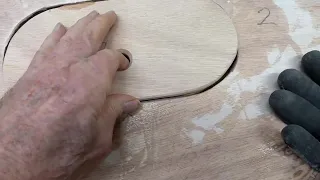
Alternativ ways of securing the latches.
In his Västervik workshop, Sven Yrvind troubleshoots hatch alignment and tests alternative mechanisms for securing boat latches, experimenting with 1 mm sheet metal springs and rubber shock cords.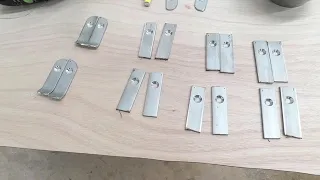
Fillits in the living area.
Sven Yrvind lays epoxy fillets along the interior living area of his test boat in Västervik, crafting custom rubber washers to secure cabin fittings.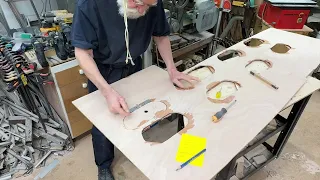
Storage Compartment Latches – A New Approach.
In his Västervik workshop, Sven Yrvind tests dual-action storage compartment latches for his test boat, evaluating friction stops and corner clearances.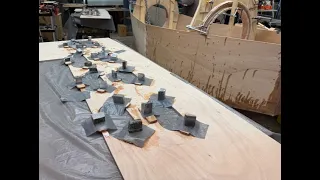
The First Major Mistake.
In his Västervik workshop, Sven Yrvind fabricates extra gravity clamps for a frame glue-up and narrowly corrects a mirror-image assembly error before the adhesive cures.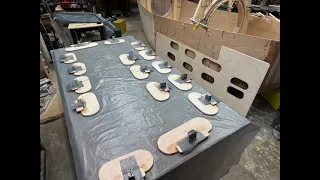
Using Gravity Clamps for Gluing Locker Covers.
Swedish solo sailor Sven Yrvind installs locker push doors and lids, employing gravity clamps to deliver steady downward pressure as epoxy cures in his workshop.