Alternativ ways of securing the latches.
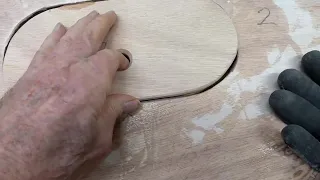
Working inside his Västervik workshop, Sven Yrvind encountered an alignment error while assembling the hatch framing on his plywood test boat. After completing the first and fourth sides identically rather than mirrored, he had to rotate one piece around. Because multiple sections were already glued, turning the part prevented the joints from fitting together properly.
To correct the asymmetry, Yrvind ground down the mismatched wooden edges. Acknowledging the mistake, he noted, “Someone has not made this symmetrical.” He treated the adjustment as a normal part of prototyping, explaining that “Still, this is experimental.” By catching fabrication errors on the plywood test boat, he aimed to avoid repeating them on his future ocean-going cruiser.
Fabricating Spring-Loaded Sheet Metal Latches
After addressing the frame edges, Yrvind turned to the boat latches. Having finished all except two, he remained dissatisfied with the existing setup and sought a better alternative.
He selected a piece of 1 mm sheet metal to build a spring latch. Because drilling thin metal cleanly is difficult, he clamped the strip between two pieces of plywood before drilling two holes. The bent metal acted like a spring, and he tapped dowel nuts into place to secure the assembly. Evaluating the mechanism, Yrvind found that “It’s a bit quicker to do. And I think it’s safer too.” He decided to build one more unit to test before drilling permanent mounting holes.
Testing Shock Cord Retention and Evaluating Options
Yrvind also tested elastic retention by drilling and countersinking two holes to receive a rubber band. Threading a 3 mm rubber shock cord through the openings, he tested how the elastic tension secured the latch arm.
Observing the setup, Yrvind affirmed that “The principle is good.” Yet the 3 mm cord did not operate smoothly, prompting him to consider whether a 2 mm cord would fit better. Rather than rushing into a final latch choice, Yrvind concluded, “I have to live with it for a little while. And then we will decide.” After evaluating both options, he chose to pause and consider further refinements before completing the installation.
Frequently Asked Questions
Yrvind built the hatch sides identical instead of mirrored. Rotating one pre-glued side prevented the joints from seating flush, requiring him to grind the edges down.
To prevent tearing or deforming the thin sheet metal, Yrvind clamped the metal strip between two pieces of plywood before drilling two holes.
Yrvind tested 3 mm rubber shock cord through countersunk holes, noting that a 2 mm cord might provide better flexibility.
After evaluating both the sheet metal spring and the rubber cord, Yrvind chose to live with the ideas for a while to consider further improvements.
Support Sven Yrvind
At WeBoating.com, we profoundly acknowledge the unwavering dedication that Sven Yrvind invests in crafting each and every video or voyage. Their passion for delivering exceptional ocean content shines through every frame, and it's a labor of love that deserves your attention.
We invite you to watch their captivating videos here and actively engage with their content, including their social media links above. Liking, commenting, and sharing their work goes a long way in fueling their creative fire.
We're also inviting you to explore the gear, sponsorships, and boat partnerships highlighted in the "Alternativ ways of securing the latches." video description, or directly on YouTube. By engaging with these offerings or purchasing services and items, you directly support Sven Yrvind, their collaborators, and the brands they're associated with.
To ensure you never miss an offshore update, consider visiting their official YouTube Channel to subscribe, like, and join their community directly.
If you have any feedback, corrections, or additional information about Sven Yrvind or their videos, please use the comment form below to share your thoughts with us.
Thank you for being a part of our community and supporting the creators we cherish. Your time and support truly matter!
This Youtube channel is about me Sven Yrvind. I am 87 and a half years old dyslectic solo sailor.
I am building a plywood test boat for a Divinycell and NM-epoxy high-latitude cruiser.
She will be about 4.4 meter or 14 feet and 6 inches long, the beam 1.36 meter, 4 feet 6 inches. She is a two masted lugger with a total sail area of 6 square meter. She will have no rudder but will be steered by adjustable fins. I am planning a cruise in the Southern Ocean to Dunedin NZ.
Subject to change.
Often the 22th every month I do a resume of the project.
I have an illustrated book with good reviews on Amazon. https://www.amazon.se/s?k=yrvind&crid=1549D6PR18BUJ&sprefix=%2Caps%2C112&ref=nb_sb_ss_recent_1_0_recent
If you’re interested in contributing to my experiments links are below.
https://www.paypal.com/donate/?hosted_button_id=53X8NVEA22MBL
Swish 0706200550
Also please subscribe - even if you are not interested in sailing.
For more see Yrvind.com

Sven Yrvind
At 86, Sven Yrvind is still pushing the limits of small-boat design. Discover the philosophy and technical grit behind his 'Exlex' series.
Channel Information:
Social Media Links:
Alternativ ways of securing the latches. Location
- Yrvind Workshop, Västervik (57.758,16.637)
Latest Episodes from Sven Yrvind
Explore the most recent voyages. Subscribe to the channel to never miss an update!
Alternativ ways of securing the latches.
In his Västervik workshop, Sven Yrvind troubleshoots hatch alignment and tests alternative mechanisms for securing boat latches, experimenting with 1 mm sheet metal springs and rubber shock cords.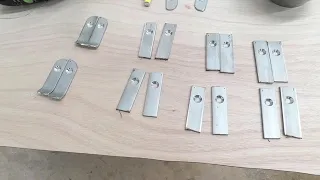
Fillits in the living area.
Sven Yrvind lays epoxy fillets along the interior living area of his test boat in Västervik, crafting custom rubber washers to secure cabin fittings.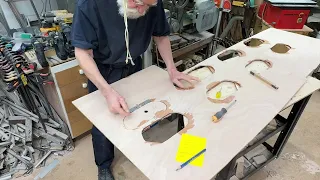
Storage Compartment Latches – A New Approach.
In his Västervik workshop, Sven Yrvind tests dual-action storage compartment latches for his test boat, evaluating friction stops and corner clearances.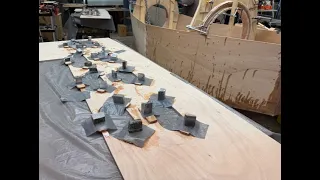
The First Major Mistake.
In his Västervik workshop, Sven Yrvind fabricates extra gravity clamps for a frame glue-up and narrowly corrects a mirror-image assembly error before the adhesive cures.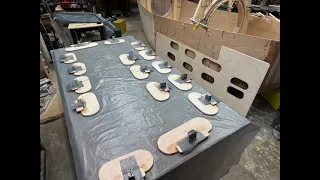
Using Gravity Clamps for Gluing Locker Covers.
Swedish solo sailor Sven Yrvind installs locker push doors and lids, employing gravity clamps to deliver steady downward pressure as epoxy cures in his workshop.