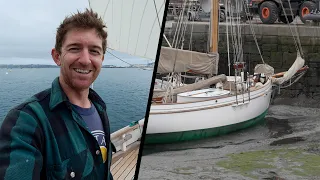
After 7 years of rebuilding, TALLY HO SAILS AGAIN!
Inside Port Townsend Sails in Washington, an automated CNC gantry table glides steadily over cream fabric held tight by vacuum suction. Sailmaker Megan Hudson monitors the cutting sequence as precision blades slice panels for Tally Ho’s working headsails. The machine replaces days of chalking and cutting by hand, sparing knees and floor space while ensuring repeatable accuracy across each seam.
Down the road in Port Hadlock, veteran sailmaker Sean Rankins of Northwest Sails and Canvas oversees assembly inside a loft located above the workshops of the Northwest School of Wooden Boatbuilding. Sean has worked in sailmaking since 1976, operating from this location for 23 years. Alongside his wife Inger, who produces custom canvas covers for deck gear and sails, Sean shapes the heavy headsails using Contender Fibercon Pro sailcloth in light cream, specified with traditional narrow panels and hand-worked hardware.
Precision Sailmaking Across Two Lofts
Constructing the sail plan for the Albert Strange gaff cutter required shared measurements between lofts in the United Kingdom and Washington. While the mainsail and topsail were built overseas, the headsails were crafted locally in Port Townsend and Port Hadlock to match the standing rig. Megan Hudson explained the shift from traditional floor lofting to the automated cutting table: “It took up a lot of space and a lot of time and then unfortunately a lot of use of one’s knees so it’s easier on the body and it’s definitely more time efficient.”
Once the panels were cut and nested, work transferred to the Port Hadlock loft for layout, corner reinforcements, reef patches, edge ropes, and finishing. Sean Rankins selected traditional cloth styling to complement the 1910 vessel: “This cloth is beautiful to work with it’s very traditional in its feel and its look we chose to go with narrow panels in the design.” Every cringle and ring is hand-sewn, giving the heavy working canvas strength for offshore service while preserving historic aesthetic detail.
Chart Table Instrumentation and Departure Preparations
Down below, Tally Ho’s navigation station combines traditional paper charts, pilot books, and tide tables with modern electronic marine electronics. A dedicated personal computer mounted beneath the chart table runs TimeZero navigation software displayed across a large monitor. The system layers digital charts alongside active radar and depth sounder returns, providing a comprehensive overview of surrounding waters without the tunnel vision common on compact cockpit chartplotters.
On deck, Nick trims oars for the dinghy as the crew completes gear checks and running rigging runs. Leo Sampson Goolden gathers the team for a pre-departure briefing, emphasizing core deck protocol: “Number one rule as always stay on the boat.” Life jackets are stowed in the forepeak for anyone requesting one, and everyone on deck remains mindful of the massive wooden boom sweeping across the cockpit. Documented by Sampson Boat Co, this outing marks the cutter’s maiden voyage under sail after 7 years of painstaking reconstruction.
Hoisting Canvas on Port Townsend Bay
Motoring clear of the marina into Port Townsend Bay, Leo steers into the breeze to begin hoisting canvas. The heavy gaff mainsail rises slowly along the mast as crew members lash wooden mast hoops to the luff. During the hoist, a cleat for the gaff span catches momentarily on a topping lift, but slackening the line frees the spar without damage. Once the throat and peak halyards are sweated up and secured, the gaff sets firmly aloft.
Next comes the staysail. Crew members haul the halyard, adjust tack pin height, and tension the sheets. Finally, the number 1 jib is run forward along the bowsprit, hoisted, and sheeted home. As the engine is throttled down, the canvas draws tight, pulling the hull onto a steady heel. The sensation of engine vibration disappears, replaced by the rush of water along the wooden hull planks.
Bay Maneuvers and a Mentorship Encounter
Bearing away across the bay, the cutter gathers speed with balanced motion. A sudden gust whips a crew member’s hat from deck, prompting an immediate call of hat overboard. Rather than initiating an emergency recovery drill under power, Leo bears away onto a broad reach, gybes the cutter smoothly, and maneuvers along the leeward side of the floating hat, retrieving it cleanly from the water with his foot.
Underway, Sean Rankins answers a phone call on deck, sparking laughter among the crew who joke about Hollywood producers seeking updates. Off the beam, another wooden vessel appears under sail. Leo recognizes it as the boat rebuilt in the United Kingdom by his early boatbuilding mentor Ashley, who famously sailed the craft across the Atlantic Ocean without an engine. Delighted by the coincidence, the crew gybes Tally Ho around to sail in company, watching two generations of traditional craftsmanship glide across Washington waters.
Maiden Sea Trial Handling and Dockside Toast
Reflecting on the cutter’s balance and tracking under sail, Leo expressed relief at how cleanly the rig handled: “She feels fantastic sing really well everything went up pretty flawlessly a couple of minor hitches but um nothing major at all.” To keep handling straightforward and avoid overstressing new spars, the cutter remained under-canvased throughout the run, omitting the topsail and additional flying headsails.
Despite carrying only lower working sails, the cutter moved effortlessly through the water. The massive wooden rudder, which often demands heavy physical effort when steering under power, balanced gracefully under canvas: “The helm that’s generally pretty heavy helm because of the size of the boat and the size of the rudder it felt a lot easier under sail than it did under power.”
Returning to the harbor, the crew lines the topsides with fenders and secures forward spring lines to the float. On the dock, Daniel uncorks a bottle of champagne to mark the milestone. Sharing a toast, the crew savors the completion of the trial: “Dude all expectations were exceeded today like to say thank you to Daniel for the champagne.” With the maiden sail complete, attention turns to resolving lingering propeller and gearbox alignment questions before longer voyages begin.
Frequently Asked Questions
Leo Sampson Goolden and his crew hoisted the gaff mainsail, the staysail, and the number 1 jib. The topsail and light-air headsails were left unbent to keep the cutter intentionally under-canvased for initial handling checks.
Sean Rankins and Inger Rankins of Northwest Sails and Canvas built the headsails at their loft in Port Hadlock, Washington, using panels precision-cut by Megan Hudson at Port Townsend Sails.
The chart table is outfitted with traditional paper charts, tide tables, and pilot books alongside a computer running TimeZero marine navigation software that displays electronic charts, radar, and depth sounder data.
The gaff cutter tracked smoothly and balanced easily across Port Townsend Bay. Leo Sampson Goolden noted that steering the helm felt noticeably lighter and easier under sail than under engine power.
Book a trip where this was filmed — near San Juan Islands

Support Sampson Boat Co
At WeBoating.com, we profoundly acknowledge the unwavering dedication that Sampson Boat Co invests in crafting each and every video or voyage. Their passion for delivering exceptional ocean content shines through every frame, and it's a labor of love that deserves your attention.
We invite you to watch their captivating videos here and actively engage with their content, including their social media links above. Liking, commenting, and sharing their work goes a long way in fueling their creative fire.
We're also inviting you to explore the gear, sponsorships, and boat partnerships highlighted in the "After 7 years of rebuilding, TALLY HO SAILS AGAIN!" video description, or directly on YouTube. By engaging with these offerings or purchasing services and items, you directly support Sampson Boat Co, their collaborators, and the brands they're associated with.
To ensure you never miss an offshore update, consider visiting their official YouTube Channel to subscribe, like, and join their community directly.
If you have any feedback, corrections, or additional information about Sampson Boat Co or their videos, please use the comment form below to share your thoughts with us.
Thank you for being a part of our community and supporting the creators we cherish. Your time and support truly matter!
Support TALLY HO; http://www.sampsonboat.co.uk/support
Become a Patron; http://www.patreon.com/sampsonboatco
TALLY HO WISHLIST; http://a.co/76y5IZP
----
EPISODE 191
After 7 years of hard work, we hoist Tally Ho's new sails!
——
To become a Patron - https://www.patreon.com/sampsonboatco
To donate or support - http://sampsonboat.co.uk/support
My Wishlist http://a.co/76y5IZP
For sneaky previews of what’s going on in between episodes, follow my
FACEBOOK http://www.facebook.com/sampsonboatco and
INSTAGRAM http://www.instagram.com/sampsonboatco.
MANY THANKS!
---
Music;
Matt's Blues - Kevin MacLeod
Reuben’s Train - Nat Keefe with The Bow Ties
Yard Sale - Silent Partner
Arkansas Traveler - Nat Keefe & Hot Buttered Rum
A Stone’s Throw - Wayward Jane
(rebuilding Tally Ho ep191)
Sampson Boat Co
Leo Sampson Goolden's seven-year restoration of Tally Ho has transitioned from a Port Townsend shed to a Caribbean voyage, redefining maritime craftsmanship.
Channel Information:
Social Media Links:
Latest Episodes from Sampson Boat Co
Explore the most recent voyages. Subscribe to the channel to never miss an update!
Taking the rig down before the winter storms arrive!
Leo Goolden unrigs Tally Ho in Cornwall ahead of winter storms, removing the bowsprit for modification, striking running rigging, and unbending the mainsail for transport to Ratsey & Lapthorn in Cowes.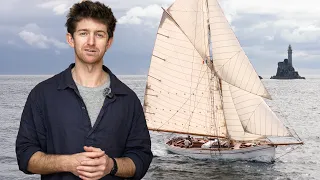
Winter rig upgrades… could Tally Ho actually win The Fastnet 100 years later?!
Leo Goolden prepares the 1910 gaff cutter Tally Ho for winter in the UK, detailing spar maintenance, bowsprit modifications, and safety upgrades for the Fastnet Race.
Getting my boat stuck in the mud
Leo Sampson Goolden maneuvers Tally Ho out of a Penryn mud berth and navigates shallow waters into Ashley Butler's Cornish boatyard, freeing the grounded cutter using a work boat, capstan, and shovel.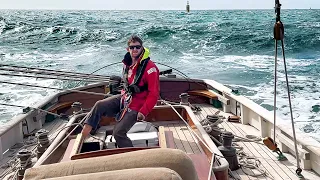
Sailing through the “Needles”
Leo Sampson Goolden navigates Tally Ho through the Needles into the Solent, reuniting with 90-year-old Roy in Warsash, touring Elephant Boat Yard, and completing a 26-hour passage back to Falmouth.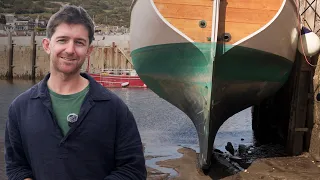
Sailing the British South coast!
Support TALLY HO; Become a Patron; Wishlist; Music; Dan Lebowitz, Tone Seeker - Back in the Saddle Brooks Williams - Johnny's Farewell FACEBOOK and INSTAGRAM