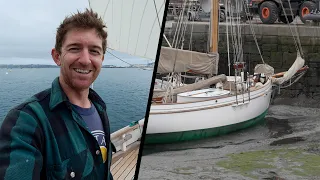
Taking the rig down before the winter storms arrive!
Moored in Cornwall as damp winter weather sets in, Leo Goolden of Sampson Boat Co began stripping down the rig on Tally Ho ahead of severe seasonal gales. The initial task focuses on unshipping the heavy wooden bowsprit and transferring it into a covered shoreside shed to dry out. In addition to protecting the spar from prolonged winter dampness, removing the timber allows Leo to prepare for planned structural modifications to lengthen the bowsprit before the next sailing season.
To extract the spar, the bronze cranse iron at the outer snout must come off so the bare wood can slide aft through the gammon iron—the bronze ring mounted to the vessel’s stemhead—and between the Samson posts. Leo’s initial attempt to hammer the cranse iron loose while fully extended failed, prompting a shift in tactics to heave the bowsprit inboard first. Leo explained the purpose of the hardware at the snout: “The cranse iron is the metal ring on the very front of the bowsprit which the various stays and shrouds attached to.”
Shipping the Bowsprit Inboard and Releasing the Fid
To heave the spar inboard without relying on bare muscle, Leo stripped the anchor chain from the deck windlass capstan and rigged a dedicated heel rope led around the drum. Applying tension with the capstan pulled the bowsprit forward just enough to relieve binding pressure on the transverse wooden fid, allowing the locking pin to be pulled free. With the fid removed, the spar could move aft toward the deck, but dismantling the bronze roller assembly mounted between the Samson posts revealed unexpected mechanical resistance.
Clearing Deck Geometry and the Forward Companionway
Removing the bronze bar and roller above the bowsprit required unfastening large bronze set screws. One screw was thoroughly seized in place. After snapping a driver bit and suffering a finger injury attempting to free it cold, Leo applied heat with a blowtorch to break the corrosion and back the fastener out. Leo noted that this teardown was not merely routine maintenance, but an investigation into long-standing deck clearance conflicts: “slight error with the geometry when this was all constructed.”
During ordinary sailing operations, retracting the bowsprit inboard proved awkward because the spar collided with the forward companionway hatch. Housing the spar previously required unbolting the small forward companionway skylight and canting the timber at an exact angle to squeeze it past deck structures. Removing the roller allowed Leo to gauge how the spar traveled and determine future modifications—such as raising the roller, lowering the gammon iron ring, or trimming the bowsprit plank and caprail—so a longer replacement spar can be handled smoothly in tight harbors.
Unbending and Drying the Gaff Mainsail
With the bowsprit brought inboard, crew attention turned to the heavy canvas aloft. Working along the boom and gaff, the crew unbent the mainsail, marking the first time the heavy sail had been stripped from the spars since the boat was launched over two and a half years ago. During offshore passage making across the Atlantic, the mainsail had logged thousands of miles and endured a tear that required mid-ocean stitching, leaving the cloth in need of specialized service. Leo observed, “this is the first time the main sail has come off the boat since we first put it on.”
Taking advantage of an unexpected break in the Cornwall weather, the crew hoisted the mainsail for a couple of hours in dry sunlight before the next squall rolled in. Leo noted, “We had a rare morning with uh some sun and very little rain, and I was able to get it up for a couple of hours and get it nice and dry.” Once thoroughly dried, the canvas was folded and bagged tightly for shipment to the Ratsey & Lapthorn sail loft in Cowes on the Isle of Wight, where professional sailmakers will execute repairs and tune the seams before spring.
Rigging Blocks and Varnish System Selection
Inspection of the rigging tackle revealed heavy deterioration across the varnished wooden blocks. The blocks were coated almost three years ago prior to the vessel’s initial launch and had gone without maintenance recoating throughout tropical voyages across the Caribbean and Mexico. Intense solar radiation and constant saltwater saturation on the headrig caused the finish to flake and weather away. Leo analyzed the traditional linseed oil formulation used previously: “Tonkinois, that we used. It’s linseed oil-based. It’s very traditional. It’s very easy to apply.”
While traditional linseed oil finishes are supple and straightforward to refresh annually, their resistance to tropical ultraviolet exposure and mechanical chafing proved limited. In contrast, Leo noted that “the product that was used on all the spars was Allwood by Owatrol,” which demonstrated exceptional durability against heavy wear throughout ocean crossings. Leo weighed transitioning the blocks and exposed deck furniture to Owatrol Allwood, acknowledging trade-offs: synthetic systems are more expensive, require tightly controlled temperature and humidity during application, and can develop microcracks that trap moisture if timber shifts.
Leo stripped the blocks down according to their construction. Metal-strapped blocks were quickly disassembled by knocking out the coins, retaining pins, and sheaves, leaving bare wooden shells ready for sanding. In contrast, traditional rope-stropped blocks featured tightly seized lashings that had to be cut away entirely. Leo plans to construct specialized traditional rigging tools to refit new permanent seizings once refinishing is complete.
Striking the Running Rig and Securing for Winter
Beyond the running blocks, Leo unbolted the solid teak light boxes mounted to the shrouds. These enclosures house the vessel’s port and starboard navigation lights and endure continuous saltwater spray and direct sunlight. Because the light boxes sit outside the planned deck shelter perimeter, they were transported into the shoreside workshop varnish booth for controlled coating.
With all halyards, sheets, and running tackle struck from the spars, Leo took stock of the stripped rig: “the down rig is basically complete.” A crew assistant remarked from the dock, “You’ve been very busy all day, Leo,” to which Leo replied, “Trying to make the most of this uh weather.” Removing lines aloft substantially reduces windage during heavy winter gales. To prevent the tall rig from heeling excessively at the dock, Leo rigged dedicated masthead lines ashore, stating, “the last thing I want is for the boat to tip over.”
To safeguard the bare decks and allow woodworking and cockpit varnishing to continue throughout the cold months, the crew will construct a timber frame over the vessel. While a custom canvas tent remains a long-term goal, immediate protection requires heat-shrunk plastic. Leo confirmed, “I have at least been able to buy biodegradable shrink wrap,” securing the boat under an eco-friendly barrier before Atlantic storms arrive.
Frequently Asked Questions
Leo Goolden is removing the bowsprit so it can dry out inside a covered shoreside shed in Cornwall before undergoing planned modifications to make the spar longer.
A geometry error during construction prevented the bowsprit from clearing the forward companionway hatch and skylight during retraction; removing the roller bar allowed Leo to evaluate how much clearance is needed to modify the mounting arrangements.
The mainsail had remained bent onto the boom and gaff for over two and a half years, having not been taken off the vessel since she was launched.
After drying out on deck, the mainsail was packed tightly to be sent to the Ratsey & Lapthorn sail loft in Cowes on the Isle of Wight for inspection and servicing.
The blocks were varnished almost three years ago before launch and received no maintenance coats while voyaging through the Caribbean and Mexico, leaving the linseed oil finish worn by tropical ultraviolet radiation and saltwater.
Because there was not enough time to make a custom canvas cover, Leo is constructing a timber deck frame enclosed with biodegradable shrink wrap to protect the boat through the winter.
Book a trip where this was filmed — near London


Support Sampson Boat Co
At WeBoating.com, we profoundly acknowledge the unwavering dedication that Sampson Boat Co invests in crafting each and every video or voyage. Their passion for delivering exceptional ocean content shines through every frame, and it's a labor of love that deserves your attention.
We invite you to watch their captivating videos here and actively engage with their content, including their social media links above. Liking, commenting, and sharing their work goes a long way in fueling their creative fire.
We're also inviting you to explore the gear, sponsorships, and boat partnerships highlighted in the "Taking the rig down before the winter storms arrive!" video description, or directly on YouTube. By engaging with these offerings or purchasing services and items, you directly support Sampson Boat Co, their collaborators, and the brands they're associated with.
To ensure you never miss an offshore update, consider visiting their official YouTube Channel to subscribe, like, and join their community directly.
If you have any feedback, corrections, or additional information about Sampson Boat Co or their videos, please use the comment form below to share your thoughts with us.
Thank you for being a part of our community and supporting the creators we cherish. Your time and support truly matter!
Support TALLY HO; http://www.sampsonboat.co.uk/support
Become a Patron; http://www.patreon.com/sampsonboatco
Wishlist; https://www.amazon.co.uk/hz/wishlist/ls/2NJ9J2VW5LPBU
ep273
Music;
Inaban - Rio Azul
Sampson Boat Co
Leo Sampson Goolden's seven-year restoration of Tally Ho has transitioned from a Port Townsend shed to a Caribbean voyage, redefining maritime craftsmanship.
Channel Information:
Social Media Links:
Taking the rig down before the winter storms arrive! Location
- Cornwall Mooring Berth (50.168,-5.105)
- Ratsey & Lapthorn Sailmakers (50.76,-1.298)
Latest Episodes from Sampson Boat Co
Explore the most recent voyages. Subscribe to the channel to never miss an update!
Taking the rig down before the winter storms arrive!
Leo Goolden unrigs Tally Ho in Cornwall ahead of winter storms, removing the bowsprit for modification, striking running rigging, and unbending the mainsail for transport to Ratsey & Lapthorn in Cowes.
Winter rig upgrades… could Tally Ho actually win The Fastnet 100 years later?!
Leo Goolden prepares the 1910 gaff cutter Tally Ho for winter in the UK, detailing spar maintenance, bowsprit modifications, and safety upgrades for the Fastnet Race.
Getting my boat stuck in the mud
Leo Sampson Goolden maneuvers Tally Ho out of a Penryn mud berth and navigates shallow waters into Ashley Butler's Cornish boatyard, freeing the grounded cutter using a work boat, capstan, and shovel.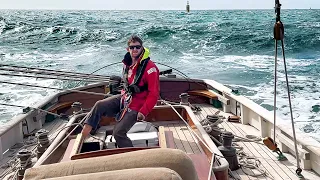
Sailing through the “Needles”
Leo Sampson Goolden navigates Tally Ho through the Needles into the Solent, reuniting with 90-year-old Roy in Warsash, touring Elephant Boat Yard, and completing a 26-hour passage back to Falmouth.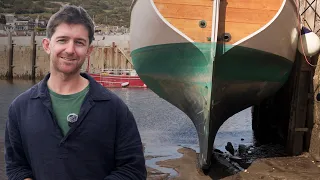
Sailing the British South coast!
Support TALLY HO; Become a Patron; Wishlist; Music; Dan Lebowitz, Tone Seeker - Back in the Saddle Brooks Williams - Johnny's Farewell FACEBOOK and INSTAGRAM