Everything Has to be Perfect: Preparing the Rig for Brand New Sails — Sailing Yabá
In blue-water voyaging, few milestones carry greater technical gravity than overhauling standing and running rigging before bending on a brand-new suit of ocean canvas. Aboard their offshore vessel, Bernardo and Suzana of Sailing Yabá reached a pivotal threshold along the Brazilian coast. After enduring seasons with aged, repeatedly patched sails originally stitched nearly two decades ago, the crew undertook an exhaustive refit. The mission demanded total precision: before hoisting custom offshore canvas aloft, every stay, turnbuckle, halyard, and mast fitting required forensic inspection and renewal.
Operating along the South Atlantic seaboard, where localized squalls and frontal systems deliver relentless dynamic loads, preparing a vessel for open-ocean passages is an engineering discipline admitting zero compromise. For Bernardo and Suzana, every trip up the mast in a bosun’s chair represented a vital investment in vessel preservation and safety. Surrounded on deck by fresh synthetic cordage, heavy bronze shackles, seasoned timber spars, and bare stainless steel wire, they set out to tune their vessel for absolute self-reliance.
The Engineering Mandate of Offshore Standing Rigging
When Bernardo and Suzana of Sailing Yabá initiated their comprehensive Rigging Overhaul aboard SV Yabá, their primary objective was to prepare their heavy-displacement Cutter Rig for a brand-new suit of custom Offshore Sails. Operating in the challenging maritime corridor along the South Atlantic coastline, every single spar, terminal, and stay had to withstand punishing cyclical shock loads. In offshore voyaging, rigging failure is never an option; whether contending with sudden coastal squalls or prolonged ocean passages, the physical security of the spars dictates the ultimate safety of the vessel and its crew.
Standing rigging on a cruising vessel operates under continuous static pre-tension while absorbing colossal dynamic heeling moments. Over thousands of sea miles, 1×19 stainless wire undergoes microscopic fatigue, particularly inside swage fittings where trapped moisture can induce invisible crevice corrosion. For Bernardo and Suzana, whose route takes them through remote waters far from boatyards, understanding every stress point within their rig was paramount. Before bending on fresh canvas cut to precise measurements by Precision Sails, every stay, shroud, and chainplate had to be audited and certified sound.
Stripping Roller Furlers and Returning to Piston Hanks
As part of the meticulous Rigging Overhaul aboard SV Yabá, Bernardo and Suzana decided to eliminate vulnerable mechanical complexity from their Cutter Rig before hoisting their new Offshore Sails from Sailing Yabá. For years, the vessel had carried heavy roller-furling extrusions on its headstays, including a bearingless Allador furling drum. While roller furlers offer push-button convenience for coastal day-sailing, their bulky aluminum foil sections completely mask the underlying wire standing rigging from direct visual inspection. In a heavy seaway, a jammed foil or failed furling drum can immobilize a foresail, creating a perilous scenario for a shorthanded offshore crew.
The deconstruction process began on the bowsprit, lowering the heavy foresail onto the deck and ferrying it via dinghy. Bernardo eased the bobstay beneath the bowsprit to relieve stay tension, allowing the long aluminum foil extrusions to be slid off without bending. Stripping the foil revealed pristine 1×19 stainless wire and fully exposed turnbuckles. Transitioning to bronze piston hanks ensures the new staysails clip directly onto naked wire, providing fail-safe simplicity, instantaneous dropping in squalls via downhauls, and continuous visual inspection before every departure.
Aloft at the Masthead: Tangs, Sheaves, and Spreader Tips
Ascending into the masthead rigging during this extensive Rigging Overhaul, Bernardo and Suzana systematically inspected every load-bearing attachment point on the Cutter Rig of SV Yabá before fitting their Offshore Sails for Sailing Yabá. Working high above the deck suspended in a bosun’s chair requires calm deliberation and meticulous attention to physical tolerances. From forty feet aloft, the motion of the vessel is magnified, and every fastener or drop-pin must be secured with lanyards to prevent heavy tools or bronze parts from tumbling into the harbor waters below.
At the masthead, the crew audited halyard sheaves, replacing worn bushings and lubricating axle pins with waterproof grease to ensure friction-free hoisting under load. The heavy stainless mast tangs—through-bolted plates transferring stay loads into the spar—were inspected under magnification for micro-fissures. Lower down the spar, spreader tips were scrutinized to verify shroud clamping security. Bernardo wrapped the tips in heavy self-amalgamating rigging tape and stitched leather boots, preventing sailcloth chafe when eased on broad reaching angles.
Spar Carpentry and Running Rigging Fabrication
Integrating new wooden spars into the Cutter Rig represented another critical phase of the Rigging Overhaul executed by Bernardo and Suzana aboard SV Yabá before bending on their Offshore Sails for Sailing Yabá. On the foredeck and cabin trunk, the crew wrestled with substantial timber booms and gaffs crafted from durable Brazilian hardwoods. Each spar had to be custom-fitted with bronze and stainless hardware, requiring careful alignment with the centerline of the vessel and precise clearance calculations against the standing rigging wire stays.
Fitting the gooseneck for the self-tacking staysail boom required boring through the hardwood bowsprit and bedding heavy through-bolts with polyurethane sealant and counterplates. When an initial test fit showed the boom was slightly long, Bernardo trimmed the timber tenon with a hand saw and reseated the bronze end-cap. For running rigging, the crew rigged a multi-part throat halyard using high-tensile 12mm and 8mm synthetic tire-cord line, offering immense chafe resistance and shock-load resilience without excessive elasticity.
The Philosophy of Ocean Self-Sufficiency and Rig Tuning
The overarching philosophy guiding Bernardo and Suzana through this exhaustive Rigging Overhaul on SV Yabá is rooted in uncompromising self-reliance, ensuring their Cutter Rig and Offshore Sails are tuned to perfection on Sailing Yabá. Unlike coastal sailors who rely on commercial riggers and marina service docks, bluewater voyagers must be capable of diagnosing and resolving every mechanical vulnerability in mid-ocean. Standing rigging does not fail suddenly without warning; microscopic signs of fatigue, galvanic corrosion, or strand unlaying appear weeks or months before a cataclysmic dismasting.
By personally reeving lines, tuning turnbuckles, and locking every clevis pin with stainless cotter pins taped against chafe, Bernardo and Suzana established absolute certainty in their vessel’s seaworthiness. With headstay sag dialed out and the mast column perfectly plumb, the rig stands ready for rough offshore waters. As they prepared for their upcoming coastal passage north to Caravelas, SV Yabá proved that patient, hands-on engineering is the foundation of confident blue-water voyaging.
Offshore Rigging Overhaul Specifications and Inspection Log
To record every mechanical tolerance achieved during the Rigging Overhaul, Bernardo and Suzana compiled a comprehensive structural logbook for the Cutter Rig and Offshore Sails aboard SV Yabá on Sailing Yabá. The engineering specifications, standing rigging scantlings, and aloft inspection protocols detailed below illustrate the rigorous standards applied to ensure complete structural reliability throughout extended offshore passages across the South Atlantic.
| Rigging Component / Subsystem | Inspection & Overhaul Specification | Offshore Engineering Standard |
|---|---|---|
| Forestays & Staysail Wire | Stripped aluminum furler extrusions; restored naked 1×19 stainless wire | 100% visual inspectability; bronze piston hanks installed |
| Headstay Turnbuckles | Bronze open-body turnbuckles with 316 stainless toggles | Turnbuckles locked with cotter pins, seized, and leather-booted |
| Masthead Tangs & Backing | Through-bolted 316 stainless plates with internal compression sleeves | Dye-penetrant inspected for stress cracking; zero elongation |
| Spreader Tips & Clamps | Machined spreader end fittings with clamped shroud wire grooves | Taped and protected with hand-stitched leather chafe boots |
| Halyard Sheaves & Axles | Acetal/bronze sheaves on 316 stainless ground pins aloft | Disassembled, cleaned, lubricated with waterproof Teflon grease |
| Gaff & Boom Goosenecks | Custom welded 316 stainless gooseneck through-bolted into timber | Bedded in marine polyurethane with 316 stainless counterplates |
| Running Rigging & Halyards | High-tensile synthetic tire-cord line (12mm throat, 8mm peak/stays) | Low-stretch, ultra-high chafe resistance for ocean voyaging |
| Sail Inventory Loft | Custom offshore heavy-duty cruising canvas by Precision Sails | Triple-stitched seams, reinforced clew/tack patches, offshore cloth |
Frequently Asked Questions
Detailed below are essential technical insights derived from the Rigging Overhaul completed by Bernardo and Suzana on SV Yabá, addressing key maintenance protocols for their Cutter Rig and Offshore Sails on Sailing Yabá.
An offshore cruising sailboat rig should undergo a thorough aloft inspection at least once every six months and prior to every major ocean passage. Voyagers must inspect masthead tangs, spreader tips, halyard sheaves, turnbuckles, cotter pins, and wire terminals for hairline stress cracks, wire strand unraveling, or crevice corrosion.
Preparing mast tracks and stays requires cleaning all track extrusions, lubricating sail cars or slides with dry PTFE lubricant, and checking for bent track joints or loose fasteners. When removing roller furlers for hank-on sails, the entire stay must be stripped of foil sections, inspected along its full length, and tuned to proper pre-tension.
Spreaders must bisect the shroud angle evenly and remain securely clamped to prevent vertical movement under load. Voyagers must verify that shroud wires are properly seated in spreader grooves, secure the retaining pins, and generously wrap the tips in self-amalgamating rigging tape and leather boots to protect sails from chafing.
Factory machine-swaged terminals are compact and standard on production yachts, but they can trap water inside the swage barrel, leading to invisible crevice corrosion over time. Mechanical fittings such as Norseman or Sta-Lok allow voyagers to rebuild wire standing rigging in remote anchorages with standard hand tools, offering inspectable cones and field-serviceable reliability.
Tuning a cutter rig requires balancing the tension of the forestay with the inner staysail stay to avoid inducing excessive mast inversion. The forestay is typically tensioned to minimize headstay sag when beating to windward, while the inner stay is supported by running backstays or intermediate stays to maintain a straight spar column under heavy staysail loads.
Bernardo and Suzana partnered with Precision Sails designers to engineer custom heavy-duty offshore canvas matched to SV Yaba’s displacement and spar geometry. They chose bronze piston hanks over roller furlers to ensure foolproof sail handling, eliminating mechanical furler jams and allowing 100% visual access to their standing wire stays in remote waters.
Every turnbuckle barrel must have sufficient thread engagement on both studs and be locked using appropriately sized stainless steel cotter pins or split rings. Cotter pin legs must be bent around the turnbuckle body to 20 degrees, trimmed, and wrapped in rigging tape or leather boots to prevent accidental snags and unravelling at sea.
Support Sailing Yabá
At WeBoating.com, we profoundly acknowledge the unwavering dedication that Sailing Yabá invests in crafting each and every video or voyage. Their passion for delivering exceptional ocean content shines through every frame, and it's a labor of love that deserves your attention.
We invite you to watch their captivating videos here and actively engage with their content, including their social media links above. Liking, commenting, and sharing their work goes a long way in fueling their creative fire.
We're also inviting you to explore the gear, sponsorships, and boat partnerships highlighted in the "Everything Has to be Perfect: Preparing the Rig for Brand New Sails — Sailing Yabá" video description, or directly on YouTube. By engaging with these offerings or purchasing services and items, you directly support Sailing Yabá, their collaborators, and the brands they're associated with.
To ensure you never miss an offshore update, consider visiting their official YouTube Channel to subscribe, like, and join their community directly.
If you have any feedback, corrections, or additional information about Sailing Yabá or their videos, please use the comment form below to share your thoughts with us.
Thank you for being a part of our community and supporting the creators we cherish. Your time and support truly matter!
Everything had to be perfect. Before we can hoist the brand new custom sails on Yabá, the entire rig needed a massive upgrade. That meant installing all-new hardware, running a web of fresh ropes, and getting the booms and gaffs completely set up and ready for action.
Between endless trips up the mast, adjusting hardware high above the deck, and double-checking every single line, it was exhausting work—but seeing the schooner's gaff rig finally come together makes every climb worth it. This is the big milestone everyone has been waiting for, and she is officially rigged and ready to receive her new canvas.
Stay tuned for the next episode where we finally bend on the brand new sails and test them out on the water for the very first time!
In this episode:
Prepping the schooner's rig for brand new sails
Countless mast climbs to set the hardware
Installing all-new ropes, block systems, and gear
Getting the booms and gaffs locked in place
Subscribe to come along on the journey: If you want to see the full haul-out and the technical challenges of maintaining a handmade wooden boat, make sure to hit that subscribe button! → https://bit.ly/3dI3hBn
💌 MP’s newsletter: https://ahoymariapaula.substack.com
🌊 MP’s YouTube channel: https://www.youtube.com/@ahoymariapaula
🤍 MP’s instagram: https://www.instagram.com/ahoymariapaula/
💙 *Support the adventure:*
🌊 *Become a Patreon* → Exclusive content here: https://www.patreon.com/sailingyaba
☕ PayPal: https://www.paypal.com/donate/?hosted_button_id=JEA5R5RUDJDLY
🧢 *Shop our gear* → Coolest T-shirts and hats here: https://shopsailingyaba.com/
🌍 Follow the journey:
📸 *Instagram* → https://www.instagram.com/sailingyaba
📘 *Facebook* → https://www.facebook.com/SailingYaba/
📩 *Business inquiries* → [email protected]
🛠 *Our Partners & Discounts*
🔱 *Sea People app* → https://seapeopleapp.com/yaba (try out SeaPeople Plus for FREE for 30-days)
🦺 *Mustang Survival* (inflatable life jackets) → https://alnk.to/esZN9lE
📡 *Starlink* → https://www.starlink.com/residential?referral=RC-1922039-91176-65 (sign up and receive one month for free)
⚡ *Battle Born Batteries* → Code: *YABA* https://battlebornbatteries.com/?afmc=iz&utm_campaign=iz&utm_medium=affiliate&utm_source=leaddyno
⚓ *Mantus Marine* (anchors and accessories) → https://www.mantusmarine.com/?affiliates=179
💡 *Lumitec* (our cool underwater lights) → https://www.lumiteclighting.com
📶 *HolaFly eSIM* → Code: *SAILINGYABA* https://holafly.sjv.io/GKb5kk
🇧🇷 Legendas em Português em todos os episódios!
🇪🇸 Subtítulos en español en todos los episodios!
#boatlife #liveaboard #sailingadventure #Sailing #WoodenBoa
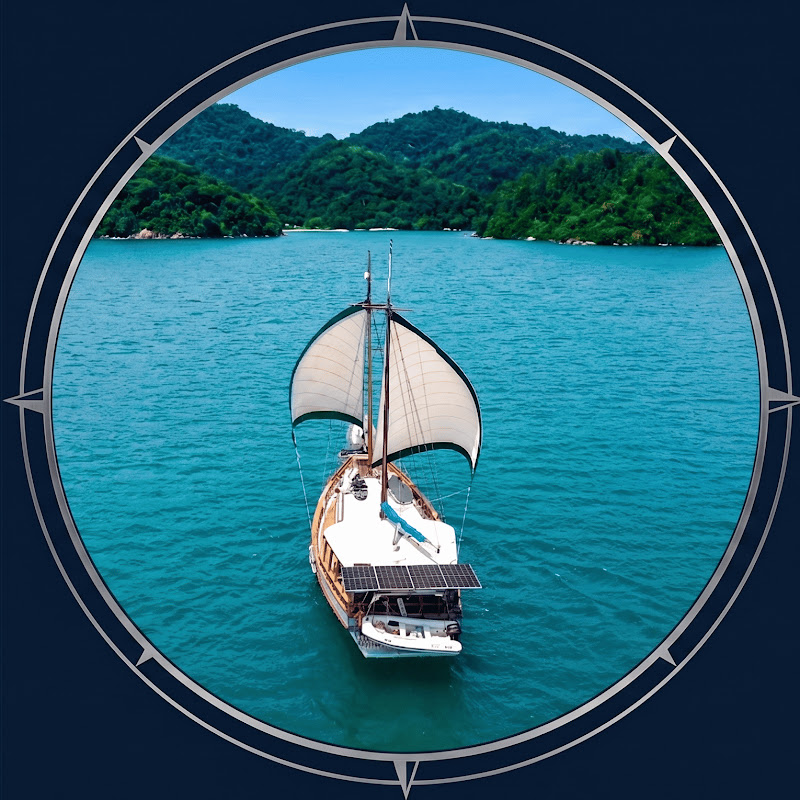
Sailing Yabá
Join Ben and MP of Sailing Yabá as they document their high-authority transition from rookies to masters of traditional Brazilian shipwrighting aboard their 88ft schooner.
Channel Information:
Social Media Links:
Everything Has to be Perfect: Preparing the Rig for Brand New Sails — Sailing Yabá Location
- Marina da Glu00f3ria Harbor Basin, Rio de Janeiro, Brazil (-22.92,-43.17)
- Ilha Grande Cruising Anchorage, Angra dos Reis, Brazil (-23.14,-44.23)
Latest Episodes from Sailing Yabá
Explore the most recent voyages. Subscribe to the channel to never miss an update!
Dropping White Sails in Paradise 🇧🇷 — Sailing Yabá
Gliding into the crystal-clear, tropical waters of Bahia, Brazil, and dropping the white sails after a long passage. ⛵️☀️ Nothing beats arriving at these tropical shores under canvas. Pure magic on the water. #Shorts #Sailing #Bahia #Brazil #Schooner ⚓ Subscribe to come along on the journey: If yo...
Yabá gets Brand New Sails & Set Sail Immediately!— Sailing Yabá
I’ve finally posted the episode where Yabá gets her brand new sails! It’s been a long build-up to this moment, and seeing her finally draped in new cloth feels incredible. There are still plenty of adjustments to be made to get them to fit perfectly, but getting them up in the air is a huge mileston...
Everything Has to be Perfect: Preparing the Rig for Brand New Sails — Sailing Yabá
Aboard SV Yabá, Bernardo and Suzana execute a comprehensive rigging overhaul, tuning standing rigging and preparing spars before bending on brand new offshore cruising sails in Brazil.
Live Refeno regatta on board Yabá— Sailing Yabá
Join us as we set of on the 300nm Refeno regatta to Fernando de Noronha #boatlife #liveaboard #sailingadventure #Sailing #WoodenBoa #refeno
Our Sails Ripped on Their Last Journey Before a Massive Upgrade! — Sailing Yabá
Episode #326Before Yabá's old canvas had to take Yabá on one last mission: a 180-nautical-mile offshore passage to Vitória, Espírito Santo, where the big sail swap and custom gaff rigging overhaul will finally happen. With her biggest crew on board yet, she started the trip hunting for a lost...