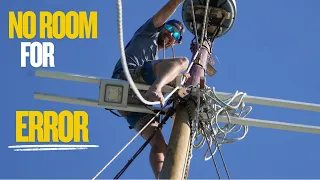
VERY SHALLOW draft 80ft WOODEN boat: Meeting Locals, Secret Mud Baths & Cocktails — Sailing Yabá
With no Ubers operating in Itacaré, Ben Fowler took the dinghy from the 80-ft wooden schooner Yabá and motored upstream to Pedra da Sabiá to pick up a new crew member, Amalie, who had just finished volunteering at a 10-day silent Vipassana meditation course. Documenting the northbound Brazilian coastal run on Sailing Yabá, Ben tied the dinghy to a tree along the rising river despite having no cell reception and set off on a 40-minute walk inland through the forest.
Along the trail, Ben spotted a wild cupuaçu fruit on the ground, planning to collect some on the return walk to blend into juice. Reaching the meditation center, known locally as o sítio, he met Cláudio, a staff member at the center, before welcoming Amalie back into conversation and hiking back down to the river to begin a major crew rotation aboard the schooner.
Grounded on an Itacaré Sandbank, Local Market Provisioning, and a Mata Atlantica Hike
Back aboard Yabá, the crew roster was shifting rapidly. Ju and Serginho had departed the previous night to rent a car and travel home, while Anthony and Noel were preparing to leave after spending 20 days aboard helping with anchoring, cooking, town errands, sailing, and watchkeeping. Before heading north with Amalie, Ben waited for low tide—only to find the shallow-draft wooden schooner resting directly on a sandbank.
When Yabá first arrived in Itacaré, a local waterman named Maguila—who dives, surfs, runs whale-watching trips, and keeps his own small schooner anchored nearby—had pulled his dinghy alongside the stern with a warning: “I think you’re on a sandbank. You should move.” At the time, Ben had checked the depth instruments and doubted the warning, later admitting: “But the secret is talk to someone local cuz they know better than the sounder.” With the hull sitting high on the sand at low water, Ben, the crew, and the dogs—Kyu (transcribed in captions as Caillou) and Licky—stepped straight off the boat and walked across the exposed sand and seaweed toward the beach, carrying a waterproof Nautilus Marine bag in case the rising tide forced them to swim back.
Ashore, Maguila guided the crew through Itacaré’s local market (feira) and artisan stalls to provision for the passage north. Ben filled a 15-kilo rucksack and four extra bags with mangoes, bananas, coconuts, spices, and spicy baiano seasoning, while also picking up a dried vegetable loofah sponge grown on a bush for exfoliating in the shower. Rather than haggling upward, the market vendors voluntarily gave the sailors extra produce—handing over a fifth coconut after they paid for four, and dropping a price from five down to three.
After the market run, the group hiked into the Mata Atlantica forest, pausing beneath an ancient samauma tree before accidentally taking a wrong exit onto an unmarked hill where the trail vanished. When the hikers lost sight of the path, the dogs Kyu and Licky doubled back up the slope and led the crew back to the main trail. That evening, after watching sunset acrobatics on the beach and a capoeira session in town, Ben ferried Anthony and Noel ashore, walked the dogs, and lifted the dinghy in preparation for a 3:00 a.m. departure.
Eleven-Hour Passage to Morro de São Paulo, Secret Mud Baths, and Cacao Cocktails
Ben slept straight through his 3:00 a.m. alarm, missing the slack water just before high tide, but still got underway early in the morning with only Amalie aboard. Although the original plan called for sailing straight to Salvador—a 17 to 20 hour passage—Ben decided to split the leg in half so the two-person crew could avoid night watches. After an 11-hour daytime sail northward into waters neither of them had visited before, Yabá reached Morro de São Paulo just after sunset.
As the schooner approached the anchorage in the dark, a speedboat flashed its lights at them. Instead of passing traffic, it was Alessandro and his son Victor, who recognized Yabá and came out to greet them. Alessandro lent Ben a secure mooring buoy for the night, took Ben and Amalie ashore to visit a supermarket, introduced them to local pastel and acarajé, and shared directions to a beachside clay mud bath.
The following morning, Ben and Amalie visited the coastal mud bath—jokingly calling it a Brazilian fountain of youth and cheap tattoo removal—coating their skin in natural clay before rinsing off and ordering tropical drinks overlooking the water. Summing up the morning, Ben remarked: “That’s the secrets to life. A mud bath, cocktail, and sea view.” Their cocktails arrived served inside hollowed-out cacao pods mixed with cacao, sugar, cachaça, and edible flowers, leaving thick cacao tea at the bottom of the pod. Back aboard Yabá, after exploring natural pools and spotting dolphins, they cracked open one of their fresh cupuaçu fruits, separating the fragrant white pulp from the fibrous seeds to blend into a fresh suco smoothie before casting off the mooring buoy—which had drifted directly underneath the hull—to catch the favorable tidal current north.
Three-Hundred-Mile Nonstop Passage to Maceió and Preparing for Recife Solo
From Morro de São Paulo, Ben and Amalie set out on a 300-nautical-mile nonstop passage to Maceió, the last major city before the start of their upcoming regatta. Before hoisting the gaff sail over the 10-ton boom, Ben took advantage of light winds to insert the numbered sail battens he had repeatedly forgotten on earlier legs—crediting Richard in the Patreon WhatsApp group, who had joked that Ben should paint “battens, idiot” directly on the canvas. Once hoisted, the new sail allowed Yabá to point closer to the wind than her old rig ever could, where the sheets had been attached much further outboard, though a persistent twist in the rigging and the lack of a boom vang prevented Ben from winching the throat any higher without stressing the gear.
During the first afternoon underway, Ben hooked a good-sized jumping dorado (mahi-mahi) using fishing rods, reels, and line gifted by supporter Ralph, only for the fish to throw the hook right at the side of the hull. As the wind died at dusk and the sails went floppy, the forecast called for 15 to 20 knots of constant wind by noon the next day, building to 27 to 30 knots for three hours at night. Because the stainless boom did not yet have a permanent welded reef hook, Ben rigged a temporary first reef line that could be tied down to a cleat, planning to douse the forward jib on the bowsprit before heavy weather hit and rely on the tiny self-tacking staysail as a storm jib.
“The only thing I’m really annoyed about today is that mahi that got away.”
Ben Fowler, Captain of Yabá
Over the next two days, Ben and Amalie rotated through two-hours-on, two-hours-off watches, with Ben sleeping on the pilot house floor where the motion was less pronounced and Amalie resting on the sofa. They flew all four sails during the day—dropping the forward jib at night and lowering the experimental trial sail whenever winds exceeded 13 to 15 knots—and shared meals of fresh guacamole and toast while passing small shrimp boats quarter the size of Yabá. As they closed on Maceió during the final night with 19 miles remaining, headwinds and steep waves forced Ben to run the engine hard, punching into the chop at 2 to 4 and a half knots while swerving around fishing vessels and a floating net marked by a flashing Christmas light. Dropping the last two sails a mile outside the flat anchorage pool, Ben discovered the old mainsail was badly ripped—another reminder to finish raising the new gaff rig—before setting the anchor after 63 to 64 hours at sea.
“I think this is the longest trip Yubba has ever done non-stop, which is 300 miles.”
Ben Fowler
After waking up securely anchored near a mooring buoy in Maceió, Ben and Amalie went ashore to watch a local Brazilian soccer game—Ben’s second stadium match in Brazil—before topping up the schooner’s fuel tanks for the final 20-hour sail north to Recife. As Amalie packed for an Uber ride to the airport, Ben asked whether she would sail again after 300 miles of beating into wind and waves; she laughed and replied, “It can be better, but an experience is an experience,” leaving Ben aboard Yabá to tackle the remaining stretch to Recife solo.
Voyage Metrics and Passage Log
| Voyage Metric / Stage | Recorded Specification / Detail |
|---|---|
| Vessel & Rig | Yabá (80-ft wooden schooner with 10-ton boom, 4 sails including self-tacking staysail and trial sail) |
| Itacaré River Pickup | Dinghy ride upstream to Pedra da Sabiá followed by a 40-minute walk to the 10-day Vipassana center |
| Itacaré Market Provisioning | 15-kilo rucksack plus 4 extra bags of fruit, 4 coconuts (plus 1 bonus), and a natural vegetable loofah |
| Itacaré to Morro de São Paulo | 11-hour daytime sail north (splitting the 17 to 20 hour direct run to Salvador) |
| Morro de São Paulo to Maceió | 300 nautical miles nonstop over 63 to 64 hours on two-hours-on, two-hours-off watches |
| Passage Wind & Speed | Forecast 15 to 20 knots building to 27 to 30 knots at night; motoring at 2 to 4 and a half knots into head seas |
| Next Leg to Recife | 20 hours of solo sailing north from Maceió to reach the regatta start in Recife |
Frequently Asked Questions
Because there were no Ubers in Itacaré, Ben motored the dinghy upstream as far as Pedra da Sabiá, tied it to a tree along the rising river, and walked 40 minutes inland to pick up new crew member Amalie after her 10-day silent Vipassana meditation course.
Local schooner owner Maguila warned Ben upon arrival that Yabá was anchored over a sandbank, but the boat’s depth sounder indicated sufficient water. At low tide, the 80-ft schooner settled directly onto the sandbank, allowing the crew and dogs to walk ashore to the beach.
With four previous crew members departing in Itacaré and only Ben and Amalie aboard, Ben decided to break the 17 to 20 hour run to Salvador in half, completing an 11-hour daytime sail to Morro de São Paulo so they would not have to stand night watches.
The 300-nautical-mile passage from Morro de São Paulo to Maceió took 63 to 64 hours nonstop, making it the longest nonstop voyage Yabá had completed to date.
Because the stainless steel boom lacked a welded reef hook, Ben rigged a temporary first reef line to tie down to a cleat, planned to lower the bowsprit jib before heavy gusts arrived, used the small self-tacking staysail as a storm jib, and dropped the experimental trial sail once winds exceeded 13 to 15 knots.
Support Sailing Yabá
At WeBoating.com, we profoundly acknowledge the unwavering dedication that Sailing Yabá invests in crafting each and every video or voyage. Their passion for delivering exceptional ocean content shines through every frame, and it's a labor of love that deserves your attention.
We invite you to watch their captivating videos here and actively engage with their content, including their social media links above. Liking, commenting, and sharing their work goes a long way in fueling their creative fire.
We're also inviting you to explore the gear, sponsorships, and boat partnerships highlighted in the "VERY SHALLOW draft 80ft WOODEN boat: Meeting Locals, Secret Mud Baths & Cocktails — Sailing Yabá" video description, or directly on YouTube. By engaging with these offerings or purchasing services and items, you directly support Sailing Yabá, their collaborators, and the brands they're associated with.
To ensure you never miss an offshore update, consider visiting their official YouTube Channel to subscribe, like, and join their community directly.
If you have any feedback, corrections, or additional information about Sailing Yabá or their videos, please use the comment form below to share your thoughts with us.
Thank you for being a part of our community and supporting the creators we cherish. Your time and support truly matter!
Vipassana Meditation courses around the world:
👉 https://www.dhamma.org/en/index
If you love the journey and want to support the rebuild, consider joining the crew on Patreon:
👉 http://www.patreon.com/sailingyaba
(Patreon members get access to our private WhatsApp group, monthly live calls, and real-time voyage updates!)
In this episode, we connect with the locals, find a "secret" mud bath (our very own fountain of youth!), and enjoy some tropical cocktails. We also dive into the vibrant local culture with an incredible Capoeira session and catch our second Brazilian soccer game!
But the adventure is shifting, after saying goodbye to my last crew member, I'm back on board Yabá alone, getting ready for what lies ahead.
⚓ Subscribe to come along on the journey: If you want to see the full haul-out and the technical challenges of maintaining a handmade wooden boat, make sure to hit that subscribe button! → https://bit.ly/3dI3hBn
💌 MP’s newsletter: https://ahoymariapaula.substack.com
🌊 MP’s YouTube channel: https://www.youtube.com/@ahoymariapaula
🤍 MP’s instagram: https://www.instagram.com/ahoymariapaula/
💙 *Support the adventure:*
☕ PayPal: https://www.paypal.com/donate/?hosted_button_id=JEA5R5RUDJDLY
🧢 *Shop our gear* → Coolest T-shirts and hats here: https://shopsailingyaba.com/
🌍 Follow the journey:
📸 *Instagram* → https://www.instagram.com/sailingyaba
📘 *Facebook* → https://www.facebook.com/SailingYaba/
📩 *Business inquiries* → [email protected]
🛠 *Our Partners & Discounts*
🔱 *Sea People app* → https://seapeopleapp.com/yaba (try out SeaPeople Plus for FREE for 30-days)
🦺 *Mustang Survival* (inflatable life jackets) → https://alnk.to/esZN9lE
📡 *Starlink* → https://www.starlink.com/residential?referral=RC-1922039-91176-65 (sign up and receive one month for free)
⚡ *Battle Born Batteries* → Code: *YABA* https://battlebornbatteries.com/?afmc=iz&utm_campaign=iz&utm_medium=affiliate&utm_source=leaddyno
⚓ *Mantus Marine* (anchors and accessories) → https://www.mantusmarine.com/?affiliates=179
💡 *Lumitec* (our cool underwater lights) → https://www.lumiteclighting.com
📶 *HolaFly eSIM* → Code: *SAILINGYABA* https://holafly.sjv.io/GKb5kk
🇧🇷 Legendas em Português em todos os episódios!
🇪🇸 Subtítulos en español en todos los episodios!
#boatlife #liveaboard #sailingadventure #Sailing #WoodenBoa
Sailing Yabá
Join Ben and MP of Sailing Yabá as they document their high-authority transition from rookies to masters of traditional Brazilian shipwrighting aboard their 88ft schooner.
Channel Information:
Social Media Links:
VERY SHALLOW draft 80ft WOODEN boat: Meeting Locals, Secret Mud Baths & Cocktails — Sailing Yabá Location
- Itacaré Anchorage and Rio de Contas, Bahia, Brazil (-14.2747,-38.9967)
- Morro de São Paulo Anchorage, Bahia, Brazil (-13.3768,-38.9169)
- Maceió Harbor Anchorage, Brazil (-9.6691,-35.7219)
- Recife Port Approach, Brazil (-8.0543,-34.8711)
Latest Episodes from Sailing Yabá
Explore the most recent voyages. Subscribe to the channel to never miss an update!
NOBODY Expected This WOODEN Sailboat to SURVIVE a 300 Mile Ocean Regatta— Sailing Yabá
Episode 332 It is finally REFENO time! Around 100 boats are getting ready for the 300-nautical-mile run from Recife to Fernando de Noronha, and I’m finally putting up a brand-new sail that’s been on the list forever. Yabá is the first of her kind in this race, originally built for Salvador’s coas...
FINALLY Adding the biggest NEW SAIL the day before a 300 mile offshore regatta— Sailing Yabá
Ben and the crew of Sailing Yabá prepare for a major 300-mile offshore regatta in Recife, tackling sail replacements, vet visits, and provisioning.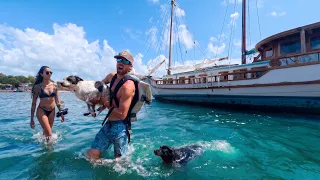
VERY SHALLOW draft 80ft WOODEN boat: Meeting Locals, Secret Mud Baths & Cocktails — Sailing Yabá
Aboard the 80-ft wooden schooner Yabá, Ben Fowler navigates Itacaré sandbanks, stops in Morro de São Paulo for mud baths and cacao cocktails, and completes a 300-mile nonstop passage to Maceió.
Dropping White Sails in Paradise 🇧🇷 — Sailing Yabá
The crew of the wooden schooner Yabá glides into the tropical waters of Bahia, Brazil, preparing to drop white sails after an ocean passage with fifteen miles remaining to Caravelas.
Yabá gets Brand New Sails & Set Sail Immediately!— Sailing Yabá
I’ve finally posted the episode where Yabá gets her brand new sails! It’s been a long build-up to this moment, and seeing her finally draped in new cloth feels incredible. There are still plenty of adjustments to be made to get them to fit perfectly, but getting them up in the air is a huge mileston...