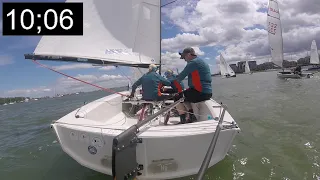
Race 4 of the Walton and Frinton dinghy regatta 2026
On the intricate, salt-marsh-fringed waters of the Walton Backwaters along the Essex coast, small-boat racing demands sharp seamanship and immediate tactical calculation. Ian Foxwell and his teenage daughter Izzy, chronicling their coastal voyages on Sailing with the Foxwell Family, contested Race 4 of the Walton and Frinton Yacht Club annual regatta aboard their classic Wayfarer dinghy. Having finished an exhausting clockwise circuit around Horsey Island earlier in the afternoon, the race committee immediately sent the fleet back around the island in reverse—leaving Horsey Island to starboard across a shifting tidal landscape.
Transitioning from their 34-foot cruising yacht, SV Daphi, on the River Medway to competitive dinghy racing showcases the family’s versatile coastal skills. In Hamford Water and the Twizzle Channel, narrow waterways are hemmed in by sticky mudbanks and sweeping saltings. With only fifty minutes per lap, every wind shift off the marsh and every scrap of shallow-water tidal relief determined whether a dinghy escaped in clean air or fell victim to foul current.
Tactical Commencements: Estuary Currents and Starting Line Dynamics
During the annual Walton and Frinton Dinghy Regatta, the Foxwell Family faced the complex navigational challenges inherent to competitive Estuary Racing. Navigating the treacherous backwaters requires acute Seamanship and rigorous Tidal Tactics, where Fleet Racing demands split-second decisions as competitors vie for position in shifting coastal channels.
Race 4 featured an immediate rolling start, turning the previous race’s finish line into an instant starting gate the moment dinghies rounded the buoy. Ian initially estimated their opening circuit had taken an hour, but Izzy promptly corrected him—fellow competitors Martin and James had officially clocked it at fifty minutes. Resetting their focus, Ian and Izzy sheeted home without pause. The opening reach skirted the local marina fairway, an infamous stretch where moored yachts and shoreside buildings cast unpredictable wind shadows across the fleet, requiring delicate mainsheet feathering to stay in motion.
Fleet congestion compounded the difficulty of the opening minutes. Ahead loomed an International Canoe, dubbed a volatile ‘lump of lead’ by Ian for its narrow beam and tendency to spear off unpredictably in sharp gusts after nearly colliding with them earlier. Lasers worked aggressive lines to leeward, while seasoned competitors Martin and Simon worked divergent paths across the waterway. Ian maintained clean air by coordinating continuous sail trim adjustments with Izzy, keeping the Wayfarer rolling over the slacking flood tide while guarding against dirty wind from faster boats.
Twizzle Channel Traversal: Mudbank Margins and Centerboard Trim
Advancing through the Twizzle Channel during the Walton and Frinton Dinghy Regatta, the Foxwell Family demonstrated the technical precision essential for shallow-water Estuary Racing. Mastering the Tidal Tactics of Hamford Water depends on proactive Seamanship and dynamic centerboard adjustments, as high-intensity Fleet Racing punishes any skipper who misjudges the submerged mudflats.
With high tide just ten minutes away, mudbanks were covered by deceptive shallows measured in inches. Underway, Izzy asked Ian about the mechanical distinctions between centerboards and daggerboards. As Ian noted, vertical daggerboards—like those on competing Lasers and Ken’s RS Aero—must be pulled straight upward and lack forgiving movement upon impact. In contrast, the Wayfarer’s wooden pivoting centerboard swings aft inside its trunk if it touches bottom, providing an invaluable safety cushion. Ian raised the board pennant partially to skim over shoals while Izzy kept close watch on the telltales, pausing only to pass a shared water bottle between gusts.
To maximize clearance over shallow shoulders without stalling, Ian heeled the Wayfarer intentionally, reducing foil draft before flattening the hull as deep water returned. Competitor Martin held high to windward, tempting the Foxwells toward a shortcut over a green marsh patch. Ian resisted the gamble, steering firmly toward the yellow channel buoy to avoid stranding on the falling tide.
Downwind Dilemmas: Spinnaker Hoists and High-Stakes Gybing
Executing the downwind run around Horsey Island in the Walton and Frinton Dinghy Regatta, the Foxwell Family encountered the intense crew coordination that defines modern Estuary Racing. Balancing aggressive spinnaker hoists against treacherous bank proximity demands exceptional Seamanship and adaptive Tidal Tactics, especially when close-quarters Fleet Racing compresses dinghies into narrow tidal gutters.
Rounding the northern corner into a broad reach, Ian evaluated hoisting their symmetric spinnaker. While the downwind angle was tempting, the narrow channel offered little room for error; the camera’s wide-angle lens masked how close the shore truly was. A heavy gust could force a sudden bear-away directly into the mud. Furthermore, Izzy was handling the symmetric kite single-handed on the foredeck in regatta conditions for the first time, balancing pole rigging, guys, and halyards.
With an awkward gybe required around an approaching spit, Ian wisely postponed the hoist until clearing an anchored yacht and completing the turn. Ahead, competitor Martin briefly bogged into soft mud while trying to steer with the tiller between his knees during his own maneuver. Once through the gybe, Ian and Izzy set the pole and launched the chute cleanly down the eastern flank of Horsey Island. When competitors Tim and Martin gained ground inside a shore eddy, Ian opted for an early drop, securing control before rounding the tight corner.
Regatta Telemetry, Course Layout, and Tidal Current Vectors
The strategic parameters of the Walton and Frinton Dinghy Regatta highlight how the Foxwell Family orchestrated their race through complex Estuary Racing conditions. Success in local Tidal Tactics and Seamanship hinges on precise data interpretation, where tactical Fleet Racing records track wind oscillations, tidal stream velocities, and maneuver execution.
| Telemetry Metric | Tactical & Navigational Parameter | Race 4 Performance Analysis |
|---|---|---|
| Host Club & Venue | Walton & Frinton Yacht Club (WFYC), Essex, UK | Hamford Water and Twizzle Channel tidal racecourse |
| Event & Course | Race 4 Annual Dinghy Regatta (Race 2 of day) | Reverse circuit around Horsey Island to starboard |
| Vessel & Rig | Wayfarer Dinghy (15 ft 10 in double-handed sloop) | Pivoting centerboard, lifting rudder, symmetric chute |
| Crew Roster | Ian Foxwell (Helm/Tactics) & Izzy Foxwell (Crew/Chute) | Parent-daughter teamwork managing trim, hiking, and foils |
| Tidal Conditions | Flood turning to ebb (spring cycle, 1.5–2.5 kt stream) | High water slack early; adverse current on return leg |
| Wind Dynamics | 12 to 18 knots with gusts near 20 knots | Shifty breeze with marina shadows and marsh puffs |
| Foil Management | Variable pivoting centerboard and dynamic hull heeling | Foil raised over shallows to eliminate grounding hazard |
| Upwind Tactic | Single pinching port-tack board against foul ebb | Minimised tack penalties in adverse stream to save ground |
The Agonizing Beat: Quad-Burning Pinches and Foul Tide Tactics
Turning into the home stretch of the Walton and Frinton Dinghy Regatta, the Foxwell Family engaged in an exhausting upwind duel that exemplifies the physical endurance of Estuary Racing. Navigating against a newly turned ebb current tested their ultimate Seamanship and defensive Tidal Tactics, forcing painful tactical compromises in competitive Fleet Racing as crews fought toward the Romley Ryan committee boat.
Once clear of Horsey Island’s leeward corner, the fleet met the full force of the newly turned ebb tide churning seaward down the river. Standard racing theory dictates short-tacking along channel edges for tidal relief. However, each tack in a two-person Wayfarer against an adverse two-knot stream incurs a severe momentum penalty, allowing current to wash the hull backward before regaining speed.
Ian elected to pinch on a single long port tack along the channel bank, feathering through gusts without tacking. While purists might advocate tacking across the river for shallow relief, Ian recognized that the lost ground during each tack would never be recouped against the ebbing torrent. This approach demanded punishing physical exertion, with Ian and Izzy hiking flat over the gunwale until their quads burned. Across the waterway, competitor Ken capsized his RS Aero in a sudden squall, drawing the safety boat. Maintaining focus despite exhaustion, Ian held the pinching line until putting in one crisp final tack to finish within seconds of their rivals at the committee boat Romley Ryan.
Frequently Asked Questions
Understanding the intricacies of the Walton and Frinton Dinghy Regatta allows sailors to appreciate how the Foxwell Family apply specialized Seamanship, Tidal Tactics, and boat trim to master high-stakes Estuary Racing and competitive Fleet Racing.
Tidal currents in the Twizzle Channel run up to 2.5 knots during spring tides. Sailors must choose between mid-channel depth with maximum adverse current or shallow bank edges that offer tidal relief but carry serious grounding hazards.
Race 4 utilized an immediate rolling start where the Race 1 finish line served as the start. Ian Foxwell rounded the mark at speed, sheeting in instantly to secure clear air ahead of congested mixed-handicap dinghies.
A pivoting centerboard swings upward when striking a mudbank, allowing a dinghy to slide over shallows without structural damage. Daggerboards on Lasers and RS Aeros cannot kick up, risking sudden capsizes or broken trunks upon impact.
Symmetric spinnakers on dinghies like the Wayfarer require a dedicated pole, guy adjustments, and manual pole shifts during gybes. Asymmetric spinnakers fly from fixed or retractable bowsprits, simplifying handling for family crews.
Tacking against an adverse current costs substantial speed and allows the foul stream to push the boat backward during each transition. Ian calculated that holding one continuous pinching line lost less distance than frequent short tacks.
The Foxwells cruise extensively on their Jeanneau 34.2, SV Daphi, while racing small dinghies like the Wayfarer and National 12. Regatta racing sharpens sail trim physics, helm sensitivity, and tidal tactics that directly enhance their coastal cruising seamanship.
Support Sailing with the Foxwell Family
At WeBoating.com, we profoundly acknowledge the unwavering dedication that Sailing with the Foxwell Family invests in crafting each and every video or voyage. Their passion for delivering exceptional ocean content shines through every frame, and it's a labor of love that deserves your attention.
We invite you to watch their captivating videos here and actively engage with their content, including their social media links above. Liking, commenting, and sharing their work goes a long way in fueling their creative fire.
We're also inviting you to explore the gear, sponsorships, and boat partnerships highlighted in the "Race 4 of the Walton and Frinton dinghy regatta 2026" video description, or directly on YouTube. By engaging with these offerings or purchasing services and items, you directly support Sailing with the Foxwell Family, their collaborators, and the brands they're associated with.
To ensure you never miss an offshore update, consider visiting their official YouTube Channel to subscribe, like, and join their community directly.
If you have any feedback, corrections, or additional information about Sailing with the Foxwell Family or their videos, please use the comment form below to share your thoughts with us.
Thank you for being a part of our community and supporting the creators we cherish. Your time and support truly matter!
So if you watched last week you will have seen us have a great time sailing around Horsey Island, well this week its the second race on that same day... back around the Island!
You can find us on Instagram now at https://www.instagram.com/sailing_with_the_foxwells/
We make these films just for fun, and we hope that you have enjoyed watching them however we have been asked on a couple of occasions now if we have a Patreon account. We don’t want to do that at this stage as we feel it would turn the channel into a business, and as we said at the beginning, this is all just for fun. However if you would like to support us and feel you could help contribute to the cost of making these films then you can do that via our PayPal account here. A big thank you to everyone that has already done this, its a great help.
https://www.paypal.me/TheFoxwellFamily
And a big thank you to everyone that has supported us so far, its very much appreciated.
Music: http://www.purple-planet.com

Sailing with the Foxwell Family
Join Ian and Hannah Foxwell as they document the high-authority transition from family cruising to competitive dinghy racing on the UK's East Coast.
Channel Information:
Social Media Links:
Race 4 of the Walton and Frinton dinghy regatta 2026 Location
- Walton & Frinton Yacht Club Fairway, Walton-on-the-Naze, Essex, United Kingdom (51.851,1.268)
- Twizzle Channel & Hamford Water Anchorage, Essex, United Kingdom (51.865,1.258)
Latest Episodes from Sailing with the Foxwell Family
Explore the most recent voyages. Subscribe to the channel to never miss an update!
Race 6 of the Walton and Frinton dinghy regatta
Ian Foxwell and his daughter Izzy navigate tidal currents and river traffic to win Race 6 of the Walton and Frinton dinghy regatta aboard their Wayfarer in Essex, England.
Race 4 of the Walton and Frinton dinghy regatta 2026
Ian and Izzy Foxwell take on Race 4 of the Walton and Frinton dinghy regatta, navigating shifting tides and mudflats around Horsey Island in their Wayfarer.
Race 3 of the Walton and Frinton dinghy regatta 2026
Ian and Izzy Foxwell navigate the shallow tidal channels and sandbars of Hamford Water in Essex, racing their Wayfarer around Horsey Island during Day 3 of the Walton and Frinton Dinghy Regatta.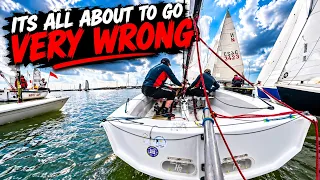
Race 2 of the Walton and Frinton dinghy regatta 2026
So race 1 couldn't have gone any better so lets see how we get on in race 2. And if your looking at the thumbnail and thinking that's AI... well no, that really is what happened. You can find us on Instagram now at We make these films just for fun, and we hope that you have enjoyed wat...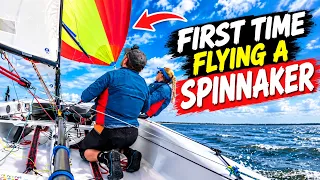
Race 1 of the Walton and Frinton dinghy regatta
So although Izzy has sailed with us loads of time in the wayfarer 3 up, and has crewed a national 12 on here own this would be her first race as sole crew in the front of the Wayfarer. in a big fleet and with the conventional spinnaker to deal with lets see how she gets on. You can find us on Ins...