The road back to boat work: A bunker surprise. Ep. 698
Returning to the relentless physical demands of traditional vessel restoration, Mads Rasmussen of Sail Life resumes comprehensive shipwright operations aboard SV Athena, his Trident Marine Warrior 38 ocean-cruising yacht. After dedicating months to establishing workshop infrastructure and navigating onshore logistics, Rasmussen confronts the unforgiving reality of long-term vessel upkeep: uncovering concealed structural decay lurking behind interior locker partitions. Operating with disciplined boatyard rigor, the Danish sailor and craftsman approaches the vessel not merely as a voyaging home, but as an ongoing masterclass in marine engineering, timber preservation, and composite craftsmanship.
The Warrior 38 design is celebrated for its heavy displacement, robust hand-laid fiberglass laminate, and proven offshore pedigree. However, decades of oceanic passages followed by extended periods on the hard generate punishing microclimates within enclosed bilges and subterranean storage lockers. Inspecting the vessel’s low-lying stowage bunkers revealed an unwelcome surprise: trapped moisture and condensation had breached factory tabbing, inducing localized fungal rot along structural bulkhead footings. Rectifying these defects demands an uncompromising standard of surgical demolition, marine joinery, and composite reinforcement.
Subterranean Moisture and Hidden Decay in the Storage Lockers
During any rigorous Boatyard Refit, Mads Rasmussen of Sail Life approaches Vessel Restoration aboard SV Athena by demanding flawless standards in both Structural Woodworking and Epoxy Joinery. Upon opening the deep subterranean storage bunkers beneath the berths, an immediate inspection revealed dampness along the lower perimeter where timber partitions bond to the fiberglass hull.
Enclosed boat lockers serve as cold condensing surfaces during seasonal weather cycles. Moisture trickling down the internal hull skin naturally ponds against horizontal stringers and plywood faces where ventilation is restricted. Over time, fungal spores penetrate raw end-grain, causing brown rot that destroys timber cellulose from within. While surface paint appeared intact, percussion soundings with a phenolic inspection hammer produced hollow, dead thuds indicating advanced delamination. Probing with an awl confirmed that the bottom four inches of the bulkhead had degraded into a spongy matrix requiring total excision.
Forensic Demolition and Substrate Excavation
Executing uncompromising Vessel Restoration requires Mads Rasmussen of Sail Life to master Boatyard Refit protocols, ensuring that every phase of Structural Woodworking and structural Epoxy Joinery aboard SV Athena rests upon sound, sterile foundations.
Demolishing the compromised bunker partition required surgical care to avoid scarring the primary hull laminate. Utilizing an oscillating multi-tool fitted with carbide plunge-cut blades, Rasmussen excised all rotted timber three inches beyond the furthest visible moisture stain, recognizing that fungal mycelium penetrates well ahead of visible decay. A low-speed rotary grinder spinning 36-grit zirconia discs then ground away legacy fiberglass tabbing, exposing clean, virgin glass free of bilge oils and polyester resin degraded by hydrolytic breakdown.
Following mechanical excavation, the remaining timber margins received saturation with a disodium octaborate tetrahydrate glycol solution to eradicate dormant fungal spores deep in the wood pores. Forced warm-air ventilation dried the bilge bay until wood moisture meters recorded levels below twelve percent, establishing the dry substrate required for permanent composite bonding.
Scarfing and Precision Templating for Replacement Marine Plywood
Precision Structural Woodworking lies at the core of every Boatyard Refit led by Mads Rasmussen of Sail Life, where high-integrity Epoxy Joinery guarantees enduring Vessel Restoration aboard SV Athena. Replacing the excised bulkhead footing demanded duplicating the hull’s compound deadrise with zero margin for error.
To map the irregular curvature of the hull skin, Rasmussen deployed traditional tick-stick spiling, gluing thin timber laths into a rigid dimensional lattice that indexed every contour. This perimeter pattern was transferred in the workshop onto sheets of certified BS 1088 Okoume marine plywood, selected for its balanced multi-ply construction, void-free veneers, and high rot resistance.
To mate the new panel to the existing upper bulkhead, Rasmussen machined an eight-to-one (8:1) scarf bevel across both joining edges. An 8:1 scarf geometry expands the glued shear area eightfold, allowing structural epoxy adhesive to transfer racking loads without stress concentrations. Dry-fitting confirmed a precise joint with a uniform three-millimeter expansion gap along the hull for the fillet.
Structural Epoxy Fillet Chemistry and Hull Tabbing Architecture
Engineering resilient Epoxy Joinery alongside traditional Structural Woodworking defines the Boatyard Refit approach of Mads Rasmussen aboard SV Athena, representing the pinnacle of Sail Life standards in comprehensive Vessel Restoration.
Rigid bulkheads must never form direct hard-point contact with a flexible fiberglass hull, as cyclic offshore wave impact generates destructive point loads that crack gelcoats and debond tabbing. To cushion the interface, Rasmussen formulated an engineered epoxy compound. After priming the plywood edges with neat slow-cure resin, he thickened the mix using a balanced matrix of fumed colloidal silica for sag resistance and phenolic microballoons for compressive strength and smooth tooling, shaping a continuous thirty-millimeter radius fillet along both faces.
While the fillet remained in an uncured tacky state, wet-on-wet secondary tabbing was applied using two staggered layers of 400 g/m² biaxial stitched fiberglass tape. The initial ply spanned four inches onto the hull and three inches up the bulkhead, while the secondary ply extended six inches onto the hull, stepping down structural stiffness to prevent localized stress risers. Synthetic peel ply was consolidated over the laminate to guarantee a smooth, amine-blush-free surface.
Moisture Drainage Channels, Limber Holes, and Barrier Encapsulation
Sustainable Vessel Restoration demands that Mads Rasmussen and Sail Life integrate defensive engineering into every Boatyard Refit endeavor, combining Structural Woodworking with impervious Epoxy Joinery to protect SV Athena against future moisture entrapment.
To prevent condensation from collecting in subterranean pockets, Rasmussen bored oversized semicircular limber holes at the lowest vertex of the bulkhead. Utilizing the drill-fill-drill method, the holes were excavated, backfilled with high-density colloidal silica epoxy paste, and re-drilled at their finished diameter, completely encasing the end-grain timber behind an impervious epoxy ring.
The entire locker compartment then received three continuous coats of unthickened marine epoxy barrier resin, hermetically sealing the timber against atmospheric moisture vapor. A topcoat of two-part polyurethane bilge enamel in bright white concluded the project, yielding an easily inspected locker that resists diesel, water, and mechanical abrasion.
Bunker Refit Diagnostics, Timber Scantlings, and Epoxy Bonding Specifications
The technical execution of this Boatyard Refit highlights how Mads Rasmussen of Sail Life unites meticulous Structural Woodworking, scientific Epoxy Joinery, and uncompromising Vessel Restoration standards aboard SV Athena. The following table details the key scantling dimensions, composite schedules, and diagnostic standards utilized throughout the locker remediation.
| Refit Phase / Component | Material & Scantling Specification | Engineering Function & Execution Standard |
|---|---|---|
| Substrate Excavation | 36-grit zirconia abrasive discs; carbide multi-tool blades | Excavate compromised timber 75 mm beyond visible rot; feather GRP tabbing 50 mm onto solid hull. |
| Fungal Remediation | Disodium octaborate tetrahydrate in ethylene glycol | Deep cellular saturation of sound timber to exterminate fungal hyphae; timber desiccated below 12% moisture. |
| Structural Timber | 18 mm BS 1088 Okoume marine plywood (void-free multi-ply) | Transverse bunker partition replacing rotted bulkhead base; exceptional strength-to-weight and rot resistance. |
| Joint Architecture | 8:1 hand-planed and routed scarf joint (144 mm bevel width) | Maximizes shear transfer across bulkhead seam; bonded with slow-cure structural epoxy adhesive. |
| Stress-Relief Fillet | Colloidal silica + phenolic microballoon thickened epoxy | 30 mm radius fillet preventing hard-point hull contact and dispersing dynamic sailing stress. |
| Composite Tabbing | 400 g/m² ±45° biaxial non-crimp stitched fiberglass fabric | Two-stage staggered tabbing (100 mm & 150 mm widths) achieving 50:50 glass-to-resin ratio by weight. |
| Limber Hole Bushing | Drill-fill-drill solid epoxy sleeve with silica modifier | Forms 100% waterproof encapsulation protecting exposed end-grain against trapped bilge water wicking. |
| Protective Coating | 3 coats unthickened epoxy barrier + 2 coats white polyurethane bilge enamel | Hermetic vapor seal preventing condensation absorption, improving visibility and chemical resistance. |
Frequently Asked Questions
Below are key technical inquiries regarding Mads Rasmussen and his Sail Life vessel restoration aboard SV Athena, detailing critical boatyard refit methods, structural woodworking standards, and structural epoxy joinery practices.
Hidden rot within enclosed boat lockers and bulkheads is diagnosed using a non-destructive phenolic percussion hammer to detect dull, dead acoustic thuds indicating internal delamination, paired with a sharp awl to test wood hardness. Calibrated moisture meters verify whether timber moisture content exceeds 18 to 20 percent, which triggers active fungal rot.
Structural bulkheads require a minimum fillet radius equal to 1.5 to 2 times the panel thickness (e.g., 25 mm to 35 mm radius for 18 mm plywood) thickened with colloidal silica and microballoons. Secondary tabbing should utilize at least two staggered plies of ±45-degree biaxial fiberglass tape extending 75 mm to 150 mm onto the hull, maintaining a 50:50 resin-to-glass weight ratio.
BS 1088 Okoume marine plywood is lightweight (approx. 450 kg/m³), exceptionally uniform with void-free veneers, and bends smoothly to compound curves, making it ideal for interior bulkheads and furniture. Marine Meranti is denser (approx. 650 kg/m³) and offers higher impact resistance, but is significantly heavier and less pliable for complex internal cabinetry.
Enclosed boat lockers are sealed against condensation by applying a minimum of three coats of unthickened structural epoxy to eliminate vapor wicking into timber, boring epoxy-encapsulated limber holes to allow free water drainage into the central bilge sump, and installing passive louvered vents or low-draw solar ventilators to promote continuous air exchange.
Staggering composite tabbing plies (e.g., first layer at 100 mm width, second layer at 150 mm width) prevents the creation of an abrupt stiffness transition on the hull laminate. A feathered step-down dissipates dynamic torsional and rig loads across a wider surface area, preventing localized stress concentrations and Gelcoat stress cracking.
Mads Rasmussen executed a meticulous seven-year total refit of SV Athena, a 1987 Trident Marine Warrior 38, beginning in Denmark in 2016. His comprehensive vessel restoration included peeling and recoating the hull with Coppercoat, reinforcing the structural grid, rebuilding the interior joinery with epoxy composites, upgrading offshore systems, and concluding with a successful Atlantic crossing in 2023.
Marine bulkhead joinery utilizes a combination of fumed colloidal silica (Cabosil) and phenolic microballoons. Colloidal silica provides essential thixotropic viscosity to prevent resin sag on vertical joints and maximizes shear strength, while microballoons reduce density, ease profiling of radiused fillets, and prevent brittle micro-cracking under cyclic loading.
Support Sail Life
At WeBoating.com, we profoundly acknowledge the unwavering dedication that Sail Life invests in crafting each and every video or voyage. Their passion for delivering exceptional ocean content shines through every frame, and it's a labor of love that deserves your attention.
We invite you to watch their captivating videos here and actively engage with their content, including their social media links above. Liking, commenting, and sharing their work goes a long way in fueling their creative fire.
We're also inviting you to explore the gear, sponsorships, and boat partnerships highlighted in the "The road back to boat work: A bunker surprise. Ep. 698" video description, or directly on YouTube. By engaging with these offerings or purchasing services and items, you directly support Sail Life, their collaborators, and the brands they're associated with.
To ensure you never miss an offshore update, consider visiting their official YouTube Channel to subscribe, like, and join their community directly.
If you have any feedback, corrections, or additional information about Sail Life or their videos, please use the comment form below to share your thoughts with us.
Thank you for being a part of our community and supporting the creators we cherish. Your time and support truly matter!
📦 BLUETTI Amazon PBDD: https://amzn.to/4xFf1tK
⚡️ Amazon Discount Code: SAILLIFE5
🖥️ BLUETTI Elite 300: https://bit.ly/4aNlJ9b
⚡️ Discount Code: SAIL8OFF
#BLUETTI #Elite300 #Solargenerator #primebigdealdays #BLUETTIPowerWeek #6YearsPoweredTogether
** Links and contact information **
My email address is [email protected]
For sponsor deals, please use this email: [email protected]
Amazon wishlist: https://www.amazon.com/hz/wishlist/ls/2NJUK30IBFWO1
Sail Life website:
https://www.saillifechannel.com/
Sail Life on Patreon:
http://bit.ly/SailLifeOnPatreon
Sail Life on Instagram:
https://www.instagram.com/saillife_
Sail Life on Facebook:
http://bit.ly/SailLifeOnFacebook
Sail Life on Twitter:
http://bit.ly/SailLifeOnTwitter
TotalBoat:
https://www.totalboat.com/saillife
Athena on No Foreign Land:
https://www.noforeignland.com/boat/saillife

Sail Life
From the 'Oh Glorious Sanding' of SV Athena to the resurrection of a hurricane-damaged Antares 44, Mads Dahlke of Sail Life defines DIY boat refitting gold.
Channel Information:
Social Media Links:
The road back to boat work: A bunker surprise. Ep. 698 Location
- Svendborg Harbor & Shipyard Basin, Funen, Denmark (55.06,9.61)
- Faaborg Fjord Cruising Fairway, Funen, Denmark (55.095,10.242)
Latest Episodes from Sail Life
Explore the most recent voyages. Subscribe to the channel to never miss an update!

The road back to boat work: Bunker roof, done! Ep. 699
Meet Renogy’s new Mini Smart Battery — smarter energy storage with reliable performance for every journey: Using Code【saillife】for 15% OFF #Renogy#renogyminismart#renogysolar ** Links and contact information ** My email address is [email protected] For sponsor deals, please use this emai...
The road back to boat work: A bunker surprise. Ep. 698
Mads Rasmussen returns to structural refit work aboard SV Athena, confronting hidden moisture rot in the bunker lockers and executing precision marine joinery and epoxy bonding.
xTool Laser Welder & Cleaner vs. bunker door
Get a $100 discount on MetalFab with the code: MADS100 👉 US: 👉 CA: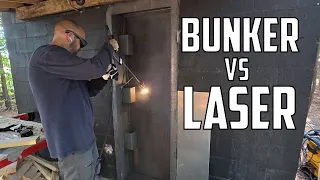
BUNKER vs. LASER – xTool MetalFab laser welder and CNC Ep. 697
Get a $100 discount on MetalFab with the code: MADS100 👉 US: 👉 CA: ** Links and contact information ** My email address is [email protected] For sponsor deals, please use this email: [email protected] Amazon wishlist: Sail Life website: Sail Life on Patreon: Sail Life on I...
The road back to boat work: Bunker Makeover! Ep. 696
🔦 Check out the ArkPro Ultra Onyx Black here: 📦 Amazon: 🖥️ Official website: #Olight #ArkProReady ** Links and contact information ** My email address is [email protected] For sponsor deals, please use this email: [email protected] Amazon wishlist: Sail Life website: Sail Lif...