The road back to boat work: The dry run & more bunker work! Ep. 700
Mads Dahlke continues preparations on the creek property in Oriental, North Carolina, clearing access routes and constructing a workshop bunker before hauling his hurricane-damaged project catamaran, Spiffy. Measuring 44 ft long and 22 ft across the beam, moving her onto the pad requires verifying that an oversized transport rig can navigate narrow rural turns and the property entrance, prompting Mads and hauler Danny to conduct an empty trailer dry run for Sail Life.
Until Spiffy reaches the property, Mads focuses on the bunker, which serves as a server room, 3D printing bay, and recording office for video voiceovers. Having confirmed the concrete slab was dry but finding moisture in the walls, Mads ran a dehumidifier and mini-split system for a couple weeks following a trip to Denmark with Ava. He sets up plastic sheet test patches to verify wall moisture has cleared before sealing the exterior and applying interior insulation.
Insulating the Bunker Roof with Closed-Cell Spray Foam
With pouring rain forecast across the next two days, Mads postpones exterior gable work and focuses inside on sealing the underside of the roof. To create a thermal barrier and moisture seal, he uses the two-part closed-cell spray foam previously applied in his shipping container workshop.
As Mads explains regarding the material choice, “This is a two-part closed-cell foam. It’s important that it’s closed-cell because in addition to this being insulation, I also wanted it to act as a moisture barrier.” Preparation involves taping off the mini-split, laying ground plastic, and giving each canister a 30-second shake before attaching hoses to the spray gun. A dab of Vaseline on the gun tip ensures replaceable nozzles do not adhere. Mads bleeds the lines until the blue part balances with the white part, bypassing the fan spray attachment to apply foam directly between ceiling rafters. Encapsulating the tops of the 2 by 4 joists stiffens the timber framing and prevents condensation. After 24 hours, the wall test patches remain dry, clearing the way to let them sit for a full 48 hours while the foam cures.
Bunker Acoustics and Staggered-Stud Framing
Organizing the bunker layout requires isolating noisy hardware from the quiet acoustic environment needed for voiceovers. Mads partitions a dedicated room to enclose server racks and running 3D printers, leaving the open area for an office desk and audio recording. Restricted ceiling height prevents installing a full-height equipment rack, prompting Mads to plan for a 27U floor rack alongside a separate wall-mounted enclosure for networking gear.
To prepare the shell for interior framing and drywall, Mads pumps down the refrigerant lines on the indoor mini-split unit and removes it, cleaning mold from the intake filter. Rather than keeping an offset wall penetration, he plans to run replacement lines straight through the rear of the unit. He fills the old opening with spray foam backing before smoothing over the cavity with waterstop cement. Outside, Mads installs protective roof sheeting over the gables to provide structural strength ahead of storms, relying on a ridge vent and soffit intakes for attic ventilation while deferring cedar shingles until spring.
For the partition separating the office from the server bay, Mads adopts a staggered-stud framing technique. Framing on a 2 by 6 base plate, he alternates 2 by 4 vertical studs along opposing edges so drywall on one side does not make direct contact with drywall on the other, decoupling vibration and sound transmission between rooms.
Recessed LED Channel Layout and Electrical Rough-In
Because ceiling height inside the bunker is constrained, traditional hanging light fixtures are discarded in favor of flush-mounted architectural lighting. Mads selects extruded aluminum channels fitted with high-quality LED strip lights designed to be mudded directly into the drywall. Calculating the luminous output necessary for workstation clarity, Mads establishes the lighting requirements: “we need about 5 m of the LED strips here in the office, and about 3 m worth here in the server room.”
Orienting the aluminum channels parallel to ceiling joists leaves open spans across the drywall ceiling. To support sheetrock edges along each channel, Mads cuts short 2 by 4 blocking and secures it between rafters, trimming cured spray foam where necessary. He positions a low-voltage junction enclosure for transformers and roughs in wiring for LED tracks alongside a dedicated line for an emergency 12-V light designed to illuminate automatically during power outages.
Empty Trailer Haul and Driveway Clearance Dry Run
With bunker carpentry paused, attention turns to transport logistics for Spiffy. Having returned from speaking at the Annapolis Boat Show the previous day, Mads meets hauler Danny at the boatyard to test the transit corridor to the creek property. Rather than deploying the red truck used in previous moves, Danny selects a smaller white service truck coupled to an empty three-axle boat trailer.
When asked why the white rig was chosen, Danny confirms: “Because it’s smaller, more maneuverable.” The truck offers better clearance along brush-lined country roads and tolerates light tree contact. Danny assesses the chances of negotiating the sharp driveway turn at 100 percent. The convoy covers the 20-minute drive over quiet rural roads, monitoring low utility cables and overhanging branches along the approach street.
Arriving at the property, where Ava has been clearing pine needles along the road, Danny positions the truck to reverse the three-axle trailer around the corner and into the narrow gravel driveway. Navigating past a small young tree without requiring a chainsaw, Danny eases the trailer past the entrance in a single continuous movement, backing toward the concrete catamaran pad. As Danny observes upon stopping the rig, “I did one shot of it, but she’s in there.” The clean pass confirms the driveway radius accommodates Spiffy’s 22 ft beam without tree removal.
Hanging Drywall and Embedding Recessed Lighting
Returning to the bunker interior, Mads prepares to hang ceiling drywall before proceeding with wiring runs. He assembles a mechanical drywall hoist originally used during the shipping container conversion, describing the folding arm as a “grade A finger pincher” during setup. Mads trims flush protruding spray foam along rafters, tapes lighting lead wires in position, and snaps chalk lines across joists to guide screw placement.
Working together, Mads and Ava hoist heavy 10-ft long sheets of 5/8-in or 16-mm thick drywall into position against the ceiling joists. It takes approximately one hour to lift, align, and fasten the three primary ceiling panels with screws. With drywall anchored, Mads mounts the recessed aluminum channels, utilizing a wire hook to fish out LED wiring harnesses through access slots. The channel features a mounting lip measuring 2 to 3 mm in height, requiring compound mudding and sanding to achieve a flat ceiling transition under low-angle sightlines.
With the dry run verified by Danny and transport coordinator Blair exploring hauling permits for the coming week, Mads turns next to pulling copper runs for high-voltage power and Ethernet lines across the bunker.
Project Specifications and Logistical Metrics
| Component or Project Stage | Specification or Measurement |
|---|---|
| Vessel Dimensions (Spiffy) | 44 ft length, 22 ft beam |
| Trailer Transport Rig | White service truck with 3 axles trailer |
| Yard Transit Corridor | 20-minute rural drive to property |
| Moisture Verification Window | 24 to 48 hours testing period |
| Ceiling Drywall Material | 10-ft sheets, 5/8-in (16-mm) thickness |
| Bunker Lighting Allocation | 5 m office strips, 3 m server strips, 12-V emergency light |
| Server Enclosure Size | 27U equipment rack |
Frequently Asked Questions
Spiffy is a 44 ft catamaran with a 22 ft beam, requiring verification that the transport truck and empty three-axle trailer could negotiate the narrow rural roads, low tree branches, and driveway turn onto the property.
Mads used a two-part closed-cell spray foam, which provides thermal insulation while functioning as an impermeable moisture barrier across the rafters and framing.
Mads staggered 2 by 4 studs across a 2 by 6 base plate, eliminating a direct physical connection between drywall surfaces to decouple sound vibrations from the office.
Aluminum lighting channels were mounted flush with 2 by 4 blocking parallel to the ceiling joists, carrying 5 m of LED strips in the office and 3 m in the server room.
Mads and Ava hung 10-ft long sheets of 5/8-in or 16-mm thick drywall using a mechanical drywall hoist.
Support Sail Life
At WeBoating.com, we profoundly acknowledge the unwavering dedication that Sail Life invests in crafting each and every video or voyage. Their passion for delivering exceptional ocean content shines through every frame, and it's a labor of love that deserves your attention.
We invite you to watch their captivating videos here and actively engage with their content, including their social media links above. Liking, commenting, and sharing their work goes a long way in fueling their creative fire.
We're also inviting you to explore the gear, sponsorships, and boat partnerships highlighted in the "The road back to boat work: The dry run & more bunker work! Ep. 700" video description, or directly on YouTube. By engaging with these offerings or purchasing services and items, you directly support Sail Life, their collaborators, and the brands they're associated with.
To ensure you never miss an offshore update, consider visiting their official YouTube Channel to subscribe, like, and join their community directly.
If you have any feedback, corrections, or additional information about Sail Life or their videos, please use the comment form below to share your thoughts with us.
Thank you for being a part of our community and supporting the creators we cherish. Your time and support truly matter!
** Links and contact information **
My email address is [email protected]
For sponsor deals, please use this email: [email protected]
Amazon wishlist: https://www.amazon.com/hz/wishlist/ls/2NJUK30IBFWO1
Sail Life website:
https://www.saillifechannel.com/
Sail Life on Patreon:
http://bit.ly/SailLifeOnPatreon
Sail Life on Instagram:
https://www.instagram.com/saillife_
Sail Life on Facebook:
http://bit.ly/SailLifeOnFacebook
Sail Life on Twitter:
http://bit.ly/SailLifeOnTwitter
TotalBoat:
https://www.totalboat.com/saillife
Athena on No Foreign Land:
https://www.noforeignland.com/boat/saillife

Sail Life
From the 'Oh Glorious Sanding' of SV Athena to the resurrection of a hurricane-damaged Antares 44, Mads Dahlke of Sail Life defines DIY boat refitting gold.
Channel Information:
Social Media Links:
The road back to boat work: The dry run & more bunker work! Ep. 700 Location
- Greens Creek Property, Oriental, North Carolina, USA (35.0251,-76.6959)
- Annapolis Harbor, Maryland, USA (38.9784,-76.4866)
Latest Episodes from Sail Life
Explore the most recent voyages. Subscribe to the channel to never miss an update!

The road back to boat work: The dry run & more bunker work! Ep. 700
Mads Dahlke prepares the creek bunker workshop for office work and voiceovers, installing spray foam and ceiling drywall before running a trailer dry run with Danny for catamaran Spiffy.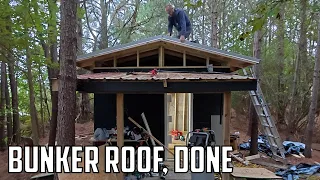
The road back to boat work: Bunker roof, done! Ep. 699
Meet Renogy’s new Mini Smart Battery — smarter energy storage with reliable performance for every journey: Using Code【saillife】for 15% OFF #Renogy#renogyminismart#renogysolar ** Links and contact information ** My email address is [email protected] For sponsor deals, please use this emai...
The road back to boat work: A bunker surprise. Ep. 698
Mads Rasmussen returns to structural refit work aboard SV Athena, confronting hidden moisture rot in the bunker lockers and executing precision marine joinery and epoxy bonding.
xTool Laser Welder & Cleaner vs. bunker door
Get a $100 discount on MetalFab with the code: MADS100 👉 US: 👉 CA: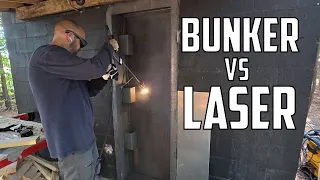
BUNKER vs. LASER – xTool MetalFab laser welder and CNC Ep. 697
Get a $100 discount on MetalFab with the code: MADS100 👉 US: 👉 CA: ** Links and contact information ** My email address is [email protected] For sponsor deals, please use this email: [email protected] Amazon wishlist: Sail Life website: Sail Life on Patreon: Sail Life on I...