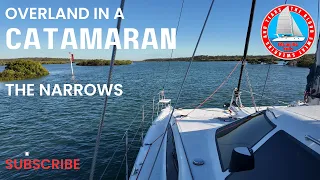
As an Aussie, I never knew how incredible this area is - Cruising on Synergy Ep457
Escaping the constrained concrete pontoons of coastal marinas is the defining milestone of long-distance voyaging, trading shore power cords and berth fees for untethered blue-water freedom. Aboard SV Synergy, a custom 42-foot composite performance catamaran, skipper Brett and first mate Janet of Life On The Hulls slipped their mooring lines at Rosslyn Bay Harbor near Yeppoon to embrace the wild expanse of Keppel Bay. Bound for the pristine bights of Great Keppel Island along the vibrant Capricorn Coast of Queensland, Australia, the voyage represents the realization of years of technical craftsmanship and dedication to independent ocean cruising.
Cruising the southern fringes of the Great Barrier Reef demands far more than wanderlust; it requires forensic seamanship attuned to macrotidal variations, shifting offshore sandbars, and self-sufficient shipboard engineering. As SV Synergy carved her track line across the open waters of Keppel Bay, the transition from marina confines to remote natural anchorages signaled a return to true off-grid voyaging. For Brett and Janet, this northward passage served as an operational shakedown, testing their vessel’s electrical autonomy, watermaker reliability, and anchoring security in dynamic tidal regimes.
Keppel Bay Anchorages and Island Exploration
Aboard the SV Synergy Catamaran along the Capricorn Coast of Queensland, Australia, Brett and the crew of Life On The Hulls dropped anchor in the sheltered lee of Great Keppel Island after crossing Keppel Bay from Rosslyn Bay Harbor. The emerald bight at Svendsen’s Beach offered calm shelter from offshore trade winds, providing a peaceful haven among a fleet of visiting cruising yachts. After days tied to marina pontoons carrying out provisioning and maintenance, swinging freely on the hook in crystal-clear three-meter depths brought an immediate sense of maritime tranquility.
Taking advantage of settled weather, Brett and Janet launched their lightweight tender to explore Great Keppel Island’s walking tracks across high sand dunes toward Butterfish Bay and Wreck Bay. Along the remote coastal trails, Janet carried a marine first aid kit equipped with specialized pressure-immobilization bandages, reviewing essential protocols for treating potential bites from native eastern brown snakes before traversing the rugged headlands. The trek concluded with a swim in the pristine bay, where Brett noted rapid algal growth on the catamaran’s underwater hull surfaces only a week after a thorough scraping, highlighting the constant maintenance required when voyaging northern waters.
Catamaran Engineering: Watermaker Wiring and Off-Grid Autonomy
For Brett and the crew of Life On The Hulls aboard SV Synergy Catamaran, cruising off Great Keppel Island along Queensland’s remote Capricorn Coast in Australia demands absolute mechanical and electrical self-reliance. Maintaining complete off-grid autonomy while voyaging isolated coral lagoons requires continuous maintenance of essential shipboard subsystems, and a functioning desalinator is paramount to avoiding frequent diversions back to mainland supply harbors.
To rectify an intermittent power feed to the vessel’s freshwater generation system, Brett spent five hours running new marine wiring through the multihull’s conduits to commission the watermaker’s low-pressure boost pump. With Janet verifying overboard brine discharge, the newly wired pump delivered a steady output of pure drinking water to the storage tanks. Coupled with a high-capacity solar array and a lithium iron phosphate battery bank, SV Synergy operates heavy domestic loads including induction cooktops without fossil-fuel generator support, ensuring true self-sufficiency on the hook.
Passage Tactics: Downwind Sailing to North Keppel Island
Under the helm of Brett, Life On The Hulls navigated SV Synergy Catamaran northward from Great Keppel Island across the Capricorn Coast of Queensland, Australia, timing their departure as rain squalls moved over Keppel Bay toward North Keppel Island. Leaving behind a crowded roadstead of fifty yachts at Svendsen’s Beach, the catamaran unfurled her epoxy-reinforced working jib to catch a freshening 12-to-16-knot southeasterly breeze.
Running downwind at an apparent wind angle of 130 degrees, SV Synergy maintained a smooth 4.5 knots under jib alone, passing peer vessels including Kenya J and Moonstruck. After skirting Pumpkin Island—historically known as 4X Island—the crew dropped their 35-kilogram SARCA Excel No. 6 anchor into eight meters of sand in North Keppel Island’s northern bay. Navigating the bay required precise tidal planning: with mid-tide showing three meters of depth, an additional 2.5 to 3.0 meters of tidal rise was due before high water, a rapid vertical shift that nearly swept away their tender on the beach.
Offshore Passage: Shoalwater Bay and Coastal Headlands
Navigating north from Great Keppel Island along the rugged Capricorn Coast of Queensland, Australia, Brett and the crew of Life On The Hulls launched SV Synergy Catamaran into an early dawn departure bound for the remote wilderness of Shoalwater Bay. Weighing anchor at 06:30, the crew hoisted the full mainsail and unfurled the jib while still securely pinned to the seabed on anchor, eliminating the anxiety and maneuvering hazards of raising canvas in rolling offshore waters.
Sailing in company with Dave and Donna aboard the Leopard 39 Valhalla, SV Synergy bypassed prawn trawlers and tracked past Mount Atherton alongside the Shoalwater Bay Military Training Area, where beach access is restricted. Over 1.5 to 2.0-meter rolling following swells and 16 knots of wind, SV Synergy demonstrated the efficiency of her custom hull transom extensions. Rather than squatting in wave troughs, the buoyant sterns lifted cleanly, enabling the catamaran to surf smoothly down following seas at speeds between eight and nine knots.
Estuary Navigation and Tidal Extremes at Island Head Creek
Reaching the dramatic coastal fjord of Island Head Creek along the Capricorn Coast of Queensland, Australia, Brett and the crew of Life On The Hulls guided SV Synergy Catamaran into the tranquil estuary after rounding Great Keppel Island and bypassing Pearl Bay. Flanked by 400-meter mountains rising abruptly from mangrove shorelines, this ten-kilometer-deep marine inlet provides complete shelter from ocean swells, serving as the premier staging point for passages to the Percy Isles.
Guiding the multihull through shallow sandbars into three meters of glassy water, Brett calculated the evening’s tidal range. Even during neap cycles, the vertical water movement spans four to five meters, while neighboring Broad Sound records extreme nine-meter spring tides. Cruisers must avoid swimming or entering the water due to resident estuarine crocodiles and aggressive bull sharks. Swinging comfortably under the mountains as twilight settled, the crew prepared their navigation logs for the upcoming 40-nautical-mile offshore hop to Middle Percy Island.
| Passage & System Metric | SV Synergy Observation & Telemetry |
|---|---|
| Vessel & Configuration | 42ft Custom Composite Catamaran with Transom Extensions |
| Cruising Crew | Brett & Janet (Life On The Hulls) |
| Passage Leg & Distance | Rosslyn Bay / Great Keppel to Island Head Creek (~62 NM) |
| Downwind Sailing Speeds | 4.0–4.5 knots under working jib; 8.0–9.0 knots surfing swells |
| Prevailing Weather & Wind | 12–17 knots Southeasterly trade winds; 1.5–2.0m following sea |
| Primary Ground Tackle | 35 kg SARCA Excel No. 6 Anchor on 10mm all-chain rode |
| Tidal Range Parameters | 2.5m–3.0m at North Keppel; 4.0m–5.0m at Island Head Creek (Neaps) |
| Electrical & Water Independence | Lithium LiFePO4 bank, rooftop solar array, 12V feed pump desalinator |
| Environmental & Marine Hazards | Shoalwater military exclusion, submerged rocks, saltwater crocodiles |
Frequently Asked Questions
Cruising the Capricorn Coast of Queensland, Australia aboard SV Synergy Catamaran with Brett and the crew of Life On The Hulls presents unique navigational questions regarding Great Keppel Island, tidal extremes, and multihull anchoring tactics.
Navigating Keppel Bay and the Capricorn Coast requires managing significant macrotidal ranges of 4 to 5 meters, strong tidal streams in island channels, shifting sandbanks, and exposed coral outcrops. Sailors must accurately calculate anchor scope, account for substantial vertical water movement, and navigate around restricted areas like the Shoalwater Bay Military Training Area.
Catamarans calculate anchor rode scope based on predicted high tide rather than chart datum, typically deploying at least a 5:1 to 7:1 chain-to-depth ratio using modern high-holding anchors like the SARCA Excel. Their shallow draft allows multihulls to tuck into protected shallow bights, but crews must ensure sufficient clearance to avoid grounding or drying out unexpectedly at low water.
Raising the mainsail while still secured to the seabed ensures the vessel remains pinned directly head-to-wind with zero way on, eliminating chaotic flogging and cockpit anxiety. Once the mainsail is hoisted and halyard tension is set, the crew simply retrieves the anchor and unfurls the headsail to smoothly initiate passage.
Custom transom hull extensions lengthen the vessel’s effective waterline, reducing hydrodynamic drag and preventing hobby-horsing in pitching seas. In following seas of 1.5 to 2.0 meters, the added buoyancy aft lifts the stern smoothly as swells roll underneath, enabling catamarans like SV Synergy to surf efficiently at speeds exceeding 8 to 9 knots.
Estuaries and mangrove inlets in Central and Northern Queensland are home to apex predators, including large saltwater crocodiles (Crocodylus porosus) and predatory sharks. Swimming, entering the water to clean running gear, or wading on muddy shores is strictly inadvisable. Shore hikers must also carry pressure bandages for venomous snake species.
The prime cruising season runs from May through September during the Australian winter, characterized by consistent southeasterly trade winds, dry weather, and low cyclone activity. As spring arrives in October, trade winds begin breaking down into northerly variables, prompting cruisers to either seek safe cyclone moorings or head back south toward New South Wales.
Equipping a catamaran with high-capacity lithium batteries, high-output solar arrays, and a reverse-osmosis watermaker eliminates the necessity of returning to commercial marinas. Crews can sustain indefinite off-grid cruising in remote archipelagos, running induction cooking, navigation electronics, and domestic systems purely on renewable solar power.
Support Life On The Hulls
At WeBoating.com, we profoundly acknowledge the unwavering dedication that Life On The Hulls invests in crafting each and every video or voyage. Their passion for delivering exceptional ocean content shines through every frame, and it's a labor of love that deserves your attention.
We invite you to watch their captivating videos here and actively engage with their content, including their social media links above. Liking, commenting, and sharing their work goes a long way in fueling their creative fire.
We're also inviting you to explore the gear, sponsorships, and boat partnerships highlighted in the "As an Aussie, I never knew how incredible this area is - Cruising on Synergy Ep457" video description, or directly on YouTube. By engaging with these offerings or purchasing services and items, you directly support Life On The Hulls, their collaborators, and the brands they're associated with.
To ensure you never miss an offshore update, consider visiting their official YouTube Channel to subscribe, like, and join their community directly.
If you have any feedback, corrections, or additional information about Life On The Hulls or their videos, please use the comment form below to share your thoughts with us.
Thank you for being a part of our community and supporting the creators we cherish. Your time and support truly matter!
Escaping the Marina is a blessing as it makes for the freedom of movement this lifestyle allows. Day long passages up the coast of Queensland and amazing new areas to see and experience, those that I never knew existed.
Patreon Membership Thank you for supporting my production - https://www.patreon.com/lifeonthehulls
If you would like to contribute to our project you can make very appreciated donations to this Pay Pal Me Link :
https://paypal.me/synergyboatworks
Thanks for joining me on Life On The Hulls and please consider joining my Patreon Network to receive early release videos, and the entire The Composites Shop Series, up to 3 months ahead of public release. The Composites Shop YouTube Channel - Please subscribe here -
https://www.youtube.com/thecompositesshop
View Patron only content and early release "The Composites Shop " videos months prior to public release on the "Life On The Hulls" Patreon site. Click on the link above to learn more and help support our productions.
Life On The Hulls
Ross and Janet: The Australian boat-building masters who spent 9 years crafting their 42ft custom composite catamaran, now launching into a life of Pacific exploration.
Channel Information:
Social Media Links:
As an Aussie, I never knew how incredible this area is - Cruising on Synergy Ep457 Location
- Great Keppel Island Cruising Anchorage, Queensland, Australia (-23.175,150.95)
- Rosslyn Bay Harbor Fairway, Yeppoon, Queensland, Australia (-23.16,150.79)
Latest Episodes from Life On The Hulls
Explore the most recent voyages. Subscribe to the channel to never miss an update!
Sailing Past Gladstone’s Giant Industry to Pancake Creek | Life on the Hulls 460
We leave the Curtis Island Narrows and cruise onboard Synergy down to Gladstone, one of Queensland’s biggest industrial ports, then carry on through to the beautiful Pancake Creek anchorage. Along the way we deal with wind against tide and get a close look at the Coal and Bauxite ships and alumina ...
Possibly the Clearest Water in Australia? — Then the Southerly Hit Ep459
After seven years building Synergy, this is exactly the kind of place we built her for. In this episode we’re anchored at Pearl Bay — our favourite spot on the Queensland coast, tucked inside the Shoalwater Bay military zone where there’s no development, just wilderness and some of the clearest wate...
Leaving Our Mark at the Percy Islands | The Famous A-Frame Ep 458
Life On The Hulls sails custom catamaran Synergy to Middle Percy Island in Queensland, Australia, navigating West Bay tides to place their mark at the historic A-Frame.
As an Aussie, I never knew how incredible this area is – Cruising on Synergy Ep457
Brett and crew aboard SV Synergy escape marina berths to cruise the Capricorn Coast and Great Keppel Island, mastering extreme tides, offshore passages, and off-grid living.
Great Keppel Heaven – Outboard Motor Problems in Paradise Ep456
It's hard to beat the feeling of arriving on a Tropical Queensland Island and having achieved it on a Catamaran hand built for the journey. Our trip North has really only has just begun and there is an unexpected problem with our tender's outboard motor that cost us a whole lot more than w...