Faster, More Beautiful | Ep. 359
On Friday evening, June 12th, Kevin Boothby manages the sails of the Ruth Avery as winds reach 15 knots. With stacks of cumulus clouds signaling potential thunderstorms and a weak cold front shifting winds from southwest to northwest, the skipper employs two reefs in the main and the staysail to maintain control. For those interested in the technicalities of such voyages, How to Sail Oceans provides extensive resources on managing these conditions.
Gust Fronts and Sail Testing
The following day, June 13th, brings a sudden challenge. A gust front, which remained undetected by global weather models, hits the vessel. For a period lasting between 30 minutes and an hour, winds spike to 25 30 knots. To handle the surge, Kevin Boothby is forced to use a deep reef staysail and two reefs in the main. Reflecting on the unpredictability of the weather, Kevin Boothby notes, “What the global weather models didn’t pick up was that gust front, while a frontal boundary is passing over”.
As the winds gradually diminish later that day, the skipper takes the opportunity to evaluate new gear. He rigs the topsail halyard and sheet on the lee side to test a new topsail. While the sail is hoisted, he observes that the wind is slightly too light to fully fill the canvas, though the test provides a baseline for the sail’s performance.
| Specification | Measurement |
|---|---|
| Wind speed (Friday) | 15 knots |
| Gust front wind speed | 25 30 knots |
| Morning wave height | 2 ft |
| Montauk Point current | 3 knots |
| Fort Pond Bay depth | 20 25 ft |
Navigating Montauk Point
By Sunday, June 14th, the Ruth Avery is within 10 25 miles of Montauk Point. After updating gribs via cell range, Kevin Boothby identifies strong southerlies and a risk of thunderstorms. He calculates that continuing toward Block Island Sound would mean he cannot reach a safe anchorage before 3:00 a.m.
Faced with this timeline, he decides to divert to Fort Pond Bay. He considers Lake Montauk but rejects it due to the difficulty of entering without an engine, particularly after dark. Regarding this choice, Kevin Boothby explains, “Lake Montauk would be ideal cuz that’s perfectly protected. But that’s going to be too difficult to get into without an engine”.
The transit around Montauk Point proves volatile. While the boat maintains a speed of about two and a half, the current reaches 3 knots. The resulting tide rips cause the vessel to slew and spin. To better handle the current swirls and improve his ability to point, Kevin Boothby rolls up the code zero and relies solely on the main and staysail. During the height of the turbulence, Kevin Boothby exclaims, “Holy moly, I’m spinning out here from these current swirls. I’m getting thrown on I’m getting slew all over the place”.
Anchoring in Fort Pond Bay
Despite the chart indicating depths between 30 and 50 ft near the point, the skipper eventually finds shelter in Fort Pond Bay, anchoring in approximately 20 25 ft of water. He chooses this stop over a 50 mi push to Tarpaulin Cove or South Dartmouth, as the exhaustion of a passage makes an all-nighter impractical.
While tacking into the bay, the wind gusts into the low 20s, revealing that the Ruth Avery had too much sail area deployed for the conditions. Kevin Boothby acknowledges the inherent challenges of sailing a 1984 Gilmer 31 gaff-rigged cutter without an inboard engine, stating, “This life is an adventure. Especially when you when you do it under sail”.
Because Fort Pond Bay offers limited shelter once the wind shifts to the northwest, the skipper prepares for a rapid exit. He intentionally leaves the sail covers off to avoid delays. His plan is to wake and pick anchor between 6:00 and 7:00 the following morning, aiming to be underway before the expected northwest shift occurs around 7:00 or 8:00.
Frequently Asked Questions
Lake Montauk is perfectly protected but too difficult to enter without an engine, especially after dark, whereas Fort Pond Bay is easy to enter and exit.
While models predicted winds of 10 to 15 knots, a gust front occurred that brought winds up to 25 30 knots for about an hour.
The current can reach up to 3 knots, creating tide rips that can cause a boat to slew and spin.
Book a trip where this was filmed — near Boston
Support How to Sail Oceans
At WeBoating.com, we profoundly acknowledge the unwavering dedication that How to Sail Oceans invests in crafting each and every video or voyage. Their passion for delivering exceptional ocean content shines through every frame, and it's a labor of love that deserves your attention.
We invite you to watch their captivating videos here and actively engage with their content, including their social media links above. Liking, commenting, and sharing their work goes a long way in fueling their creative fire.
We're also inviting you to explore the gear, sponsorships, and boat partnerships highlighted in the "Faster, More Beautiful | Ep. 359" video description, or directly on YouTube. By engaging with these offerings or purchasing services and items, you directly support How to Sail Oceans, their collaborators, and the brands they're associated with.
To ensure you never miss an offshore update, consider visiting their official YouTube Channel to subscribe, like, and join their community directly.
If you have any feedback, corrections, or additional information about How to Sail Oceans or their videos, please use the comment form below to share your thoughts with us.
Thank you for being a part of our community and supporting the creators we cherish. Your time and support truly matter!
After a frisky frontal passage conditions moderate to more cheerful summertime weather and I get my first opportunity to fly the new topsail. The nice weather doesn't last however, and I am obliged to put in to Fort Pond Bay behind Montauk to sit out another front.
SUPPORT HOW TO SAIL OCEANS ON PATREON: https://patreon.com/user?u=12372934
HOW TO SAIL OCEANS ON RUMBLE: https://rumble.com/c/c-1981134
HOW TO SAIL OCEANS TEE SHIRT: https://maritimetees.net/search?q=how+to+sail+oceans
DONATE: https://www.paypal.me/KevinBoothby
WEBSITE: https://www.kevinboothbysailing.com
MUSIC: The Temple -- Kevin Boothby
VIDEO SOUNDTRACKS: https://soundcloud.com/user-177118317
CAMERAS:
Canon EOS R6 Mk II with RF 70-200mm L IS zoom lens
Go Pro Hero 9 Black
Go Pro Hero 12 Black
Go Pro Hero 13 Black
DRONE:
DJI Phantom 3 Professional
THE BOAT: Design: Gilmer 31; LOD 31', LWL 25', Beam 9.5', Draft 4.5', Displ. 13,600lbs
How to Sail Oceans
Kevin Boothby, PhD, documents the forensics of engineless blue-water voyaging. Join his 2026 Bahamas expedition aboard the Gilmer 31 cutter, Ruth Avery.
Channel Information:
Social Media Links:
Faster, More Beautiful | Ep. 359 Location
- Montauk Point, New York, USA (41.0725,-71.8522)
- Fort Pond Bay, New York, USA (41.0558,-71.8755)
Latest Episodes from How to Sail Oceans
Explore the most recent voyages. Subscribe to the channel to never miss an update!
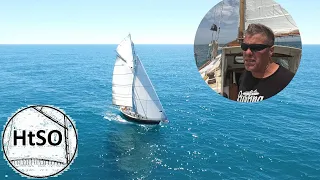
Faster, More Beautiful | Ep. 359
Kevin Boothby navigates the Ruth Avery through challenging winds and currents near Montauk Point, testing a new topsail and seeking shelter in Fort Pond Bay without an engine.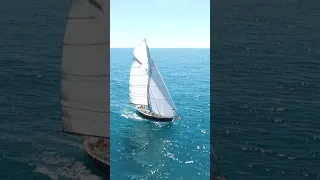
On Escaping the Heat and DIY Boatyards | Ep. 358
Kevin Boothby gets underway from Chisman Creek, Virginia, clearing the Chesapeake Bay Bridge-Tunnel to sail offshore toward Buzzards Bay and avoid extreme summer heat while reviewing DIY boatyard realities.
New sails, new toys, and splash! | Ep. 357
SV Ruth Avery finishes yard preparations with bolted pin rails, new Genoa tracks, and Sea Hawk antifouling before splashing into the water to unfurl a larger Code Zero.
The Haulout “Third Quarter” | Ep. 356
Working through the middle stretch of a boatyard haulout, Kevin Boothby refits the wooden spars and hull of the Gilmer 31 Ruth Avery, applying epoxy barrier coats, servicing rigging, and stepping the rig.